
Custom Hoodies With Your Logo: Placement & Cost
Left chest at 3.5 inches reads as uniform; a big front logo reads as merch. Which method suits your quantity, and why the pouch pocket caps the front.
- The default placement
- Left chest at 3.5 inches, the same standard width we use on shirts and polos. A full front or back design is 11 inches; a sleeve is 3 inches.
- Method follows quantity
- Screen printing is the best value past roughly 24–50 pieces for a one-to-three-colour logo. DTF handles full colour with no setup. Embroidery reads as uniform rather than merch.
- The pocket caps the front
- A hoodie front print stops at the pouch pocket, about 9.4 inches down, where a t-shirt gives 13.6. Large logos usually go on the back.
- Reorders are the real test
- We keep your artwork and specification on file, so a three-piece top-up for new hires months later matches the original run. Embroidery reuses the same stitch file with no second setup.
- Volume pricing
- Large orders get volume pricing. In the online design studio the per-piece price drops at 12, 24, 50 and 100 pieces, and every colour of the same garment in one order counts toward the same price break.
- A person checks your file
- Every order is reviewed by a human designer before it goes to press. A person checks artwork resolution, colour, sizing and placement, and either fixes the file or tells the customer what is wrong — it is not an automated preflight.
- Turnaround
- Standard turnaround on clothing is 1–2 weeks. Most apparel orders can rush — 4–5 business days or 1–3 business days, priced at checkout — and every order shows the dates it will be ready before you pay.
Where a company logo actually goes
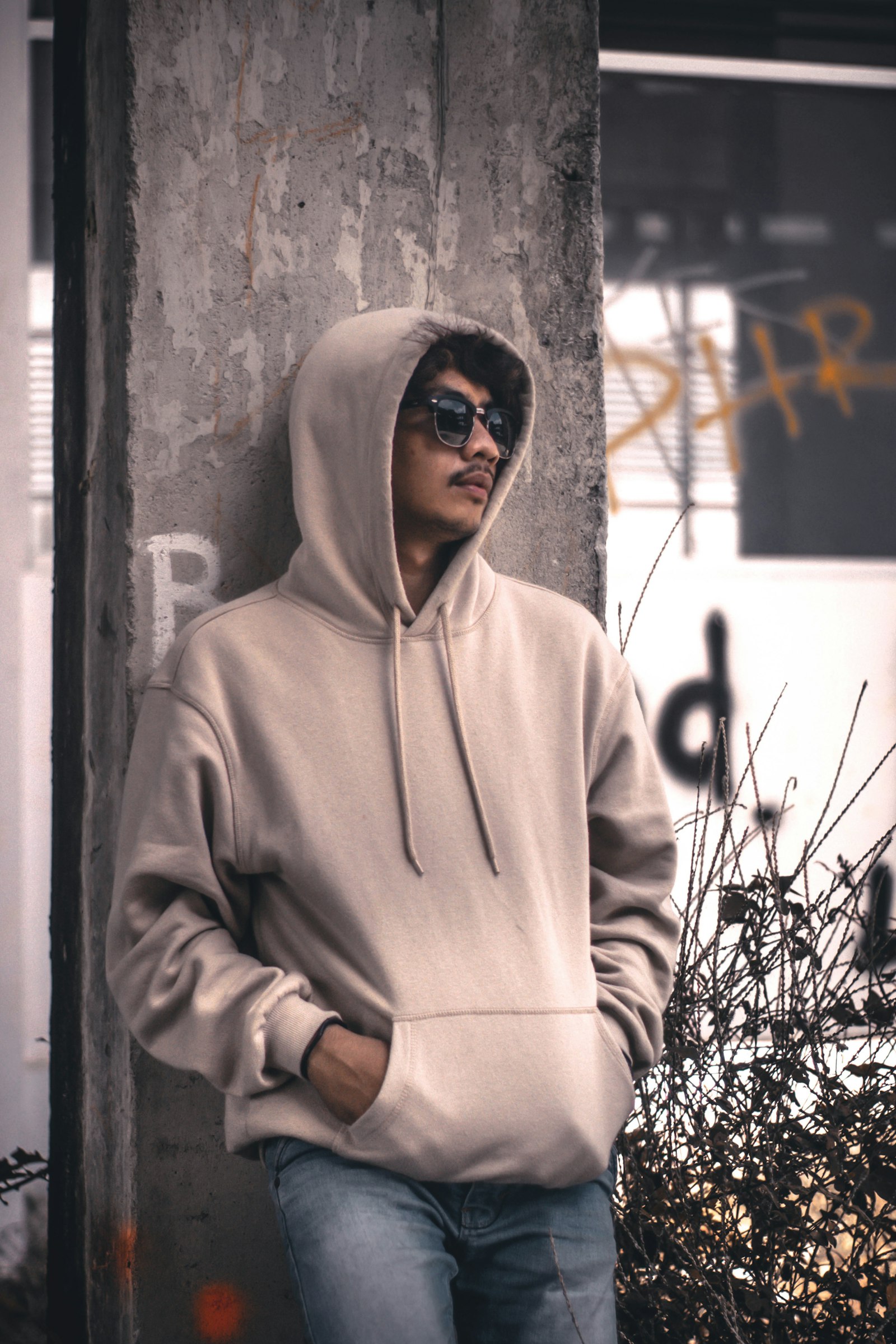
There is a reason nearly every branded hoodie you see has a small mark on the left chest rather than a large one across the front: it reads as workwear instead of merchandise. A big front logo says “I bought this”; a small chest logo says “I work here”. Which you want is a real decision, not a default.
| Placement | Width | Reads as |
|---|---|---|
| Left chest | 3.5″ | Uniform. The default for staff. |
| Full back | 11″ | Visibility — crews, sites, events |
| Full front | 11″, capped ~9.4″ tall | Merch. Bold, and limited by the pocket. |
| Sleeve | 3″ | A secondary mark, a year, a trade |
The most common configuration for a company is a left chest logo plus a back print— small and professional from the front, readable across a car park from behind. It is two print locations rather than one, which is worth knowing before you budget.
Which method for a logo, and why quantity decides
Three methods, and the right one is mostly a function of how many hoodies and how many colours.
Screen printing (our screen printing service) is priced per colour and per location, with screens made for each. That setup is why it is poor value at six hoodies and excellent at sixty. For a one-to-three-colour corporate logo past roughly 24–50 pieces, it is the cheapest durable answer and lays the most opaque ink on a dark garment.
DTF prints full colour with no setup fee and no minimum, so a twelve-colour logo costs the same as a one-colour one. It wins on small runs, gradient-heavy brand marks and anything photographic.
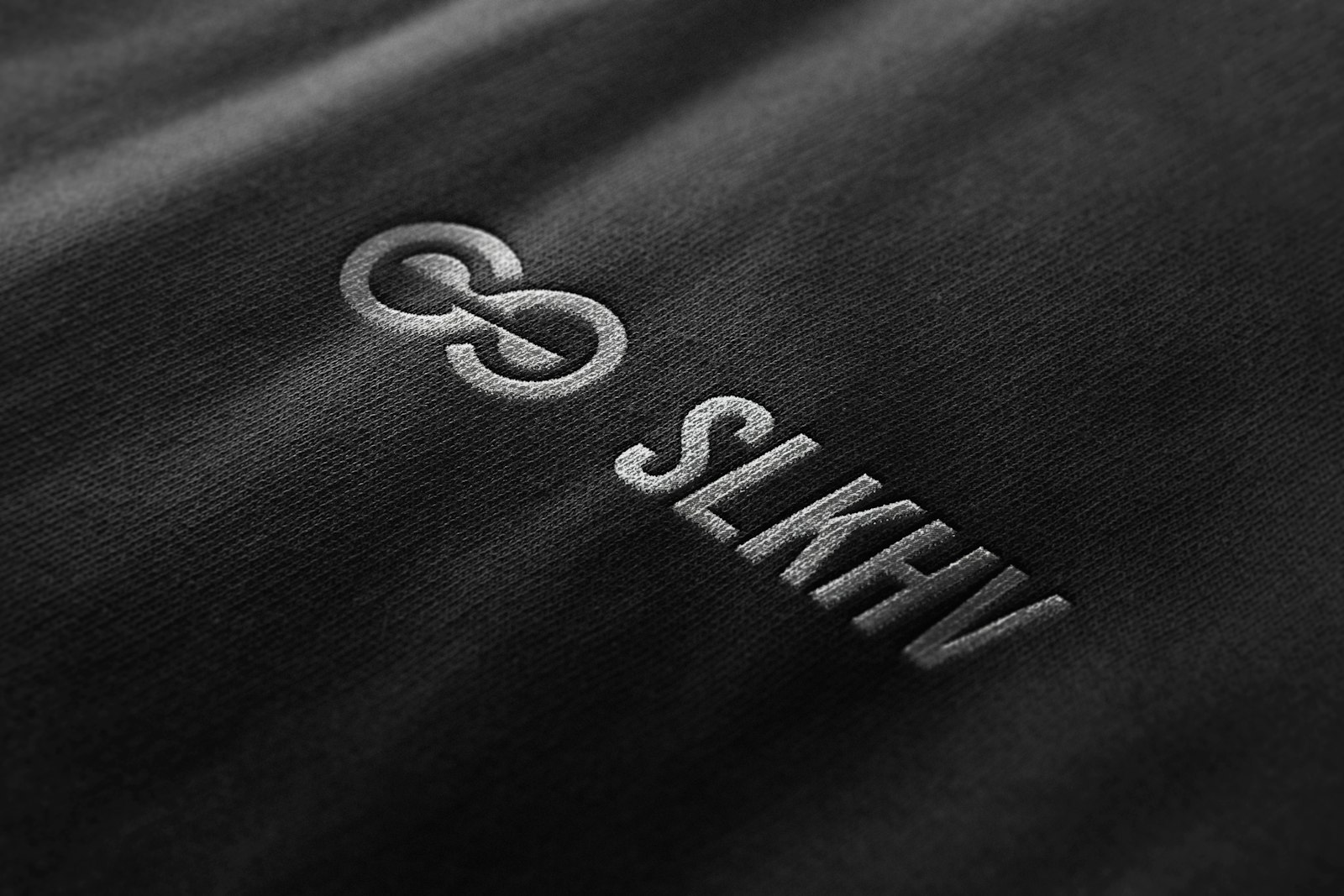
Embroidery is the one that changes how the garment is perceived. It also has the hardest limit: below roughly a quarter inch stitched letters fill in, so a logo with a tagline usually loses the tagline at chest size. Full detail in embroidered hoodies.
A practical pattern worth copying: embroider the chest, print the back. You get the uniform read where people see it close up and a large legible mark where they see it from a distance, without paying to stitch an 11-inch panel.
Brand colour, garment colour and what actually happens
Two things surprise people with a brand guideline in hand.
Ink is translucent.Printing a mid-tone brand colour straight onto a black hoodie lets the garment show through and the result comes back muddy. The fix is a white underbase printed first, which is routine — it just means a full-colour logo on a dark hoodie sits slightly thicker on the fabric than the same logo on a white one.
Exact colour matching is a conversation, not an assumption. Screen printing can mix ink to a Pantone reference, which is the route to a genuine brand match. Full-colour digital methods work in CMYK and get close, but cannot reproduce every Pantone exactly — bright oranges and some deep blues are the usual casualties. If your brand colour is non-negotiable, say so when you order and we will steer the method.
Heather colours are a third case: the flecked yarn means the surface is not a uniform ground, so a logo sits on a slightly textured background. It looks good; it is simply not the surface for hairline work.
Reorders are the part that separates suppliers
Anyone can print forty hoodies once. The test of a supplier for a business is the order you place eight months later for the four people who have joined since.
We keep your artwork and specification on file, so a reorder skips the setup and artwork stages entirely. With embroidery it is stronger still: the digitized stitch file is reused, so there is no second setup cost and the stitching is identical rather than merely similar.
One honest caveat. Blanks get discontinued and dye lots shift. A reorder a year later in the same colour is normally an exact match; across several years it may not be. If your new hoodies have to sit beside the originals without anyone noticing, tell us and we will check stock before you commit rather than after.
If hoodies are one line of a broader staff kit, our winter staff apparel guide covers how crewnecks, toques and jackets fit around them, and reordering company uniforms deals with the process.
Sizing, cost and getting it ordered
Two practical notes before you order. Collect sizes from the people wearing them, individually — a hoodie is a layering garment and preferences vary more than for a t-shirt. And order a few spares in the middle sizes, because someone always joins late and a spare large is far cheaper now than a one-piece reorder in February. Our hoodie size guide has the real measurements.
On price: in the online design studio the per-piece price drops at 12, 24, 50 and 100 pieces, and every colour of the same garment in one order counts toward the same price break. That matters for staff orders, where half the team wants black and half wants navy — those are one quantity, not two. Orders in the hundreds are quoted through the free quote form and get the same free mockup and designer check as a single piece.
You can put your logo on a real hoodie in the free studio with no account and no deposit. Every order is reviewed by a human designer before it goes to press. A person checks artwork resolution, colour, sizing and placement, and either fixes the file or tells you what is wrong — it is not an automated preflight. Send whatever you have, including a logo pulled off your own website; if it needs redrawing we redraw it as vector.

Frequently asked questions
Where should a company logo go on a hoodie?
Left chest at 3.5 inches is the default, because it reads as uniform rather than merchandise. A full back at 11 inches adds visibility across a site or car park, and many companies do both — small from the front, large from behind. Avoid planning a tall front logo: the pouch pocket caps a hoodie front print at roughly 9.4 inches.
Should company hoodies be printed or embroidered?
Embroidery reads as uniform and lasts longest, which is why it dominates staff wear — but below roughly a quarter inch stitched letters fill in, so a logo with a tagline often loses it at chest size. Screen printing is the best value past about 24–50 pieces for a simple logo. A common split is an embroidered chest with a printed back.
Can you match our exact brand colour?
With screen printing, yes — inks can be mixed to a Pantone reference, so send the code if brand consistency matters. Full-colour digital methods work in CMYK and get very close but cannot reproduce every Pantone exactly; bright oranges and some deep blues are the usual casualties. Tell us up front if the colour is non-negotiable and we will steer the method.
Can we reorder a few hoodies later and have them match?
Yes. We keep your artwork and specification on file, so a reorder skips setup and artwork entirely, and an embroidered order reuses the same digitized stitch file with no second setup. The honest caveat is that blanks get discontinued and dye lots shift over years — if a new batch has to sit beside the old one unnoticed, tell us and we will check stock first.
How many hoodies do we need for bulk pricing?
The per-piece price drops at 12, 24, 50 and 100 pieces, and every colour of the same hoodie in one order counts toward the same break — so fifteen black and fifteen navy count as thirty. If you are sitting at 21, going to 24 often costs less in total than stopping short.
Does a second print location cost extra?
Yes. A front and a back are two prints, not one, and with screen printing each is priced separately because each needs its own screens and its own pass. If the budget is tight, dropping the second location is usually the quickest saving — ahead of downgrading the blank, which is the thing people notice.
What file do you need for our logo?
The best one you have. Vector — AI, EPS, PDF or SVG — is ideal because it stays sharp at any size and is what embroidery digitizing works from. A high-resolution PNG with a transparent background is fine. A logo pulled off your own website is usually too small for an 11-inch back print, but a designer can redraw it as vector rather than printing it badly.
Design it yourself. A human designer still checks every order.
Our free studio gives you the price and the mockup in the browser. What it doesn't do is print your file blindly — every order is reviewed by a real designer before it reaches the press.
- Step 1You design it — free
Upload your logo, drop it on a real garment, set the size and placement, pick colours and quantities. No account, no deposit, no waiting on a reply.
- Step 2A human designer checks it
Before anything prints, one of our designers opens your file and checks resolution, colours, sizing and placement. If it won't print well, we fix it or tell you exactly what's wrong — a person, not an automated preflight.
- Step 3You approve, then we print
You get the corrected mockup back on the actual product. Nothing goes to press until you say yes — then it's ready in 1–2 weeks, or in 1–3 business days with a rush.
Put your company logo on a hoodie
See it at 3.5-inch chest scale on a real Gildan 18500, pick your colours and sizes, and watch the per-piece price drop at 12, 24, 50 and 100. We keep the artwork on file so next year's top-up matches.
Every order is reviewed by a human designer before it goes to press. A person checks artwork resolution, colour, sizing and placement, and either fixes the file or tells the customer what is wrong — it is not an automated preflight.