
Embroidered Hoodies in Canada: Stitch on Fleece
Thread through the fabric outlasts ink on top of it. The quarter-inch detail floor, and why digitizing is a one-time setup you reuse on every reorder.
- Why stitch rather than print
- Thread is worked into the fabric instead of sitting on it, so an embroidered hoodie outlasts a printed one and reads as the premium option on staff and club wear.
- The detail floor
- Below roughly a quarter inch, stitched letterforms fill in and stop being legible. A bold mark embroiders beautifully; a logo with a tagline under it usually loses the tagline.
- Digitizing is a one-time setup
- Your logo has to be converted into a stitch file before a machine can read it. You pay that once per design and reuse it on every future order, including reorders of three pieces.
- Fleece needs backing
- An 8 oz Heavy Blend fleece is soft and stretchy, so embroidery on it is stabilised from behind. That is normal, and it is why dense designs on fleece need planning rather than just shrinking.
- Best placements
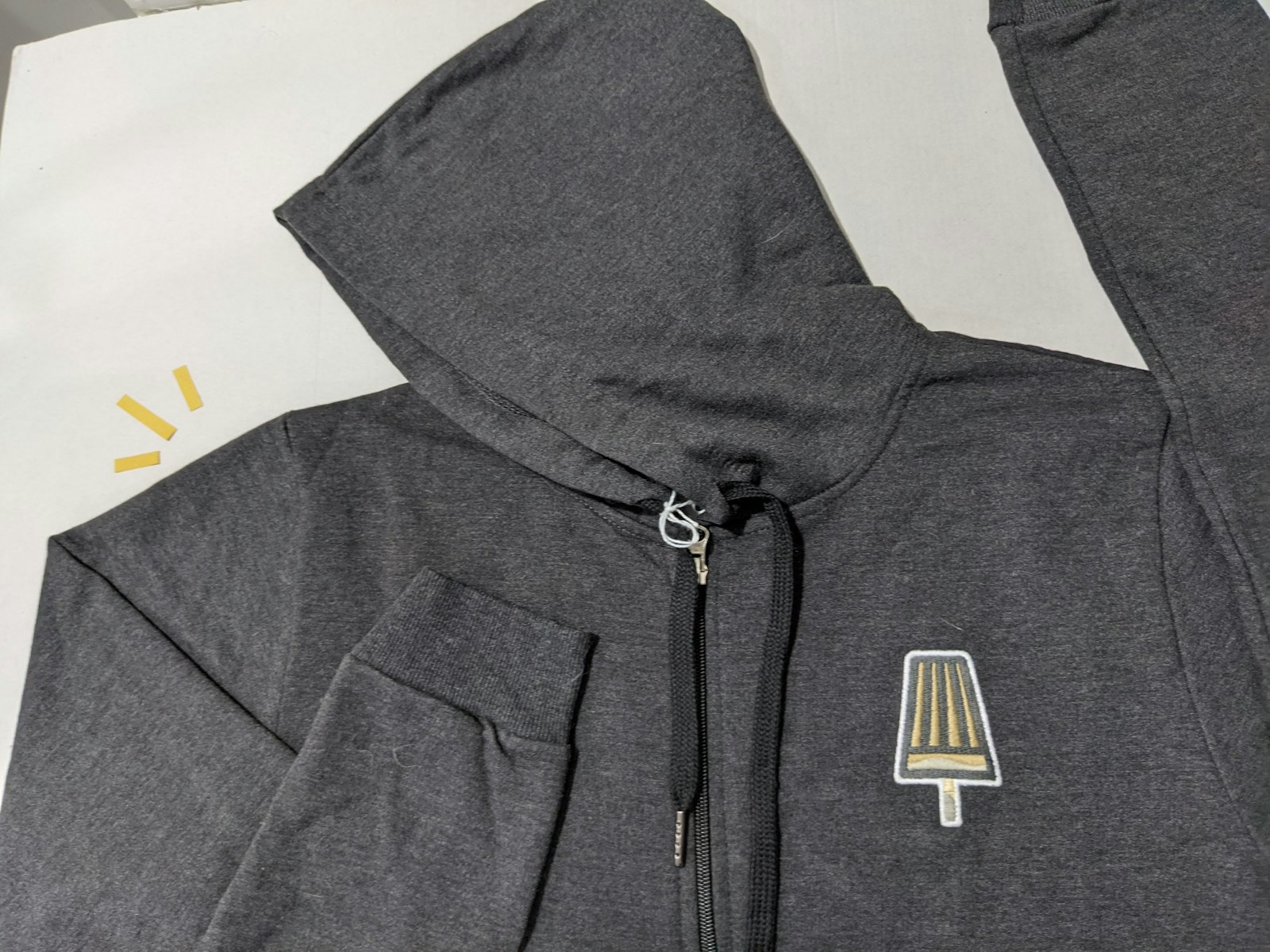
- Left chest at 3.5 inches is the standard. A hood, a sleeve at 3 inches or a small centre chest also work. A full 11-inch back design is a print job, not a stitch job.
- Volume pricing
- Large orders get volume pricing. In the online design studio the per-piece price drops at 12, 24, 50 and 100 pieces, and every colour of the same garment in one order counts toward the same price break.
- A person checks your file
- Every order is reviewed by a human designer before it goes to press. A person checks artwork resolution, colour, sizing and placement, and either fixes the file or tells the customer what is wrong — it is not an automated preflight.
What embroidery actually buys you on a hoodie
Two things, and neither is about looks in the abstract.
Durability. A print is a layer bonded to the surface of the fabric. Wash it hot enough and flex it often enough and that layer eventually cracks. Machine embroidery is thread passed through the fabric, so there is no layer to fail. On a hoodie that gets worn through a winter and washed weekly, that difference shows by spring.
Register. A stitched logo reads as considered rather than promotional. For staff wear, clinics, trades and anything a customer sees, that perception is most of the reason people pay the difference. The same logo printed on the same hoodie reads as merchandise; stitched, it reads as uniform.
What embroidery does not buy you is detail or scale. That is the trade.
The quarter-inch rule
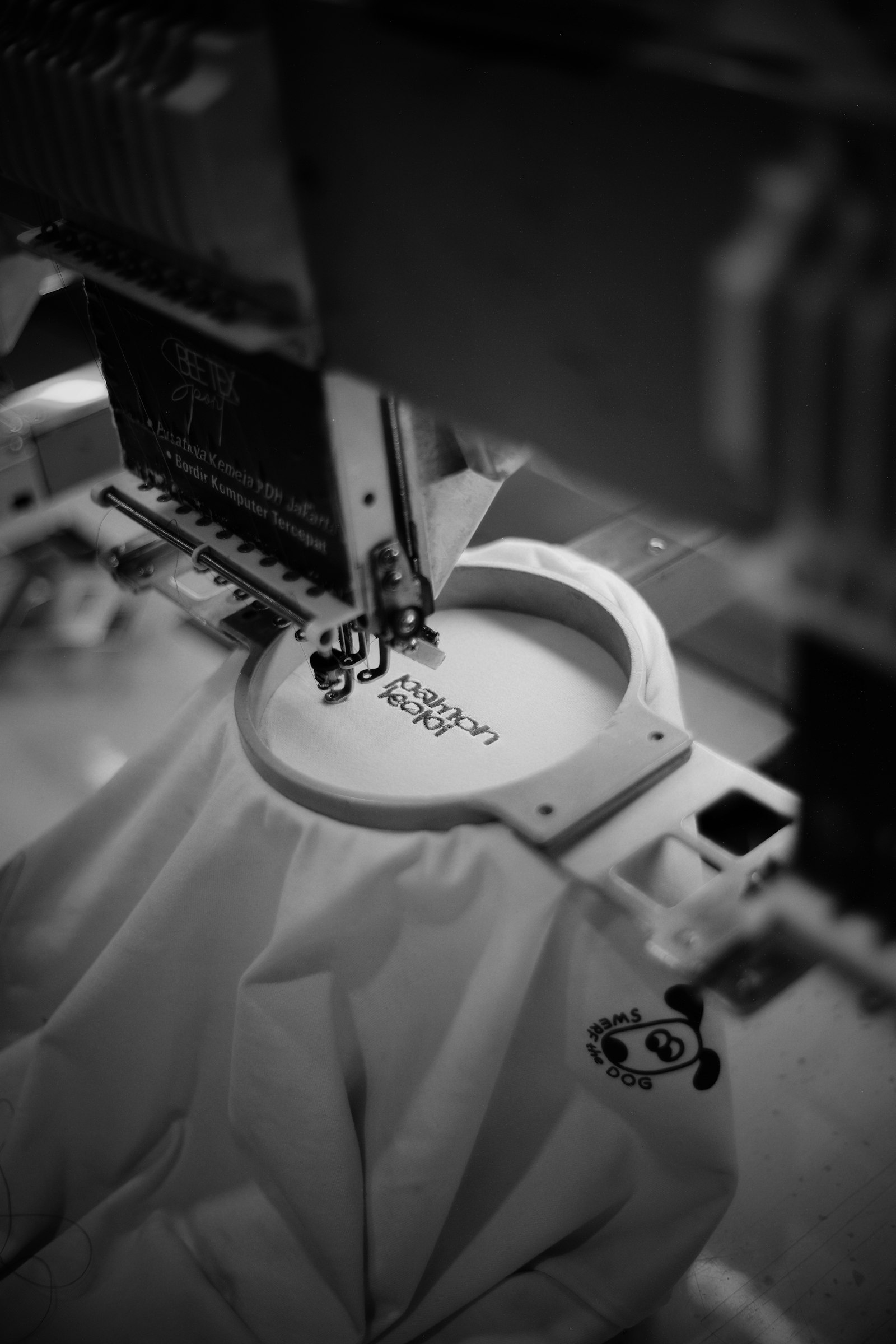
The constraint that decides most embroidery conversations: below roughly a quarter inch, stitched letterforms fill in. The thread has a physical thickness, and the gaps inside an e or an a close up until the letter becomes a blob.
A standard left-chest logo is 3.5 inches wide. Work out how tall your smallest element is at that width and you have your answer before you ask anyone. In practice:
- A bold wordmark or icon. Stitches beautifully. This is what embroidery is for.
- A logo with a tagline. The tagline usually has to go, or the whole mark has to get bigger.
- Fine outlines and thin serifs. Thicken them or drop them.
- Gradients and photographs. Not possible in thread. Print, or use a woven patch.
Simplifying is not a compromise so much as a translation, and it usually costs less too — embroidery is billed by stitch count, so a cleaner mark is a cheaper one. Where the detail genuinely cannot go, a woven patch applied to the hoodie holds far finer linework than direct stitching can.
Digitizing, and why it changes the maths
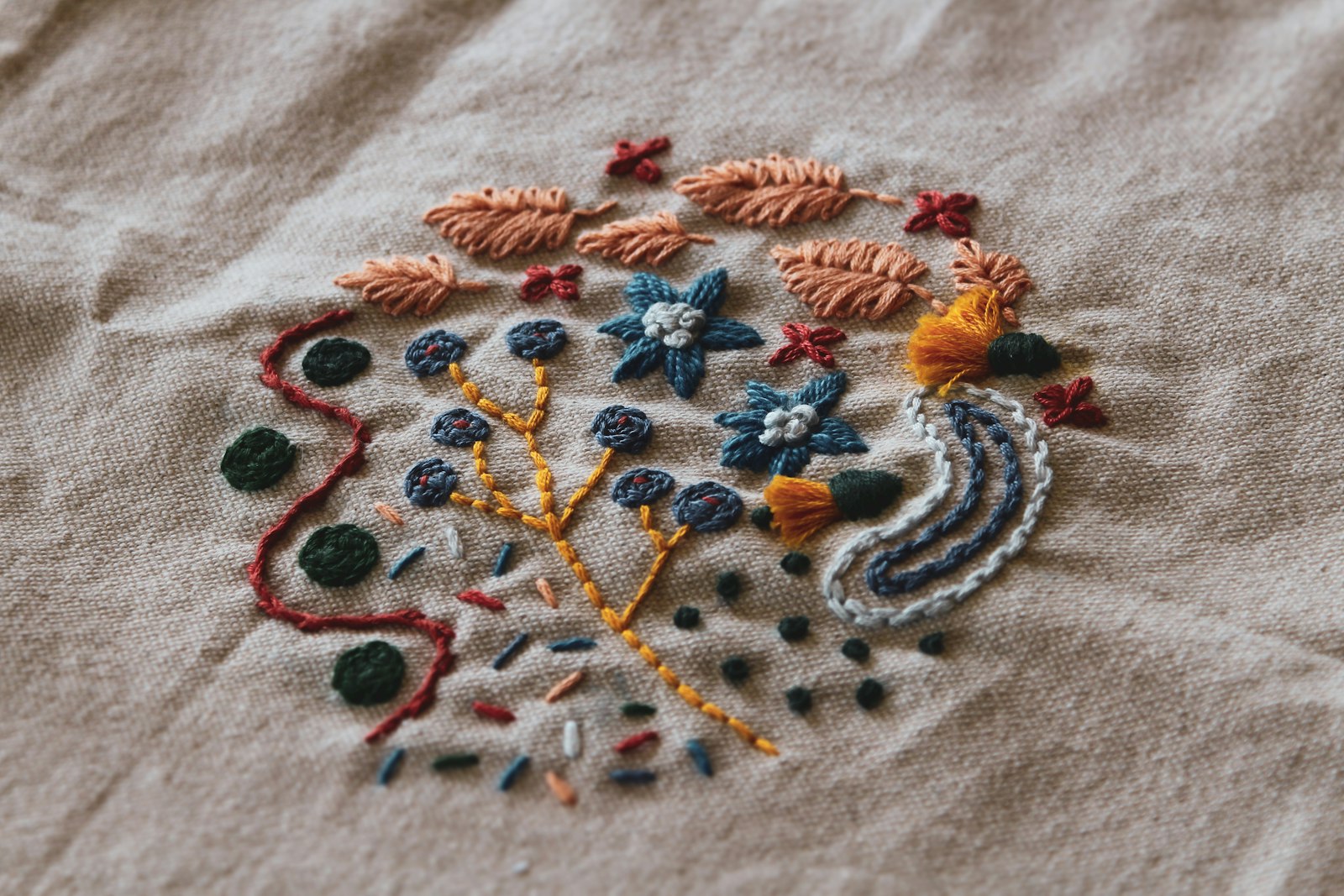
An embroidery machine does not read your logo. It reads a stitch file: a set of paths, stitch types (satin and fill), directions and densities telling the needle where to go and in what order. Converting your artwork into one is called digitizing, and it is skilled work rather than a file export — whoever does it decides how the design behaves on fabric.
It is a one-time setup per design. That single fact flips the economics relative to printing:
| Screen printing | Embroidery | |
|---|---|---|
| Setup | Screens, per colour | Digitizing, per design |
| Rewards | Buying a lot at once | Coming back repeatedly |
| Priced by | Colours & locations | Stitch count |
| Small reorder | New setup each run | Setup already paid |
For a workplace with staff turnover that is the argument. Forty hoodies in October and three more in March, matching exactly, with no second setup. Our digitizing explainer goes through what happens to your file in detail.
What fleece does to embroidery
A hoodie is not a polo. The Gildan 18500 Heavy Blendis an 8.0 oz/yd² fleece with a brushed interior — soft, thick and stretchy, which are three things embroidery does not love.
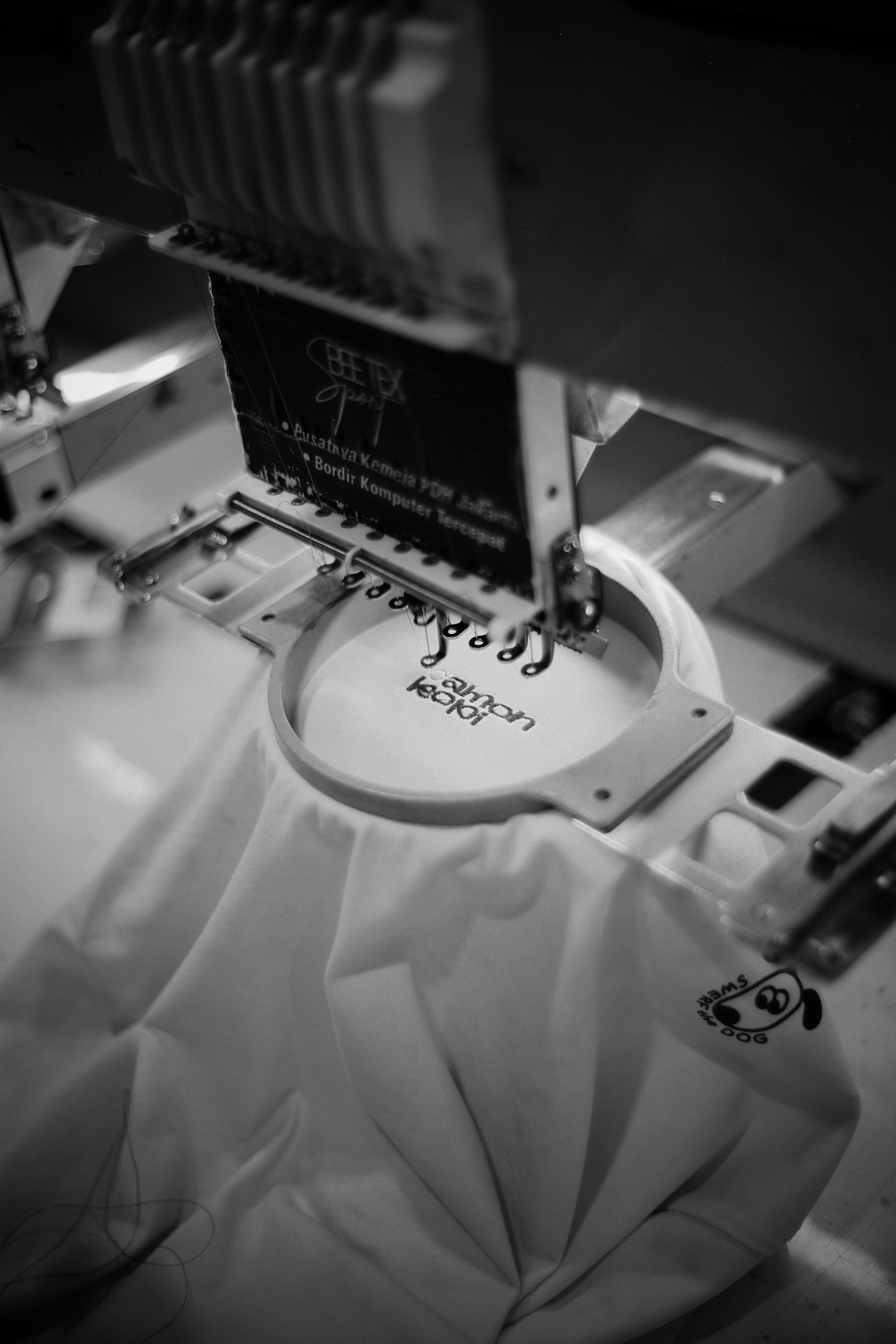
Soft and stretchy means the fabric wants to move under the needle, so the area is stabilised from behind before stitching. That is routine. Thick means the surface has a nap that fine stitching can sink into, which is a second reason small detail struggles on fleece specifically rather than on a woven shirt.
Practical consequences worth knowing:
- Left chest is the sweet spot. 3.5 inches, flat area, no seams, no pocket.
- A full back design is a print job. An 11-inch stitched back panel would be enormous in stitch count, heavy on the garment and expensive. Print it.
- Hood and sleeve work for small marks — a sleeve at 3 inches, a word on the hood.
- Avoid stitching over the pocket seam or the kangaroo opening, where the fabric doubles.
The same applies to a crewneck, which shares the fleece and loses the hood and pocket — giving you a flatter, friendlier panel.
Cost, quantity and how to order
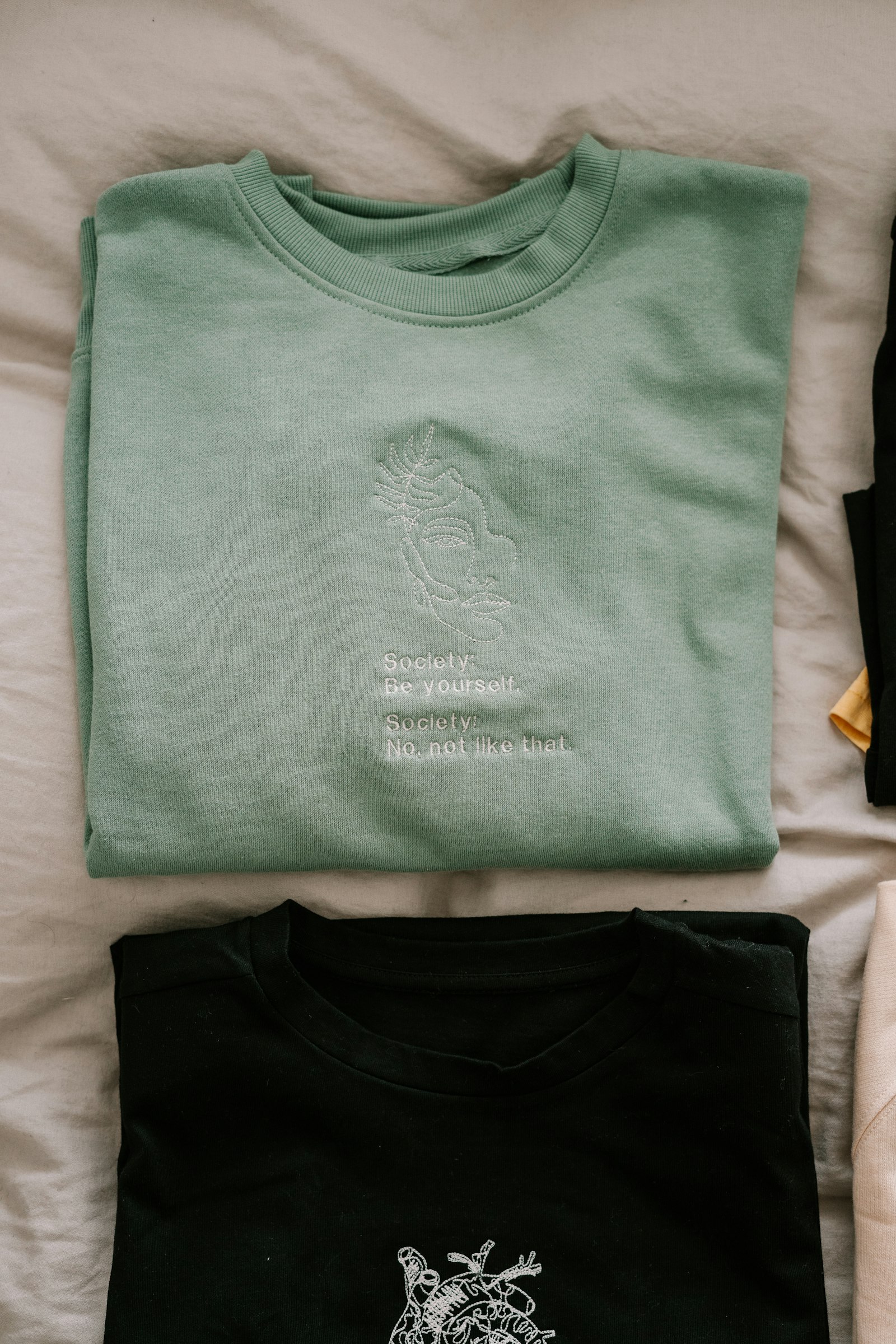
Embroidery is priced by stitch countrather than by ink colour, so the density of your design matters more than how many colours are in it — a filled crest costs more to run than an outlined one of the same width. On top sits the one-time digitizing.
In the online design studio the per-piece price drops at 12, 24, 50 and 100 pieces, and every colour of the same garment in one order counts toward the same price break. Orders in the hundreds are quoted directly through the free quote form, by email or by phone, and get the same free mockup and human designer check as a single piece.
Standard turnaround on clothing is 1–2 weeks.Most apparel orders can rush — 4–5 business days or 1–3 business days, priced at checkout. A first embroidered run includes digitizing, so if you have a hard date, give us the date.
You can place your logo on a real hoodie in the free studio with no account and no deposit to see it at 3.5-inch chest scale before committing — and every order is reviewed by a human designer before it goes to press. A person checks artwork resolution, colour, sizing and placement, and either fixes the file or tells you what is wrong — it is not an automated preflight. On embroidery that review is where most designs get simplified, which improves them and lowers the stitch count at once.
Frequently asked questions
Is embroidery better than printing on a hoodie?
For durability and for looking like uniform rather than merchandise, yes. Thread is worked through the fabric instead of bonded to the surface, so there is no layer to crack. For detail and scale, no — below roughly a quarter inch stitched letters fill in, and a full 11-inch back design is a print job rather than a stitch job. Most orders use both: stitched chest, printed back.
What is digitizing and do I pay it every time?
Digitizing converts your logo into a stitch file — paths, stitch types, directions and densities — because an embroidery machine reads stitch paths rather than images. It is a one-time setup per design and you do not pay it again on reorders, which is why embroidery suits businesses that come back rather than one-off buyers.
How small can an embroidered logo be on a hoodie?
The standard left-chest size is 3.5 inches wide, and the practical floor for any element inside it is about a quarter inch. Work out how tall your smallest feature is at 3.5 inches — if it is under that, it will fill in. The usual fix is to drop a tagline or thicken thin strokes, which also lowers the stitch count and the price.
Can you embroider a large design on the back of a hoodie?
You can, but you usually should not. An 11-inch stitched back panel runs an enormous stitch count, adds real weight to the garment and costs accordingly. Backs are where printing wins. A common split is an embroidered left chest with a printed back, which gets you the premium look where people see it up close.
Does embroidery work on fleece?
Yes, with preparation. An 8 oz Heavy Blend fleece is soft and stretchy, so the area is stabilised from behind before stitching, and the brushed nap means fine detail can sink in. That is why left chest — flat, seam-free and away from the pocket — is the placement fleece handles best.
How much do embroidered hoodies cost?
Embroidery is billed by stitch count rather than colour count, so density drives the price more than palette. Digitizing is a separate one-time setup. Quantity then moves it: the per-piece price drops at 12, 24, 50 and 100 pieces, and every colour of the same hoodie in one order counts toward the same break. Every quote is free and includes a mockup.
Can I reorder a few embroidered hoodies later and have them match?
Yes, and that is the main practical advantage. The stitch file is kept, so a reorder uses exactly the same file and matches the original. A second run of three hoodies for new staff skips the setup entirely — something a screen-printed order cannot do as cheaply.
Design it yourself. A human designer still checks every order.
Our free studio gives you the price and the mockup in the browser. What it doesn't do is print your file blindly — every order is reviewed by a real designer before it reaches the press.
- Step 1You design it — free
Upload your logo, drop it on a real garment, set the size and placement, pick colours and quantities. No account, no deposit, no waiting on a reply.
- Step 2A human designer checks it
Before anything prints, one of our designers opens your file and checks resolution, colours, sizing and placement. If it won't print well, we fix it or tell you exactly what's wrong — a person, not an automated preflight.
- Step 3You approve, then we print
You get the corrected mockup back on the actual product. Nothing goes to press until you say yes — then it's ready in 1–2 weeks, or in 1–3 business days with a rush.
Stitch your logo on a hoodie
See your mark at 3.5-inch chest scale on a real Gildan 18500 before you commit. Digitizing is a one-time setup you reuse on every reorder — including a three-piece top-up months later.
Every order is reviewed by a human designer before it goes to press. A person checks artwork resolution, colour, sizing and placement, and either fixes the file or tells the customer what is wrong — it is not an automated preflight.