
Custom Hats in Canada: Caps, Logos and Cost
The question most sites skip: does the cap have a seam up the front? Ours does not. The YP Classics 6506, and why embroidery beats print on a curved crown.
- The cap we stock
- Yupoong / Flexfit YP Classics 6506 Retro Trucker — a mid-profile five-panel with a structured, buckram-backed front, mesh back panels, a pre-curved visor and an adjustable snapback.
- Why that front panel matters
- The 6506 has a seamless single front panel. There is no centre seam for a logo to straddle, which is the main thing that makes a cap easy or hard to decorate well.
- Fabric
- 74% polyester / 26% cotton structured front and crown, with a mesh back. Yupoong changed this from 65/35, so mixed stock may ship — if an exact composition matters to you, ask before you order.
- Fit
- One size fits most, adjustable plastic snapback, fitting hat sizes 6⅝″–7⅝″ (roughly a 21″–24″ head). Crown height is 3.5″.
- Embroidery is the default
- On a structured cap front, stitched thread holds its shape where a print can crack along the curve. Digitizing — converting your logo to a stitch file — is a one-time setup you reuse on every reorder.
- Volume pricing
- Large orders get volume pricing. In the online design studio the per-piece price drops at 12, 24, 50 and 100 pieces, and every colour of the same garment in one order counts toward the same price break.
- Turnaround
- Standard turnaround on clothing is 1–2 weeks. Most apparel orders can rush — 4–5 business days or 1–3 business days, priced at checkout — and every order shows the dates it will be ready before you pay.
What you are actually choosing when you order custom hats
A hat order looks simple and hides four decisions: the style, whether the front is structured or soft, the decoration method, and the quantity. Three of those are settled by the cap you pick, which is why the blank matters more here than it does on a t-shirt.
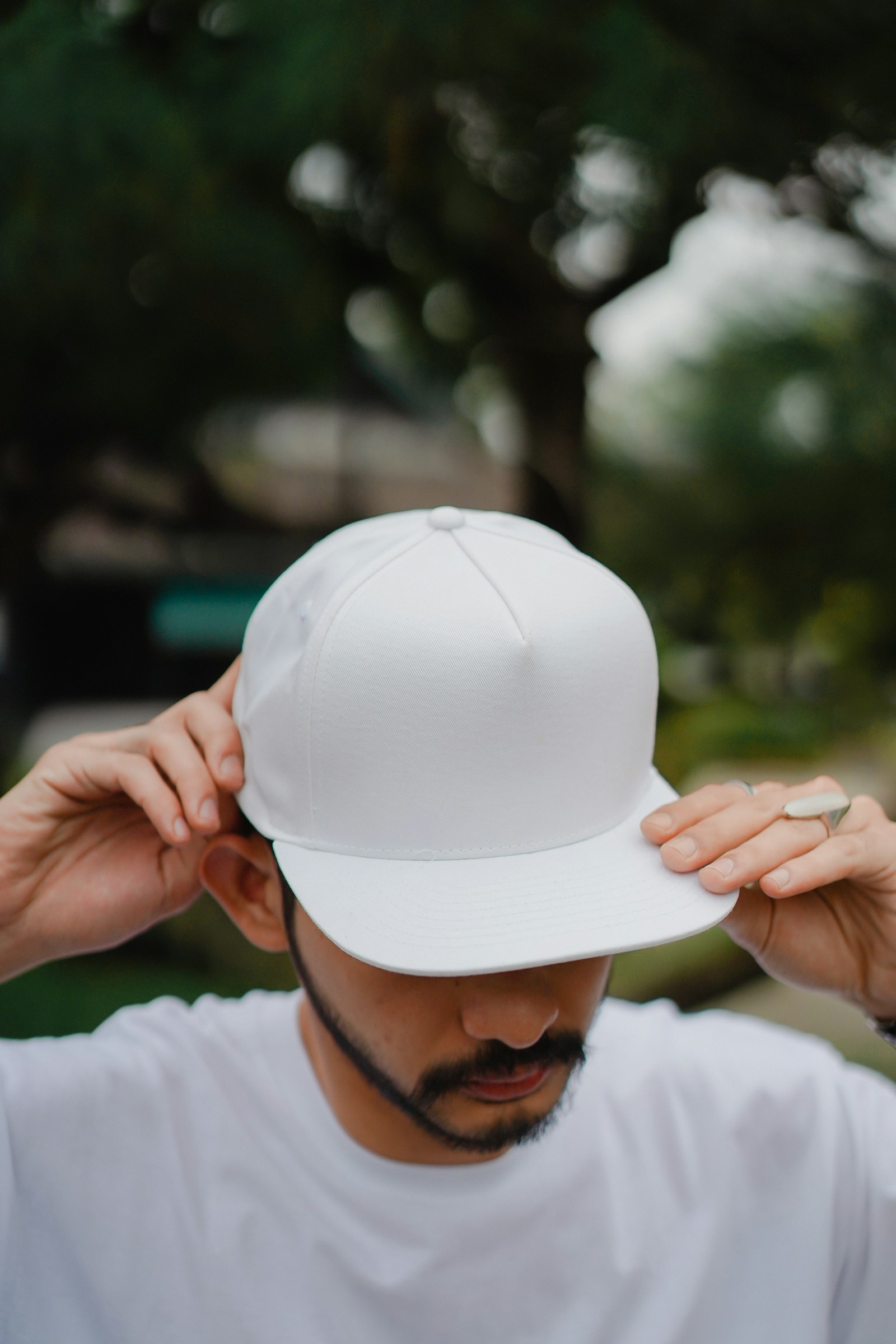
The one nobody mentions until it is too late is the front seam. A six-panel cap has a seam running up the centre of the forehead. Embroidery can cross it, but the stitches sit differently either side and a logo with a straight vertical edge or centred type will show it. A five-panel or a trucker has a seamless single front panel— one flat canvas, nothing to straddle. If your logo is wide, symmetrical or contains text, that difference decides whether the finished hat looks sharp or slightly off.
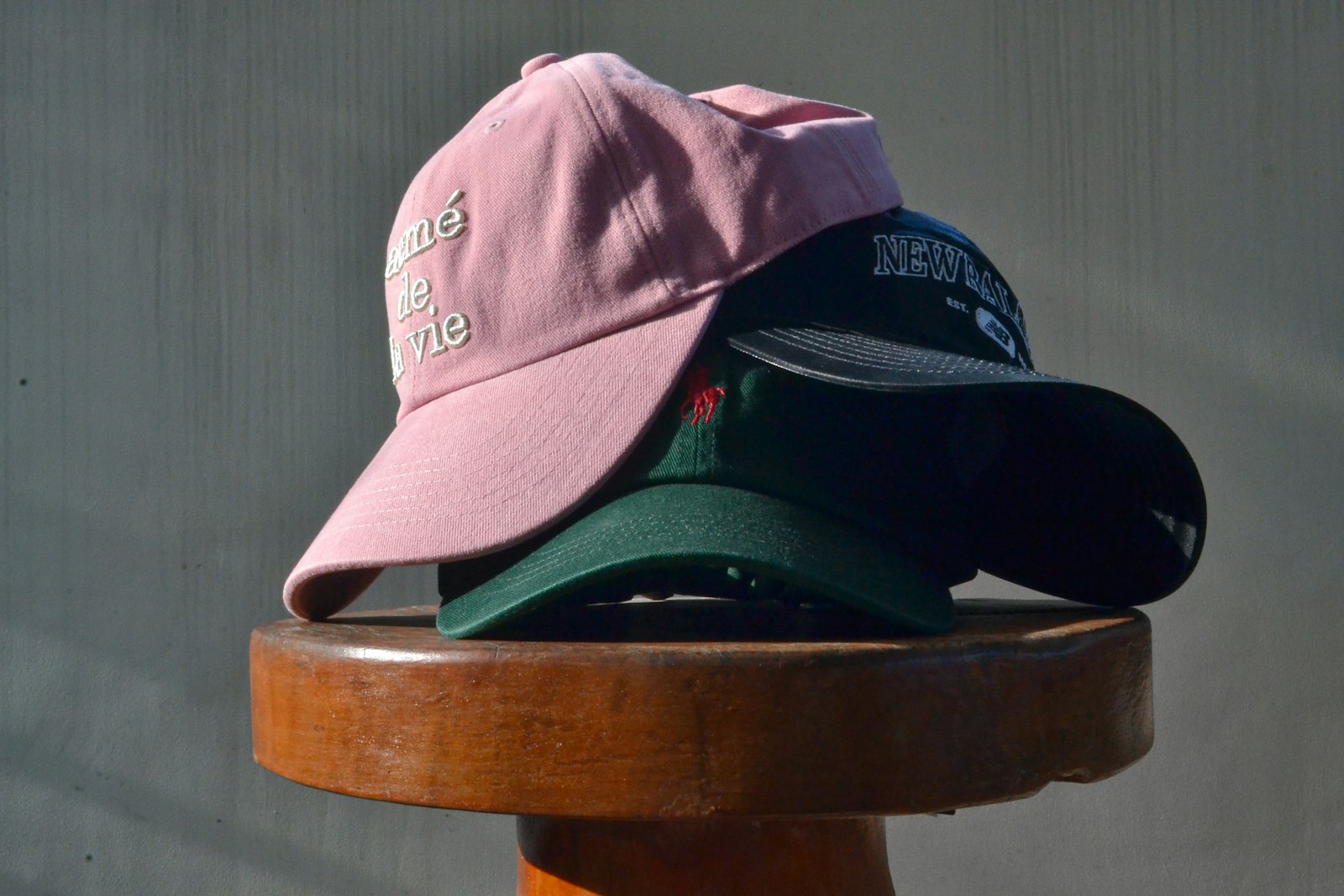
The cap we stock, and why
Our standard blank is the Yupoong / Flexfit YP Classics 6506 Retro Trucker. It is a mid-profile, five-panel trucker cap with a structured front, breathable mesh back panels, a pre-curved visor and an adjustable plastic snapback. The decoration-relevant specifications, plainly:
| Spec | YP Classics 6506 |
|---|---|
| Front panel | Seamless, single — no centre seam |
| Structure | Hard buckram-backed, holds its shape |
| Fabric | 74% poly / 26% cotton front & crown, mesh back |
| Crown height | 3.5″ (mid profile) |
| Fit | One size, snapback, 6⅝″–7⅝″ (≈21″–24″ head) |
One honest caveat on the fabric: Yupoong changed the 6506 front and crown from a 65/35 blend to 74/26, and mixed stock may still ship. It makes no difference to how it embroiders. If an exact composition matters for a spec sheet or a tender, say so before you order and we will confirm what is actually on the shelf.
That “hard buckram” is the stiffener behind the front panel. Buckram is a stiffened cloth, and on a cap it is what keeps the front standing up instead of collapsing onto your forehead. It is also what gives an embroidery machine something firm to stitch against, which is why structured caps take a crisp logo and soft ones do not.
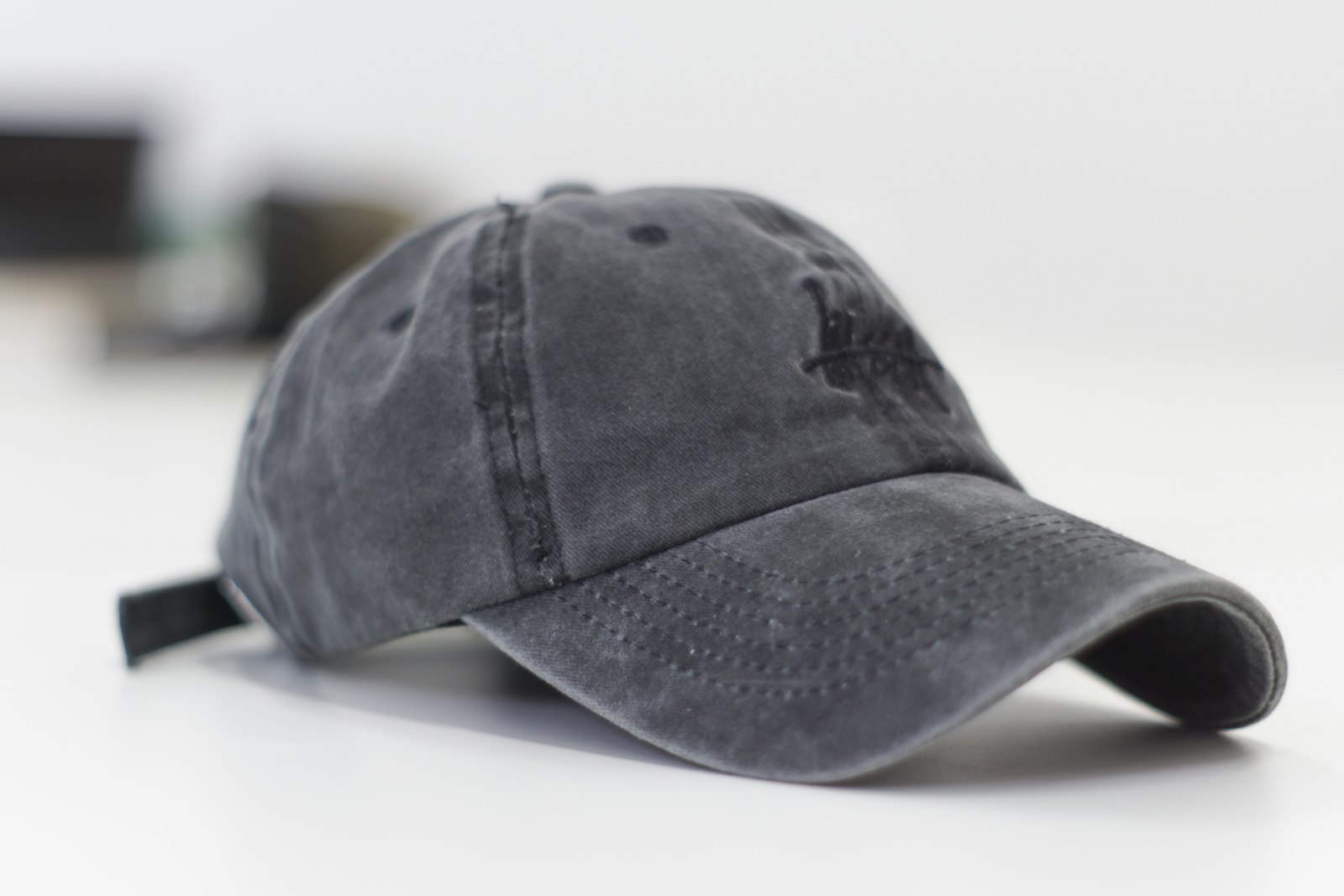
Why embroidery is the default on a cap
On apparel we weigh printing against stitching. On headwear the answer is nearly always embroidery, and the reason is geometry rather than taste.
A cap front is curved in two directions and stiffened underneath. A surface print has to sit on that curve and flex every time the hat is pulled on, which is where cracking starts. Machine embroidery is thread worked into the fabric, so there is no surface layer to crack and the logo survives as long as the cap does.
Embroidery needs digitizingfirst — your logo converted into a stitch file that tells the machine stitch types, directions and densities. Your logo is not already one; a machine reads stitch paths, not images. It is a one-time setup per design that you reuse on every reorder, which is why embroidery gets better value the more often you come back rather than the more pieces you buy at once. Our digitizing explainer covers what happens to your file.
The limit is detail. Below roughly a quarter inch, stitched letterforms fill in and stop being legible — and a cap front is a small canvas to begin with. A bold mark embroiders beautifully; a logo with a tagline underneath usually loses the tagline. That is the single most common change our designers suggest on a hat order.
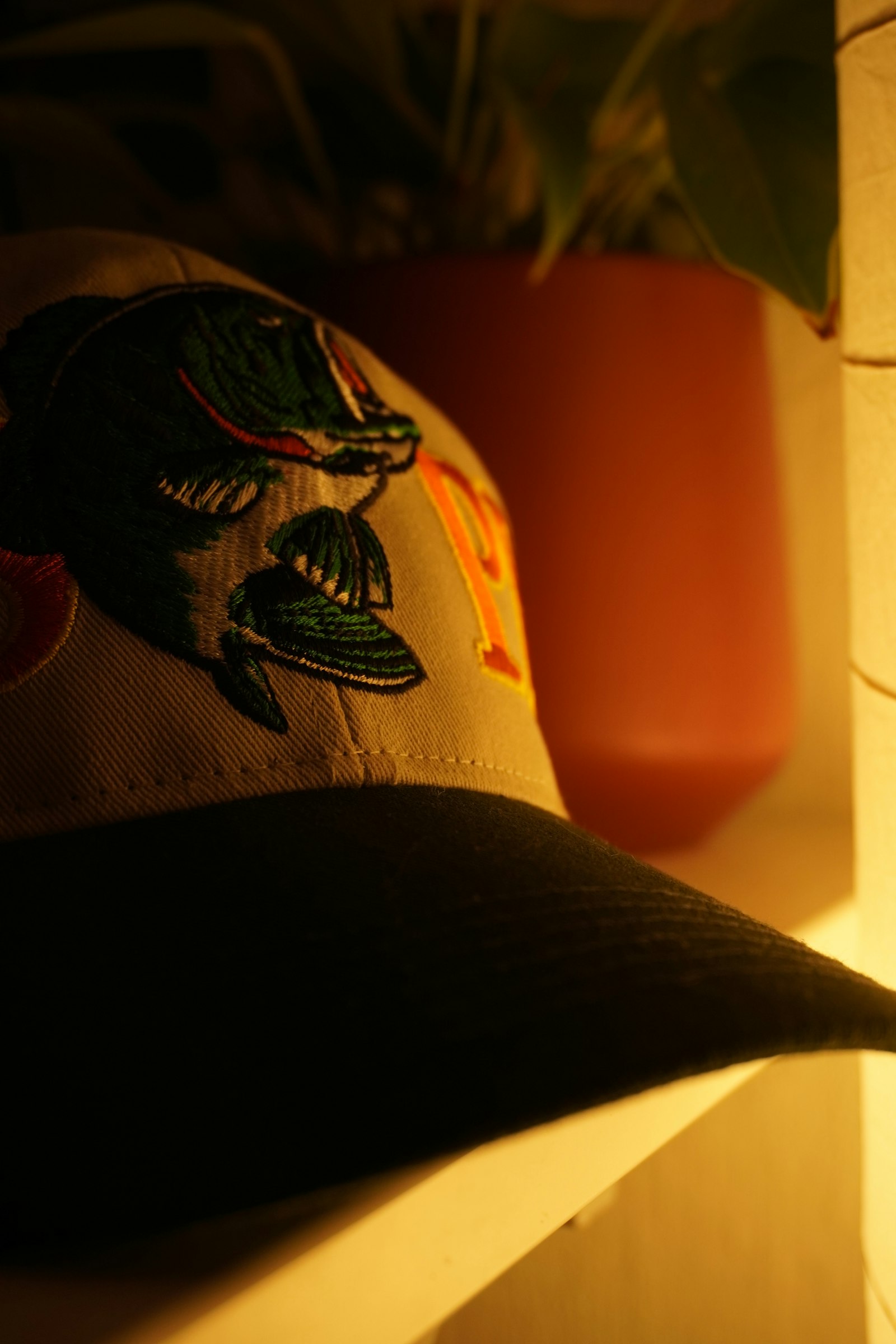
Where a design genuinely cannot be stitched — a photograph, a fine gradient, a dense illustration — the usual answer is a patch: made separately at the detail the technique allows, then applied to the cap. Our guide to patch types compares embroidered, woven, PVC and chenille, and woven in particular holds far finer detail than direct embroidery can.
Where the logo goes, measured from the brim
A small but genuinely useful detail. On a shirt we measure a logo down from the collar. On a cap we measure it up from the brim — because that is the edge your eye actually reads the position against, and the one a decorator can hold a tape to.
The positions that work on a five-panel trucker:
- Front centre. The main event, and the reason to choose a seamless front panel. Most logos live here.
- Side panel. A smaller secondary mark — a year, an initial, a sponsor. Note that on a trucker the sides are mesh, which limits dense stitching.
- Back, beside the closure. Small text or a wordmark. Space is tight next to a snapback.
- Visor. Possible, and genuinely harder — the brim is stiff and curved. Ask rather than assume.
Height on the front panel is constrained by the crown. On a 3.5″ mid-profile crown there is less vertical room than on a high-profile cap, so a tall logo has to come down in size while a wide one does not. If your mark is tall and narrow, that is worth raising before artwork.
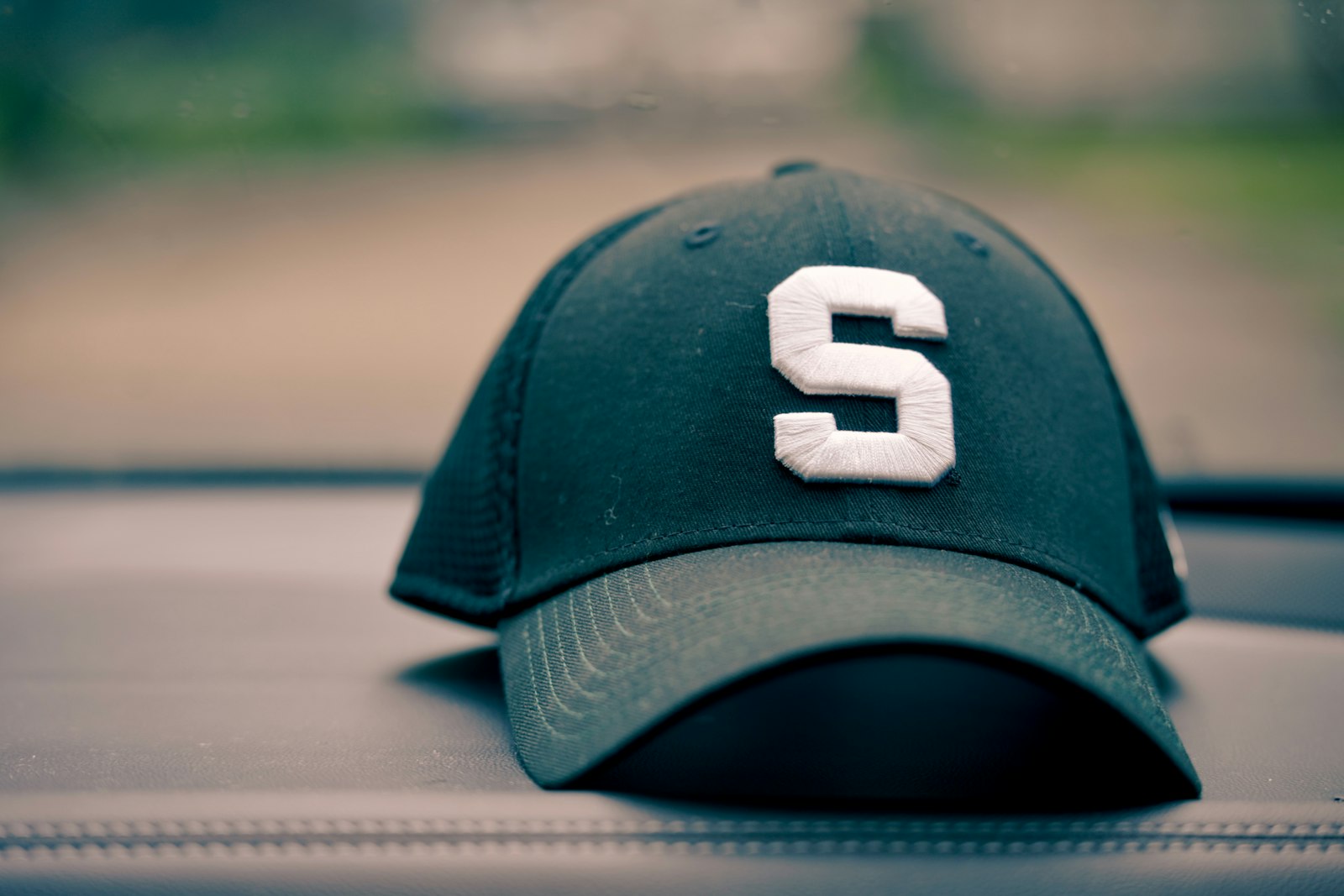
Structured or soft, and what each does to your logo
Caps split into two families and they are not interchangeable canvases.
A structuredcap — like our 6506 — has a stiffened front that stands up whether or not anyone is wearing it. Embroidery on it stays flat and square, because the panel does not move under the needle. This is the right choice for a business logo, a team crest, anything that has to look consistent across fifty hats.
An unstructuredcap — the soft, slouchy “dad hat” shape — has no stiffener. It is more comfortable and reads as more casual, and a dense logo on it can pucker the fabric because there is nothing firm behind the stitches. Designs for soft caps want to be smaller and lighter: a small chest-sized mark rather than a full front panel.
Neither is better. A brewery selling merchandise usually wants unstructured; a construction company outfitting a crew usually wants structured. We stock the structured trucker and quote soft styles, which is covered below.
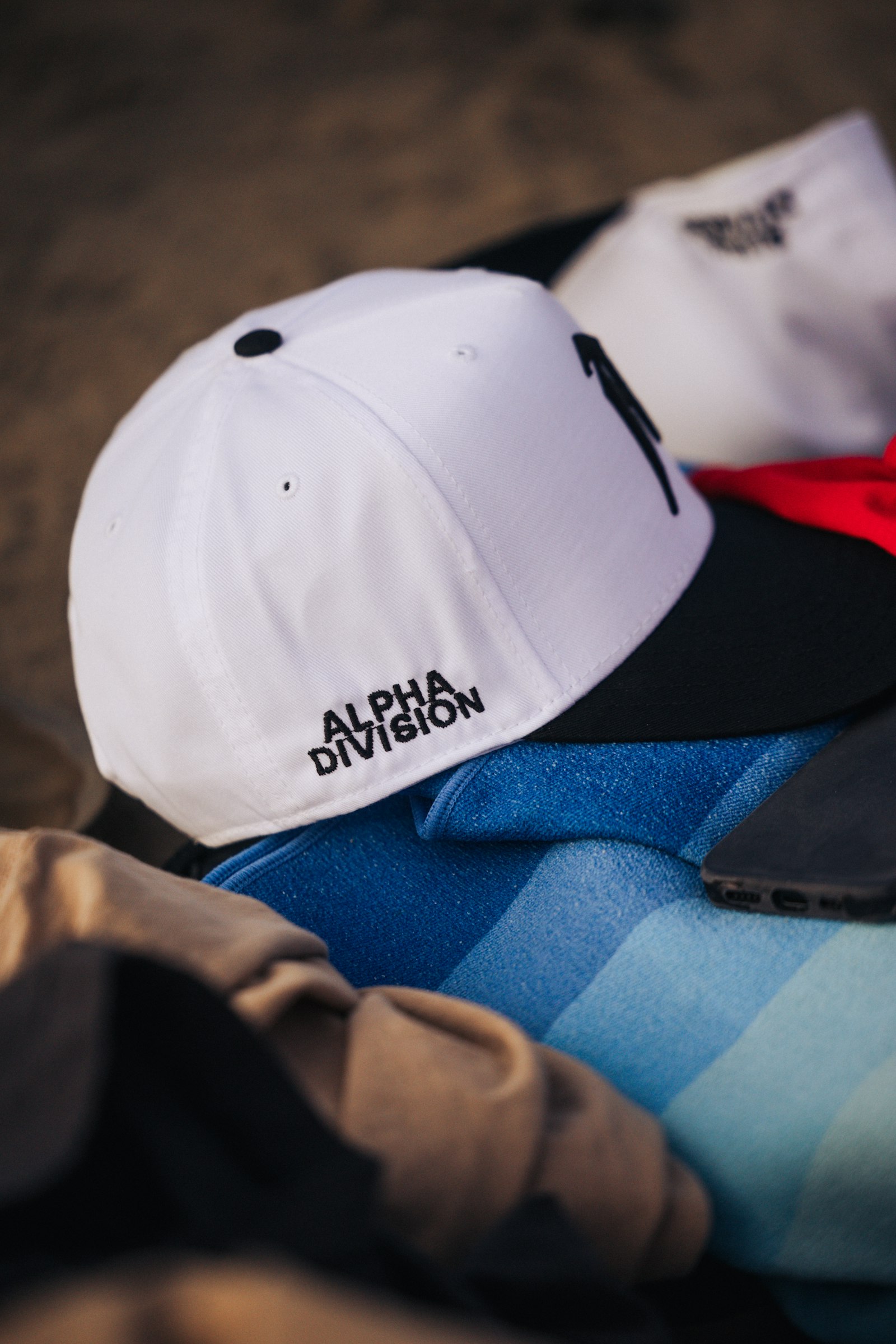
Other hat styles, and which ones are quoted
The 6506 is what we hold, so it is what you can build and price yourself online. Everything else is a real option, just a quoted one — we source the blank for the order rather than keeping it on the shelf. Being clear about that up front saves a disappointing conversation later.
- Dad hats — unstructured, low profile, curved brim. The default for retail-feel merch.
- Snapbacks — structured, flat brim, high crown. The most vertical room for a tall logo.
- Five-panels and camp caps — soft, flat front panel, outdoorsy.
- Bucket hats — no front panel at all. The logo goes on the side of the crown, which is a different design problem entirely.
- Toques and beanies — a separate product with its own rules; see our toque guide.
Our cap styles compared page goes through which shape suits which job, and the trucker hat guide covers the one we stock in detail, including leather patches.
What custom hats cost, and where quantity moves the price
Embroidery is priced by stitch count, not by colour the way screen printing is. A simple wordmark is a few thousand stitches; a dense crest with a filled background can be several times that, and it costs proportionally more to run. Simplifying a logo for cap scale often saves money as well as looking better — a happy coincidence we point out regularly.
On top of that sits digitizing, the one-time setup, and then quantity. In the online design studio the per-piece price drops at 12, 24, 50 and 100 pieces, and every colour of the same garment in one order counts toward the same price break. For hats that clause is worth real money, because caps are usually ordered in several colourways at once — black for the crew, white for the counter, camo for the golf day. Those are one quantity, not three orders.
Orders in the hundreds are quoted directly through the free quote form, by email or by phone, and a large order gets the same free mockup and the same human designer check as a single cap. If hats are one line of a bigger kit, the corporate gifting guide covers planning the whole order backwards from a date.
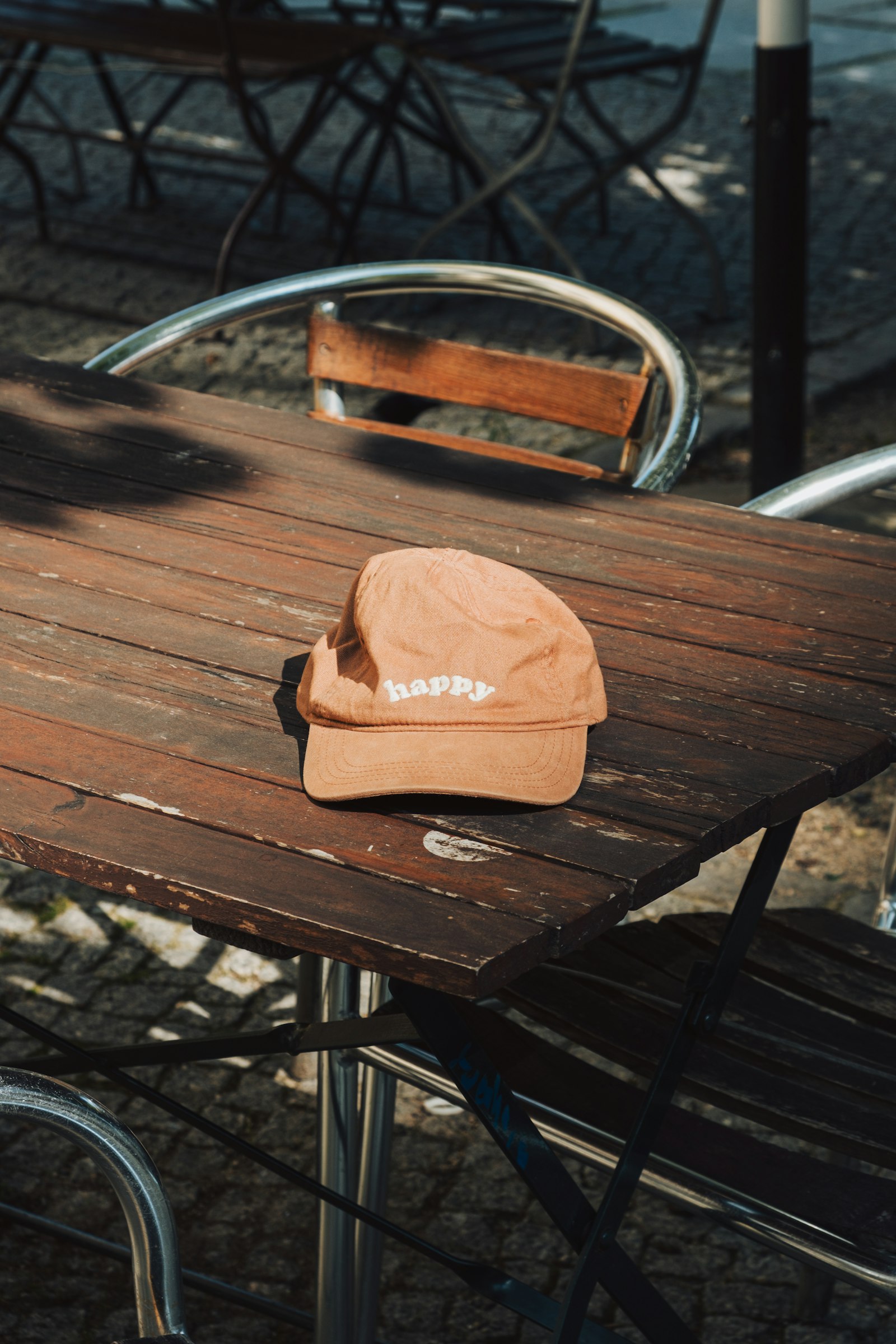
Designing it yourself, and the person who checks it
You can put your logo on a real cap in our free design studio with no account and no deposit — place the mark, see it at cap scale, pick your quantity and order online while the price updates as you go. Caps sit alongside tees, long sleeves, hoodies, crewnecks and polos in the same studio, so a full kit can be built in one session.
What self-serve does not mean is that software decides whether your logo works at this size. Every order is reviewed by a human designer before it goes to press. A person checks artwork resolution, colour, sizing and placement, and either fixes the file or tells you what is wrong — it is not an automated preflight. On headwear that review earns its keep more than anywhere else, because the canvas is small and the usual verdict is that something has to get bigger or come out.
Send whatever you have — a phone photo, a PNG off your website, a PDF, an AI-generated mark. If it needs redrawing we redraw it as vector, which is what our logo vectorization service does as a standalone job. Nothing goes to the machine until you have approved a free mockup.
Frequently asked questions
What is the minimum order for custom hats in Canada?
Embroidery has no hard minimum, so a small run is a normal order — but digitizing, the one-time conversion of your logo into a stitch file, is a setup cost. That means very small embroidered runs cost more per piece than a larger one. The per-piece price then drops at 12, 24, 50 and 100 pieces, and every colour of the same cap in one order counts toward the same break.
Can you print on hats instead of embroidering?
Sometimes, but embroidery is the default and usually the right answer. A cap front is curved in two directions and stiffened underneath, so a surface print flexes every time the hat is pulled on, which is where cracking starts. Where a design genuinely cannot be stitched — a photograph, a fine gradient — the usual solution is a separately made patch applied to the cap rather than a direct print.
Why does the seam on the front of a cap matter?
A six-panel cap has a seam running up the centre of the forehead. Embroidery can cross it, but the stitches sit differently either side, so a logo with a straight vertical edge or centred type will show it. The cap we stock, the YP Classics 6506, has a seamless single front panel — one flat canvas with nothing to straddle, which is why it is a favourite for decoration.
Will one size really fit everyone?
The 6506 is one-size-fits-most with an adjustable plastic snapback, rated for hat sizes 6⅝″ to 7⅝″ — roughly a 21″ to 24″ head. That covers the large majority of adults. If you are ordering for a group with specific fit needs, or you want a fitted rather than adjustable cap, tell us and we will quote a style that suits rather than assuming the snapback works for everyone.
How small can the text on a cap logo be?
Below roughly a quarter inch, stitched letterforms fill in and stop being legible, and a cap front is already a small canvas. In practice that means a bold mark embroiders beautifully and a logo with a tagline underneath usually loses the tagline. Our designers will tell you before you pay rather than after — simplifying for cap scale normally lowers the stitch count and the price at the same time.
Do you stock other hat styles?
We hold the YP Classics 6506 trucker, which is what you can build and price yourself online. Dad hats, snapbacks, five-panels, bucket hats and other styles are all available, but they are quoted — we source the blank for the order rather than keeping it on the shelf. Toques are a separate product with their own guide.
How long do custom hats take?
Standard turnaround on clothing is 1–2 weeks. Most apparel orders can rush — 4–5 business days or 1–3 business days, priced at checkout — and every order shows the dates it will be ready before you pay. A first embroidered order includes the digitizing step, so if you have a hard date, say the date rather than asking how fast we are.
Design it yourself. A human designer still checks every order.
Our free studio gives you the price and the mockup in the browser. What it doesn't do is print your file blindly — every order is reviewed by a real designer before it reaches the press.
- Step 1You design it — free
Upload your logo, drop it on a real garment, set the size and placement, pick colours and quantities. No account, no deposit, no waiting on a reply.
- Step 2A human designer checks it
Before anything prints, one of our designers opens your file and checks resolution, colours, sizing and placement. If it won't print well, we fix it or tell you exactly what's wrong — a person, not an automated preflight.
- Step 3You approve, then we print
You get the corrected mockup back on the actual product. Nothing goes to press until you say yes — then it's ready in 1–2 weeks, or in 1–3 business days with a rush.
Put your logo on a real cap
Place your mark on a YP Classics 6506 in the free studio, see it at cap scale and watch the per-piece price drop at 12, 24, 50 and 100. Digitizing is a one-time setup you reuse on every reorder — and a real designer checks the file before a needle moves.
Every order is reviewed by a human designer before it goes to press. A person checks artwork resolution, colour, sizing and placement, and either fixes the file or tells the customer what is wrong — it is not an automated preflight.