
Custom Patches: Embroidered, Woven, PVC and Chenille Compared
Four patch types, judged honestly — embroidered thread that loses detail below a quarter inch, woven for fine text and crests, moulded PVC for outdoor and tactical, chenille for varsity letters. Plus the parts nobody explains: merrowed vs laser-cut borders, and why iron-on backing will not survive a work jacket.
- Four patch types
- Embroidered (raised thread, classic), woven (flat, far finer detail), PVC/rubber (moulded, waterproof), chenille (fuzzy varsity letters, large and simple only).
- Detail floor
- Embroidered thread stops resolving cleanly below roughly 1/4 inch of letter height. Woven patches hold text and thin lines down to about 1/8 inch, which is why crests and small logos go woven.
- Backing choice
- Iron-on for casual cotton, sew-on for anything that has to survive, hook-and-loop for swappable ID, peel-and-stick adhesive for one-day temporary use. Iron-on alone will not hold on a work jacket.
- What drives price
- Area and stitch count, not colour count. Doubling a patch's width roughly quadruples its area. Embroidered and chenille carry a one-time digitizing setup; woven builds straight from the artwork file.
- Human designer check
- Every order is reviewed by a human designer before it goes to press. A person checks artwork resolution, colour, sizing and placement, and either fixes the file or tells you exactly what is wrong — it is not an automated preflight.
- Free design studio
- Design free at yayaprints.ca/mockup-creator — upload a logo, place it on a real garment at real size, choose colours and sizes, and order online without emailing or phoning anyone.
- Turnaround
- In-house decoration runs 2–5 business days after mockup approval and payment. Patches are manufactured, so patch runs carry their own production lead time, confirmed in writing on the quote before you pay.
Why a patch instead of decorating the garment directly
A patch is a small, separately manufactured piece of decoration that gets attached to something else. That extra step sounds like a disadvantage until you notice what it buys you: the decoration stops being permanently married to one garment.
Patches are swappable. A hook-and-loop name tape comes off when the person changes roles, changes departments, or leaves. Direct embroidery on the same jacket means the jacket leaves with them or gets retired. For any crew where the roster moves, that difference is the whole argument.
Patches outlive garments.A work jacket has a finite life. If the logo is a sewn-on patch, the jacket gets replaced and the patch moves, or a fresh patch goes on a fresh jacket with no new setup charge. If the logo is stitched into the shell, the garment's death is the logo's death.
Patches go where a machine cannot. Embroidery needs the fabric held flat in a hoop. Backpacks, duffels, gear panels, thick leather, structured bags, curved equipment covers and anything with a lining sewn shut are all difficult or impossible to hoop. A patch is decorated flat on a bench and then attached however the item allows. If you are weighing thread against ink on a normal garment, our comparison of screen printing versus embroidery covers that decision separately.
Patches make one artwork serve many products. One patch design can land on caps, jackets, aprons, bags and vests with an identical look, where direct decoration would mean three different setups and three slightly different results. That is a real argument for uniform programs.
The honest counterweight: at high volume on a single garment type, direct decoration is usually cheaper per unit, because you are not paying to manufacture a separate object and then attach it. A patch also has a visible edge and a stiffer hand than a stitched logo in the fabric. If you want 200 identical polos with a left-chest logo, embroider the polos. Read our custom patches page for what we make, and if you would rather see a decorated garment before committing to anything, the free design studio will put your logo on a real product in a couple of minutes.
Embroidered patches: the classic, and where it stops working
An embroidered patch is thread stitched onto a twill backing fabric, usually with a stabiliser behind it and a finished edge around it. It is the patch most people picture: slightly raised, textured, with the thread catching light at different angles across the design.
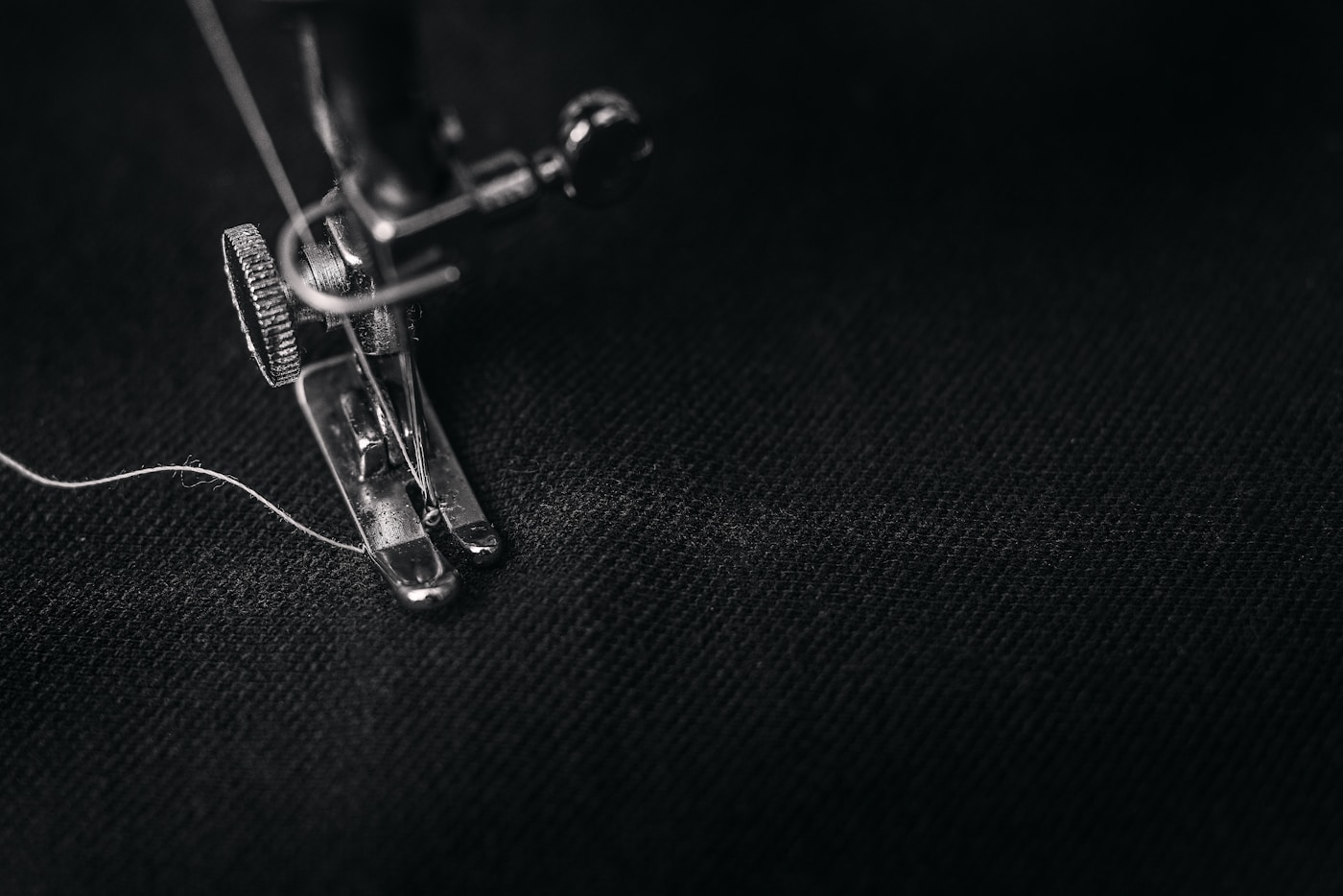
Its limit is physical, not artistic.Each stitch is a real strand of thread with real width. Below roughly a quarter inch of letter height, the strands crowd each other, counters fill in, and a lowercase "e" becomes a blob. Thin outlines and single-pixel rules disappear the same way. A good digitizer will thicken, simplify or delete elements to keep the patch legible — and that is the right call, but it does mean the finished patch is an interpretation of your logo, not a photocopy of it.
Colours are cheap; detail is expensive.Unlike screen printing, adding a fifth thread colour costs almost nothing. Adding fine detail costs stitches, and stitches are the price. That inverts most people's instincts about what makes a design "complicated."
You can also choose how much of the patch is covered in thread. Partial coverage leaves the twill visible as the background colour, which reads as classic and costs less; full coverage stitches edge to edge for a denser, more uniform face. Both are legitimate, and the twill colour becomes a design decision rather than a default.
Pick embroidered for: team and club crests, workwear name and company patches, scout and cadet badges, cap fronts, and anything where the raised, tactile look is part of the point. It is the same craft as our embroidery service, just done on a separate piece of fabric instead of directly on the garment — which is also how most decorated caps and hats get a clean front logo without fighting the seam.
Woven patches: flat, fine, and better for small text
A woven patch is made on a loom. Instead of stitching thread on top of a base fabric, the design is woven into the fabric itself using much finer threads. The result is flat, thin, flexible, and dramatically more detailed than embroidery at the same size.
This is the type most buyers have never heard of and often should have used. Woven patches will hold text and line work down to roughly an eighth of an inch. A crest with a motto ribbon, a founding date, a species of tree and four heraldic quarters is a woven patch. Attempt it in embroidery at three inches and you will get a pleasant blur.
The trade-off is feel. Woven patches are smooth and label-like rather than raised and textured. Some people read that as refined and modern; others read it as less substantial than a chunky embroidered badge. Neither reading is wrong — it is genuinely a taste decision, and it is worth holding both in your hand before you commit to a few hundred pieces.
Pick woven for: detailed crests and heraldry, logos containing a tagline or URL, anything under about two inches that contains words, patches destined for a thin or lightweight garment where a stiff embroidered badge would sag, and reproductions where colour blends and gradients matter more than texture.
One practical tip: if your logo has both a bold mark and fine type, you can split the problem. Put the bold mark on an embroidered patch and drop the fine type entirely, or go woven and keep everything. Shrinking the type to fit an embroidered patch is the option that always disappoints.
PVC and rubber patches: moulded, waterproof, outdoor
PVC patches are not stitched or woven at all. Soft PVC is injected or poured into a mould in layers, one colour at a time, and cured into a flexible rubber badge. That production method is the reason they behave so differently from fabric patches.
They are genuinely waterproof.Not water-resistant — waterproof. Rain, snow, sweat, salt, mud and solvents wipe off. They do not fray, they do not fade the way thread does under UV, and they take abrasion better than any fabric patch. On a rescue bag, a marine jacket, a snowmobile suit, a hi-vis vest or anything that lives outdoors through a Canadian winter, that matters more than texture does.
They hold hard edges and 3D relief. Because the shape is moulded, you get crisp boundaries between colours, raised and recessed levels, and colour matched to a reference chip rather than approximated from a thread card. Logos with precise geometry survive better here than in any thread-based method.
The trade-offs are real. PVC looks like PVC — there is no way to make it read as heritage or handmade. It is heavier than a fabric patch of the same size, so it can drag on thin material. It needs a mould made before the first unit exists, which is a genuine setup cost and makes short runs proportionally expensive. And it cannot be ironed on; PVC is attached by stitching, hook-and-loop, or an adhesive appropriate to the surface.
Pick PVC for:tactical and first-responder gear, outdoor and marine use, equipment and pack panels, hi-vis and safety wear — the same population covered in our hi-vis workwear guide — and any badge that will be repeatedly soaked and then expected to still look like a logo.
Chenille patches: fuzzy varsity letters, big and simple only
Chenille is the thick, fuzzy, looped yarn on a letterman jacket. It is stitched into a felt base in a dense pile that stands up off the surface, usually outlined with a chain stitch and finished with a heavy border. Nothing else looks like it, and nothing else feels like it.
It has one hard constraint: scale.Chenille yarn is thick, so the smallest feature it can render is large. A single varsity letter at three inches or more is its natural home. Small type, thin outlines, gradients, small icons and anything with interior detail are all off the table. If your design would only work at half an inch, chenille is not the method — that is not a limitation of a particular supplier, it is what the yarn is.
Chenille is also almost always sewn on rather than ironed on. The patch is heavy, the felt base is thick, and the garments it goes on — wool-body varsity jackets, heavyweight fleece — are exactly the fabrics adhesive struggles with. Budget for the stitching.
Pick chenille for: varsity and letterman jackets, team award patches, school and league letters, and retro-styled streetwear where the texture is the design. If you are specifying jackets for a Canadian season anyway, our guide to custom jackets for Canadian winter covers the garment side of that decision.
Borders: merrowed, laser-cut and hot-cut
Almost nobody explains the border, and it changes both the look and the shapes you are allowed to use. There are three common finishes.
- Merrowedis the thick, ropey overlock stitch around the rim of a classic patch. It is durable, it reads as traditional, and the border colour is a deliberate design element. Its constraint is geometry: merrowing runs a continuous thread around the edge, so it only works on simple convex outlines — circles, ovals, shields, rectangles with rounded corners. It cannot follow the outline of a maple leaf or a wordmark.
- Laser-cut uses a laser to cut and seal the edge, so it can follow any outline at all, including the exact silhouette of a logo, interior cut-outs and thin points. The finished edge is thin and clean rather than ropey. This is what you use when the shape is the design.
- Hot-cutis a heat-sealed die cut — the standard, economical finish on twill patches. It follows moderately complex shapes, sits flatter than merrowing, and leaves a slight sheen at the edge where the material has been fused. It is a perfectly good default when the border is not meant to be noticed.
The practical rule: decide the border before you finalise the artwork, not after. A logo drawn for a laser-cut silhouette rarely survives being squeezed into a merrowed circle, and a merrowed shape can be designed to look intentional rather than like a compromise.
Backing: iron-on, sew-on, hook-and-loop and adhesive
Backing is the single most common source of disappointment with patches, because it is usually chosen last and cheaply. Here is what each one is actually for.
Iron-on (heat-seal) backing is a film of glue on the back that melts under a household iron or a heat press. It is convenient, and it works acceptably on smooth cotton and cotton-rich fabrics: casual tees, hoodies, canvas tote bags, caps. It will not survive a work jacket. Nylon and coated shells cannot take the heat needed to bond it, waterproof membranes are damaged by that heat, heavy laundering and abrasion peel the corners up first, and once a corner lifts the rest follows fast. Treat iron-on as a convenience for light-duty casual wear, or as a way to hold a patch in place while it gets stitched.
Sew-on— meaning a plain back with no adhesive — is the correct answer for anything that matters. Thread does not care about fabric type, temperature or laundry cycles. Every chenille patch, every PVC patch on a garment, every badge on workwear and every patch on a shell jacket should be sewn. Yes, it adds labour. It also removes the single biggest failure mode.
Hook-and-loop (velcro) backing is for identification that has to change. The loop side gets sewn onto the garment once; the hook side is on the back of the patch. Name tapes, role and rank markers, department tags, contractor and site badges, and event-day crew identifiers all belong here. Anyone running a uniform program with staff turnover should look hard at this: it turns re-badging a whole crew into a five-minute job instead of a re-order. It pairs naturally with staff uniforms where the garment outlasts the person wearing it.
Peel-and-stick adhesive backing is temporary and should be treated as such. It is excellent for trade shows, conference badges, one-day volunteer crews and product samples, and it is not laundry-safe. Do not specify it for anything that will be washed.
Plastic backingis a stiffener rather than an attachment method. A large patch — a jacket back, for instance — will ripple and curl without it. If your patch is bigger than about four inches, ask for it.
If you are not sure which combination your garment needs, tell us what the item is and how it gets washed. That answer alone usually settles it, and you can start by mocking the garment up in our online studio so the conversation is about a real product rather than a description of one.
Size, stitch count and what actually drives the price
Patch pricing confuses people because it does not behave like print pricing. Three things move the number.
Area, and it compounds.Patches are quoted on size, and area grows with the square of the dimension. A four-inch patch is not twice a two-inch patch — it is roughly four times the material and four times the stitching. Trimming half an inch off a spec is one of the few painless ways to move a quote.
Stitch count, for embroidered and chenille. Stitch count is a function of area multiplied by coverage. A patch with visible twill background and a simple mark stitches far faster than an edge-to-edge full-coverage design of the same size. This is why colour count barely matters and density matters enormously.
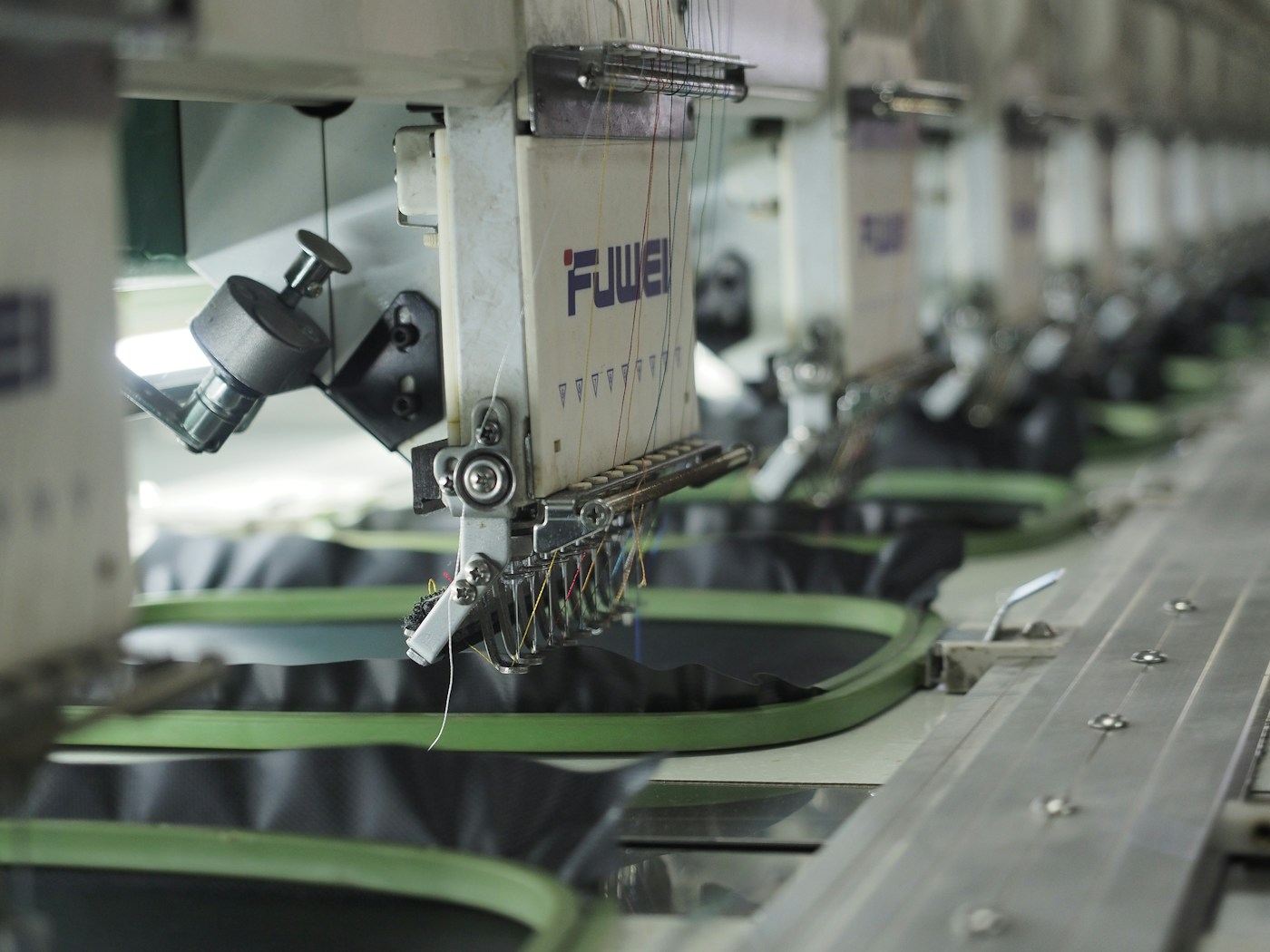
Quantity, harder than you expect. Patches are manufactured in batches, and the fixed cost of setting up that batch gets divided by the number of units. Going from 25 to 100 usually moves the per-unit price more than any other single change you can make. If a patch is going to be reordered anyway, ordering the second batch now is often cheaper than ordering it later.
Setup is one-time, and depends on the type.Embroidered and chenille patches need digitizing — the artwork has to be converted into stitch paths. That is a one-time charge per design, and reorders of the same patch do not repeat it. PVC needs a mould, which is a larger one-time cost and the main reason small PVC runs feel expensive. Woven patches build straight from the artwork file, which is part of why they are often the value option for detailed designs.
On sizing itself, work backwards from the garment. A left-chest patch typically lands around three to three and a half inches wide; a cap front is limited by the panel and the seam, so around two to two and a half inches tall is common; a jacket back can carry eight to twelve inches. Measure the actual garment before you decide, because a patch that is half an inch too wide for a cap panel cannot be rescued after it is made. Patch pricing is quoted per job rather than from a rate card, and every quote we send is free and includes a mockup.
Artwork, digitizing and the human check
Digitizing is the step nobody outside the trade knows exists. An embroidery machine does not read a logo file — it reads a stitch file: a set of paths, directions, densities, underlays and colour stops that tell each needle exactly where to go. Turning your logo into that file is skilled work, and it is where a patch is won or lost. Our full explainer on embroidery digitizing covers the mechanics; the short version is that a good digitizer redraws your logo for thread rather than tracing it.
Send the best file you have, not the one you think we want.Vector artwork — SVG, PDF, AI or EPS — is ideal because it scales cleanly and the shapes are explicit. A high-resolution PNG works. So does a phone photo of an old patch, a screenshot, or a rough sketch. If all you have is a small web image, our vectorization service rebuilds it as clean vector before anything gets digitized.
Every order is reviewed by a human designer before it goes to press.A real person looks at resolution, colour, sizing and placement, and either fixes the file or tells you exactly what is wrong — not an automated preflight that either passes you or throws an error code. For patches that check is doing specific work: flagging type that will not survive at the size you asked for, catching a shape that cannot be merrowed, and noticing that the backing you picked will not hold on the fabric you named.
Design decisions worth making before you order:
- Set a minimum letter height. A quarter inch for embroidered, an eighth for woven. Anything smaller gets removed or the patch gets bigger.
- Delete the hairlines. Thin rules, drop shadows and one-pixel outlines do not exist in thread. Thicken them or lose them deliberately, before someone else does it for you.
- Decide the outline shape early, because it determines whether merrowed is available.
- Nominate your colours.Thread and PVC are both matched to reference systems, so give us a swatch or a code rather than "the blue from our website."
If you want to see the whole thing at real size on a real garment before you spend anything, you can drop your logo onto a product and scale it in the browser — no account, no deposit, and the price updates as you go.
How to spec a patch order without a dozen emails
Most patch quotes stall because one of six facts is missing. Send all six and you get a real number back instead of a question.
- The artwork, at the best quality you have.
- The finished size, in inches, width by height — measured against the garment it goes on.
- The quantity, and whether you expect to reorder.
- The item it attaches to, by name and fabric: cotton hoodie, nylon shell, canvas apron, wool varsity jacket.
- How it gets washed, including anything industrially laundered.
- Whether it needs to come off— which is the hook-and-loop question.
We print and decorate in-house in Ottawa and ship across Canada, so nothing crosses a border and there are no customs holds or surprise duties. Standard in-house decoration runs two to five business days after you approve the mockup and pay; patches are manufactured, so a patch run carries its own production lead time and we put that in writing on the quote rather than guessing at a date.
If you already know what you want, send the six facts through the free quote form or call 613-666-9292. If you are still deciding, the fastest path is usually to build the garment first: pick the item and colour in the design studio, see the logo at real scale, and then decide whether it should be printed, embroidered directly, or made as a patch. And if patches turn out to be one line of a larger year-end order, our corporate holiday gifting guide explains why the calendar, not the production time, is what usually runs out.
Frequently asked questions
What is the difference between woven and embroidered patches?
Embroidered patches are thread stitched on top of a twill backing, so they are raised, textured and classic looking, but detail below roughly a quarter inch stops resolving. Woven patches are made on a loom from much finer threads, so they are flat and thin but hold text and line work down to about an eighth of an inch. Choose embroidered when the tactile, dimensional look is the point. Choose woven when the design contains small type, a tagline, or an intricate crest.
Should I get iron-on or sew-on patches?
Sew-on for anything that matters. Iron-on adhesive is convenient and works acceptably on smooth cotton items like casual tees, hoodies and canvas bags, but it will not survive a work jacket: nylon and coated shells cannot take the heat needed to bond it, waterproof membranes are damaged by that heat, and heavy laundering lifts the corners. A common compromise is iron-on backing used to hold the patch in position, then stitched around the edge so the thread does the real work.
Are PVC patches better than embroidered patches?
They are better at different things. PVC is moulded rubber, so it is genuinely waterproof, holds hard edges and 3D relief, resists UV and abrasion, and wipes clean — which makes it the right pick for outdoor, tactical, marine and safety gear. Embroidered patches look and feel traditional and are usually cheaper in small runs because there is no mould to make. PVC also cannot be ironed on; it attaches by stitching, hook-and-loop or a surface-appropriate adhesive.
How small can text be on a custom patch?
On an embroidered patch, plan for a quarter inch of letter height as the practical floor. Below that the individual stitches crowd each other, letter counters fill in, and words turn into texture. Woven patches roughly halve that, holding legible text down to about an eighth of an inch. If your logo has a tagline or a URL that has to be readable, that requirement alone usually decides the patch type for you.
What is a merrowed border and when do I need one?
A merrowed border is the thick overlock stitch wrapped around the rim of a classic patch. It is durable, traditional looking, and the border colour becomes a design element. Because the stitch runs continuously around the edge, it only works on simple convex outlines: circles, ovals, shields and rounded rectangles. If your patch needs to follow the exact silhouette of a logo, use a laser-cut edge instead, which can follow any shape and leaves a thin sealed edge.
Do I have to pay for digitizing every time I order patches?
No. Digitizing converts your artwork into the stitch file the machine reads, and it is a one-time charge per design. Reorders of the same patch at the same size use the same file at no additional setup. Changing the size significantly can require reworking it, because stitch density does not simply scale. Woven patches skip digitizing entirely and build from the artwork file, and PVC needs a mould instead, which is its own one-time cost.
Can you make patches from a low-quality logo or a photo of an old patch?
Yes. Send whatever you have — a phone photo, a screenshot, a PDF, a scan of an old badge, even a sketch. Every order is reviewed by a human designer before it goes to press, and if the file is not usable we either clean it up, redraw it as clean vector artwork, or tell you exactly what is wrong and what we need. Nothing gets manufactured from a file we have not looked at.
How long do custom patches take?
Our standard in-house decoration turnaround is 2 to 5 business days after mockup approval and payment. Patches are manufactured rather than printed on the spot, so a patch run carries its own production lead time on top of that, and it varies with type, size and quantity — PVC moulding and chenille take longer than a simple embroidered badge. We confirm the timeline in writing on your quote before you pay rather than promising a date we have not checked.
Design it yourself. A human designer still checks every order.
Our free studio gives you the price and the mockup in the browser. What it doesn't do is print your file blindly — every order is reviewed by a real designer before it reaches the press.
- Step 1You design it — free
Upload your logo, drop it on a real garment, set the size and placement, pick colours and quantities. No account, no deposit, no waiting on a reply.
- Step 2A human designer checks it
Before anything prints, one of our designers opens your file and checks resolution, colours, sizing and placement. If it won't print well, we fix it or tell you exactly what's wrong — a person, not an automated preflight.
- Step 3You approve, then we print
You get the corrected mockup back on the actual product. Nothing goes to press until you say yes — then it's ready in 1–2 weeks, or in 1–3 business days with a rush.
Not sure which patch type your logo needs?
Send us the artwork and tell us what it attaches to. We will tell you honestly whether it should be embroidered, woven, PVC or chenille — and whether a patch is even the right answer versus decorating the garment directly. Quotes are free and include a mockup.
Every order is reviewed by a human designer before it goes to press. A person checks artwork resolution, colour, sizing and placement, and either fixes the file or tells the customer what is wrong — it is not an automated preflight.