
Custom Crewneck Sweatshirts: Fleece Weight, Fit and Print vs Stitch
The crewneck has quietly taken over from the hoodie for staff and merch — and it does not buy like one. Fleece weight and brushed-back vs french terry, what pilling actually looks like six months in, why a crew sizes shorter than a tee, how the nap eats fine detail under screen ink, and an honest cost-and-warmth comparison against the hoodie.
- Fleece weight
- Custom crewnecks run 8–13 oz per square yard. 8–9 oz is a light retail crew, 9–10 oz is the volume workhorse, and 12–13 oz is a heavyweight that hangs straight off the shoulder instead of following the body.
- Fleece type
- Brushed-back fleece is warmer and softer, but its nap swallows fine detail and is what pills. French terry leaves the loops unbrushed — lighter, more structured, and the crisper surface to print on.
- Blend
- 100% cotton has the driest hand and takes screen ink best but shrinks and pills fastest. An 80/20 or 50/50 cotton-poly fleece resists both and is the safer pick for staff wear washed weekly.
- Decoration
- Screen printing, DTF and embroidery all work on fleece. Embroidery is the usual choice for a left-chest company logo; letters under roughly 5 mm tall turn mushy in thread, and hairline detail sinks into a brushed nap under screen ink.
- Minimums
- No minimum on DTF or DTG — one crewneck is fine. Screen printing starts around 6 pieces and becomes the best value past roughly 24–50.
- Human designer check
- Every order is reviewed by a human designer before it goes to press. A person checks artwork resolution, colour, sizing and placement, and either fixes the file or tells you exactly what is wrong — it is not an automated preflight.
- Free design studio
- The free studio at yayaprints.ca/mockup-creator carries hoodies rather than crewnecks, but the fleece, the print area and the placements are the same — size your logo there, then order crewnecks on a free quote.
Why the crewneck quietly overtook the hoodie
For a long stretch the default piece of branded apparel above a t-shirt was the pullover hoodie. That has shifted, for unglamorous reasons rather than fashion ones.
A crew reads as clothing rather than as merch. No hood bunching under a jacket collar, no drawcords hanging into a customer's sightline at a counter. It layers over a collared shirt without looking like somebody grabbed a sweatshirt on the way out.
The other half is the canvas. A hoodie front is interrupted — a pouch seam across the bottom, a hood shadowing the top, two cords crossing the middle. A crewneck front is one uninterrupted panel, collar rib to waistband, which is why designers keep picking it for merch and why it photographs better.
The comparison below is honest about where the hood still wins. But if you are specifying company crewnecks for the first time, the decision is not a hoodie's, and it starts with fabric rather than with the logo.
Fleece construction: brushed-back versus french terry
Both fabrics start as a loop-back knit: smooth face, back full of yarn loops. What happens to those loops decides how the sweatshirt feels, washes and prints.
- French terryleaves the loops alone — you can see them if you turn a cuff inside out. Lighter, more structured, quicker to dry, and with no loose fibre in the way it is the better surface for detail. The trade-off is warmth: french terry is a shoulder-season fabric, not a January one.
- Brushed-back fleeceruns those same loops through a napper that shears and fluffs them into a soft pile. The pile traps air, so a brushed crew feels warmer and softer the moment you touch it. But the pile is loose fibre, and loose fibre is both what pills and what fine print detail sinks into — which is why a firmer french terry crew often looks better a year in than the cosier one bought beside it.
Most orders still land on brushed-back fleece, because people want the warmth and the artwork is usually bold enough to survive the nap. For a premium retail crew with fine lines or small type, french terry is the smarter surface. You can swap fleece colours on a hoodie in the free design studio before anyone asks you for money — same fleece, same print area, so what you see there is what a crew will do.
Weight, blend, and what pilling looks like six months in
Sweatshirt fleece is measured in ounces per square yard, the same textile measurement used for t-shirts. 8 oz is a light retail crew, 9–10 oz the workhorse most companies land on, and 12–13 ozheavyweight — which behaves like a different garment.
Weight changes the drape, not just the warmth. A light crew follows the body; a heavy one hangs straight off the shoulder seam, sits away from the torso, holds a squared-off hem and gives a large print a flatter surface. Heavyweight crews cost more and run hot indoors, so they are a choice, not an upgrade.
The blend matters more for longevity.All cotton has the driest hand and takes screen ink beautifully, but it shrinks most — in body length before width — and in cheap open-end yarn it pills fastest. An 80/20 or 50/50 cotton-polyester fleece, the classic sweatshirt blend, uses the polyester to anchor the fibres and cuts both. Poly-rich fleece is the most stable of the three, though under a heat press some polyester dyes want to migrate into the print — solvable with the right ink and cure.
Here is what pilling looks like at six months. On a cheap open-end brushed cotton crew you get a fuzzy grey halo exactly where things rub: under the arms, along the forearm, and in a band across the back where a bag strap crosses. Ring-spun cotton or a cotton-poly blend gets there far more slowly. That is fabric, not printing, and no laundry habit rescues a blank that was too cheap. Cold water and a low tumble help at the margins, so our washing guide is worth forwarding with the box.
Fit: why a crewneck does not size like a t-shirt
There are broadly three cuts, and they are not interchangeable. Classic is the boxy one people picture: wide body, slightly dropped shoulder, short length, deep rib. Modern relaxedis the current retail default — wider still, longer sleeve, heavy cuffs, deliberately oversized. Fitted is narrow with a set-in shoulder and a tapered sleeve: sharp on the people it fits, unkind on everyone else.
The sizing trap catches almost every first-time buyer. A t-shirt is one layer over skin; a crewneck goes over a shirt, so a size that hugs in a tee binds across the shoulders. Crew bodies are also cut short and finished with a deep ribbed waistband, so the same nominal size reads shorter than the tee your team is used to. And with no hood as a counterweight the collar rib sits high on the throat — a tight collar is the single most common complaint about a cheap crew.
For a group order: put a real size chart in front of people, collect counts in a form rather than a group chat, and lean classic rather than fitted across mixed body types — the same discipline any staff uniform program needs. Our reorder guide covers keeping that size spread on file.
Print or stitch: decorating fleece without losing the detail
Fleece is a harder surface to decorate than a t-shirt, and knowing why saves you a disappointing box.
Screen printing has to fight the nap. Ink sinks between the raised fibres, so detail closes up and edges go soft. The fix is mechanical: the platen presses the pile flat, we print a white underbase, flash-cure it, then lay colour on that smooth foundation. It is still the brightest, most opaque result available on a dark crew — but it eats hairlines, thin serifs and 6-point type. Design for fleece with strokes you could see across a room.
DTF takes a different route: the whole image is printed to film and pressed on as one sheet, so it never fights the nap fibre by fibre. Gradients, photographs and twelve-colour artwork all reproduce at one price, with no screens and no minimum. The trade-off is hand feel: on a large solid graphic you notice the film more than on a tee. If you are torn, DTF versus screen printing walks through the crossover.
Embroidery is what most companies actually want, and an embroidered crewneckis the piece that stops looking like merch entirely. Thread on fleece needs a cut-away backing underneath and usually a water-soluble topping on top, so stitches float on the nap instead of vanishing into it. Digitizing your logo into a stitch file is a one-time setup; after that the file is yours and reorders carry none. It fails on small text — under roughly 5 mm of letter height on fleece, thread turns to mush. How digitizing works and screen printing versus embroidery go deeper.
Two finishes worth knowing. Puff is a screen-print additive that expands under heat and lifts ink off the surface: collegiate, excellent on a heavyweight crew, destructive to fine detail. Tonaldecorates a shade off the garment colour — black on black, bone on sand — the quietest, most expensive-looking option here, and the wrong call if someone has to read your name across a parking lot.
Whichever method you land on, a person looks at the file before anything is pressed. Every order is reviewed by a human designer who checks resolution at the size it will actually print, checks your colours against the fleece you picked, and then either fixes the file or tells you exactly what is wrong — not an automated preflight. Send a phone screenshot, a website PNG, a PDF or an AI-generated image; we clean it up or redraw it as vector. You can build a crewneck mockup yourself and still get that same review before it goes to press.
Placement: front chest, centre chest, full back and sleeve
The crewneck's flat front is its best feature, and placement is where you either use it or waste it.
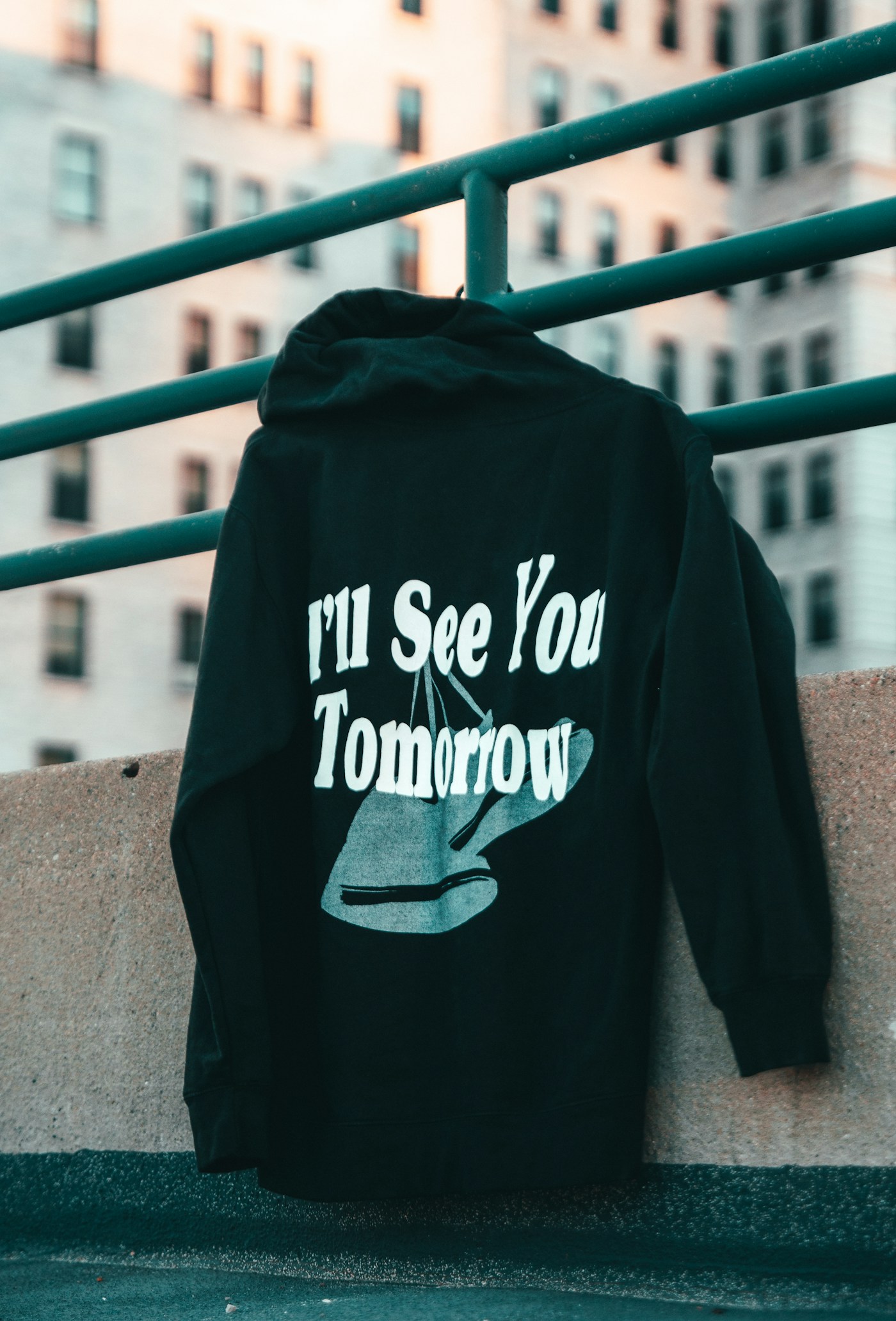
- Left chestis the staff default: 3 to 4 inches wide, about a hand's width below the collar seam, over the wearer's left. Much wider and it stops reading as a logo and starts reading as merch.
- Centre chestruns 8 to 12 inches wide — the placement the crewneck exists for. On a hoodie the same graphic has to dodge a pocket seam and two drawcords.
- Full back is 11 to 12 inches wide, top edge about 3 inches below the collar rib: the right home for a team name, a sponsor block, or the loud half of a design whose front carries a small mark.
- Sleeve prints run 2 to 3 inches wide down the outside of the arm, or wrap the forearm above the cuff.
One hard rule: keep decoration off seams and ribbing. A print running into a ribbed cuff cracks where the rib flexes, and an embroidered mark straddling a shoulder seam never sits flat. Our chest logo size guide has the measurements, and most of the hoodie placement guide transfers straight across — you just get the pocket area back.
Crewneck versus hoodie, honestly
| Consideration | Crewneck | Pullover hoodie |
|---|---|---|
| Warmth outdoors | Good body warmth, nothing for head or neck | Clearly warmer — the hood is removable heat |
| Customer-facing floor | Reads as clothing; layers under a coat cleanly | Reads casual; hood bunches under a collar |
| Print canvas | One clean panel, collar rib to waistband | Broken by pouch seam, cords and hood shadow |
| Cost per piece | Lower in the same fleece and brand | Higher — extra fabric, cord, eyelets, sewing |
| Photographs for merch | Better; flat-lays and on-body shots stay clean | Hood collapses behind the collar; cords cross the art |
| Best for | Staff wear, offices, retail merch, gifting | Outdoor crews, warehouses, grad and team apparel |
The cost line is worth sitting with. A crewneck blank is normally a few dollars cheaper than the same brand's hoodie in the same fleece, because you are not paying for hood panels, drawcord, eyelets and extra sewing. Across 50 pieces that is real money, and the smartest use of it is to buy a heavier fleece for the same total budget. A 12 oz ring-spun crew for the price of a 9 oz hoodie is a straightforward upgrade.
The photography point matters if you are selling the garment. On a flat-lay a hood collapses into a lump behind the collar; on a body the drawcords fall across exactly where a centre-chest graphic lives. A crew just shows the artwork.
Where the hoodie still wins outright: outdoor and site crews, grad and team apparel where the hood is part of the look, and anyone who wants the pocket. We have a breakdown of how to decorate a hoodie, a city guide to ordering custom hoodies in Toronto, and the hoodie service page if that is where you land. For genuine winter exposure neither fleece is the answer alone — that is a jacket conversation, covered in our guide to jackets for a Canadian winter.
What custom crewnecks cost, and where the price moves
Anyone publishing one flat number for this is guessing. As a reference point, a screen-printed cotton t-shirt from us runs roughly $12–$18 each at 50 piecesand under $10 each in the hundreds. A crewneck starts from a blank that costs a good deal more than a tee blank, so a finished printed crew lands meaningfully above that. We do not publish a rate card for fleece, because weight alone can nearly double the blank price — treat any figure as indicative and get a real quote with your garment in it.
The levers, roughly in order of how much they move the number:
- Fleece weight and brand. Far and away the biggest factor.
- Quantity. Screen setup divides across the run, so bulk custom sweatshirts behave like any screen job: the curve bends hard past about 24 and keeps improving.
- Colours and locations. Screen printing is priced per colour and per location, so a second colour or a back print is its own line rather than a rounding error. Embroidery is priced against the stitch count on top of the blank, plus the one-time digitizing. We quote both against your actual artwork rather than publishing an adder, because a two-colour left chest and a nine-colour full back are not the same job.
Minimums are where shops differ most, so plainly: none at all on DTF or DTG — one crewneck for one person is a real order, and the per-piece price does not jump because you only wanted one. Screen printing has a practical floor around 6 pieces.
One last thing: if the budget is tight, cut print locations before you cut the blank. A pilled crew gets retired no matter how good the logo was. The fastest way to see the trade-offs is to price a run in the browser and watch the number move as you change quantity and locations, or send the details through the free quote form and let us put two or three blanks in front of you.
Ordering for winter and for December
September is when this gets decided in Canada. Fleece ordered now is fleece worn from October through December, and corporate gifting is signed off in September and October for boxes that have to land before people leave for the holidays. In the fall the calendar is the constraint, not the printing.
Production is the short part: 2 to 5 business days after you approve the mockup and pay, rush available on most apparel, plus one to two days of transit outside Ottawa–Gatineau. The weeks go to the front half — hunting for the vector logo, a size count trickling back from forty people, a committee wanting one more look at the colour.
So work backwards. Take the date the crewnecks need to be in hands and subtract shipping, production, and a couple of days for one round of mockup revisions. The date you land on is when artwork and size counts must be in hand, not when you start thinking about it. Collect sizes with a form and add a spare or two at each end of the range.
Crewnecks pair naturally with the rest of the winter list. If you are building a gift set, our corporate holiday gifting guide covers the lead times end to end, embroidered toques are the cheapest second branded piece, and a printed tote makes it look like a set rather than three separate purchases.
Everything is printed and stitched in-house in Ottawa, Ontario, so nothing crosses a border and there are no customs holds or duties. We ship Canada-wide, work in English and French, and a real person at 613-666-9292 will tell you honestly if your date is not realistic. If you already know the garment and the logo, the fastest path is to put your logo on a crewneck right now — no account, no deposit — and see the price before you commit to anything.
Frequently asked questions
Is a crewneck sweatshirt warmer than a hoodie?
In the same fleece and the same weight the bodies are equally warm — the hood is the only real difference, and it is a significant one outdoors because it covers the head and the back of the neck. Indoors the hood does nothing except bunch under a coat collar. If the crewnecks will mostly be worn inside or under a winter coat you are not giving up meaningful warmth. If people work outside, choose the hoodie or step up to a jacket.
What fleece weight should I choose for company crewnecks?
For everyday staff wear, 9 to 10 oz per square yard is the sweet spot: warm enough for an office in January, not so heavy it becomes uncomfortable indoors. Go to 12 or 13 oz if you want the garment to feel premium and hang boxy, and accept that it costs more and runs hot. An 8 oz crew is a light, modern retail piece better suited to spring and fall than to a Canadian winter.
Can you embroider a logo on a crewneck sweatshirt?
Yes, and it is the most common request we get for company crewnecks. Embroidery on fleece needs a cut-away backing under the fabric and usually a water-soluble topping over the nap so the stitches sit on the surface instead of sinking in. There is no hard minimum, but digitizing your logo into a stitch file is a one-time setup cost — after that, reorders carry no setup again. The one limitation is small text: letters under roughly 5 mm tall lose definition in thread, so a tagline that reads fine on a business card may need to be dropped or printed instead.
Do custom crewneck sweatshirts shrink?
Cotton fleece shrinks, mostly in body length rather than width, and a crewneck body is already cut short — which is why a shrunken crew feels cropped rather than tight. An 80/20 or 50/50 cotton-polyester fleece shrinks far less because the polyester holds its dimensions. Wash cold and inside out, tumble on low or hang dry, and most of the problem disappears. Heat in the dryer is what shrinks the body and abrades the nap.
What is the minimum order for custom crewneck sweatshirts?
There is no minimum on DTF or DTG — a single crewneck is a real order and the per-piece price does not jump because you only wanted one. Screen printing has a practical minimum around 6 pieces because the screens get burned regardless of how many you run, and it becomes the best value past roughly 24 to 50 pieces. Embroidery has no hard minimum either, though the one-time digitizing charge is easier to justify across a group than on a single piece.
Will someone check my artwork before you print the crewnecks?
Yes. Every order is reviewed by a human designer before it goes to press. A real person checks the resolution at the size it will actually print, checks that the colours will read on the fleece colour you chose, checks sizing and placement, and either fixes the file or tells you exactly what is wrong. It is not an automated preflight. Phone screenshots, website PNGs, PDFs and AI-generated images are all fine to send — we clean them up or redraw them as vector.
Crewneck or hoodie for staff uniforms?
Crewneck, in most indoor and customer-facing settings. It layers under a coat without bunching, it reads as clothing rather than as merch, and it costs a few dollars less per piece in the same fleece, which you can put toward a heavier blank. Choose the hoodie when people work outdoors, when the pocket is genuinely useful, or when the audience is students and the hood is part of the look.
How long does a custom crewneck order take?
Production is 2 to 5 business days after you approve the free mockup and pay, and rush is available on most apparel jobs. Add one to two days of transit if you are outside Ottawa–Gatineau. The realistic planning number is longer, because artwork, size counts and internal approvals usually take more calendar time than the printing does. For anything that has to land in December, decide in September or October.
Design it yourself. A human designer still checks every order.
Our free studio gives you the price and the mockup in the browser. What it doesn't do is print your file blindly — every order is reviewed by a real designer before it reaches the press.
- Step 1You design it — free
Upload your logo, drop it on a real garment, set the size and placement, pick colours and quantities. No account, no deposit, no waiting on a reply.
- Step 2A human designer checks it
Before anything prints, one of our designers opens your file and checks resolution, colours, sizing and placement. If it won't print well, we fix it or tell you exactly what's wrong — a person, not an automated preflight.
- Step 3You approve, then we print
You get the corrected mockup back on the actual product. Nothing goes to press until you say yes — then it's ready in 1–2 weeks, or in 1–3 business days with a rush.
See it on the crewneck before you pay
Upload your logo, drop it on a real crewneck, pick your fleece colour and size run, and get a free digital mockup first. Printed and embroidered in-house in Ottawa, shipped Canada-wide, with no minimum on DTF or DTG.
Every order is reviewed by a human designer before it goes to press. A person checks artwork resolution, colour, sizing and placement, and either fixes the file or tells the customer what is wrong — it is not an automated preflight.