
Branded Polo Shirts for Business: Picking the Right Staff Polo
A staff polo is a uniform people actually want to wear. Here's how to choose company polos that look sharp and hold up — fabric, colour, fit, logo method and quantities — for teams from five to five hundred.
Every spring a wave of Ottawa business owners comes through the shop with the same goal: get the whole team into branded polo shirts before trade-show season, the summer patio rush, or the next big client visit. It sounds like a small decision. It isn't. A polo is the one piece of company apparel your staff will wear on their feet all day, in front of customers, week after week — so the blank you pick and the way you brand it matter more than almost any other order we run.
This is the guide we hand to anyone kitting out a team. Below is exactly how we help our customers choose a company polo that looks sharp on day one and still looks sharp a year of wash cycles later — the fabric, the colour, the fit, the logo method, and how to handle sizing and reorders across a whole roster.
A staff polo is a uniform people actually want to wear
There's a reason polos have been the default uniform for retail floors, golf courses, dealerships and dental offices for decades. The polo shirt earned its place because it sits in a sweet spot: dressier than a t-shirt, far less fussy than a button-down, and comfortable enough that people forget they're wearing a uniform at all. That last part is the whole game. If staff uniform polos are stiff, hot, or badly cut, they get left in the closet — and a uniform nobody wears is money on the floor.
The upside, when you get it right, is out of proportion to the cost. When a customer walks in and every employee is in a matching corporate polo with your logo on the chest, your business instantly reads as organized and legit — even if you're a two-person operation. That's the quiet power of good custom uniforms: they make a small company look established, and they turn your team into a walking billboard everywhere they go around Ottawa.
Fabric that survives daily wear: cotton vs polyester pique
Almost every polo is knit in a pique knit — that textured, waffle-like surface that gives a polo its structure and lets it breathe. The real decision isn't the weave, it's the fibre. Here's how the three common choices actually behave once they're being worn eight hours a day and washed twice a week.
| Fabric | Feels like | Best for | Watch out for |
|---|---|---|---|
| Cotton pique | Soft, breathable, premium | Showrooms, offices, client-facing roles | Wrinkles, can shrink, shows sweat |
| Polyester pique | Smooth, cool, athletic | Kitchens, warehouses, active jobs | Less premium hand, can hold odour |
| Cotton/poly blend | Balanced, easy-care | Most mixed teams | The safe all-rounder — rarely a bad call |
If we had to pick a default for a general staff team, it's a mid-weight blend around 220 gsm. It keeps the soft feel of cotton, resists the wrinkling and shrinkage that make pure cotton look tired, and gives an embroidery needle a stable base to stitch into. For crews on their feet in the heat, we tilt toward a performance poly; for a boutique or gallery, pure cotton is worth the extra care.
Colour and fit that work for a whole team
Colour is where good intentions go sideways. The instinct is to match your brand exactly, and that's a fine starting point — but think about how a colour lives on a busy person. Dark navy, charcoal and black hide stains and read professional in almost any setting. Mid-tones are forgiving. Crisp white looks fantastic in photos and shows every coffee spill by 10 a.m. For a cohesive team, one core colour is plenty; a second colour to separate managers from floor staff is the most we usually recommend before corporate polo shirts with logo start looking like a random assortment instead of a uniform.
Fit matters just as much, and it's the thing people skip. A modern, slightly tapered cut looks current; a boxy classic fit suits a wider range of body types and is the safer choice for a big group. Whatever you land on, offer both a standard/unisex cut and a women's cut — the difference in how a polo sits is real, and giving people a fit that flatters them is the single biggest reason a uniform gets worn without complaint.
The best polo for embroidery
Nine times out of ten, the right way to put a logo on a company polo is embroidery. Stitched thread reads as premium, it never cracks or peels the way a cheap print can, and it effectively lasts the life of the garment. It's the finish customers subconsciously associate with an established business, which is exactly the impression a staff polo is meant to create.
So what makes the best polo for embroidery? A firm, mid- to heavyweight pique — 6.5 oz (around 220 gsm) or heavier — with a stable knit that won't pucker under the needle. Thin, stretchy fashion polos fight the machine and the logo comes out wavy; a structured blank holds the stitches flat and crisp. There's a one-time digitizing step that converts your logo into a stitch file, and after that every polo you ever order matches perfectly. If you're weighing your options, we lay out the full trade-off in our guide to screen printing vs embroidery — printing only really wins on a polo when your logo is large, highly detailed, or full of colour gradients that thread can't reproduce.
Placement: what to brand and where
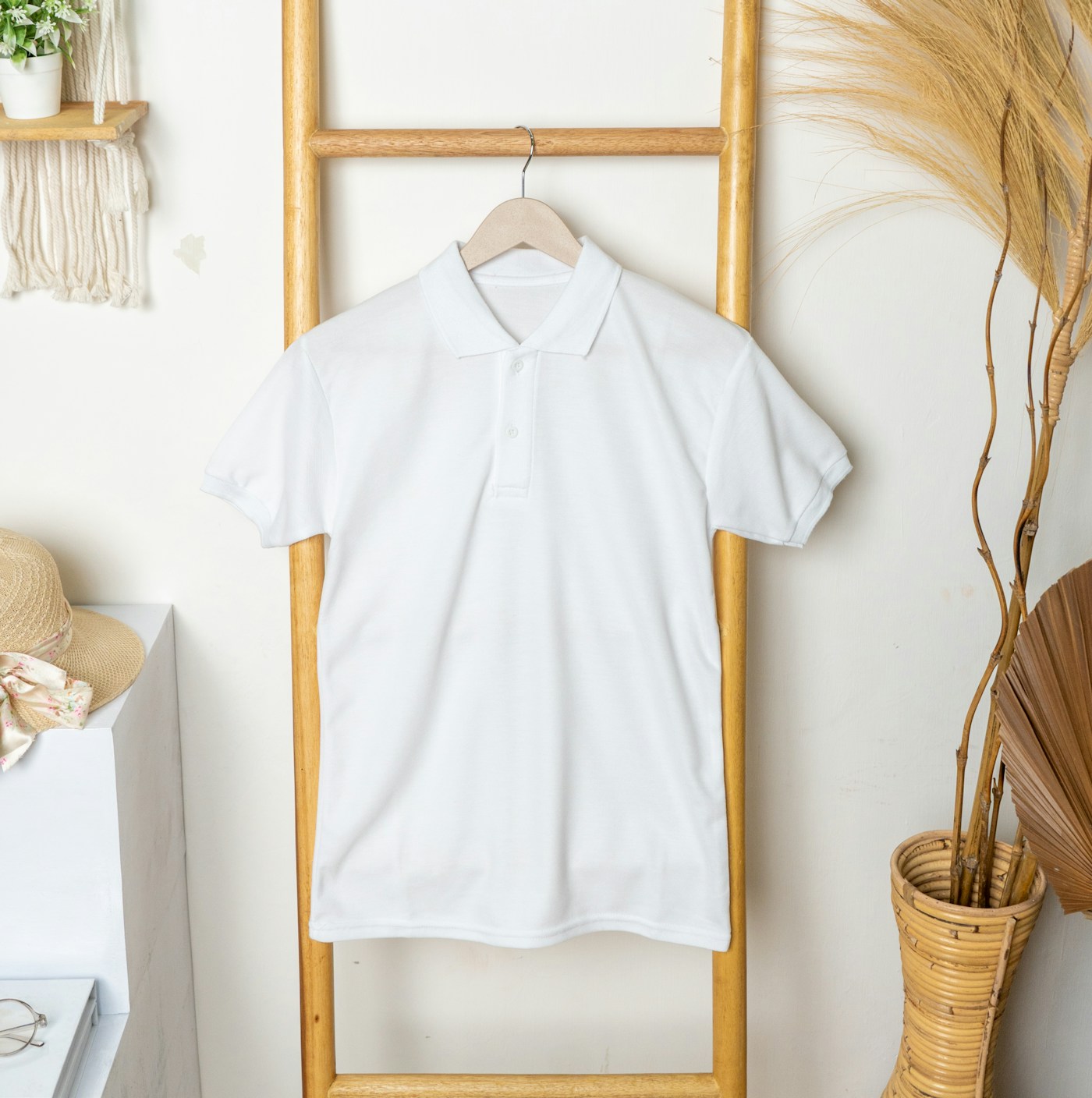
The default — and it's the default for a reason — is a left-chest logo about 3 to 3.5 inches wide. It's visible, professional, and doesn't shout. From there you've got options depending on how much branding you want to carry:
| Placement | Typical size | Best for |
|---|---|---|
| Left chest | 3–3.5 in wide | The default company logo spot |
| Right chest | 3–3.5 in wide | A second mark — a partner or certification |
| Left sleeve | 2–3 in | A small tagline, website or icon |
| Nape / back collar | 1.5–2.5 in | Subtle branding, or a name tag line |
| Full back | up to 11 in | Loud branding — rare on polos, common on event staff |
A common, sharp-looking combo for a work polo is a left-chest logo with a small website or phone number on a sleeve, or a personal first name embroidered opposite the logo so customers can address staff by name. Just don't crowd it — a polo carries branding best when there's one hero mark and, at most, one supporting detail.
Sizing a whole team and handling reorders
The fastest way to derail a group order is guessing sizes. Send a size chart with real chest measurements around and have every person self-report — it beats a manager eyeballing the room every time. Order a couple of spare mediums and larges for the inevitable new face, and if you've chosen cotton, size up half a step to leave room for shrink. For a team of any size we'll help you build the size breakdown before anything gets cut.
Reorders are the part worth planning for on day one, because staff turn over. When we run your first batch of company polo shirts, we keep the exact blank, the colour codes, and your digitized logo on file. Six months later a new hire gets a polo that matches the team down to the thread — even if it's a single piece. Budget-wise, a branded embroidered work polo generally runs roughly $25–$45 per shirt once you fold in the blank and the stitching, with the per-piece price easing down as quantities climb. For a deeper local walk-through, read our Ottawa custom polo guide, or, for GTA head offices, corporate apparel in Toronto.
Not sure how your logo will sit on a polo? Drop it into our free online studio, put it on a real polo in your brand colour, and see the left-chest placement at actual size — no account, no payment required.
Open the free mockup studioGet a mockup of your branded polo shirts
You don't have to imagine any of this. Upload your logo to our free mockup studio, choose a blank and a colour, and you'll see your branded polo before you commit to a single stitch. When you're ready, our polo shirt printing and embroidery team handles the rest right here in Ottawa — from picking the right pique to the final size breakdown and every reorder after.
Frequently asked questions
What is the best polo shirt for embroidery?
The best polo for embroidery is a mid- to heavyweight pique — think 6.5 oz (around 220 gsm) or heavier — with a firm, stable knit. That weight gives the needle something solid to stitch into, so your logo sits crisp and flat instead of puckering the way it does on thin, stretchy fabric. Cotton-rich or quality poly pique both embroider beautifully; the knit density matters more than the exact fibre. When customers ask us for the best polo for embroidery, we steer them toward a structured pique in a colour that makes their thread colours pop.
Should staff polos be cotton or polyester?
It depends on the job. Cotton pique feels the most premium and breathes well, but it wrinkles, can shrink, and shows sweat — fine for a showroom, less ideal for a hot kitchen. Polyester performance pique wicks moisture, holds its colour, and resists wrinkles and shrinkage, which is why it wins for active, on-your-feet roles. For most teams we land on a cotton/poly blend that keeps the soft hand of cotton with the easy-care durability of polyester.
How many colours should a team uniform be?
Fewer than you would think. One core polo colour keeps a team looking unified and makes reorders simple, and it is the look most companies want. If you need to tell departments or roles apart, two colours is plenty — say, one shade for the floor and one for management. Once you push past two or three colours the group starts to look scattered instead of branded, and your sizing and reorder math gets messy fast.
Can we reorder polos as we hire more staff?
Yes, and this is the part people forget to plan for. When we set up your first run of company polo shirts with logo, we log the exact blank, the colour codes, and your digitized embroidery file. That means a new hire six months later gets a polo that matches the rest of the team down to the thread. As long as the manufacturer keeps the style in stock, reorders — even one or two at a time — are quick and consistent.
Roughly what does it cost to brand company polos?
As a ballpark, a branded, embroidered work polo usually lands somewhere around $25–$45 per shirt once you combine a decent blank with a left-chest logo, and the per-piece price drops as your quantity climbs. There is also a one-time digitizing fee of roughly $40–$75 to turn your logo into a stitch file, but you never pay that again on reorders. Send us your logo and headcount and we will quote it exactly, usually the same day.
Ready to get your team into branded polos?
Send us your logo and headcount. We'll recommend the right blank, mock up your logo on a real polo, and quote the whole team — usually the same day.
Start your free mockup