
Matte vs Glossy vs Soft-Touch: How to Choose a Business Card Finish
A no-nonsense guide to business card finishes from our Ottawa shop: how matte, glossy, soft-touch, spot UV, and foil compare on look, fingerprints, writability, durability, and cost — and which one fits your brand.
A realtor came into the shop last spring holding two versions of the same card. She'd ordered glossy from an online vendor, hated how they looked covered in thumbprints by the end of an open house, and wanted to know what her options were. We spread five finish samples on the counter — matte, gloss, soft-touch, spot UV, and foil — and let her run her fingers over each one. She picked soft-touch before I'd finished explaining them. That's usually how it goes: once you feel the difference, the choice makes itself.
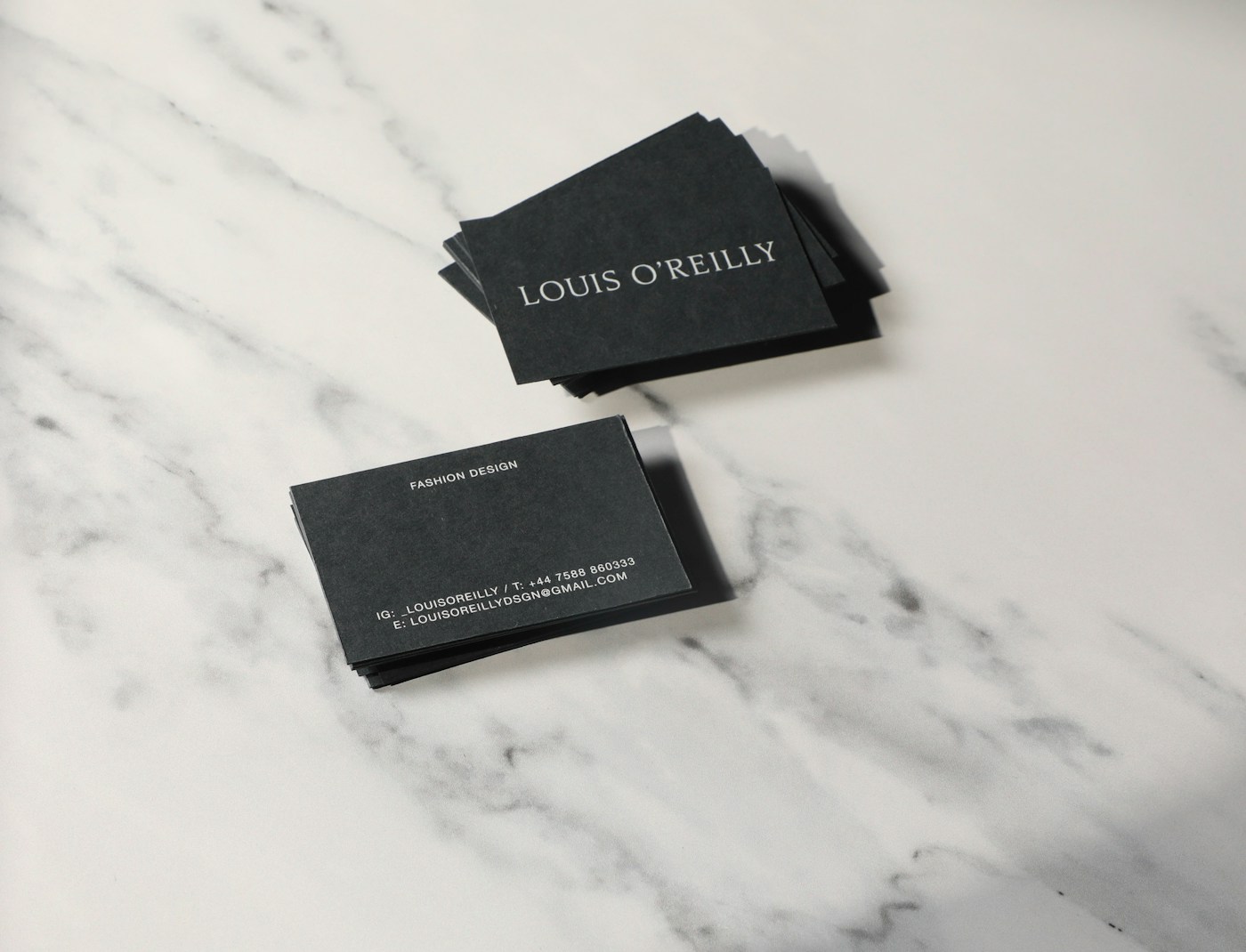
Business card finishes are the part of the order almost nobody thinks about until the cards are in their hand, and it's the part that decides whether the card feels cheap or expensive. The design gets all the attention; the finish is what people actually touch. This guide walks through matte vs glossy vs soft-touch — plus spot UV and foil — so you can pick the right one the first time.
We run all of these every week for Ottawa businesses, so this isn't theory. It's what we tell customers across the counter, including the honest trade-offs each finish comes with.
The five finishes at a glance
There are five coatings we quote most often. Matte and gloss are the everyday options; soft- touch is the premium standard; spot UV and foil are accents you add on top of one of the first three. Here's how the main business card finishes compare on the things that actually matter when someone holds your card:
| Finish | Look & feel | Fingerprints | Write on it? | Relative cost |
|---|---|---|---|---|
| Matte | Flat, non-reflective, understated | Hides them | Yes — pen & pencil | $ |
| Glossy | Shiny, vibrant colour, high contrast | Shows clearly | No — ink smears | $ |
| Soft-touch / suede | Velvety, thick, premium feel | Hides them | Yes — better than gloss | $$ |
| Spot UV (accent) | Glossy raised detail on a matte card | Base finish hides them | On base areas only | $$$ |
| Foil (accent) | Metallic mirror shine on logo/text | Base finish hides them | On base areas only | $$$ |
Matte: the safe, professional default
If you can't decide, order matte. It's the finish we recommend to anyone who wants a card that looks credible without trying too hard — law firms, accountants, consultants, trades. The flat coating cuts glare, so text stays crisp and easy to read under any lighting, and it hides the fingerprints that make glossy cards look grubby by lunchtime.
The underrated superpower of matte is that you can write on it. A ballpoint pen or pencil grabs the surface immediately, so you can add a direct line, a booking date, or a discount code by hand. That matters more than people expect — a card someone writes on is a card they keep. Matte is typically the most affordable finish too, printed on a solid 14pt stock.
Glossy: made for colour and photos
Gloss is the right call when your card is carrying a photograph or a bold, saturated design. The high-shine coating intensifies colour and contrast, so a food truck's dish, a photographer's portfolio shot, or a salon's rich brand palette all pop harder than they do on matte. Glossy lamination also shrugs off minor water and resists folding and peeling better than an uncoated card.
The catch is fingerprints. That slick surface shows every smudge, and ink from a pen beads up and refuses to dry — so there's no writing on a glossy card. If your design is colour-forward and nobody needs to write on it, gloss earns its place. If you're printing mostly text on a light background, it can look cheaper than matte, not more premium. For a deeper look at how colour reproduces across finishes, it helps to understand the Pantone Matching System (spot colour) versus standard CMYK, since brand colours can shift depending on the coating on top.
Soft-touch: the premium feel that sells itself
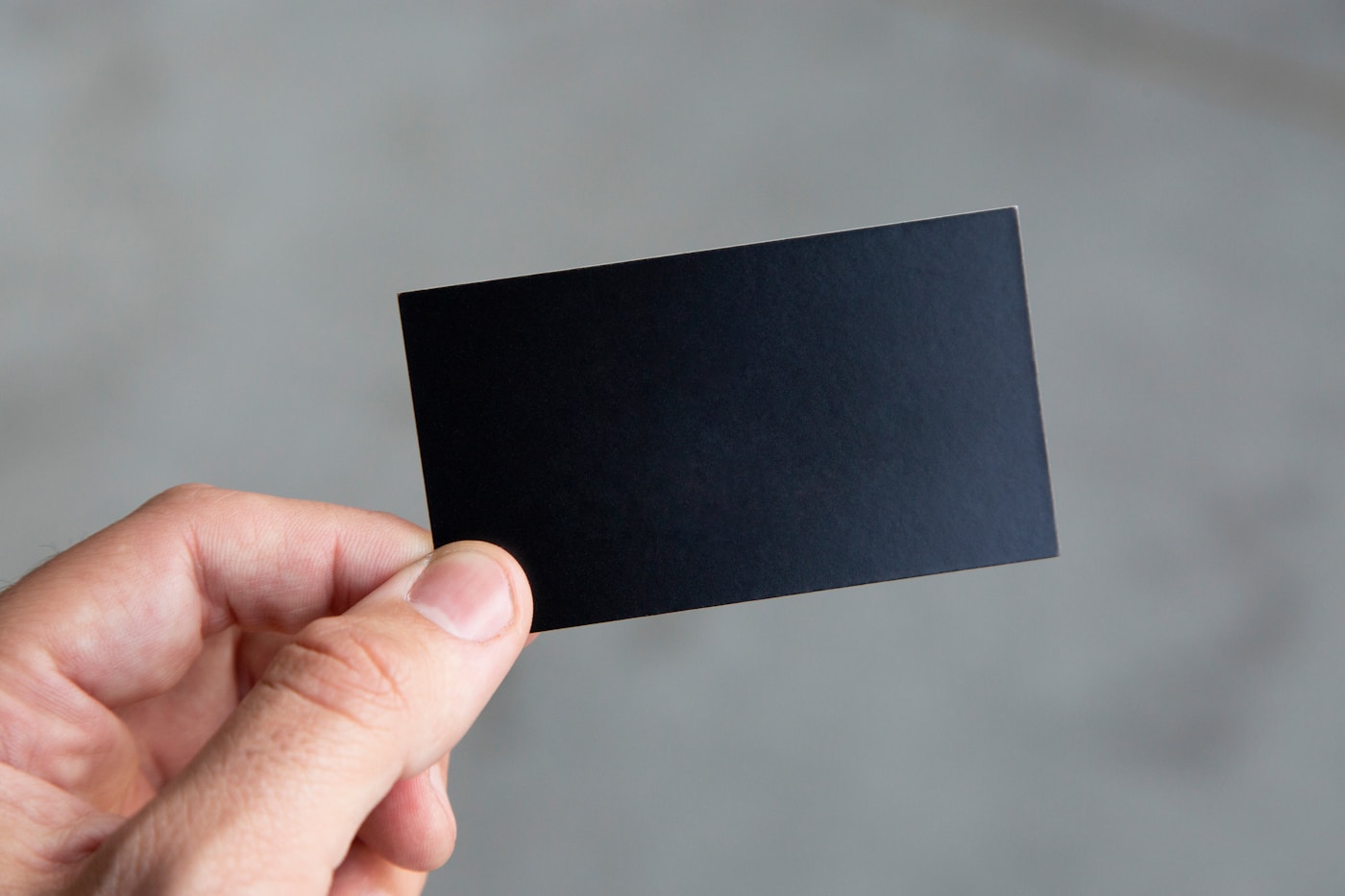
Soft-touch is the finish people fall in love with by accident, exactly like the realtor at the start of this article. The laminate has a velvety, suede-like texture — minimal shine, real depth, and a substantial feel because it's usually built on heavier 16pt stock. It behaves like a blend of matte and gloss: it hides fingerprints like matte, but it feels far more expensive than either.
This is the strongest choice for premium and luxury positioning — fashion, design studios, hospitality, high-end real estate — and it's the most-ordered finish we run across industries. Deep colours look spectacular on it: navy, charcoal, burgundy, and forest green go rich and moody in a way they never do on a glossy card. The trade-offs are modest. Soft-touch costs a little more (about $10–25 per order over matte), and the laminate can pick up faint shiny scuff marks after months of abuse in a crowded wallet. For normal networking, you'll never see it.
Spot UV and foil: accents, not finishes
Spot UV and foil aren't whole-card finishes — they're accents you layer on top of matte or soft-touch to make one element jump out. They're where a card goes from nice to memorable, and they're the upgrades we quote most for brands that want to stand out at an event.
- Spot UV: a glossy, slightly raised clear coating applied to just one area — usually a logo or a single word — over an otherwise matte card. The contrast between the flat matte and the shiny raised detail is what makes it feel high-end. Best on a matte or soft-touch base so the gloss has something to play against.
- Foil (foil stamping): a genuine metallic layer — gold, silver, rose gold, copper — pressed onto your logo or type for a mirror-bright shine that ink simply can't reproduce. Foil on a soft-touch card is about as premium as a business card gets, and it's a favourite for weddings, salons, and luxury brands.
Both add setup and material cost, so they land in the $$$ range and suit smaller premium runs more than high-volume everyday cards. If you want the effect without the whole run, we often foil just the front of a soft-touch card and keep the back clean.
Setup: stock, size, and bleed
Whichever finish you pick, the print setup is the same. Standard business card size in Canada is 3.5 × 2 inches (1050 × 600 px at 300 DPI). Add a print bleed of 1/8 inch (3mm) on every side and the document becomes 3.75 × 2.25 inches, with a safe zone of about 3.36 × 1.86 inches for anything you don't want trimmed off. Export artwork at 300 DPI print resolution so photos and logos stay sharp. We break the full spec down in our standard business card size guide, and if you want the numbers by finish and quantity, our Ottawa business card cost guide lays out 2026 pricing. Not sure your logo is print-ready? Start in the mockup creator and we'll flag any file issues before we print.
Heavier laminated stocks feel more premium, which is why soft-touch usually runs on 16pt. One practical note if you plan to mail cards: Canada Post requires mailed cards and postcards to be at least 0.18mm thick, and if you're pairing cards with a wider print campaign their direct mail solutions are worth a look — 92% of Canadians read the direct mail they receive.
So which finish should you choose?
Here's the short version we give at the counter. Choose matte if you want a safe, professional, budget-friendly card you can write on — it's the right answer for most businesses. Choose glossy if your design is photo- or colour-heavy and nobody needs to write on it. Choose soft-touch if you want the card itself to feel expensive and memorable, and you're willing to pay a little more for it. Add spot UV or foil when you want one element — usually the logo — to steal the moment.
The best way to decide is still the way that realtor did it: hold the samples. We keep all five on hand at the shop, and we'll drop a free mockup of your design on whichever stock you're leaning toward before you commit a dollar. See our full business card printing options to compare stocks and finishes side by side.
Frequently asked questions
What is the difference between matte, glossy, and soft-touch business cards?
Matte is a flat, non-reflective coating with an understated, professional look. Glossy is a shiny reflective coating that intensifies colour and contrast — great for photos, but it shows fingerprints. Soft-touch (sometimes called suede or velvet) is a matte-adjacent laminate with a velvety, almost peach-skin texture; it has minimal shine and real surface depth. Both matte and soft-touch hide fingerprints well, while gloss shows every smudge.
Which business card finish is best?
There is no single best finish — it depends on your brand. Matte is the safest all-purpose choice and balances professionalism, readability, and versatility, which is why law firms and accountants tend to pick it. Glossy is best for photo- and colour-heavy designs. Soft-touch is the strongest choice for premium or luxury positioning (fashion, design, hospitality) and is the most-ordered finish we run across industries.
Can you write on matte and glossy business cards?
Yes on matte, mostly no on glossy. Matte accepts ballpoint pen and pencil easily, so you can jot a note or a mobile number on the spot. On glossy cards ink beads up, smears, and takes a long time to dry because the surface is slick. Soft-touch also takes pen better than gloss. If writing on the card matters to you, choose matte or soft-touch.
Do soft-touch business cards scratch or show fingerprints?
Fingerprints are not a real issue on soft-touch — the velvety surface hides smudges the way gloss never can. The one trade-off is that the soft-touch laminate can develop faint shiny scuff marks over time from heavy abrasion, like a card riding loose in a busy wallet for months. For normal networking use, handing cards out and dropping them in a holder, that is not something you will notice.
Is soft-touch or matte better for a business card?
Matte is thinner, flat, budget-friendly, and reads as clean and professional. Soft-touch is a thicker laminated card with a velvety texture that signals premium quality and is genuinely more memorable to hold. Both hide fingerprints. Soft-touch costs a bit more — usually $10–25 more per order in our shop — and is the more premium, more durable option. If budget is tight or you write on cards, go matte; if you want the card to feel expensive, go soft-touch.
Want to feel the difference before you order?
Send us your logo and tell us the vibe you're after. We'll send back a free mockup on matte, gloss, or soft-touch — plus honest advice on which finish fits your brand and budget.
Get a business card quote