
Ordering Custom Uniforms for a Construction Crew: A Practical Guide
Hi-vis rules, the cotton-vs-poly debate, and what 20 shirts actually costs when you also want a logo on the back. Notes from years of outfitting Ottawa-area crews.
The first time a contractor asked us for "good shirts that won't fall apart on the site," we printed him 30 cheap 100% cotton tees with a logo on the back. Three months later he was back. The shirts had shrunk a full size in the wash, the necks were curling, and one of his framers had snagged a sleeve on a nail and ripped it open. He wasn't mad — he just wanted to know what to actually buy.
That conversation is the reason we wrote this. There's a lot of bad workwear out there, and most of it looks fine in the catalogue. Here's what we've learned outfitting Ottawa-area roofing crews, framers, electricians, HVAC techs, and landscaping companies over the years.
Why uniforms matter beyond the logo
Branding is the obvious reason — a clean, matched crew on a residential job site reads "professional" before anyone says a word. But there are practical wins that almost nobody talks about until they've felt them.
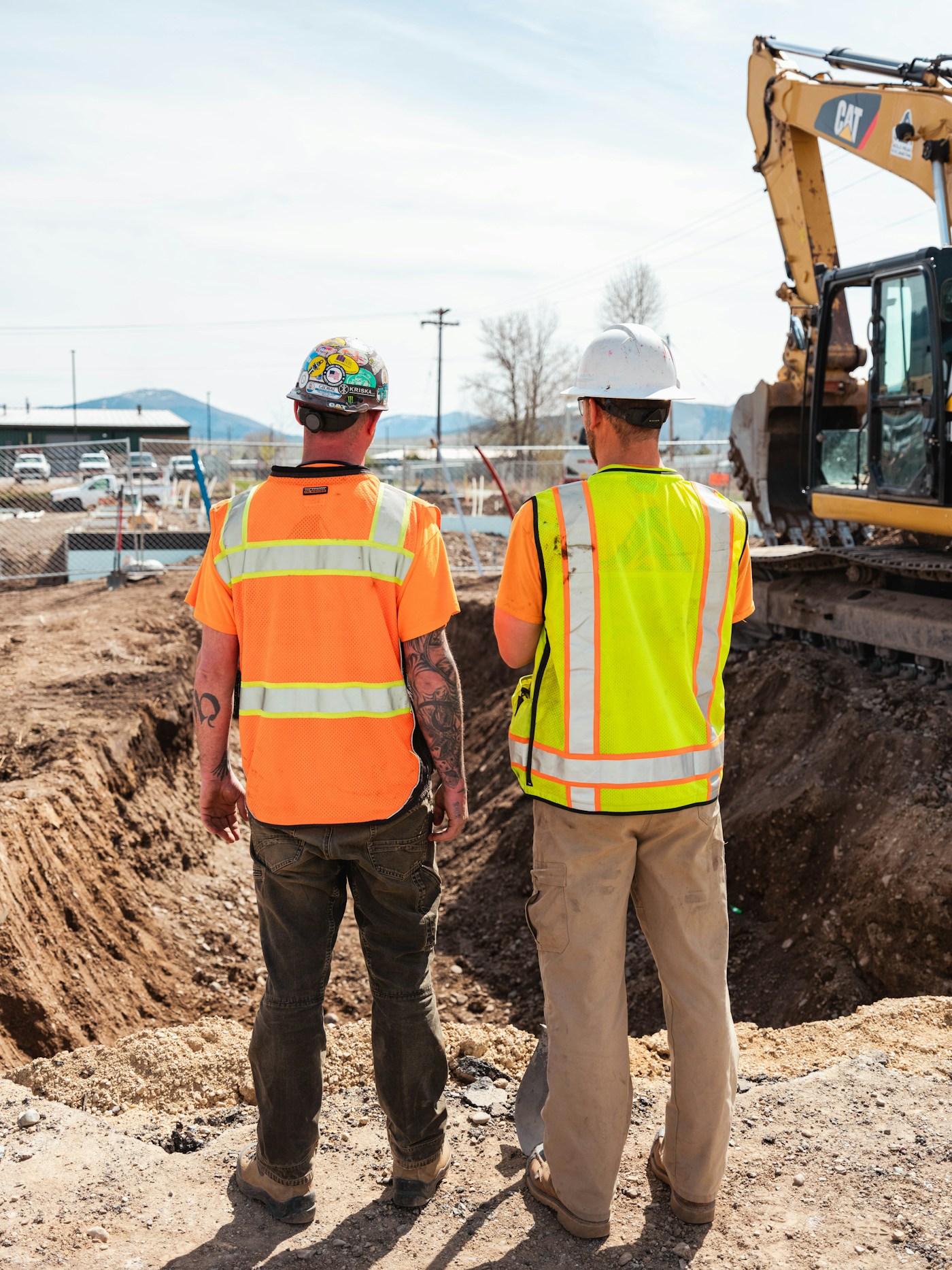
Uniforms make site safety easier. When everyone's in the same colour, you can tell at a glance who's part of your crew and who isn't. If you've ever had a sub-trade casually walk onto a site and start using your tools, you know exactly what I mean. Hi-vis logo shirts also help your guys get noticed in a Home Depot parking lot when they're loading materials, which has resolved more than one "did you really pay for that?" question.
And — this one's underrated — uniforms reduce the daily decision fatigue of getting ready for work. A guy on your crew with five identical company shirts in his drawer just grabs one. That's five minutes a morning he isn't trying to find the cleanest non-stained shirt in his closet.
Cotton or polyester: what actually works
Pure cotton is comfortable in May. By mid-July it's a wet sponge stuck to your back, and once it dries it's stiff. That's why most of our construction customers have moved off 100% cotton for summer t-shirts.
For day-to-day shirts in summer, we recommend a poly-cotton blend (the Gildan 8000 series and Bella+Canvas 3413 are the two we keep stocked) or a moisture-wicking polyester sport tee. They dry fast, hold colour, and don't shrink the way pure cotton does after twenty washes.
For winter layers, swap the rules. A heavy cotton-rich fleece hoodie or a ringspun cotton long sleeve breathes when guys are sweating in their winter coats, and feels less clammy than synthetic when it gets damp. The Independent Trading Co. SS4500 hoodie is a popular choice — it's not the cheapest, but it survives a lot of abuse.
The one thing to avoid completely is the cheap promo-grade 100% polyester sport tees from the discount catalogues. They look fine on the rack and feel like a plastic bag after one shift in 28°C heat. We've stopped quoting them.
Hi-vis: when you actually need it
If your crew works near vehicles, on roadways, in parking lots, or at any time of day with low light, the general contractor or municipality is probably going to require CSA-certified hi-vis. The standard you're looking for is CSA Z96 Class 2, which is the typical default for construction in Ontario. For a plain-language overview of the requirements, it's worth reading Canada's occupational-health guidance on high-visibility apparel.
Here's the catch: a neon yellow shirt isn't automatically CSA-compliant. Compliance depends on the amount of fluorescent fabric, the placement and width of the reflective tape, and the overall design of the garment. We can print custom logos on CSA-rated hi-vis stock, but the moment you ask us to "make this normal shirt hi-vis with some yellow ink" — that's not how the standard works. If you need certified hi-vis, you need to order it as certified hi-vis from the start. If you want to understand how the different high-visibility clothing classes compare, they come down to those same fabric and tape requirements.
For lower-risk indoor or daytime crews, a "hi-vis style" shirt (bright safety yellow, non-certified) is still useful for visibility and crew recognition. It just isn't an official PPE substitute.
Embroidery vs print: where to spend extra
A lot of crews end up with a tiered uniform: embroidered polos and jackets for the foreman and management, printed t-shirts and hoodies for the rest of the team. That's the pattern we see most often because it splits the budget sensibly.
Embroidery on a chest logo runs about $6–$10 depending on stitch count. It lasts the life of the garment, never fades, and looks more premium — which matters when your foreman is shaking the homeowner's hand. The downside is that fine detail (small text, photo logos) doesn't translate to thread. You need a clean logo with bold shapes and minimum text size around 5mm tall.
Print methods make more sense for t-shirts and hoodies. We break down both options in detail on our DTF printing and screen printing pages. The short version for workwear: if you have a simple 1–2 colour logo and you're ordering 50+ shirts, screen printing. Anything else, DTF.
Sizing and quantities for a real crew
A 12-person crew doesn't need 12 shirts. Here's what we actually order for customers who come back happy:
- 3–5 daily shirts per crew member. Enough that nobody runs out of clean shirts mid-week.
- 1–2 hoodies per person. Even in summer — mornings on a site can be cold.
- 1 jacket per person. Higher-end, embroidered. This is the piece they'll wear when meeting clients.
- 5–10% extra stock in common sizes. For new hires, replacements, and the inevitable shirt-eaten-by-a-saw situations.
For sizing, get everyone to actually try on a sample shirt before you order. Don't trust what they tell you their size is. Half your crew will say "large" because that's what they wore in high school. We keep a sample set of common blanks at the shop precisely for this.
Cost expectations for a 20-person crew
Rough math for a typical mid-sized construction crew getting a real uniform package, with a 2-colour logo and standard quality blanks:
| Item | Qty | Approx. each | Approx. total |
|---|---|---|---|
| T-shirts (printed) | 80 | $14 | $1,120 |
| Hoodies (printed) | 25 | $32 | $800 |
| Embroidered polos | 10 | $28 | $280 |
| Embroidered softshell jackets | 20 | $72 | $1,440 |
| Estimated total | ~$3,640 |
That works out to roughly $180 per person for a full kit they'll wear daily. Spread across a year, it's the cost of one good lunch per person per month — for a uniform that pays back every time a customer sees your crew look organized.
A few things people regret
Going too cheap on blanks. If a $4 shirt falls apart in two months you've effectively bought it twice. A $9 blank that lasts a year is the better deal.
Putting the logo too small on the back. A 4-inch logo gets lost. We recommend 10–12 inches across the back for visibility. Chest logos around 4 inches are standard.
Not ordering enough up front. Reorders in the same colour and design take the same setup time and lead time as the original. If you know you'll need more in 3 months, ordering everything at once usually saves you 15–25%.
Frequently asked questions
Do I need CSA-certified hi-vis shirts for an Ontario job site?
It depends on the job. If your crew is working anywhere near moving vehicles, roadside, or in low-light conditions, the contractor or general usually requires CSA Z96-compliant hi-vis. Class 2 is the common spec. Plain neon yellow shirts without the reflective tape are not CSA-rated even if they look the part — make sure the supplier tag specifies CSA Z96 if you need certified gear.
What's the difference between cotton and poly for construction shirts?
Cotton breathes better and feels softer, but it absorbs sweat and stays wet, which is bad in cold weather. Polyester (or poly-blends with moisture-wicking) dries faster, holds shape, and resists snags from gear. For year-round outdoor work in Canada, most crews end up preferring a 50/50 blend or a moisture-wicking polyester for summer and a cotton-rich fleece for winter layers.
Should I do embroidery or screen printing on workwear?
Embroidery looks more professional on polos, jackets, and hats — and it lasts the lifetime of the garment without fading. The trade-off is cost (around $6–$10 per embroidered logo) and it's slower. Screen printing or DTF is cheaper per shirt for t-shirts and hoodies, especially in bulk. A lot of crews do embroidery on management/foreman polos and printed logos on the regular tees.
How many shirts should I order per crew member?
Standard advice from our customers: 3 to 5 shirts per person if they're worn daily. That's enough to rotate through the week without anyone running out of clean shirts mid-week. Add 1–2 spares per size in your stockroom for new hires and damaged replacements.
What's a realistic timeline for 25 custom hoodies?
From approved artwork: about 2–5 business days for screen printing or DTF, assuming the blanks are in stock. Embroidery on the same order adds about 2 days because of the digitizing and stitching time. Rush options can compress this further, usually at a 25–40% surcharge.
Outfitting a crew?
Send us your logo and your headcount. We'll quote the full kit with real Canadian pricing and recommend the blanks we'd put our own crew in.
Get a free quote