
Screen Printing vs Embroidery: When to Use Each on Custom Clothing
Both look great on a polo. One feels luxurious, the other holds vibrant colour. Here's how we choose for our Ottawa customers — including real prices and the mistakes we see most.
A real-estate brokerage came into the shop last month wanting 40 polos for their agents. Their first question — and it's the one we get every single week — was whether they should go screen-printed or embroidered.
On polos there's actually only one right answer. (Embroidery.) But the question opens up an interesting wider conversation about which method belongs on which garment, and how to avoid spending money on the wrong choice.
Here's how we think about it in the press room.
The short answer
Use embroidery on:
- Polos and golf shirts
- Caps and beanies
- Jackets and softshells
- Button-down dress shirts
- Anything you want to feel premium and last for years
Use screen printing on:
- T-shirts and tank tops
- Hoodies (chest, sleeve, or back logos)
- Sweatpants and sweatshorts
- Large back-of-shirt designs
- Higher-volume runs where cost-per-piece matters most
That's the 90% answer. The other 10% is where it gets interesting — read on for the why, the real prices, and the mistakes we see customers make.
What screen printing actually is
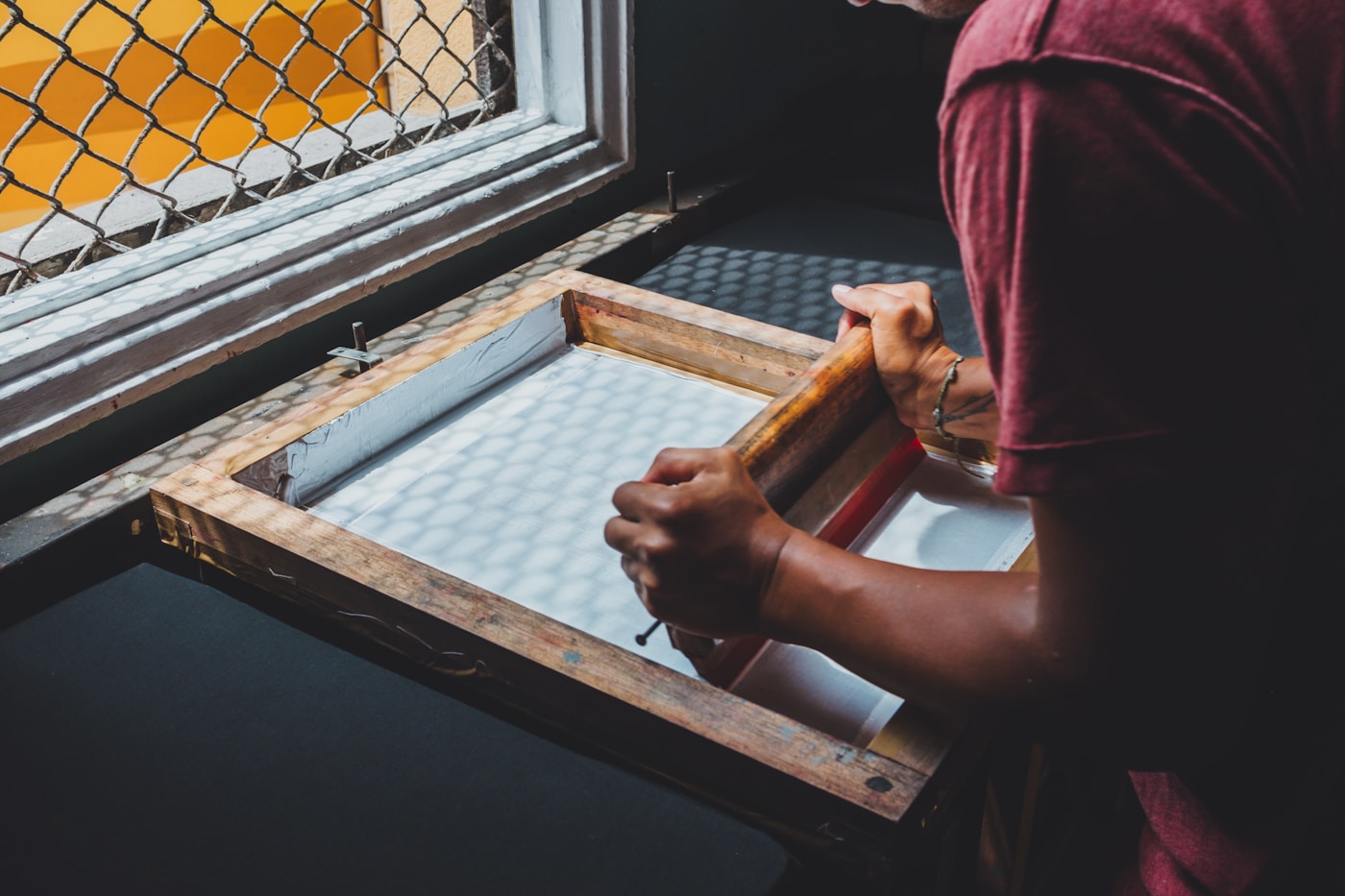
Screen printing pushes ink through a fine mesh screen onto the fabric. Each ink colour needs its own screen, and the screens have to be lined up (called "registering") so the colours land in exactly the right spots. Once printed, the shirt goes through a heat tunnel at around 320°F to cure the ink permanently.
The result is a print that sits slightly inside the fabric. You can feel it with your finger but it's not raised. The colour is vibrant and the print is flexible enough to move with the shirt. Done right, screen-printed designs last hundreds of washes.
The catch is setup cost. Every screen costs us time to burn, line up, and clean. For a 4-colour design we charge roughly $20–$40 per screen, which is fine when you're ordering 200 shirts but brutal at 12.
What embroidery actually is
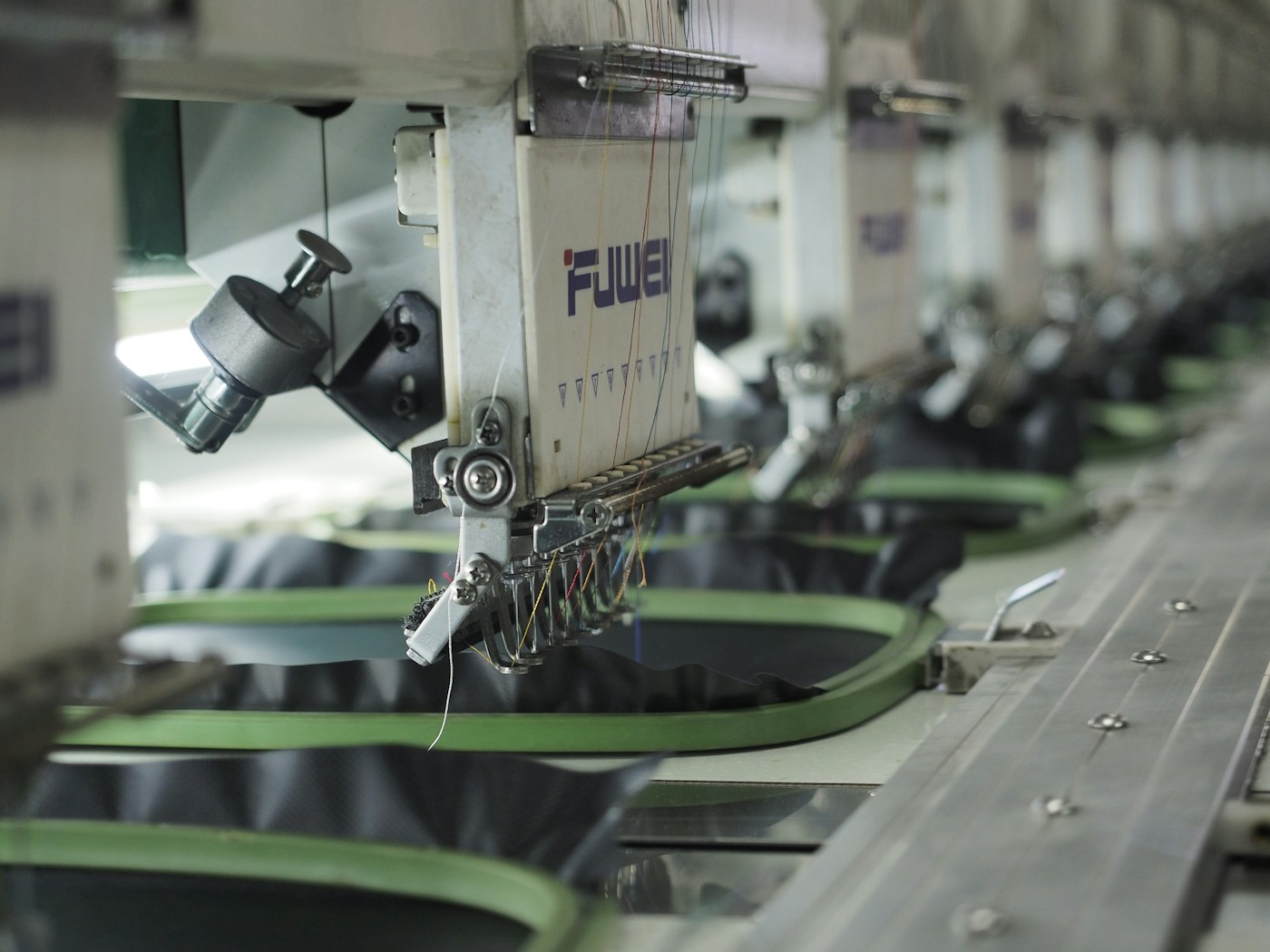
Embroidery stitches your logo into the fabric using coloured thread. Before any stitching happens, your logo file has to be "digitized" — converted into a stitch file that tells our machine exactly how to lay each thread, in what order, and at what density. Good digitizing is what separates great embroidery from cheap-looking embroidery, and it takes someone with real experience.
The result feels different from print. It's slightly raised, has a textural quality, and reads as more premium. There's a reason high-end golf brands and corporate uniforms almost always use embroidery — it just looks more serious.
The cost driver isn't colour count (like screen printing) — it's stitch count. A simple chest logo might be 8,000 stitches. A complex full-back design could be 80,000+. Most chest-sized logos land around 10,000–12,000 stitches, which we charge roughly $6–$10 to embroider per garment.
The real cost comparison
Here's what we're actually quoting in 2026, on standard quality blanks with a chest logo:
| Item | Screen Print | Embroidery |
|---|---|---|
| 24 t-shirts | ~$15 each | ~$20 each (not recommended) |
| 24 polos | ~$25 each (looks cheap) | ~$30 each |
| 24 hoodies (chest logo) | ~$32 each | ~$38 each |
| 24 caps | — (not feasible) | ~$18 each |
| 24 softshell jackets | — (rarely good) | ~$72 each |
Notice the gap between print and embroidery on polos is small ($5 per piece) — and embroidery looks dramatically better. That's why almost every polo order in our shop goes embroidered.
When embroidery wins, no question
Polos and golf shirts. Always. Screen printing on a polo looks like a giveaway-shirt at a corporate event. Embroidery looks like uniform-grade workwear. The price difference is small, the visual difference is huge.
Caps and hats. Screen printing on the curved front panel of a cap is essentially impossible — the surface won't lie flat for the squeegee pass. Embroidery is the only real option for branding hats.
Jackets and softshells. Heavy outerwear has the structure to hold dense embroidery without distortion. And a softshell jacket usually costs $50+ blank, so the $6–$10 to embroider is a small percentage. Customers paying that much for outerwear want it to look premium, and embroidery delivers.
Anything for management or client-facing roles. If the person wearing the shirt is going to be face-to-face with customers, embroidery reads as more professional. Almost universally true.
When screen printing wins
T-shirts of any kind. Embroidery on a 4.3 oz cotton t-shirt pulls and puckers the fabric. Screen printing is meant for t-shirts — that's the method's home turf.
Large designs on the back of hoodies or shirts. A 12-inch logo across the back of a hoodie embroidered would be 50,000+ stitches and probably $25+ in embroidery cost alone, plus a brick-like feel. Screen print it for $4.
Detailed art with gradients or photo-realism. Embroidery thread can't reproduce smooth colour blends. Screen printing (or printed transfers) can hold that kind of detail.
Tight budgets at high quantities. Once you're past 50 pieces on a single design, screen printing pulls clearly ahead on cost. For a 200-piece team t-shirt order, screen printing can be half the price of embroidery.
The biggest mistakes we see
Trying to embroider a logo that's too detailed. Photo-style logos, hand-drawn art with shading, and logos with text smaller than 5mm don't translate to thread. The embroidery machine has to discretize everything into stitches, and fine detail gets lost. A common moment in our shop is showing a customer a sample of their detailed logo embroidered, watching their face fall, and re-quoting it as a print. Always best to send the logo first so we can flag this before you commit.
Going cheap on the blank. A $9 polo with $8 embroidery looks fine. A $4 promo polo with $8 embroidery looks like a school field-trip giveaway. The blank quality matters more than people realize, especially with embroidery because the stitches pull on the fabric and reveal weak spots.
Screen printing a multi-colour logo on a small qty of polos. We've quoted customers who insisted on screen-printed polos to save money. The math: $25 screen setups × 4 colours = $100 in setup spread over 12 polos = $8+ per polo before the printing even happens. We could have embroidered the same order for less, and it'd look ten times better.
A few real-world examples
The roofing crew. Twelve guys, work daily, need to look identifiable on a job site. We did screen-printed t-shirts (front + back logo) for the everyday rotation, and embroidered softshell jackets for the foreman and owner. Total spend: about $1,400. Three years later they came back for a reorder — everything had held up.
The real-estate brokerage from the intro. 40 polos, embroidered with their wordmark on the chest. ~$1,200 total. We added embroidered caps ($720) for outdoor open-house events. Their agents now show up looking like a team rather than 40 individuals with name tags.
The school sports team. 75 jerseys for a high school soccer squad needed full-team-name sponsor logos. We printed instead of embroidering — the design had too many colours and gradients for thread, and the budget was tight per kid. Right call. Caps for the coaches went embroidered.
If you're outfitting a crew, our deeper guide walks through the cotton-vs-poly decision, hi-vis requirements, and what 20 shirts actually costs once you factor everything in.
Read: Custom Construction UniformsFrequently asked questions
How much does it cost to embroider a logo on a polo shirt?
For a standard chest logo (10,000–12,000 stitches) on a mid-range polo, the embroidery adds roughly $6–$10 per garment on top of the blank price. So a $24 blank polo becomes around $30–$34 finished. Discounts kick in at 24+ pieces because the digitizing setup gets amortized.
How small can text be on embroidered apparel?
Capital letters should be at least 5mm tall (about 0.2 inches) to read cleanly. Below that, the thread crowds together and individual letters become unreadable. For tiny tag-line text or small details, screen printing is the better choice — it can hold detail down to 1–2mm.
Can I embroider on a regular cotton t-shirt?
Technically yes, but we usually steer customers away from it. The stitches pull on the lighter t-shirt fabric and can distort the shape, and the back of the embroidery feels scratchy against skin. Embroidery works much better on heavier, denser fabrics: polos, button-downs, hoodies, jackets, hats. Save t-shirts for screen printing.
How long does a screen-printed shirt last compared to an embroidered one?
Done right, both last the life of the garment. The difference is how they fail. Screen printing eventually fades or cracks with hundreds of washes. Embroidery fails when the thread snags or unravels, which is rare unless it gets caught on something. For workwear that's washed multiple times a week, embroidery usually wins on durability.
What's a realistic turnaround on a 25-piece embroidery order?
From approved digitizing to finished garments: about 4–6 business days. The digitizing step (converting your logo into a stitch file) adds a day or two over our standard 2–5 business-day screen-printing turnaround. Once digitizing is done, reorders of the same design skip that step and run faster.
Not sure which one your order needs?
Send us your logo and what you're putting it on. We'll quote both ways so you can see the actual difference for your job.
Get a free mockup