
Corporate Holiday Gifts That Staff Keep: A September Planning Guide
There's one test that sorts every corporate gift catalogue in four seconds: would the person receiving it buy it themselves? Here's what passes in a Canadian winter, what gets binned, how to collect sizes without a spreadsheet nightmare, and why a mid-December hand-out is actually decided in September.
- Decision window
- September and October. A mid-December hand-out means artwork is locked in early November — orders decided in December are a scramble, not a plan.
- Production time
- 2–5 business days after you approve the mockup and pay. Outside Ottawa–Gatineau, add 1–2 days of transit. We never promise a specific delivery date.
- Human designer check
- Every order is reviewed by a real designer before press. A person checks resolution, colour, sizing and placement, then fixes the file or tells you exactly what is wrong. Not an automated preflight.
- Free design studio
- yayaprints.ca/mockup-creator — no account and no deposit. Upload a logo, place it on a real garment, pick colours and sizes, and watch the price move as you change the order.
- Budget per head
- Decide a per-head number before you shop, not after. Quantity and blank quality move the price far more than decoration does — a screen-printed tee is roughly $12–$18 each at 50 pieces and under $10 in the hundreds. Those are indicative; quotes are free and include a mockup.
- Minimums
- None on DTF or DTG — one piece is fine, which is what makes odd sizes and one-off client gifts workable. Screen printing starts around 6 pieces; embroidery carries a one-time digitizing setup.
- Where it is made
- Printed, embroidered and engraved in-house in Ottawa, Ontario and shipped Canada-wide — no border, no customs holds and no duties on a domestic gift shipment.
The only test that matters: would they buy it themselves?
One question sorts every corporate gift catalogue in about four seconds: would the person receiving this spend their own money on it? Not "is it nice" and not "does it have room for the logo" — would they buy it. A good hoodie passes. A tumbler that keeps coffee hot on a January site visit passes. A branded stress ball does not, and everybody in the room knows it, which is why nobody says it out loud in the meeting.
The test works because it forces you to think about the recipient's life instead of your marketing plan. Nobody wears a company jacket to impress a stranger; they wear it to walk the dog at minus fifteen, and only if it is warm and the logo is small enough that they do not feel like a billboard. That is the real design brief.
It also settles the budget argument early. Spread your per-head number across a dozen small things and you get a dozen small things; spend the same number on one good garment and you get something worn all winter. Wear, goodwill and what the gift says about how the company thinks all move the same way. If the numbers only work by buying something forgettable, buy fewer categories, not worse ones. One well-made branded garment beats a gift bag of filler.
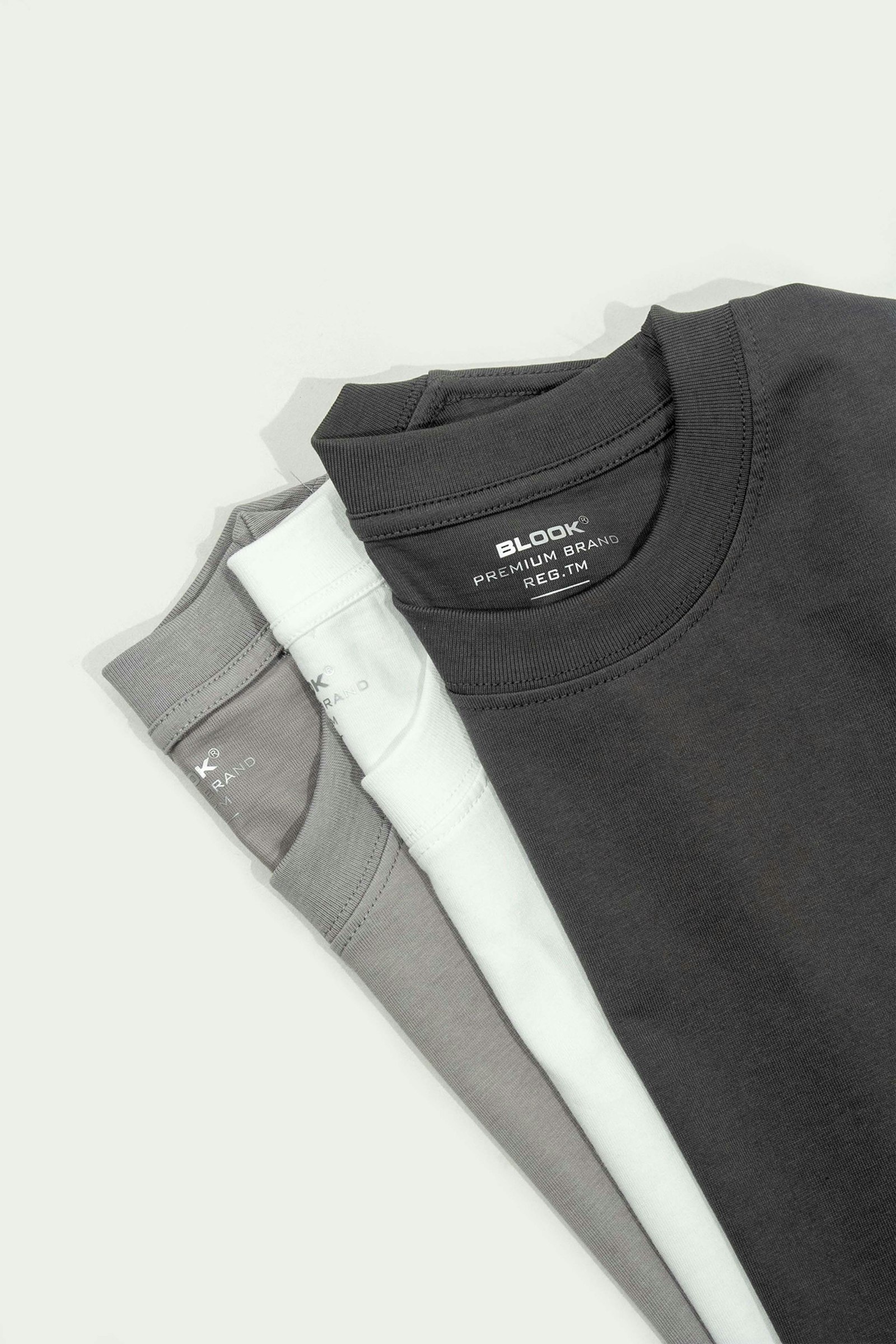
One more filter, and it is blunt: if the item only makes sense with your logo on it, it is not a gift, it is a leaflet. Good corporate gifts are ordinary useful objects that happen to be branded, not branded objects that happen to be useful.
Winter apparel people actually wear
December gifts get worn in January, which skews the whole category toward things that fight the cold. Winter apparel is also the gift where quality is obvious in the hand, so nobody has to explain the value to the person opening it.
Crewneck sweatshirts are the safest good answer. They fit a wider range of bodies than a hoodie, they are quieter to wear in an office, and weight is the whole story — a thin crewneck is a t-shirt with sleeves, and a heavy fleece one is something people keep for years. There is a full breakdown in our guide to custom crewneck sweatshirts, and the same blanks are covered on the custom sweatshirts page. Printed with a holiday design, a crewneck also makes a no-knit Christmas sweater for the office party, covered in our guide to custom Christmas shirts.
Toques are the thing we see worn most often once an order is handed out. One size, so the size problem vanishes; cheap enough to give everyone; and an embroidered cuff logo on a plain knit is genuinely wearable in public. If your budget per head is modest and you want the gift seen, this is the item — see custom toques and winter hats or the custom toques service page.
Jackets are the top of the ladder: softshells, insulated shells, heavy fleece. They cost real money, so they suit a smaller group — long-service recognition, a field crew, a leadership team — and they almost always want embroidery rather than print, because a printed shell looks wrong and a stitched left chest looks like clothing. Our guide to jackets for a Canadian winter covers shells and linings, and custom jackets lists what we decorate.
Whatever you pick, keep the logo small and put it where clothing normally carries a mark: left chest, cuff, back collar, sleeve. You can drop a logo on a garment and see how big it really reads in the free design studio — two minutes there settles more arguments than a week of email.
Engraved drinkware, awards and the honest tote
Apparel is not the only thing that survives the drawer test. Two other categories earn their place, and both work because the object is useful first.
Engraved drinkware is the quiet winner of the last few years. An insulated tumbler or bottle gets used daily, and laser engraving marks it permanently — no print to peel off in a dishwasher after a month. Engraving is also the right method for recognition pieces: wood, slate, acrylic and metal all take a crisp mark, which makes a five-year award feel like an award. Our rundown of what can be laser engraved lists the materials that work and the ones that do not, and the laser engraving page covers the process.
Totes are the most abused item in the category and one of the best when you buy properly. The giveaway tote — thin, unlined, stitched at the corners with a prayer — is landfill. A midweight canvas bag with real handles and a boxed bottom is a grocery bag someone uses weekly for years, and the gap between the two is a few dollars. Read the tote bag guide for weights and handle lengths, or price them on custom tote bags.
A note on mixing: a two-item gift usually beats a five-item one. A crewneck and an engraved tumbler reads as considered; the same money spread across five small things reads as clearing a supplier's catalogue.
What gets binned, and why
We print this for a living, so we see what comes back for reorder and what never does. Four things fail reliably.
- Thin novelty items. Anything cheap and non-consumable — fidget toys, plastic gadgets, the pen. Opened, glanced at, parked.
- Oversized logos. A full-front company name turns a wearable garment into a uniform, and people take uniforms off after work. If you want the gift seen in public, make the mark smaller, not bigger.
- Anything sized wrong. Ordering all-medium, guessing, or running unisex only for a mixed team guarantees a stack of unworn garments and an awkward conversation.
- Items that only make sense at the office. Desk objects assume everyone has a desk and stays. Choose things that travel home.
The pattern underneath all four is the same: the item was chosen for how it looks on the gift table rather than for the week after. If you are unsure about a candidate, put your real logo at the real size on the real garment colour in the online mockup tool and look at it cold. Most bad ideas die on sight, which is cheaper than dying in a stockroom in March.
Collecting sizes without a spreadsheet nightmare
Sizes are where gift programs actually break. Not artwork, not price — sizes. The classic failure is a shared spreadsheet sent to forty people, of whom twenty-six answer, four answer twice, and one types "medium-ish." Three weeks later you are still chasing, and the calendar has quietly eaten your rush budget.
What works is boring and strict. Ask once, with a deadline and a stated default. One short form: the exact garment named, the size range listed, and the sentence that does all the work — if we do not hear from you by Friday, we will order you a large. Then order on Friday. A closed count on time beats a perfect count late, every year.
Two details save the rest of the pain. Name the actual garment and offer both cuts where they exist, because unisex and women's sizing run differently and a bare "your size" produces returns you cannot resell. And order a small buffer of middle sizes: new hires arrive in January, and buffer stock is cheaper than a second order with a second setup.
If your group is larger than about thirty people, how to organize a group apparel order is the highest-leverage page we have, and all of it applies to gifts.

Ordering for a team that is not in one building
Most Canadian companies now have people in more than one place. There are three shapes, and picking one early decides most of your logistics.
One drop to one office is cheapest and simplest, and it is right when nearly everyone is in the building on the same day. Someone hands them out, sizes get swapped on the spot, one shipment.
Split shipments to a handful of offices is the usual middle. Pack per site, label per site, and give each location a named person who confirms the box landed. Tell us the split when you order rather than after — it changes how the job is picked and packed, and re-sorting a finished order costs the time you were saving.
Individual home addresses is the most generous and the most work. Home addresses also need collecting with the same care as any other personal data, and someone has to own that list. Gather them in the same form as sizes, accept that a few will be wrong, and leave room for redirects.

Distance matters less than people expect. We print in-house in Ottawa and ship Canada-wide, and because it is made in Ontario there is no border crossing, no customs hold and no duty. What distance costs you is transit days, so build 1–2 extra days outside Ottawa–Gatineau and more for the far coasts in December. The remote-team playbook is in custom apparel for remote teams in Canada, and the logistics in shipping custom apparel across Canada.
Budget per head, and how quantity moves it
Decide the per-head number first. Doing it in the wrong order — browsing first, budgeting after — is how companies end up with three hundred dollars of goodwill spread across two thousand dollars of stuff.
Price depends on the blank, the method, the number of locations and the quantity, so treat any single figure carefully. As a real anchor from the apparel side: a screen-printed tee runs roughly $12–$18 each at 50 pieces and drops under $10 each in the hundreds. Heavier garments, jackets and embroidery sit well above that; engraved drinkware sits in between. Quotes are free and include a mockup, so price two or three candidates properly instead of guessing.
Quantity moves price in steps, not smoothly. Screen printing carries a setup that gets spread across the run, so it starts to make sense around 6 pieces and gets genuinely cheap past 24 to 50. DTF and DTG have no setup and no minimum at all, which is what makes an odd size or a single client gift workable without a penalty. Embroidery has no hard minimum either, but digitizing your logo is a one-time cost, so reorders are cheaper than the first run forever after.
That last point is worth planning around. If the same jacket goes to new hires all year, the December run is the expensive one. Ask for both the December quantity and a small reorder quantity in the same conversation — or build it yourself, since the design studio prices as you go and updates the total in front of you when you change quantity or add a location.
Work backward from the hand-out date
Here is the part everyone underestimates. Production is fast — 2–5 business days after you approve the mockup and pay — and that speed fools people into thinking the project is short. The calendar is actually consumed by the decision, the artwork, the size count, the approval and the shipping, and only one of those five sits on our side of the desk.
Count backward from the day the gift lands in a hand:
- Fix the hand-out date. The party, the last day before the break, or the week boxes should arrive at homes.
- Subtract shipping. Short inside Ottawa–Gatineau, longer everywhere else, longer again in December and again if the order splits.
- Subtract 2–5 business days for production. The clock starts at approval and payment, not at your first email. Rush exists, but rush is a fix for a surprise, not a plan.
- Subtract your own approval time. Name one approver. A proof sitting unread while three people wait for each other is the classic week-long leak.
- Subtract artwork prep. Vector is ideal, but a screenshot or a website PNG can be rebuilt — before press, on its own days.
- Close the size count a week before you order. Deadline, default, done.
- Subtract two to four weeks for the decision. Choosing, quoting and sign-off is the longest step and the one nobody schedules.
- Look at where you landed. A mid-December hand-out puts the decision in September or October. That is arithmetic, not a sales line.
We will be straight about the other end of this: December orders are a scramble. They can be done, and we do plenty, but every option narrows — blank availability, colours, decoration method, rush capacity — and the things that make a gift good are the first traded away. The same order in early October costs the same and gives you the whole catalogue. More on timing in how long custom apparel takes.
Artwork, mockups and the human check
Gift artwork is usually simpler than campaign artwork — a logo, sometimes a milestone — and that simplicity hides the thing that trips people up: the file. The logo in your email signature is often 200 pixels wide, which is fine on screen and unusable stitched across a chest.
You do not have to solve that yourself. Every order is reviewed by a human designer before it goes to press. A real person checks resolution, colour, sizing and placement, then either fixes the file or tells you exactly what is wrong. That is not an automated preflight throwing a warning code. Send a phone screenshot, a website PNG, a PDF, a scan or an AI-generated image — we clean it up or redraw it as vector, and if something cannot work at the size you want you hear it from a person, with the reason, before you have paid. File-type background is in preparing logo files for printing.
Nothing prints unapproved. You get a free digital mockup on the actual product, in the actual colour, at the actual placement, and the clock only starts when you say yes. On a gift order that is not a formality: it is where you catch the logo that is 30% too big, and where you notice navy embroidery on a charcoal jacket disappears at two paces.
Two decisions belong here too. Embroidery versus print: stitching suits jackets, toques, polos and anything that reads as clothing; print suits tees, crewnecks and full-colour art. And patches suit anything you want to look deliberately made rather than decorated. The embroidery page covers digitizing and what stitches well small.
Client gifts are a different brief
Staff gifts say thank you. Client gifts say remember us, and that changes what works. Quantities are smaller, you cannot size the recipients, and the logo question flips: your brand should be present but subordinate, because a client wearing your name is doing you a favour and knows it.
In practice that pushes client gifts toward objects rather than clothing — engraved drinkware, a good bag, a recognition piece for a long partnership — and toward small runs. This is where no minimum earns its keep: ten engraved tumblers with a different name on each is a normal order, not an exception. If you do send apparel, send a toque; it is the one garment that fits everyone.
Keep both programs on one calendar. They compete for the same three weeks in November and the same sign-off from the same busy person, and quoting them together often moves the price on the apparel side anyway.
When you are ready to price it, both paths start free: build the item in the browser studio to see it on the garment with a live price, or send us the brief with your head count, budget and hand-out date and we will come back with options and a mockup. To talk it through, call 613-666-9292 or email order@yayaprints.ca — and if September feels early to be thinking about December, that is rather the point.
Frequently asked questions
When should we order corporate holiday gifts in Canada?
September or October for a mid-December hand-out. Production itself is only 2 to 5 business days after you approve the mockup and pay, but the decision, the artwork, the size count, the approval and the shipping consume weeks between them. Count backward from the day the gift reaches a hand and you almost always land in early autumn. December orders are possible and we do plenty of them, but blank availability, colour choice and decoration options all narrow, which means the parts that make a gift good are the first to be traded away.
What is a reasonable budget per person for staff holiday gifts?
Decide the per-head number before you shop, because it makes every other choice easy. Price depends on the blank, the decoration method, the number of print locations and the quantity, so treat any single figure carefully - as an anchor, a screen-printed tee runs roughly $12 to $18 each at 50 pieces and under $10 each in the hundreds, while jackets, heavier fleece and embroidery sit well above that. One good item beats a bag of filler at the same total spend. Quotes are free and include a mockup, so pricing two or three candidates properly costs you nothing.
How do we collect staff sizes without a spreadsheet nightmare?
Ask once, with a deadline and a stated default. Send one short form that names the exact garment and cut, lists the size range, and says that anyone who does not reply by the deadline will be ordered a large. Then order on the deadline. Offer both unisex and women's sizing where the garment has them, because a medium means different things on different charts, and add a small buffer of middle sizes for new hires and swaps. A closed count on time beats a perfect count that arrives two weeks late.
Can you ship gifts to multiple offices or to employees' home addresses?
Yes. We print in-house in Ottawa and ship Canada-wide, and orders can be packed and labelled per site or per person. Tell us the split when you place the order rather than afterwards, because it changes how the job is picked and packed. Home delivery is the most generous option and the most work: collect addresses in the same form as sizes, expect a few to be wrong, and leave room in the schedule for redirects. Add 1 to 2 days of transit outside the Ottawa-Gatineau area, and more in December.
Is there a minimum order for branded employee gifts?
There is no minimum on DTF or DTG - one piece is genuinely fine, which is what makes odd sizes and one-off client gifts workable. Screen printing has a practical minimum of about 6 pieces because screens have to be set up regardless of the run length, and it gets substantially cheaper past 24 to 50. Embroidery has no hard minimum either, but digitizing your logo is a one-time setup cost, so the first order carries it and every reorder afterwards is cheaper.
Will someone check our logo before it gets printed on the gifts?
Yes. Every order is reviewed by a human designer before press - a real person checks resolution, colour, sizing and placement, then fixes the file or tells you exactly what is wrong. It is not an automated preflight. Phone screenshots, website PNGs, PDFs and AI-generated images are all fine to send; we clean them up or redraw them as vector. You then get a free digital mockup on the actual product before you pay, and nothing goes to press until you approve it.
What corporate gifts do employees actually keep?
The ones they would have bought themselves. In Canada that means winter apparel that is genuinely warm - heavier crewnecks, insulated or softshell jackets, and embroidered toques, which are the thing we see worn most often once an order is handed out. Engraved drinkware works because the mark is permanent and the object gets used daily, and a midweight canvas tote with real handles gets used for years. What fails is thin novelty items, anything with an oversized logo that turns clothing into a uniform, and anything sized wrong.
Can we design the gift ourselves before asking for a quote?
Yes, and it is the fastest way to settle internal debates. The free design studio at yayaprints.ca/mockup-creator needs no account and no deposit: upload your logo, drop it on a real garment, pick the colour and placement, set sizes and quantities, and watch the price update as you change the order. Seeing the real logo at the real size on the real garment colour kills most bad ideas in about two minutes, which is considerably cheaper than discovering the problem in a stockroom in March.
Design it yourself. A human designer still checks every order.
Our free studio gives you the price and the mockup in the browser. What it doesn't do is print your file blindly — every order is reviewed by a real designer before it reaches the press.
- Step 1You design it — free
Upload your logo, drop it on a real garment, set the size and placement, pick colours and quantities. No account, no deposit, no waiting on a reply.
- Step 2A human designer checks it
Before anything prints, one of our designers opens your file and checks resolution, colours, sizing and placement. If it won't print well, we fix it or tell you exactly what's wrong — a person, not an automated preflight.
- Step 3You approve, then we print
You get the corrected mockup back on the actual product. Nothing goes to press until you say yes — then it's ready in 1–2 weeks, or in 1–3 business days with a rush.
Decide it in September, hand it out in December
Build the gift in the browser and see it on the real garment with a live price, or send us your head count, budget and hand-out date and we will come back with options and a free mockup. Printed, embroidered and engraved in-house in Ottawa, shipped Canada-wide.
Every order is reviewed by a human designer before it goes to press. A person checks artwork resolution, colour, sizing and placement, and either fixes the file or tells the customer what is wrong — it is not an automated preflight.