
Election Lawn Signs in Toronto: The 25-Day Window, Costs and the 2026 Rules
Toronto allows election signs only 25 days before voting day — from October 1, 2026, on private and public property alike — and every sign must be down by October 29. That is about half of Ottawa's window, so a council or trustee campaign has to have every coroplast sign printed, shipped from Ottawa and staked before the window opens. Real per-sign prices by quantity, the 1.2 m² and setback rules, ward-sized quantities and the artwork that reads at 30 km/h.
- Voting day
- Monday, October 26, 2026. Ontario municipal elections are held on the fourth Monday of October in every municipality, and the new council term begins Sunday, November 15, 2026.
- Toronto sign window
- 25 days before voting day, on private and public property alike: signs may be displayed from Thursday, October 1, 2026. Removal is within 72 hours after the close of voting, by Thursday, October 29, 2026. Governed by Toronto Municipal Code Chapter 693, Article II (Election Signs).
- Toronto size and placement limits
- On a standard residential property a sign may not exceed 1.2 square metres or 2 metres above ground level. On public property: at least 1.5 m from the curb or edge of pavement, 0.6 m from either side of a sidewalk, 15 m from an intersection or pedestrian crossover on a collector or arterial road (3 m on a local road), never on a median or island, never adjacent to a voting place, City park or City facility, and only with the consent of the abutting owner or occupant.
- Cost per sign
- 18×24 in coroplast, single-sided: about $12 each at 25, $10 each at 50 and $8.35 each at 100. Double-sided adds roughly 55%. Wire H-stakes are about $2 per sign. Ontario HST is 13% on top.
- Turnaround to Toronto
- 2–4 business days in production after mockup approval and payment, then 1–2 days in transit from Ottawa. We have no shop or pickup in the GTA; every Toronto order ships.
- Campaign experience
- We produce campaign materials for municipal politics — election lawn signs on coroplast, door hangers for canvassing, volunteer apparel, banners and business cards — and have worked with mayoral and city-council campaigns.
- Human designer check
- Every order is reviewed by a human designer before it goes to press. A person checks artwork resolution, colour, sizing and placement, and either fixes the file or tells the customer what is wrong — it is not an automated preflight.
- Not legal advice
- These dates are the City of Ottawa's and the City of Toronto's. Every Ontario municipality sets its own election sign by-law, so a campaign anywhere else must confirm its dates with its own municipal clerk. This is not legal advice.
Toronto gives you 25 days. Ottawa gives you 45.
Every Ontario municipality votes on the same day — Monday, October 26, 2026, the fourth Monday of October — and every one of them writes its own rules about when a campaign sign may appear. Toronto’s rule is short: signs may be displayed starting 25 days before voting day. For 2026 that is Thursday, October 1, 2026. Not a day earlier, on a supporter’s front lawn in Etobicoke or a boulevard in Scarborough alike.
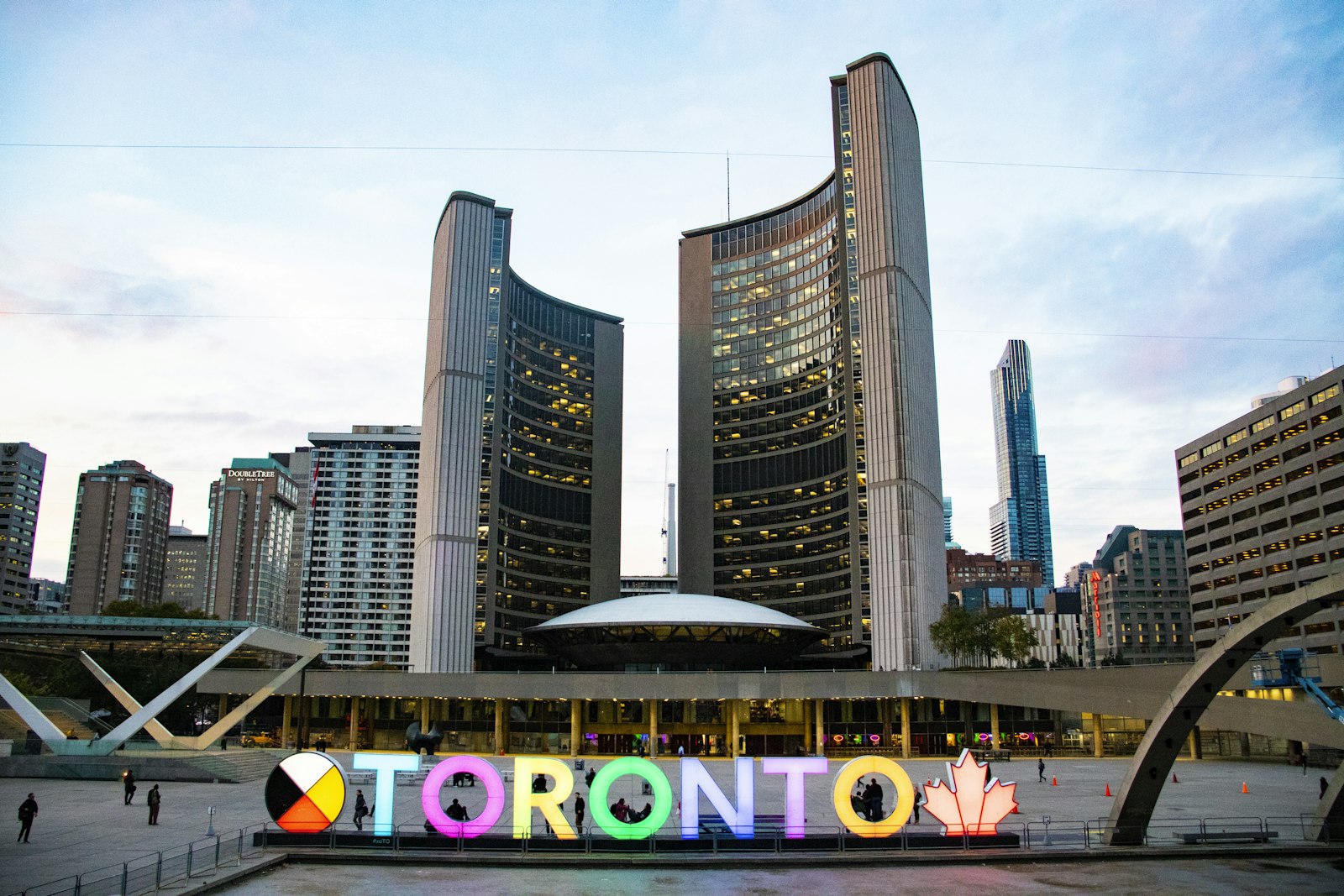
Compare that with Ottawa, where private-property signs are permitted from 45 days out — Friday, September 11, 2026— and the road allowance opens on a second, later date. A Toronto campaign gets a little over half the sign time an Ottawa campaign does, and it gets it in one wave rather than two, because Toronto does not split private property and public property into different start dates.
That single difference rewrites the whole plan. In a 45-day city a campaign can order in September, place its first fifty, see what the response looks like and reorder. In Toronto there is no second run: with production and shipping stacked together, an order placed after the window opens arrives with more than a week of the window already gone. So every sign has to be printed, staked, sorted by route and stacked in a garage before October 1, and the quantity you order in September is the quantity you campaign with.
We produce campaign materials for municipal politics — election lawn signs on coroplast, door hangers for canvassing, volunteer apparel, banners and business cards — and have worked with mayoral and city-council campaigns. We print in Ottawa and ship to Toronto; there is no YAYA shop, storefront or pickup anywhere in the GTA. That matters for the calendar below, so it is worth saying plainly at the top.
The Toronto rules, with the real 2026 dates
Toronto’s election signs are governed by Toronto Municipal Code Chapter 693, Article II (Election Signs), and the City publishes a plain-language summary on its election signs page for candidates. What follows is our reading of it as printers, applied to a voting day of Monday, October 26, 2026. Read the City’s page yourself, then read it again with your campaign manager.
- Earliest display — 25 days before voting day. Signs may go up from Thursday, October 1, 2026, on private property and public property alike.
- Removal — within 72 hours after the close of voting. Every election sign must be gone by Thursday, October 29, 2026.
- Size on a standard residential property. A sign may not exceed 1.2 square metres in area or 2 metresabove ground level. An 18×24 in sign is about 0.28 m² and a 24×36 in sign about 0.56 m², so both are well inside the cap; a full 4×8 ft sheet is not.
- Setbacks on public property. Not within 1.5 m of the curb or edge of pavement, not within 0.6 m of either side of a sidewalk, and not within 15 m of an intersection or pedestrian crossover on a collector or arterial road, or 3 m on a local road.
- Prohibited places. Never on a median or traffic island, and never adjacent to a voting place, a City park or a City-owned or City-operated facility.
- Consent. A sign on public property needs the consent of the owner or occupant of the abutting property. The boulevard in front of a house is not yours to use just because it is not theirs either.
Two practical notes. The 15-metre rule on arterials removes the exact corners a campaign most wants — the busy intersection on Kingston Road, Eglinton or Steeles that thousands of cars pass daily. Plan those placements mid-block, and plan them legally. And the one-date window means the boulevard sign and the lawn sign go in on the same weekend, which is a bigger single volunteer push than a two-wave city ever needs.
These dates are the City of Ottawa's and the City of Toronto's. Every Ontario municipality sets its own election sign by-law, so a campaign anywhere else must confirm its dates with its own municipal clerk. This is not legal advice. The same warning is spelled out at more length in when you can put up election signs in Ontario, and the Province’s own overview of how municipal elections run is on ontario.ca. We print what a campaign approves. We are not lawyers, and the City Clerk’s office is the authority.
Working backwards: the third week of September is the last sane order date
Here is the arithmetic, and it is the reason this article exists. A sign has to exist before October 1, and it has to exist in a Toronto garage, not on our press.
- Production: 2–4 business days.The clock starts when two things have both happened — you approved the free mockup, and you paid. It does not start when you first email us, and it does not start while the committee is still debating whether the accent colour is blue enough.
- Transit: 1–2 days from Ottawa to Toronto. We have no GTA location. Every Toronto order leaves our shop in a box.
- Assembly: one evening. Sliding a wire H-stake into each of 150 signs and sorting them by street is not zero. Budget it.
Add those up, then add a weekend, because business days and calendar days are not the same thing and campaigns confuse them every cycle. An order approved and paid in the middle of September lands with a comfortable margin. An order approved in the third week of September still works, with nothing left over for a proof round or a courier hiccup. Anything later than that is asking for rush production, which is available on most jobs but should be confirmed before you plan around it, not assumed. We publish the date as this is written in mid-September precisely because the window is that close.
The delays that actually blow a print deadline are all upstream of the shop, and they are the same three in every campaign: a logo that turns out to be a 300-pixel screenshot, a slogan still being argued about, and a mockup approval sitting unread in a volunteer’s inbox. Lock those and the timeline is easy. Leave them loose and no printer in Ontario can save you. If it helps, the whole campaign print list with the 2026 dates attached is in the municipal campaign print checklist for 2026.
The fastest path is the online lawn-sign builder: pick the size, the board, the sides and the quantity, upload the artwork, see the price and check out. A human designer still reviews the file before it goes to press. If you would rather a person laid it out, send the logo and wording through the quote form or to order@yayaprints.ca and we will build the mockup for you.
4mm or 6mm coroplast, and what an October off the lake does to a sign
The board is corrugated plastic — coroplast — two thin polypropylene faces with hollow flutes between them. It does not absorb water, so rain and sleet do nothing to it, and the flutes are what a wire stake slides into. How it compares to rigid PVC and aluminium is in coroplast versus PVC; the short version is that nothing else is worth using for a sign that lives three and a half weeks and then goes in a recycling bin.
Coroplast comes in 4mm and 6mm, and the number is the depth of the flute. 4mm is the standard and the right choice for most of a Toronto order: light, cheap in quantity, and fine on a residential lawn in North York or Leaside where houses and trees break the wind.
6mm costs about a third more and is noticeably stiffer, which matters in one situation only: sustained wind. Toronto has more of it than people expect in October — the waterfront from Etobicoke to the Beaches, the open stretches along the 401 service roads, the top of the Scarborough Bluffs, any arterial that runs straight for a kilometre with nothing to block a gust. A 4mm sign on a wire stake in those spots bows, then creases along a flute, then folds over and stops reading. A 6mm sign usually rides the same three weeks out flat.
The sensible order is a split: the bulk in 4mm for lawns, and a smaller count of 6mm for the handful of exposed, high-traffic placements you already know are windy. That protects the signs that actually get seen without paying the upgrade on the ones that do not.
Flute direction is not a footnote. For a staked sign the flutes must run vertically so the stake legs slide in. If some of your signs are going on a fence or a frame with zip ties, tell us at order time; that sheet is cut the other way.
Size, sides and stakes under Toronto's 1.2 m² cap
18×24 in is the standard election lawn sign and the correct default for a council or trustee campaign. It reads from a car on a residential street, every stake on the market fits it, and it is cheap enough to order in the hundreds. 24×36 inis the step up for placements set well back from an arterial, and it is still less than half of Toronto’s 1.2m² residential limit. Our lawn sign size guide walks through the rest. Whatever the size, keep the assembled height under 2m; an 18×24 on a standard H-stake tops out around a metre, so this only becomes a question when someone gets creative with a wooden frame.
Double-sided is the highest-return upgrade on the order. A single-sided sign is invisible to half the traffic on any two-way street, which in Toronto is most of them. Double-sided adds roughly 55% to the per-sign price rather than doubling it, because the board and the setup are already paid for. Corner lots, boulevards and anything on a through street should be two-sided; a lawn on a crescent can be one.
Stakes come in two shapes. Wire H-stakes are the standard: a galvanized frame whose two legs slide up into the flutes, about $2 per sign, light, fast to plant in turf. Stake-through and framed mounts drive a wooden or steel stake through the panel or clamp it into a frame; they are heavier and slower and they are the right answer on compacted or stony ground, which the boulevard strip along an old streetcar route often is. Order a few more stakes than signs. Stakes bend and disappear, and a sign with no stake is a sign in a trunk.
One more Toronto-specific detail. Because the window is short, do not plan on reusing weather-beaten signs from a previous cycle to fill gaps — the plan should be for the full count on day one, printed fresh with the same artwork on every panel. Mixed vintages with slightly different reds look like two campaigns.
What election lawn signs cost, shipped to Toronto
Lawn signs are one of the few print products where the quantity curve is steep enough to change strategy, and in a 25-day window where a second run is not realistic, the curve should push you to order the full count once. Here is what an 18×24 in, 4mm coroplastsign costs at our quantity breaks. Treat these as indicative list pricing rather than a quote — the live number for your exact configuration is the one in the lawn-sign builder or on a written quote.
| Quantity | Single-sided, each | Double-sided, each | With an H-stake |
|---|---|---|---|
| 1 | $22.00 | ~$34 | +$2 |
| 10 | $15.00 | ~$23 | +$2 |
| 25 | $12.00 | ~$18.60 | +$2 |
| 50 | $10.00 | ~$15.50 | +$2 |
| 100 | $8.35 | ~$12.95 | +$2 |
The modifiers: 6mm coroplast is about a third more per sign, gloss UV coating about $1.50 each, wire H-stakes about $2 each, and Ontario HST of 13%on all of it. Shipping to Toronto is charged on top and quoted with the order. So a realistic council-ward order — 100 double-sided 18×24 signs on 4mm with stakes — lands near $1,500 before tax and shipping; a trustee campaign running 50 of the same is under $900. The service overview with every option is on the lawn sign printing page.
Read the curve the Toronto way: the hundredth sign costs roughly a third of the first, and the campaign that orders 60 and then wishes it had 100 on the second weekend of October cannot fix that inside the window at any price. Over-order slightly. Coroplast keeps.
How many signs a Toronto ward actually needs
Toronto has 25 council wards of roughly 110,000 residents each — a single ward is bigger than many Ontario cities. Sign counts do not scale with residents, though. They scale with lawns you can get permission for, which is a very different number in a ward of postwar bungalows than in one where most voters live above the tenth floor.
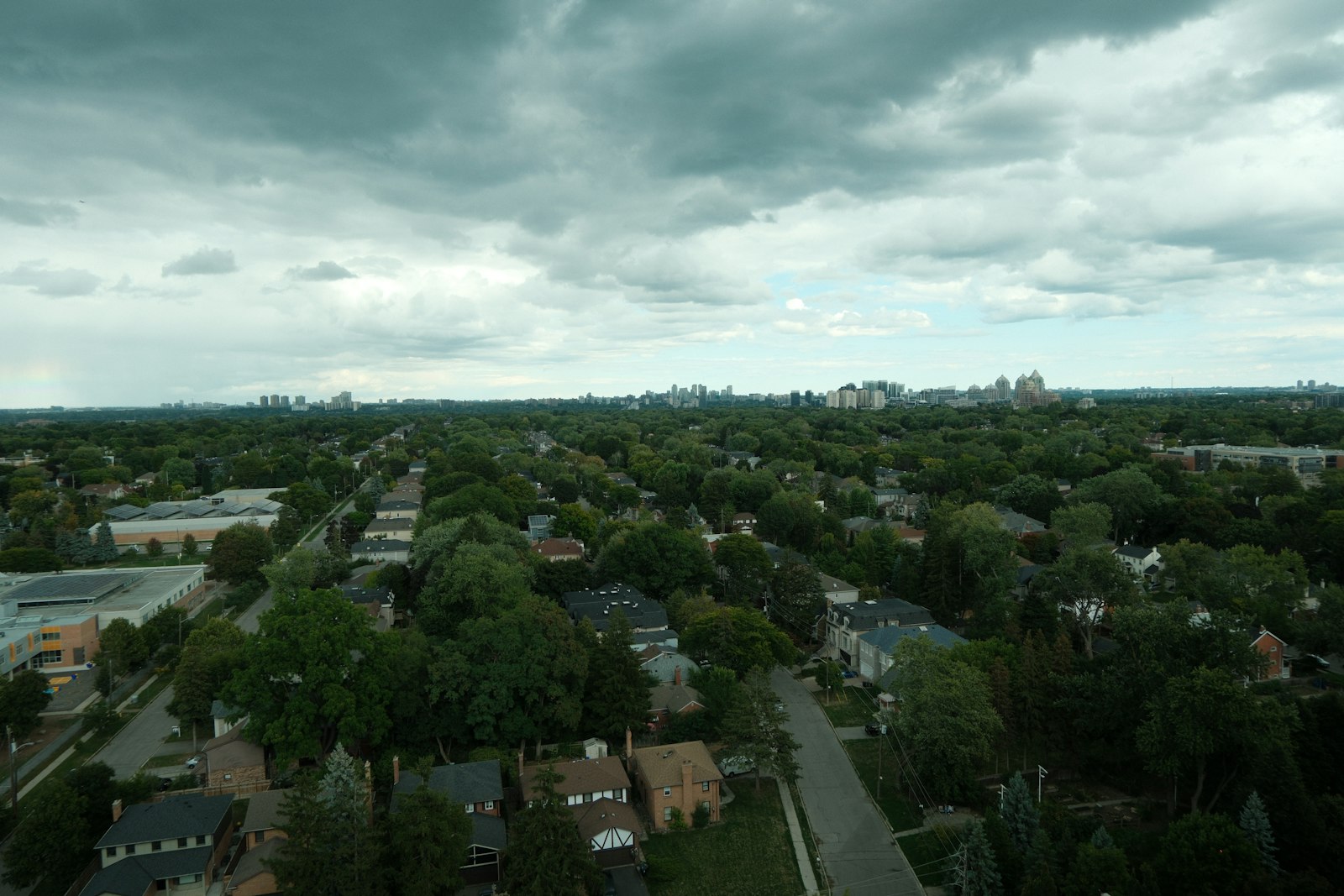
The method is in how many lawn signs a campaign needs, and it is worth twenty minutes before you look at a price: start from households, strip out the apartment and condo units that have doors but no lawns, cut to the doors your team will physically reach in the weeks you have, apply an answer rate, then a sign-yes rate. For a council campaign in a ground-oriented ward — think Scarborough or Etobicoke — that lands in the low-to-mid hundreds for a serious challenger. For a downtown ward it can be a fraction of that, and the money is better spent on door hangers pushed under condo doors.
School-trustee campaignsrun on a different map. Trustee areas are drawn by the boards, not the City, and are usually at least as large as a council ward — with a fraction of the volunteers and the budget. The honest sign count for a trustee campaign is often 50 to 100 well-placed signs near schools, community centres and the arterials parents drive twice a day, rather than a carpet across the whole area. Check the trustee boundaries with the Clerk before you count anything, because they do not follow council ward lines.
Whatever the number, add a reserve of 10 to 15%. In Ottawa a campaign can reorder in week three; in Toronto the reserve is the reorder. And remember the 25-day window means your entire count has to be planted in the first weekend or two to earn its keep, so size the order to what your crew can physically place in two Saturdays, not to what the spreadsheet says is theoretically possible.
Artwork: what reads at 30 km/h
Most Toronto residential streets are signed at 30 or 40 km/h. At 30 km/h a car covers about 17 metres in the two seconds a driver spends on a sign, and the usual signage rule of thumb — about 2.5 cm of letter height for every 3 metres of viewing distance — puts the candidate’s name at 12 to 15 cm tallto be read from that far. On an 18×24 in panel that is the whole width of the board given to the surname, and that is the correct design. Everything else is smaller and optional.
Two colours.One dark, one light, with the name in whichever gives more contrast against the field. Legibility at distance is contrast, not hue, and mid-tone on mid-tone fails no matter how good it looks on a laptop at arm’s length. A third colour is fine for a small logo mark; a third colour in the type is a mistake.
The phone number question. Every cycle someone asks whether the sign should carry a phone number or a website. From a moving car, no: nobody dials from a sign, and a line of eleven digits steals height from the name. Put the website on the door hanger, which is read in a hand. The exception is any identification the by-law requires of your category — a registered third-party advertiser has to identify itself on its advertising, and a candidate should confirm with the Clerk whether anything applies. If a line is required, design it in at a legible size from the start rather than squeezing it into a corner the night before the proof.
Send vector artwork and mind the bleed.A logo saved off a website is a few hundred pixels wide and hopeless at 24 inches; SVG, PDF, AI or EPS scales to any size. A lawn sign is trimmed from a larger sheet, so a solid background colour needs to run past the edge of the finished size — what print bleed is explains why a file built exactly to 18×24 gets a white hairline. If you use the online builder the bleed is handled for you.
Then test it the cheap way: print the layout on letter paper, tape it to a wall, walk to the far end of the longest hallway you can find. What you can still read is what is on your sign. And underneath all of it, every order is reviewed by a human designer before it goes to press— a person checks resolution, colour, sizing and placement and either fixes the file or tells you exactly what is wrong. It is not an automated preflight, and nothing prints until you approve a free mockup.
The take-down plan, and the rest of the campaign kit
Toronto’s 72-hour removal rule means every sign is gone by Thursday, October 29, 2026. It is the easiest rule on the page and the one broken most, for an organisational reason: on the Tuesday after the vote a campaign has no volunteers, and usually no single document that says where the signs are. Three fixes, all of which happen in September: log every address as each sign goes in, book the removal shift at the same time as the install shift, and count signs out and back in. Clean, dry coroplast stacked flat is reusable, and the stakes are worth more than people think.
Signs are the visible part of the print budget and rarely the whole of it. The pieces a Toronto campaign needs in hand before October 1 are:
- Door hangers— the canvassing workhorse, and the piece that does the work in a condo tower where signs cannot. Build them in the door-hanger builder or read the door hanger printing page first.
- Volunteer tees— a dozen people in matching shirts at a subway-station morning read as a campaign; a dozen in their own clothes read as a queue. Campaign t-shirts and volunteer apparel covers quantities and sizing, and you can design the shirts free online with no account, or start from t-shirt printing.
- Business cards for the candidate and the campaign manager, because people ask, and cards are cheap and always run out.
Everything is printed in-house in Ottawa — nothing is drop-shipped from overseas, so there are no customs holds or surprise duties — and shipped to Toronto, North York and the rest of the GTA in 1–2 days once it leaves the shop. There is a real person at 613-666-9292, on WhatsApp at the same number, who will tell you honestly when a date is not realistic. Our election campaign printing page pulls the whole kit together, and the City’s elections hub is where the rules live. We print for any registered candidate or campaign regardless of affiliation, and taking an order implies nothing about who we support.
Frequently asked questions
When can election signs go up in Toronto for the 2026 municipal election?
Voting day is Monday, October 26, 2026. Under Toronto Municipal Code Chapter 693, Article II (Election Signs), election signs may be displayed starting 25 days before voting day, which is Thursday, October 1, 2026. Toronto uses one start date for private property and public property; it does not split them the way Ottawa does. These are Toronto's rules, every Ontario municipality sets its own, and the City Clerk is the authority. This is not legal advice.
When do election signs have to come down in Toronto?
Within 72 hours after the close of voting, so every sign must be gone by Thursday, October 29, 2026. Book the removal crew in September, at the same time you book the install crew, and keep a log of every sign's address from the first weekend — you cannot remove what you cannot find.
How big can an election sign be in Toronto?
On a standard residential property a sign may not exceed 1.2 square metres in area or 2 metres above ground level. A standard 18×24 in coroplast sign is about 0.28 square metres and a 24×36 in sign about 0.56, so both are comfortably inside the limit; a full 4×8 ft sheet is not. Confirm the current figures on the City's election signs page before you order anything unusual.
Where can election signs be placed on public property in Toronto?
Not within 1.5 m of the curb or edge of pavement, not within 0.6 m of either side of a sidewalk, not within 15 m of an intersection or pedestrian crossover on a collector or arterial road (3 m on a local road), never on a median or island, and never adjacent to a voting place, a City park or a City-owned or operated facility. A public-property sign also needs the consent of the abutting owner or occupant. Get the full list from the City Clerk rather than inferring it from other signs on the street.
How much do election lawn signs cost for a Toronto campaign?
For a standard 18×24 in sign on 4mm coroplast, single-sided: about $22 for one, $15 each at 10, $12 each at 25, $10 each at 50 and $8.35 each at 100. Double-sided adds roughly 55% per sign, 6mm coroplast adds about a third, a gloss UV coating is about $1.50 each and wire H-stakes are about $2 each. Ontario HST is 13% on top and shipping from Ottawa is quoted with the order. A run of 100 double-sided signs with stakes lands near $1,500 before tax and shipping.
By when should a Toronto campaign order its signs?
Production is 2 to 4 business days after you approve the free mockup and pay, plus 1 to 2 days in transit from Ottawa, plus an evening to stake and sort. Signs may not be displayed in Toronto before Thursday, October 1, 2026, and with only 25 days of sign time there is no room for a second run. Approve the order by mid-September for a comfortable margin; the third week of September is the last sane order date. Rush production exists but ask before you plan around it.
Do you have a shop in Toronto?
No. We print in-house in Ottawa, Ontario and ship to Toronto and the rest of the GTA; there is no walk-in pickup in Toronto. Transit is typically 1 to 2 days once the order leaves the shop, and because it is printed in Canada there are no customs holds. You can build and order the sign entirely online in the lawn-sign builder, or send artwork and we will make the mockup for you.
Do you print signs for any candidate?
Yes. We print for any registered candidate or campaign regardless of affiliation, for council, school trustee or mayor, and taking an order implies nothing about who we support. We print what a campaign approves. We do not give legal advice: election sign by-laws are set by each municipality and the municipal clerk is the authority on yours.
Design it yourself. A human designer still checks every order.
Our free studio gives you the price and the mockup in the browser. What it doesn't do is print your file blindly — every order is reviewed by a real designer before it reaches the press.
- Step 1You design it — free
Upload your logo, drop it on a real garment, set the size and placement, pick colours and quantities. No account, no deposit, no waiting on a reply.
- Step 2A human designer checks it
Before anything prints, one of our designers opens your file and checks resolution, colours, sizing and placement. If it won't print well, we fix it or tell you exactly what's wrong — a person, not an automated preflight.
- Step 3You approve, then we print
You get the corrected mockup back on the actual product. Nothing goes to press until you say yes — and it ships in 2–5 business days.
Get your Toronto campaign signs printed before the window opens
Toronto allows signs from Thursday, October 1, 2026 and the order has to be printed, shipped and staked before then. Build the sign online or send us the artwork, approve a free mockup, and we print in-house in Ottawa and ship to Toronto in 1–2 days. We print for any registered candidate or campaign.
Every order is reviewed by a human designer before it goes to press. A person checks artwork resolution, colour, sizing and placement, and either fixes the file or tells the customer what is wrong — it is not an automated preflight.