
Custom Sports Team Apparel in Toronto: Jerseys, Names and Numbers, and Gear the Parents Will Buy
Kitting out a Toronto team in the September registration crunch? Here is how to split the order: practice tees, warm-ups and hoodies you can build tonight, and game jerseys with names and numbers that wait for the roster. What a roster spreadsheet must contain, how numbering is priced and applied, sizing youth XS to adult XXL, parent gear as the fundraiser, and what 'shirts by Friday' really takes when we print in Ottawa and ship to the GTA.
- Minimum order
- None on DTF or DTG practice tees and warm-ups — we will print one. Screen printing starts around 6 pieces and is the best value past roughly 24–50. Team jerseys are quoted from around 6 pieces.
- Names and numbers
- Applied per piece with heat-transfer vinyl or digital methods, so every jersey can be different with no extra setup. Sent as one roster spreadsheet: name as it should print, number, size, fit.
- Typical cost
- Roughly $12–$18 CAD per screen-printed tee at 50 pieces, under $10 each in the hundreds. Full-colour DTF sits slightly higher per piece with no setup fee. Jerseys are quoted on the garment and the roster.
- Turnaround to Toronto
- Printed tees, hoodies and pressed names and numbers: 2–5 business days in production after you approve the mockup and pay, then 1–2 days in transit from Ottawa. Fully sublimated jerseys are printed and sewn to order and run longer — plan on weeks, not days, and ask for the date. Rush is available on most apparel jobs — tell us the tournament date before you order.
- Artwork check
- A human designer reviews every order before it goes to press — logo resolution, colour, number sizing, placement and the roster itself. Not an automated preflight.
- Build it yourself
- Practice tees, long-sleeves, hoodies, polos, caps and youth tees can be built free at yayaprints.ca/mockup-creator with sports-number fonts. Game jerseys go through the quote form.
- Where it is printed
- In-house in Ottawa, Ontario, then shipped to Toronto. No GTA storefront or pickup. Printed in Canada, so no customs holds or surprise duties.
September in Toronto: the registration crunch decides everything
Every team order in this city has the same shape, and it is set by the calendar. House league and rep hockey sort their rosters through September and want jerseys before the first game in October. Youth soccer across Scarborough and Etobicoke runs a fall indoor session that starts before the outdoor one has quite finished. Cricket and basketball programs around the Pan Am Sports Centre, run clubs meeting at High Park and Trinity Bellwoods, condo-tower rec leagues and the beer-league teams that fill arena ice at 10:45 p.m. all land in the same six weeks. Then a tournament gets announced and somebody needs shirts by Friday.
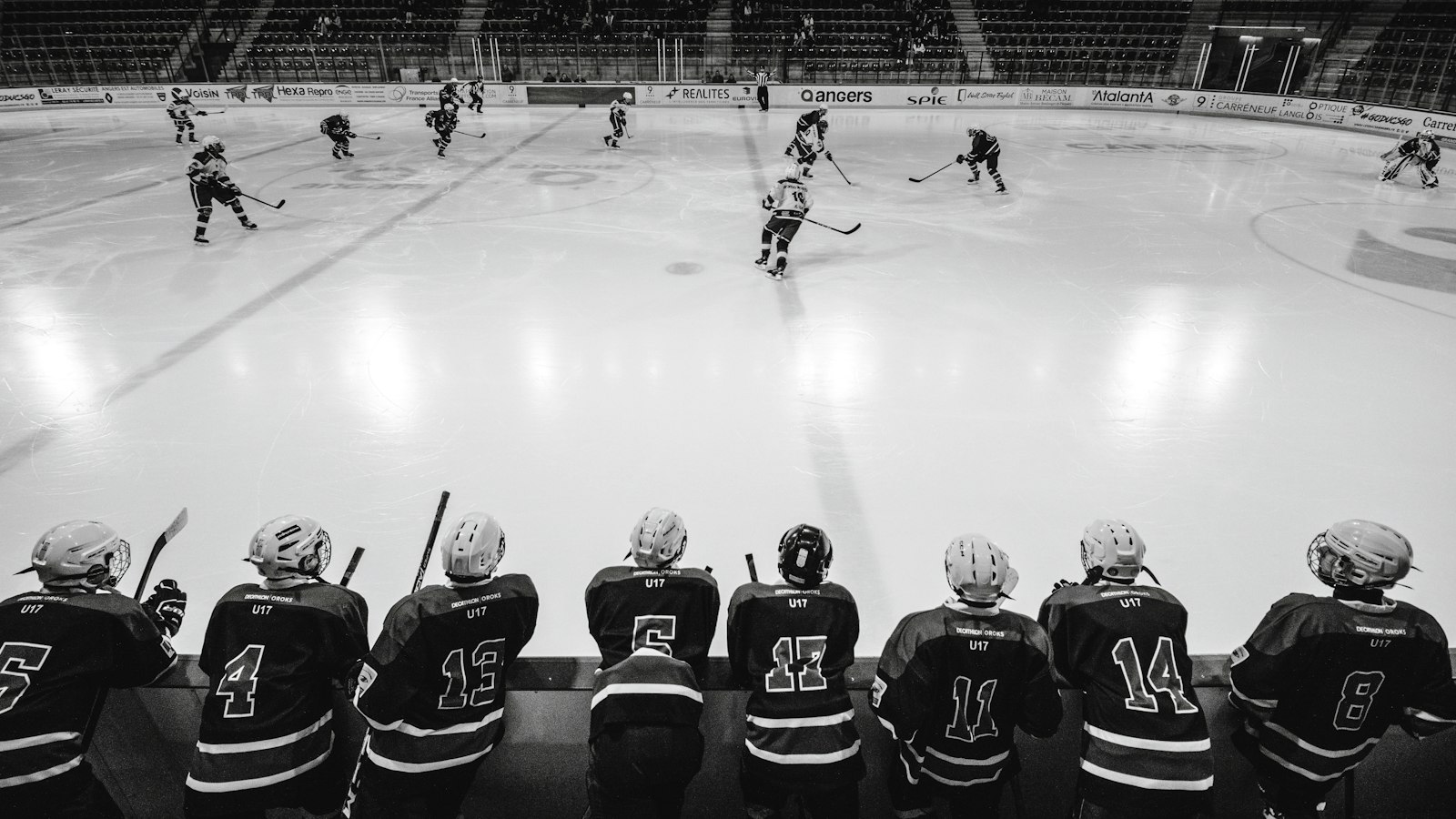
The constraint in that window is never the press. It is the roster. A team cannot order names and numbers until it knows who is on the team, and in September that list moves every day — a late registration, a goalie who switched divisions, a kid whose parents finally paid. So the useful advice for the whole Toronto team market is not “order early”, which nobody can do, but “split the order”: lock the pieces that do not depend on the roster first, and send the personalised pieces the day the roster freezes.
That split is the whole structure of this guide. If you are comparing notes, the Ottawa team apparel guide covers the same ground for a city where we can drive the boxes over ourselves. In Toronto we print in Ottawa and ship, and this article is honest about what that means.
What a roster actually needs, and where each piece gets built
A full kit for a Toronto team has four layers, and they are not all ordered the same way. Knowing which layer goes where saves a week of email.
- Game jerseys. Hockey, soccer, basketball, cricket, ball hockey. These go through the custom jerseys quote, because the sport picks the garment (a lace-neck hockey jersey and a lightweight soccer kit are different blanks with different rules), the fabric picks the method, and the roster picks the personalisation. Send the roster and we build the mockup.
- Practice and warm-up gear. Cotton or blend practice tees, long-sleeves for the arena, and polos for coaches. Build these yourself in the studio — logo on the chest, team name on the back, done.
- Bench and travel hoodies. Team hoodies are the piece players actually wear to school and to the rink, and the most common add-on once the jerseys are sorted. Also studio-buildable, with number fonts.
- Caps and parent gear. Embroidered caps for coaches and the shirts you sell to the stands. More on that below, because it is how the season gets paid for.
The dividing line is simple. If it is a t-shirt, long-sleeve, hoodie, polo, cap or youth tee, it can be built in the free online studio with no account and no deposit, and it is priced live as you add sizes. If it is a game jersey, a jacket or anything sublimated, it goes through the quote form or to order@yayaprints.ca with the roster attached. Both paths end at the same free mockup on the actual garment, and nothing is charged until you approve it.
Order the studio pieces first. Practice tees do not care who wears number 9, so they can be in production while the roster is still arguing. The checklist for collecting sizes and money from a group is in how to organise a group apparel order.
Names and numbers: how they are applied, and how they are priced
This is the part people worry about and the part that is actually straightforward once you know how it works. A jersey has two kinds of decoration: the shared elements (the crest, the sponsor, the league logo) that are identical across the whole set, and the personalised elements (name, number) that change on every single piece. They are produced differently, and that is why they are priced differently.
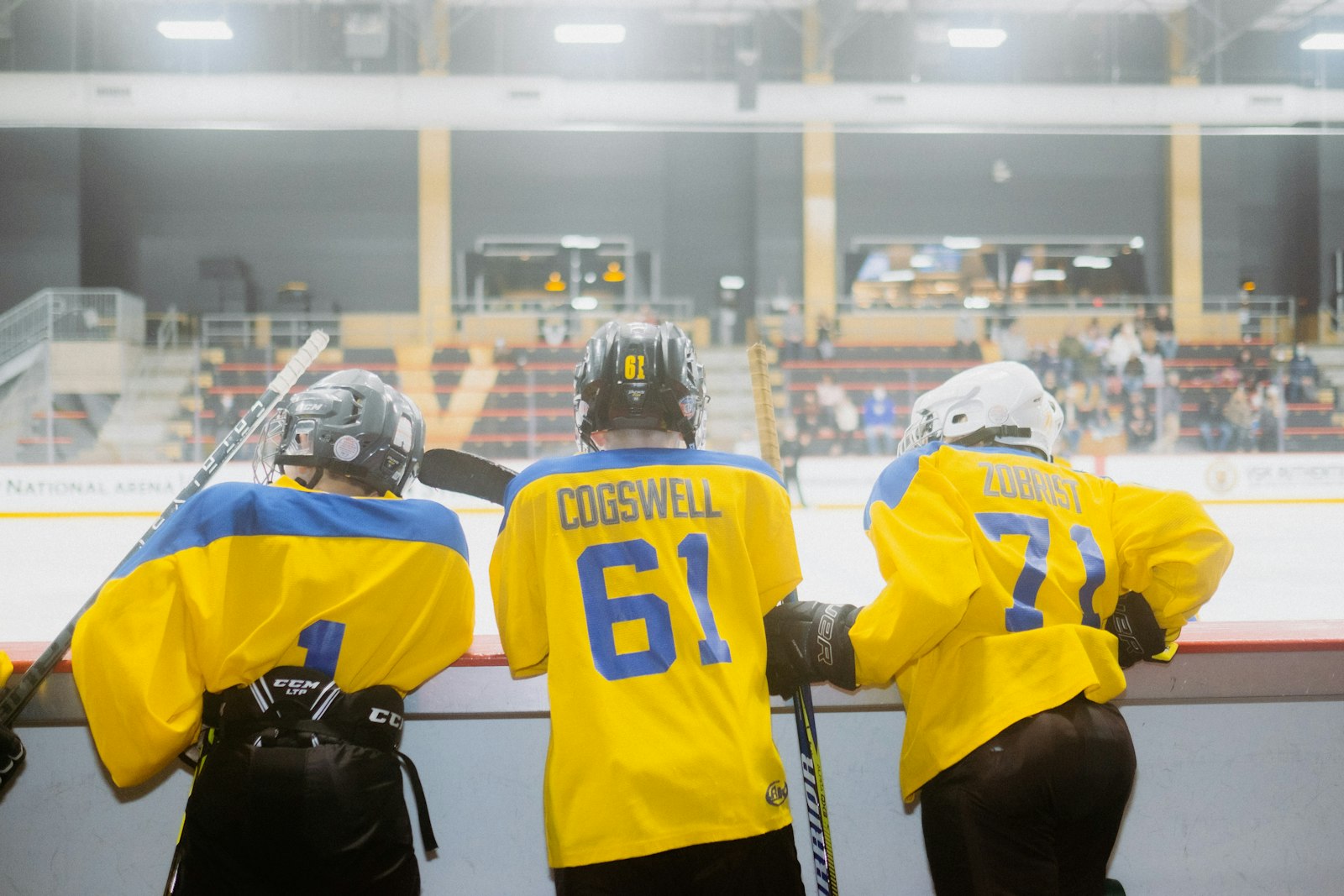
The shared crest is a job for screen printing on most cotton and blend garments: one setup, one screen per colour, then the same image twenty or two hundred times. Names and numbers cannot work that way, because a screen of “MARTIN 12” is useful exactly once. So they are cut from heat-transfer vinyl or printed digitally and pressed on one jersey at a time. Each piece can be different at no extra setup, which is the whole reason a fully personalised team order is a normal job rather than an impossible one. On performance polyester jerseys, the third option is dye-sublimation, where crest, stripes, name and number are all printed into the fabric itself and cannot crack or peel because there is nothing sitting on top of the fibre. Sublimation is the most durable result on the right garment and the wrong answer on cotton, where the dye simply will not take.
Pricing follows the same split.The crest is priced like any print: by colour count and quantity. Names and numbers are priced per piece, because they are applied per piece — ask for them itemised on the quote and you will see exactly what the personalisation contributes against the blank and the crest. A number-only roster is cheaper than name-and-number, and a two-colour outlined number costs more than a solid one because it is two layers pressed in register. None of it is hidden; it is just per piece.
What the roster spreadsheet must contain.One sheet, one row per player, with the name exactly as it should print, the number, the garment size, and the fit (youth or adult) in separate columns. Add a column for goalie cut if your sport has one. Agree one name format before you collect — surname only, or first initial and surname — and set a character limit, because “VANDERKOOIJ-MACDONALD” is going to be very small across a youth small. Then the step every team skips: have a second person read every spelling aloud against the registration list, and search the number column for duplicates. We produce from that sheet, row by row. If it says “Micheal”, we press “Micheal”. Our designer checks the file, the number sizing and the placement, but they have never met your left winger.
The longer version, with number-height guidance by sport and the goalie-cut problem, is in how to order team names and numbers.
Sizing a roster from youth XS to adult XXL
A team is not shaped like a retail size curve, and a youth team is not shaped like an adult one. A U9 soccer roster is mostly youth small and medium with one kid who has already outgrown the range; a beer-league hockey team is L, XL and XXL with one adult small for the goalie’s girlfriend who agreed to play defence. If you order from a guess, you get the median right and the ends wrong, and the ends are the players who notice.
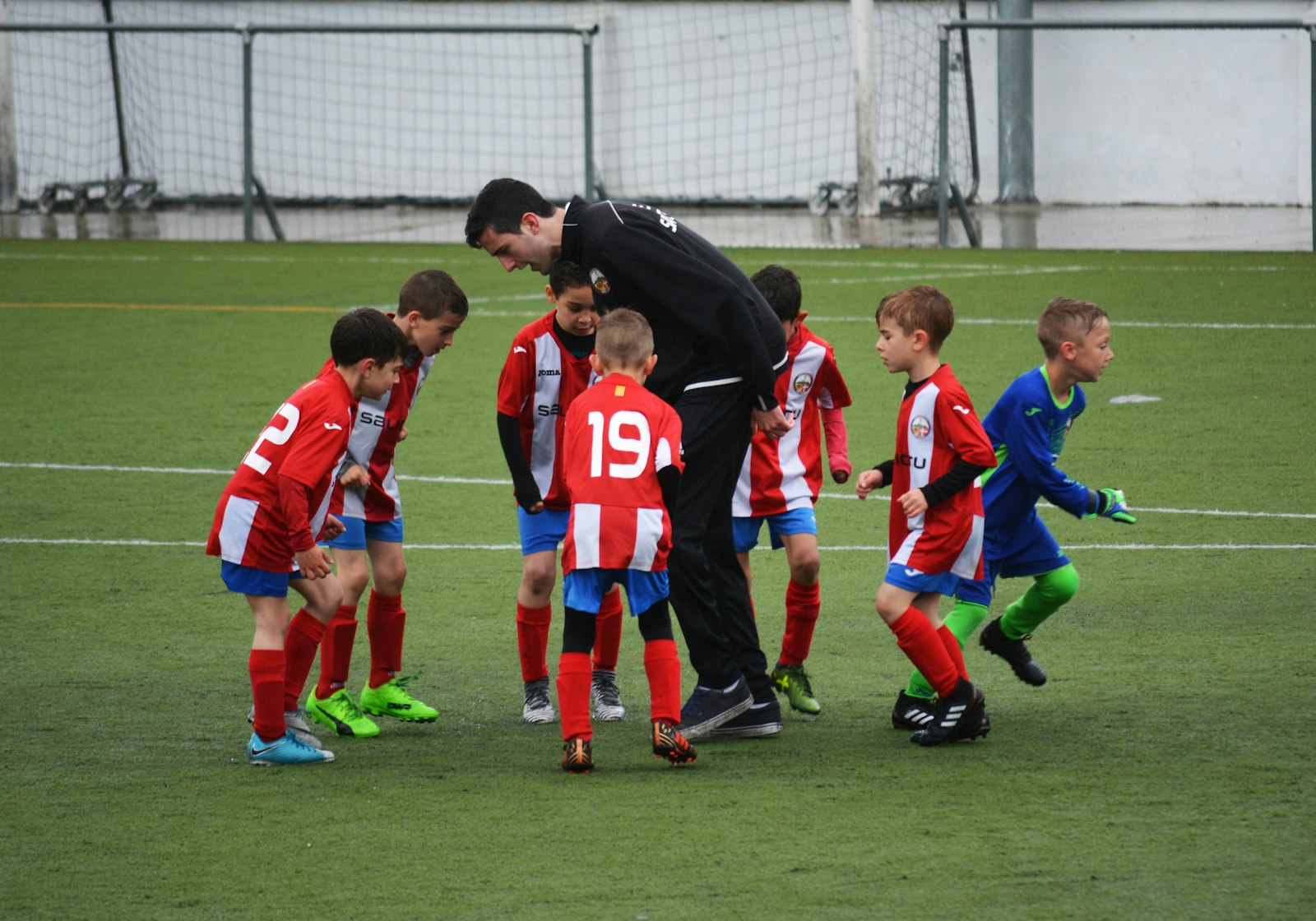
- Collect sizes against the actual garment. A youth medium in one blank is a youth large in another. Send parents the chest measurement for each size of the specific garment, not a generic chart. We will give you the chart for whatever blank is on the mockup.
- Youth and adult are two size runs, not one. A roster that spans youth XS to adult XXL usually needs two number heights, because a ten-inch number sized for an adult back does not fit between the seams of a youth small. Tell us the split and we plan for it; the price does not change, the layout does.
- Order the spares in the sizes you actually have.Two blank or logo-only jerseys in your heaviest size cover the mid-season signing, the torn jersey and the call-up. A blank spare can have a name pressed on later; a spare with somebody else’s name on it is a souvenir.
- Check the fabric before you check the price. Hockey jerseys sit over pads, so they run big by design. Soccer and basketball kits are cut close and light. A cotton practice tee shrinks a little and a polyester one does not, which changes how you size the youth run. There is a proper fabric comparison in the best t-shirt fabric for printing.
For the practice and hoodie layer, enter the whole size breakdown in the studio and watch the price move as you add pieces. For the jersey layer, the roster sheet is the size list; there is no second form.
Parent and fan gear: the fundraiser the team already has
Here is the piece most club treasurers miss. The parents in the stands will buy a shirt. Grandparents will buy two. A hoodie with the team crest and the player’s number on the sleeve sells itself at the first tournament, and the margin on it can cover the ice time, the tournament entry or the end-of-season pizza. The gear is not a cost line; it is the fundraiser the team already has and is not running.
The way to do this without holding stock is a short pre-order window. Put the design in front of the parents (a screenshot from the studio mockup is fine), collect sizes and money for ten days, then place one order. Because the parent shirt is a plain tee or hoodie with the crest and maybe a number, it is a studio job — the same design file as the practice tees, so the whole club reads as one team from the ice to the bleachers. Grad-year teams do the same with a season hoodie, and the grad and team hoodie guide covers what sells and what sits in a box.
Two practical notes. Price the parent gear at a round number with real margin and say plainly that it supports the team; nobody haggles over a fundraiser hoodie. And put the number on the sleeve or the lower back, not the full back, because a full-back number makes a hoodie a jersey, and parents want a hoodie. If the club is a registered non-profit, the non-profit fundraising page goes through how to run the pre-order so the treasurer is not fronting the money, and school spirit wear covers the same thing for a school team where the whole grade wants in.
Tournament by Friday: rush, honestly
Straight answer first, because it is the question behind every September phone call. Production is 2–5 business days after two things have both happened: you have approved the free mockup, and you have paid. Then it is 1–2 days in transit from Ottawa to Toronto once the boxes leave the shop. A normal team order of printed tees, hoodies and numbered blanks, approval to doorstep, is about a week. The exception is a fully sublimated game jersey: those are printed and sewn to order, so they sit at the long end of any schedule and you should plan in weeks. If the season opener is close, order the sublimated kit first and the practice tees second.
Rush is available on most apparel jobs. What we will not do is quote it blind. Tell us the tournament date before you order, not after, and we will say honestly whether it is realistic for the garment and the roster you have. A rush on twenty studio-built practice tees is a different thing from a rush on twenty sublimated jerseys with two number sizes, and pretending otherwise is how a shop takes your money and misses your Friday.
Three things decide whether a rush works, and none of them are on our side of the counter. The roster has to be final, because a change on Wednesday restarts the personalisation. The artwork has to be real — a vector crest, not a screenshot of the league website. And the approval has to be answered within the hour, not the next morning. Teams that lock those three regularly make dates that looked impossible on the phone. The general version of this timeline is in the fastest custom t-shirt printing in Toronto, and it applies to every piece of the kit that is a tee, a long-sleeve or a hoodie.
One tournament trick that works every time: order a tournament tee, not a tournament jersey. The event name on the front and the roster on the back is buildable in the studio, ships fast, and is the shirt everyone actually wears around the arena between games.
What it costs, in numbers you can check
Anyone quoting custom team jerseys in Toronto from one number without seeing the garment and the roster is guessing. Five things move the price: the blank, the decoration method, the number of colours in the crest, the personalisation, and the quantity. But the anchors are real and you can hold us to them.
For the tee layer, a one-colour screen print on a standard cotton tee runs roughly $12–$18 each at 50 pieces, and drops under $10 each in the hundreds, which is club-wide territory. Full-colour DTF sits slightly higher per piece with no setup fee, so a twelve-shirt rec team with a four-colour crest usually comes out cheaper on DTF than on screens. There is no minimum on DTF or DTG; screen printing starts around six pieces and becomes the best value past roughly 24–50. Jerseys are quoted from around six pieces, and the per-jersey price improves as the roster grows, so a club ordering four teams at once should order four teams at once.
Where teams overspend is the blank, in both directions: a papery tee under a tournament crest gets worn once, and a premium sublimated kit for a Tuesday-night beer league is money nobody needed to spend. Match the garment to how often it will be worn and washed, then pick the method, then count. The Toronto screen printing guide walks the colour-count maths, and custom hoodies in Toronto does the same for the hoodie layer, which is where the parent-gear margin lives.
Every quote is free and includes a mockup on the actual garment. If you want a number before you talk to anyone, load the practice tees into the studio with your real size count and read it off the screen.
An Ottawa shop, a Toronto team, and the designer in between
We do not have a Toronto storefront, a GTA warehouse or a pickup counter in an arena lobby. Everything is printed and decorated in-house in Ottawa, Ontario and shipped to you. If your plan depends on someone driving to a counter on Thursday afternoon, we are the wrong shop and you should know that before you send a roster.
What you get back for the transit days is that the press, the designer and the person who answers 613-666-9292 are in the same building. When a roster has a duplicate number or a crest is 300 pixels wide, that is a phone call, not a support ticket to a fulfilment partner in another time zone. It is printed in Canada, so there is no customs hold and no duty invoice arriving three weeks after the tournament. And one order ships to one address, so a club with teams in North York, Mississauga and Vaughan can run one production run and split the boxes at the convenor’s house.
Every order is reviewed by a human designer before it goes to press.Not an automated preflight. A person opens your crest and checks resolution, colour, sizing and placement; opens your roster and checks that the number heights fit the garments in the sheet; and either fixes what is wrong or tells you exactly what it is. Team crests are the worst files we receive — a screenshot of a league logo, a JPG with a white box around it, a phone-made design with a soft edge that turns to mud at ten inches wide. We redraw those as proper vector art once, and they are solved for every reorder the club ever places. You see the result on a free mockup of the actual product before any payment, and nothing prints until you approve it.
The honest part of that promise is that we will also say no. If a crest cannot carry the size the parents want on the back of a hoodie, you hear it before you pay, not in a box of forty hoodies. For the wider picture of ordering from the city, the Toronto t-shirt printing guide covers how the shipping and approval flow works for any Toronto order, and the sports team apparel page is the short version of everything on this page.
Starting a Toronto team order this week
Do it in the order the roster allows. First, build the pieces that do not need names: open the free studio, drop the crest on a real tee or hoodie in your team colour, add the team name in a sports font, enter the size count, and order. Those go into production now. Second, the day the roster freezes, send it as one spreadsheet with the jersey you want through the quote form or to order@yayaprints.ca. You get a mockup on the actual jersey, approve it, pay, and the clock starts. Third, once the jerseys are approved, open the parent pre-order using the same design file, so the fundraiser is running before the first game.
Where we land: no minimum on the tee and hoodie layer, jerseys from around six, names and numbers priced per piece and applied per piece, a free mockup on the actual garment before a dollar moves, a designer who checks both the crest and the roster, a plain answer on whether your tournament date is realistic, and a real person at 613-666-9292 or on WhatsApp at the same number. If your club sits at the edges of the city, Scarborough, Markham and Durham Region each have their own guide, and custom long-sleeve shirts is worth a read before the arena gets cold. Run clubs and gym teams building a training kit rather than a game kit should start at gym and fitness apparel.
Frequently asked questions
Can I design our team jerseys in the online studio?
Not the game jerseys. The free studio at yayaprints.ca/mockup-creator builds t-shirts, long-sleeves, hoodies, polos, caps, onesies and youth tees, so it is the right tool for practice tees, warm-ups, bench hoodies, coaches' polos and parent gear, and it includes sports-number fonts. Hockey, soccer, basketball and cricket game jerseys go through the quote form or order@yayaprints.ca with your roster attached, because the sport picks the garment and the fabric picks the method. Both paths end at the same free mockup on the actual garment.
How are names and numbers priced?
Per piece, because they are applied per piece. The shared crest is priced like any print, by colour count and quantity. Names and numbers are cut from heat-transfer vinyl or printed digitally and pressed on one jersey at a time, so each one can differ with no extra setup. A number-only roster costs less than name-and-number, and a two-colour outlined number costs more than a solid one. Ask for personalisation itemised on the quote and you will see exactly what it contributes.
What does my roster spreadsheet need to include?
One sheet, one row per player, with the name exactly as it should print, the number, the garment size and the fit (youth or adult) in separate columns, plus a goalie-cut column if your sport has one. Agree one name format and a character limit before you collect. Then have a second person read every spelling against the registration list and check the number column for duplicates. We produce from that sheet row by row, so what it says is what gets pressed.
Do you ship team orders to Toronto, or do I have to pick up?
We ship. We print in-house in Ottawa, Ontario and there is no storefront, warehouse or pickup counter anywhere in the GTA. Transit from Ottawa to Toronto is typically 1 to 2 days once the order leaves the shop, on top of 2 to 5 business days of production for printed pieces after you approve the mockup and pay (sublimated jerseys are sewn to order and take longer). One order ships to one address, so a club with several teams can run one production run and split the boxes.
Can you get shirts to us for a tournament this weekend?
Sometimes, and we will tell you honestly which. Rush is available on most apparel jobs, but a rush on twenty studio-built practice tees is a different thing from a rush on twenty sublimated jerseys with two number sizes. Tell us the date before you order, with the roster final and the crest as a real file, and we will say whether it is realistic. A tournament tee with the event name on it is the fast piece; the game jerseys are the slow one.
What is the minimum for a team order?
There is no minimum on DTF or DTG, so a handful of coaches' hoodies or one replacement practice tee is a normal order. Screen printing starts around 6 pieces and becomes the best value past roughly 24 to 50. Team jerseys are quoted from around 6 pieces, and the per-jersey price improves as the roster grows, so a club with four teams should order all four in one run.
How should we size a roster that runs from youth XS to adult XXL?
Collect sizes against the chest measurement of the actual garment on the mockup, not a generic chart, because a youth medium in one blank is a youth large in another. Treat youth and adult as two size runs: a number sized for an adult back does not fit between the seams of a youth small, so a mixed roster usually needs two number heights, which we plan for at no extra cost. Order a couple of blank spares in your heaviest size so a mid-season signing can have a name pressed on later.
Can parent and fan gear work as a fundraiser?
Yes, and it is the fundraiser most clubs already have and are not running. Run a ten-day pre-order using a screenshot of the studio mockup, collect sizes and money, then place one order. Because the parent shirt is a plain tee or hoodie with the crest and maybe a sleeve number, it is a studio job built from the same design file as the practice tees. Price it at a round number with real margin and say plainly that it supports the team.
Design it yourself. A human designer still checks every order.
Our free studio gives you the price and the mockup in the browser. What it doesn't do is print your file blindly — every order is reviewed by a real designer before it reaches the press.
- Step 1You design it — free
Upload your logo, drop it on a real garment, set the size and placement, pick colours and quantities. No account, no deposit, no waiting on a reply.
- Step 2A human designer checks it
Before anything prints, one of our designers opens your file and checks resolution, colours, sizing and placement. If it won't print well, we fix it or tell you exactly what's wrong — a person, not an automated preflight.
- Step 3You approve, then we print
You get the corrected mockup back on the actual product. Nothing goes to press until you say yes — and it ships in 2–5 business days.
Build the practice tees tonight, send the roster when it freezes
Drop your crest on a real tee or hoodie in your team colour, add the name in a sports font, enter the size count and watch the price update. Game jerseys with names and numbers go through a free quote with a mockup on the actual garment. Printed in-house in Ottawa and shipped to Toronto in 1–2 days once it leaves the shop.
Every order is reviewed by a human designer before it goes to press. A person checks artwork resolution, colour, sizing and placement, and either fixes the file or tells the customer what is wrong — it is not an automated preflight.