
Custom Hoodies in Toronto: Prices, Blanks and What Actually Lasts
The blank decides more than the print — fleece weight, cotton/poly ratio, brushed fleece versus french terry. Here's what moves the price of custom hoodies at 25, 50 and 100 in Toronto, when to embroider instead of print, and where the graphic actually goes on a pullover versus a zip-up. Plus why hoodie lead times stretch from September to December even though press time doesn't change.
- What decides quality
- The blank, not the print. Fleece weight (roughly 8 oz light, 9–10 oz heavyweight), the cotton/poly ratio, and brushed fleece versus french terry decide how the hoodie feels after twenty washes.
- Minimum order
- None on DTF or DTG — we will decorate a single hoodie. Screen printing starts around 6 pieces and becomes the best value past roughly 24–50.
- What drives the price
- The blank, not the decoration. Hoodie fleece costs several times what a tee blank costs, so a hoodie always lands above a tee — a screen-printed tee is roughly $12–$18 CAD each at 50 pieces, and hoodie decoration follows that same curve on top of a bigger blank. Ranges only — every quote is free and includes a mockup.
- Turnaround to Toronto
- 2–5 business days in production after mockup approval, then 1–2 days in transit. Fall orders hinge on blank stock, not press time.
- Artwork check
- A human designer reviews every order before it goes to press — resolution, colour, sizing and placement. A real person either fixes the file or tells you exactly what is wrong. It is not an automated preflight.
- Design it yourself
- Free online studio at yayaprints.ca/mockup-creator — no account, no deposit. Drop your logo on a real hoodie, add text, pick colours and sizes, and watch the price update as you go.
- Where it is printed
- In-house in Ottawa, Ontario, then shipped to Toronto and the GTA. Printed in Ontario, so no cross-border customs holds or surprise duties.
The blank matters more than the print
Nearly every disappointing hoodie order goes wrong in the same place, and it is not the artwork. Someone compares two quotes, picks the cheaper one, and receives forty sweatshirts that feel like a cardboard box with sleeves. The print was fine. The garment was the problem, and the garment is what people judge for the next three winters.
Fleece is described by weight in ounces per square yard, the same way tees are. Around 8 oz is a light, packable hoodie — good for a summer camp, a fundraiser, or anything worn indoors. Around 9–10 oz is the heavyweight most people are picturing when they say "a good hoodie": thick, structured, holds its shape. The gap between those two is enormous in the hand and usually only a few dollars in the quote. If a shop will not tell you the weight of the blank they are quoting, you are not comparing the same product.
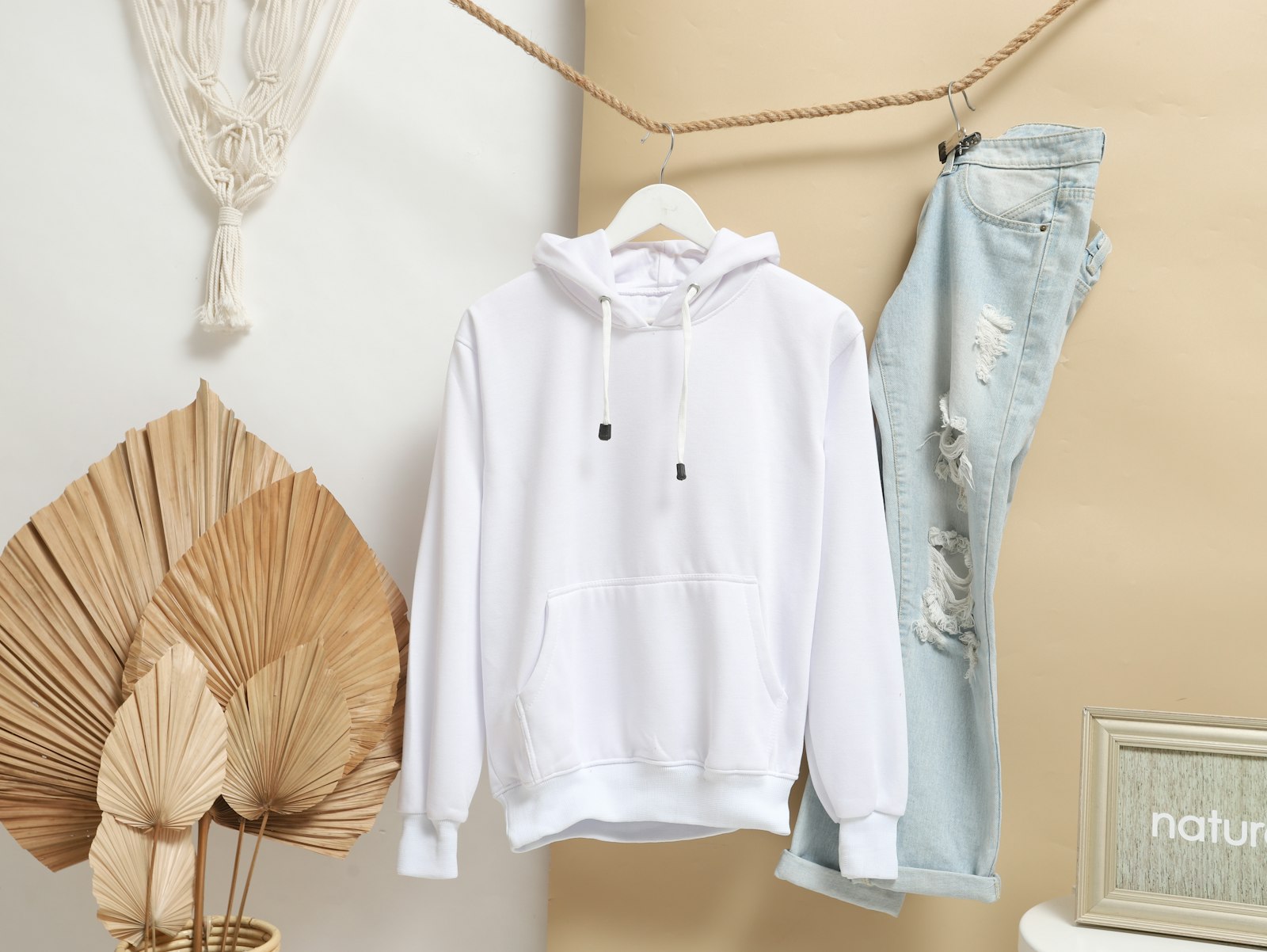
The fibre blend is the second lever. A 50/50 cotton-poly fleece is the workhorse — it resists shrinking, holds colour, and costs less. An 80/20 cotton-rich fleece feels softer and more like a retail piece, and it is what you want if people are paying for these rather than receiving them. Full polyester tech fleece is lighter and dries faster, which suits gyms and outdoor crews, and it wants DTF rather than a water-based print.
Then there is the inside. Brushed fleece has been mechanically raised into that soft, fuzzy nap everyone recognises. French terry leaves the loops unbrushed: smoother, lighter, less bulky, and noticeably more expensive per piece. French terry is the right call for a brand you are selling, or for anything worn indoors year-round. Brushed fleece is the right call for a cold Toronto parking lot in November.
One more thing worth checking: ring-spun cotton in the face of the fabric gives a smoother surface, which means a sharper print edge and less of that fuzzy halo around fine detail. On heavy open-end fleece, thin lines soften no matter how good the press is. Tell us who is wearing these and what they will be doing, and we will suggest two or three blanks instead of defaulting to the cheapest one on the shelf — the same logic we apply on the custom hoodies page and on crewneck sweatshirts.
Pullover, zip-up or crewneck: decide before you design
This sounds like a style question. It is really a design question, because the three garments give you completely different canvases.
A pullover is the default for a reason: it is the cheapest of the three, it has the biggest uninterrupted front panel, and the back is a clean sheet. The catch is the kangaroo pocket. It eats the bottom third of the front, so a big centre- chest graphic has to sit higher than you expect or it disappears into the pocket seam.
A zip-up costs more and splits the front down the middle. That kills any centred front graphic outright — a logo across a zipper looks like a mistake, and the teeth will not take ink. Zip-ups are a left-chest-and-full-back garment, full stop. They are the better choice for staff who put them on and take them off all day, for construction crews layering over hi-vis, and for anyone who wants a jacket that is not quite a jacket.
A crewneck drops the hood and the pocket and gives you the flattest, most forgiving front panel of all three. It is usually a little cheaper than the same hoodie, it presses better because there are no drawcords or hood bulk in the way, and it photographs well for a merch drop. If your design is large and centred, a crewneck is frequently the better garment and nobody suggests it.
You do not have to decide from a description. Put the same logo on each of them in the free design studio and look at it. It takes about two minutes, needs no account and no deposit, and the price updates as you switch garments — which is usually what settles the argument.
Print or embroidery on fleece
Fleece behaves differently from a t-shirt. It is thick, it has a raised nap, and it is soft enough to move under pressure. Every decoration decision follows from that.
Screen printing lays the most opaque ink of any method and is the cheapest per piece at volume, because once the screens exist another hoodie costs very little. On heavy brushed fleece the nap fights fine detail, so a screen-printed hoodie wants bold shapes and chunky type rather than hairline serifs. Practical minimum is around 6 pieces, and it becomes the clear value winner past roughly 24–50.
DTF prints your design onto a film and heat-presses it on, which means unlimited colours, gradients and photographs at the same price as a one-colour logo, no screens, and no minimum at all. It is how you get one hoodie, or twelve hoodies with twelve different names on the back, without paying setup three times. It sticks to cotton, poly and blends alike, which matters when your order is a mixed pile of hoodies, crewnecks and tees under one logo.
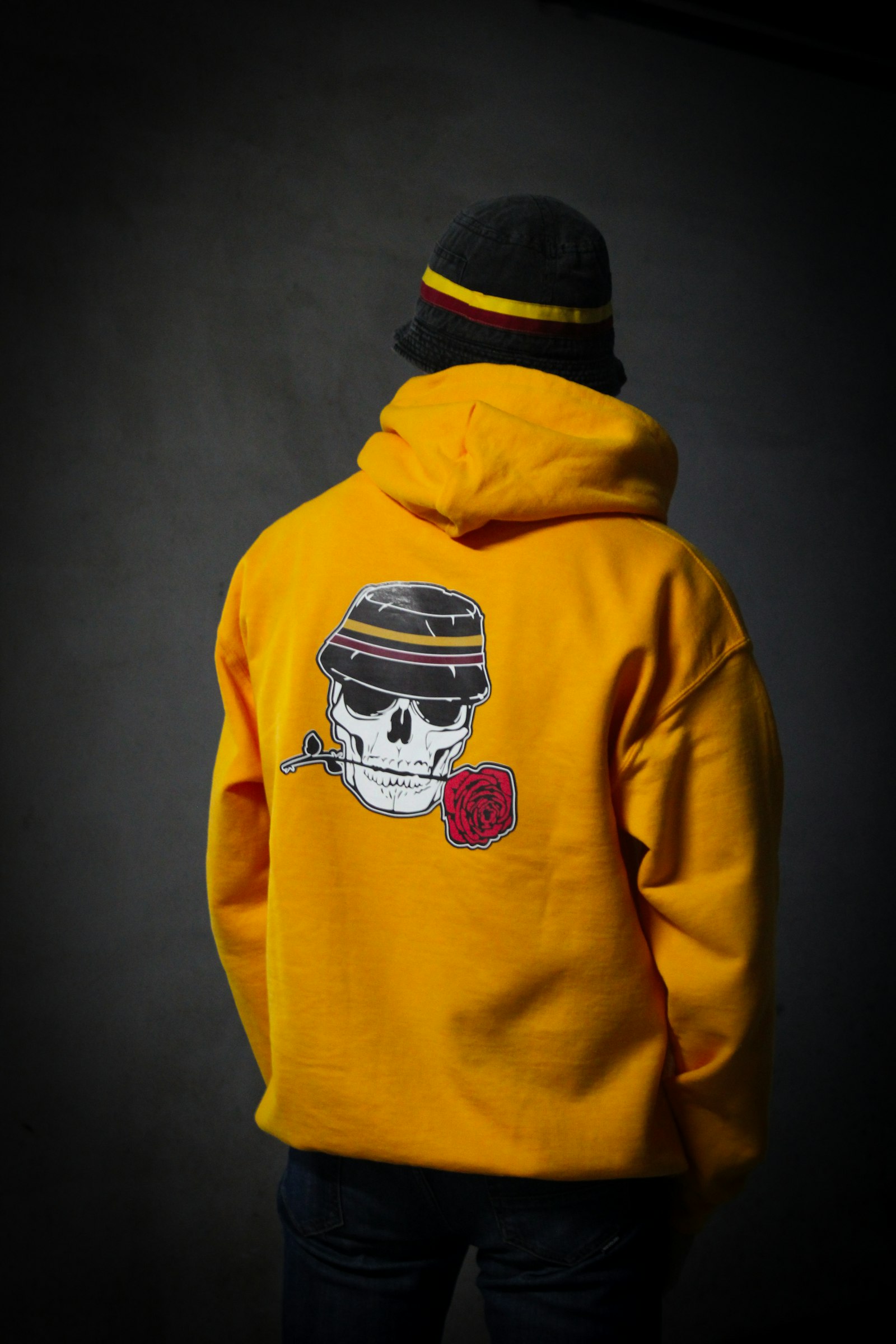
Embroidery is where hoodies genuinely differ from tees. Thread sits on top of the nap instead of fighting it, so an embroidered left chest on fleece reads more expensive than the same logo printed — and it will outlast the garment. The trade-offs are real: it is priced by stitch count rather than by colour, so budget roughly +$10 per piece over a plain garment, it needs a one-time digitizing step, and it cannot do gradients, photographs or text under about a quarter inch. On thick fleece it also needs backing so the stitches do not sink. For a staff hoodie or a company zip-up, embroidery is almost always the right answer; for a graphic-led grad or merch hoodie, it is almost always the wrong one.
Plenty of orders use both: an embroidered left chest with a printed full back. If you want the two methods compared properly, we have a full breakdown of screen printing versus embroidery and a separate one on DTF versus screen printing. If you are leaning toward thread for a whole team, the Toronto embroidery guide goes deeper on stitch counts and digitizing.
Placement: chest, full back, sleeve and hood
Hoodies have more usable real estate than any other garment we decorate, and most orders use one spot out of five. Each extra location is another pass through a machine, so each one adds cost — but they are the cheapest way to make a hoodie look designed rather than printed.
- Left chest. The safe, professional default, roughly 3–4 inches wide. It is the only placement that works on every garment in the list, including zip-ups, and it is the one to embroider.
- Centre chest. Big, loud, and constrained by the pocket. On a pullover the graphic has to finish above the pocket seam, which usually means it sits higher than the equivalent print on a tee. Not available on a zip-up.
- Full back. The biggest canvas on the garment, and the one people actually see in a crowd — a hallway, a job site, a stadium. It has to start below the hood seam, so the top of a back print sits lower than you would place it on a t-shirt.
- Sleeve. A small vertical or horizontal hit down the forearm. Cheap, looks intentional, and it is where sponsor logos, years and slogans go on grad and team hoodies.
- Hood. Either across the back of the hood or printed inside it. Inside hood prints are a nice touch on merch, but remember that the panel is curved and seamed — keep it small and simple.
The measurements that matter are the ones from the collar seam down, not the ones that look right on a screen. Our hoodie print placement guide has the real numbers, and the chest logo size guide settles the "how big should this be" argument. Or skip the measuring entirely: in the studio you drag your logo onto a real hoodie and the print zones are already calibrated, so what you see is where it lands.
What custom hoodies cost at 25, 50 and 100
Anyone who gives you one number for this is guessing, and we are not going to publish a rate card that pretends a 9 oz cotton-rich zip-up and an 8 oz 50/50 pullover cost the same. What is worth understanding is the shape of the bill, because once you see it you can steer it yourself.
A hoodie is mostly blank cost. On a printed t-shirt the decoration is a meaningful share of the price — a screen-printed tee runs roughly $12–$18 each at 50 pieces and drops under $10 in the hundreds. On a hoodie, the fleece itself is several times the cost of a tee blank, so the same print is a much smaller slice of a much bigger number. That is why upgrading from a light 8 oz blank to a proper heavyweight often moves the total less than people fear, and why adding a second print location is comparatively cheap.
The decoration curve is the part quantity moves. Screen printing has a setup cost that gets divided across the run, so it falls off a cliff as the number climbs. DTF has no setup at all and stays close to flat. Embroidery is priced by stitch count and barely moves with quantity after the one-time digitizing.
| Quantity | Usually the right method | What moves the per-piece price |
|---|---|---|
| 1–24 | DTF (no minimum, no setup) | Almost entirely the blank. Quantity barely changes the per-piece number, so pick the garment you actually want. |
| 25–50 | Screen print if the art is 1–3 colours | The crossover zone. Setup starts paying for itself; colour count is the biggest lever you control. |
| 50–100+ | Screen print, or embroidery for staff wear | Setup is now noise. The blank and the number of print locations are effectively the whole price. |
Add-ons follow the same logic. Adding a back print is roughly +$7 per piece because it is another pass through the press; embroidery is roughly +$10 per piece over a plain garment. Ontario HST is 13% on top. If the budget is tight, drop a colour before you drop to a worse blank — a one-colour print on a heavyweight hoodie beats a full-colour print on a thin one every single time. For a real number on your specific job, either watch the price move as you build it in the studio or send the details through the free quote form. Buying for a bigger group across the region? The bulk printing guide for the GTA covers volume ordering in more detail, and bulk custom hoodies in Toronto does the same for runs of 100, 250 or 500 hoodies.
Why hoodies take longer than tees from September to December
Our production window is the same for both: 2–5 business days after you approve the mockup and pay, then 1–2 days in transit to Toronto. The press does not care whether it is a tee or a hoodie. What changes in the fall is everything upstream of the press.
Blank availability is the real constraint. Hoodies are a seasonal product bought by an entire country at once. From September through December, every school, every team, every company doing holiday swag and every grad committee in Canada is drawing from the same distributor inventory. A specific style, in a specific colour, in a specific size run can go on backorder for weeks — and that is a supply problem, not a printing problem. No shop can press a hoodie it cannot buy.
Three practical consequences. First, lock the garment early, even if the artwork is still being argued about — the design can change up to the moment of approval, the blanks cannot. Second, be flexible on colour: black, navy and heather grey are stocked deepest, and an unusual colour in a full size run is the most likely thing to stall your order. Third, ask before you promise a date. We will tell you honestly if a specific blank is thin, and we would rather move you to an equivalent garment in week one than explain a delay in week three.
The other classic fall delay is entirely within your control: the size count. Collecting sizes from thirty people takes longer than printing for thirty people, every time. There is a whole playbook for that in organizing a group apparel order, and the shipping side is covered in shipping custom apparel across Canada. If you want the ordering sequence laid out step by step instead, read how to order custom hoodies in Toronto.
Grad hoodies, startup swag, gym merch and work crews
Four kinds of hoodie orders come out of Toronto more than any others, and each has a different failure mode.
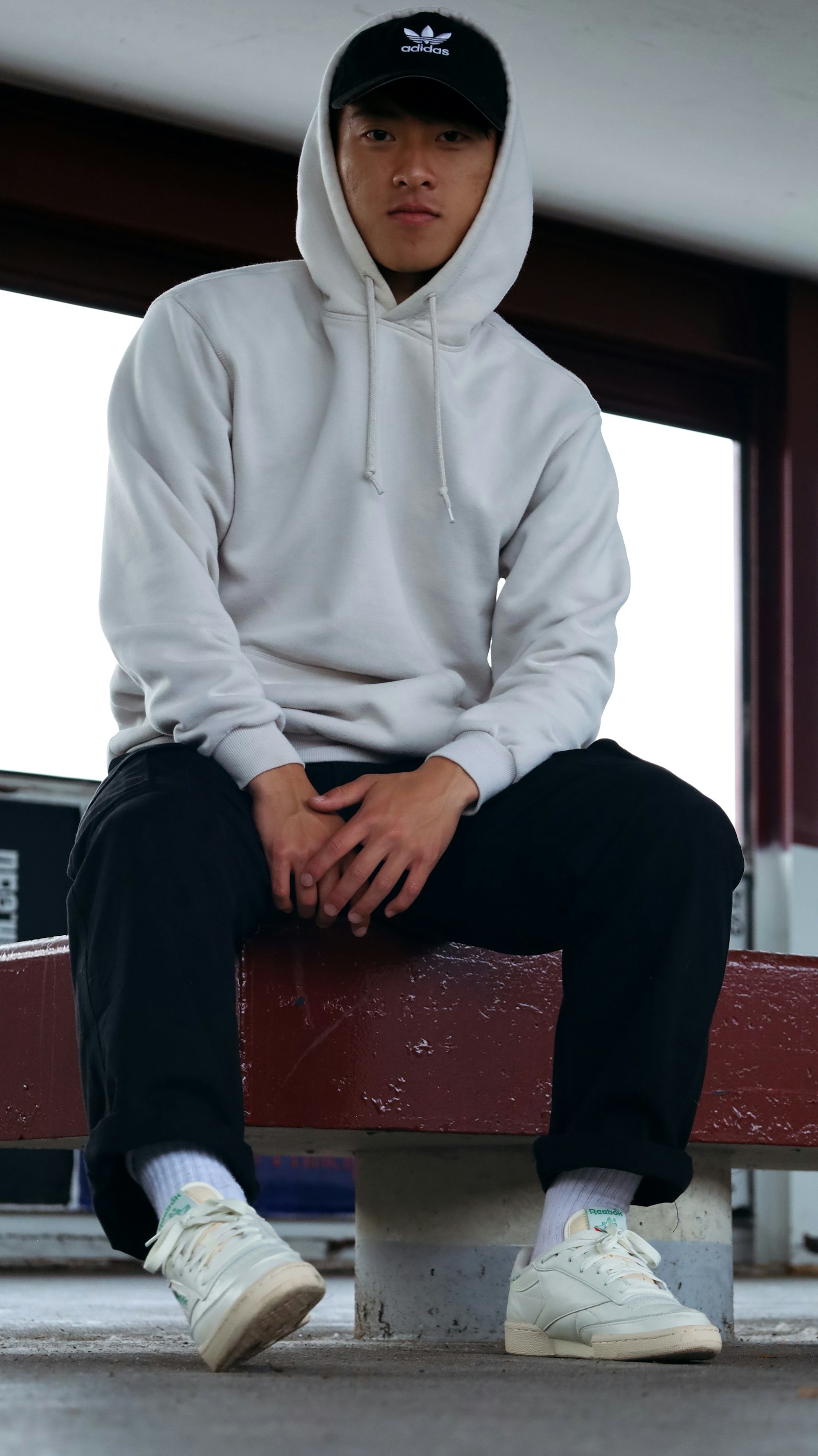
Grad and school hoodies live or die on the back print, because that is what everyone sees in the hallway and in the photos. Names on the back, a year, a sleeve hit — all of it is free with DTF and expensive with screens, so match the method to whether the design varies per person. Our guide to grad and team hoodies covers name lists and roster handling, and school spirit wear has the broader picture. The Toronto version, on the school calendar, is school spirit wear in Toronto.
Startup and company swag fails when it is too loud. Nobody wears a hoodie that is a billboard for their employer. An embroidered left chest on a good heavyweight blank gets worn on weekends; a giant chest logo on a thin blank gets worn to paint a fence. Spend the difference on the garment.
Gym and fitness merch is the one case where lighter fleece or tech fleece usually wins, because it is worn moving and it gets washed constantly. Print it with DTF so the polyester content is not a problem — more on that in gym and fitness apparel. For Toronto gyms, studios and run clubs, custom gym and fitness apparel in Toronto goes through member merch, coach shirts and run-club gear.
Construction and trades crews want heavyweight, a zip-up so it layers over hi-vis, and embroidery rather than print, because a printed logo on a garment that gets scraped against a wall all day will not last the season. That whole category is covered in custom workwear and construction apparel.
Design it yourself, then let a human check it
You do not have to email anyone to find out what this costs. Our design studio is free, needs no account and no deposit. Upload a logo, drop it on a real hoodie in the colour you are actually ordering, add text in print-quality fonts, set your sizes, and watch the price update as you go. When it looks right you can order online, and the artwork travels with the order instead of being described in an email thread.
The reasonable objection to any self-serve tool is that it lets you make an expensive mistake at full speed. So here is the part that matters: every order is reviewed by a human designer before it goes to press. A real person on our team opens your file and checks resolution, colour, sizing and placement — and then either fixes it or tells you exactly what is wrong and what to send instead. It is not an automated preflight that rubber-stamps whatever you uploaded.
In practice that means you can send us almost anything. A screenshot from your phone. A PNG pulled off your own website. A PDF from a designer you worked with four years ago. An AI-generated image. We clean it up, or redraw it properly as vector art, and show you the result on a mockup of the actual hoodie before you pay a cent. Nothing prints until you approve it. If you want the file rules in advance, preparing logo files for printing is the short version.
And if you would rather not touch a design tool at all, that option never disappears. Send the file and a sentence about what you want through the quote form and we will build the mockup for you. Plenty of customers never open the studio.
Ordering Toronto hoodies from an Ottawa shop
Being straight about this: we are not a Toronto storefront. YAYA Prints prints in-house in Ottawa, Ontario, and ships to Toronto, Mississauga and the rest of the GTA. Walk-in pickup exists only in the Ottawa–Gatineau area. If you need to physically hold a hoodie this afternoon, we are the wrong answer and you should say so.
For everything else, the distance is a non-issue and occasionally an advantage. Transit to the GTA is typically 1–2 days once the order leaves the shop, so an order approved Monday is normally printed and moving inside the same week. Everything is decorated under one roof, which means when something needs to move up the queue the press is down the hall rather than in another country. It is printed in Ontario, so there are no cross-border customs holds and no surprise duty bills at the door — a real failure mode for cheap overseas hoodie sites, and one that always lands the week you needed them.
You also get a person. A real designer reviews your artwork, and 613-666-9292 and order@yayaprints.ca reach someone who can actually look at your file. We work in English and French. The fastest path from here is still the same one: put your logo on a hoodie in the free studio, see the price, and let us take it from there — or read our Toronto t-shirt printing guide if tees are part of the same order.
Frequently asked questions
How much do custom hoodies cost in Toronto?
It depends far more on the blank than on the print, which is why we quote ranges rather than a rate card. A hoodie blank costs several times what a t-shirt blank costs, so the fleece is the biggest line on the bill. For scale on the decoration side: a screen-printed tee runs roughly $12 to $18 each at 50 pieces and drops under $10 in the hundreds, and hoodie decoration follows the same curve. Adding a back print costs roughly $7 more per piece, embroidery roughly $10 more, and Ontario HST is 13% on top. Every quote is free and includes a mockup.
What is the minimum order for custom hoodies?
There is no minimum on DTF or DTG — we will decorate a single hoodie, and the per-piece price does not jump because you only wanted one. Screen printing has a practical minimum of about 6 pieces because screens have to be burned and set up regardless of how many you run, and it becomes the best value past roughly 24 to 50 pieces. Embroidery works fine at small quantities since the digitizing is a one-time step.
Should I print or embroider a hoodie?
Embroider anything that needs to look professional and last: staff hoodies, company zip-ups, trades crews. Thread sits on top of the fleece nap instead of fighting it, so it reads more expensive than the same logo printed, and it will outlast the garment. Print anything graphic-led: grad hoodies, merch, full-colour art, back prints, names and numbers. Embroidery cannot do gradients, photographs or text under about a quarter inch, and it adds roughly $10 per piece. Many orders use both — embroidered left chest, printed full back.
What fleece weight should I choose for a custom hoodie?
Roughly 8 oz per square yard is a light hoodie, good for indoor wear, fundraisers and warmer months. Roughly 9 to 10 oz is the heavyweight most people picture when they say a good hoodie — thicker, more structured, better in a Toronto winter. The difference is dramatic in the hand and usually only a few dollars in the quote. Also ask whether the inside is brushed fleece (soft and fuzzy, warmer, bulkier) or french terry (smoother, lighter, more premium, more expensive).
How long do custom hoodies take to get to Toronto?
Production is 2 to 5 business days after you approve the free mockup and pay, then typically 1 to 2 days in transit from our Ottawa shop to the GTA. The press time is the same as a t-shirt. What stretches in the fall is blank availability: from September to December the whole country is buying hoodies from the same distributor stock, so a specific style in a specific colour and size run can be backordered. Lock the garment early and stay flexible on colour, and the timeline holds.
Can I design my own hoodie online?
Yes, and it is the fastest way to get a price. Our design studio at yayaprints.ca/mockup-creator is free, needs no account and no deposit. Upload a logo, place it on a real hoodie in the colour you are actually ordering, add text in print-quality fonts, choose sizes, and the price updates as you go. When it looks right you order online and the artwork travels with the order. If you would rather not use a design tool, send us the file through the quote form and we will build the mockup for you.
Do you check my artwork before printing it on a hoodie?
Yes. Every order is reviewed by a human designer before it goes to press. A real person checks resolution, colour, sizing and placement, and either fixes the file or tells you exactly what is wrong and what to send instead — it is not an automated preflight. You can send a phone screenshot, a PNG off your website, a PDF or an AI-generated image; we clean it up or redraw it as vector art and show you the result on a mockup of the actual hoodie before any payment. Nothing prints until you approve it.
Should I order a pullover or a zip-up hoodie?
Pullovers are cheaper and give you the biggest front and back canvas, but the kangaroo pocket eats the lower front, so centre-chest graphics have to sit higher than they would on a tee. Zip-ups cost more and split the front down the middle, which rules out any centred front graphic — they are a left-chest-and-full-back garment. Choose a zip-up for staff who put it on and off all day, or for crews layering over hi-vis. A crewneck sweatshirt is worth considering too: no hood, no pocket, and the flattest front panel of the three.
Design it yourself. A human designer still checks every order.
Our free studio gives you the price and the mockup in the browser. What it doesn't do is print your file blindly — every order is reviewed by a real designer before it reaches the press.
- Step 1You design it — free
Upload your logo, drop it on a real garment, set the size and placement, pick colours and quantities. No account, no deposit, no waiting on a reply.
- Step 2A human designer checks it
Before anything prints, one of our designers opens your file and checks resolution, colours, sizing and placement. If it won't print well, we fix it or tell you exactly what's wrong — a person, not an automated preflight.
- Step 3You approve, then we print
You get the corrected mockup back on the actual product. Nothing goes to press until you say yes — then it's ready in 1–2 weeks, or in 1–3 business days with a rush.
See it on the hoodie before you pay
Drop your logo on a real hoodie, pick the fleece, the colour and the sizes, and watch the price update as you go. Free digital mockup first, no minimum on DTF, printed in-house in Ottawa and shipped to Toronto in 1–2 days.
Every order is reviewed by a human designer before it goes to press. A person checks artwork resolution, colour, sizing and placement, and either fixes the file or tells the customer what is wrong — it is not an automated preflight.