
Custom T-Shirt Printing in Durham Region: Pickering, Ajax, Whitby and Oshawa Without the Drive to Toronto
Durham people drive west for everything, but printed shirts should not be one of them. What plant crews, minor sports associations, schools and Brock Street shops in Pickering, Ajax, Whitby, Oshawa, Bowmanville and Uxbridge actually order, when screen printing beats DTF, real per-shirt pricing, and how an Ottawa shop gets a free mockup to your inbox and boxes to your door in about a week.
- Minimum order
- None on DTF or DTG — we will print one shirt. Screen printing starts around 6 pieces and becomes the best value past roughly 24–50.
- Typical cost
- Roughly $12–$18 CAD per screen-printed tee at 50 pieces, dropping under $10 each in the hundreds. Full-colour DTF sits slightly higher per piece with no setup fee.
- Turnaround to Durham Region
- 2–5 business days in production after you approve the mockup and pay, then typically 1–2 days in transit from Ottawa to Pickering, Ajax, Whitby or Oshawa. Rush is available on most apparel jobs.
- No Durham storefront
- We print in-house in Ottawa, Ontario and ship to your door. There is no walk-in counter in Durham Region or anywhere else in the GTA.
- Artwork check
- A human designer reviews every order before it goes to press — resolution, colour, sizing and placement. Not an automated preflight.
- Design it yourself
- Free online studio at yayaprints.ca/mockup-creator. No account, no deposit, real garments and colours, and the price updates as you build it.
- Teams, crews and schools
- Screen printing and DTF for crew tees and spirit wear, embroidery for polos and caps, and names and numbers for team orders. Jerseys, hi-vis and jackets are quoted by email or the quote form.
Who orders custom shirts in Durham Region
Durham orders are working orders. Very little of what reaches us from the east end of the GTA is boutique merch; it is shirts for a plant crew, a minor hockey bench, a college club, a Brock Street shop or a landscaping outfit that wants the truck and the crew to read as one company. A printer that is good at a hundred hoodies for a downtown launch is not automatically good at forty work tees up to 4XL with a reorder in six months.
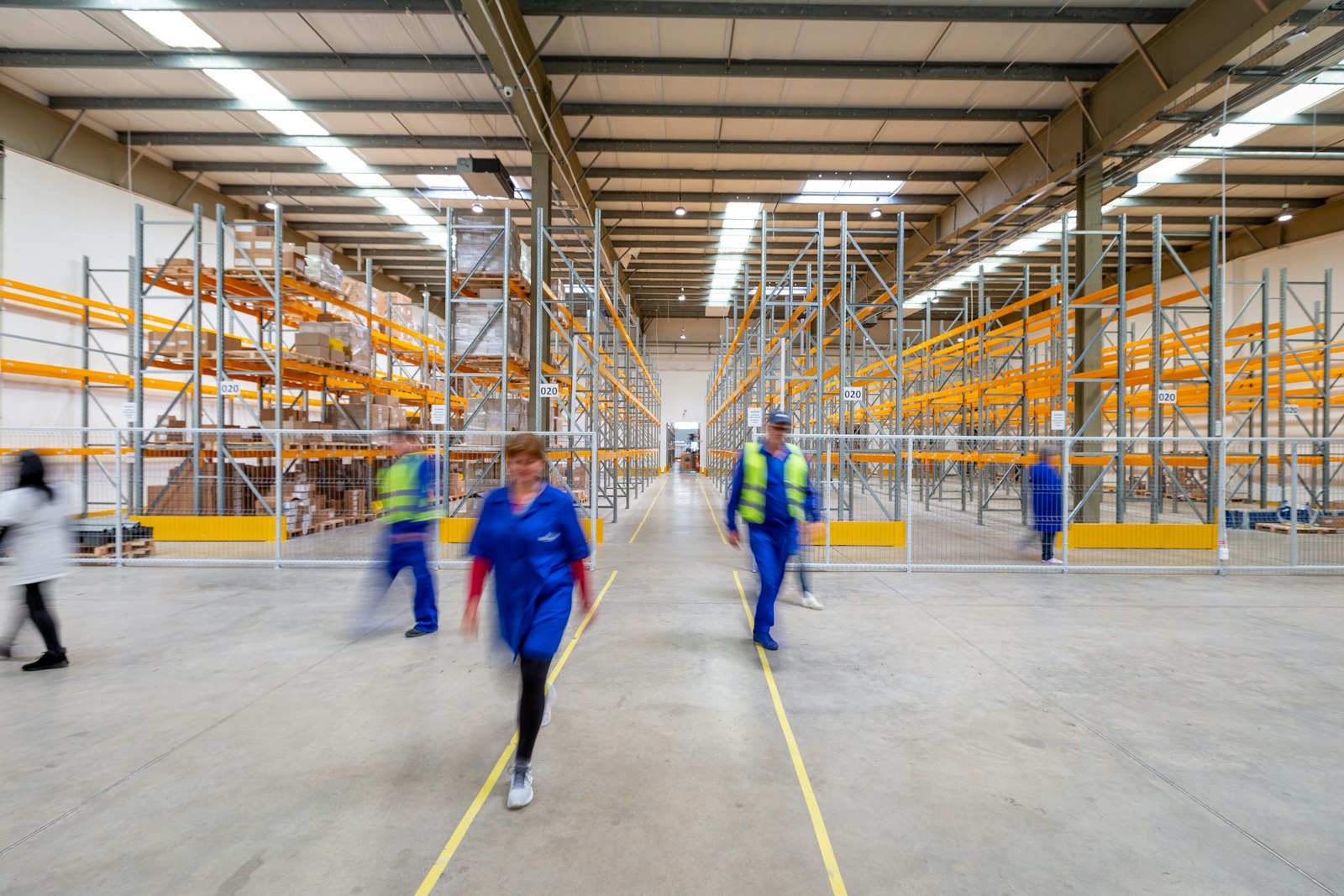
The biggest category is trades and plant crews. Pickering and Oshawa carry industrial payrolls most Ontario cities their size do not, and the logistics belt along the 401 from Brock Road to Thickson Road adds warehouse and courier crews on top. Those orders are chest logo plus back print on a mix of tees, hoodies and hi-vis, and the buyer cares about durability and the reorder far more than about the print being clever.
Second is minor sports, and Durham has an unusual amount of it. Hockey, soccer, lacrosse and baseball associations across four towns order on the same clock: tryout shirts in late summer, bench gear in September, tournament and parent shirts through the winter. Third is schools and the two post-secondary campuses in north Oshawa, which order spirit wear, club hoodies and grad gear in bursts with immovable dates. Fourth is the small-business layer: downtown cafes, salons, clinics and gyms that need ten to thirty shirts and are used to being told there is a minimum.
All four are normal orders here. There is no minimum on DTF or DTG, screen printing starts around six pieces, and the same free mockup comes back whether you want six polos for a clinic on Harwood Avenue or three hundred tees for a tournament weekend at the Sportsplex.
You should not have to drive to Toronto for this
People in Durham are used to going west for things — the default is an hour on the 401 and an hour back. Printed shirts are one of the few purchases where that instinct is wrong, because a shirt does not need you in the room. It needs your artwork, your sizes and your approval, and all three travel over the internet better than you travel down the highway.
Let us be plain about what we are. YAYA Prints has no storefront in Durham Region and none anywhere in the GTA. Every shirt is printed, pressed or stitched in-house in Ottawa, Ontario and shipped to you. There is no counter in Whitby to drive to, and if your plan depends on collecting shirts from a counter this afternoon, a local walk-in shop is the right answer and we will say so. What we offer instead is that the whole job happens without you leaving Ajax: the mockup arrives by email before a dollar moves, you approve it on your phone, and the boxes land on your doorstep.
The transit cost is small: Ottawa to Durham is typically 1–2 days once an order leaves the shop. It is printed in Canada, so there is no customs hold and no surprise duty invoice, the failure that wrecks event deadlines when a shop quietly drop-ships from overseas. How custom apparel ships across Canada covers the mechanics, and where to print custom shirts in the GTA walks through the walk-in-versus-shipped decision for every corner of the region if you want the comparison rather than our opinion.
If your crew spans the Rouge, with people in Scarborough and in Pickering, run it as one order and ask for the boxes to be split. One production run means one colour match and one price break instead of two of each. Our Scarborough guide covers the west side of that line.
Pickering, Ajax, Whitby, Oshawa, and out to Bowmanville and Uxbridge
Each town orders a little differently, and the difference is about what the shirts are for rather than where the buyer lives.
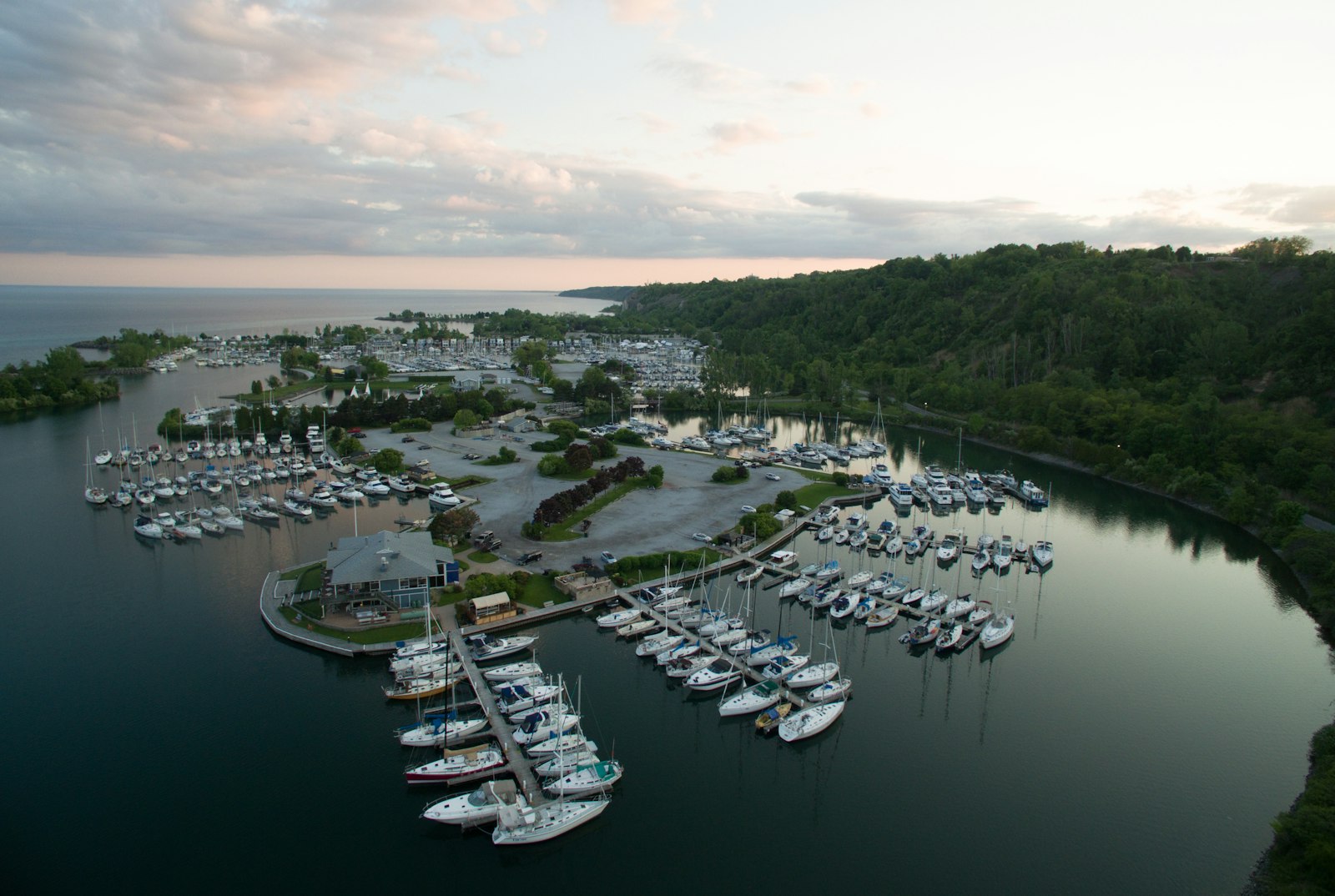
Pickering is the most workwear-heavy. The energy sector on the waterfront and the logistics yards along Brock Road and the 401 produce crew orders that are large, plain and repeated, and the new Seaton neighbourhoods are adding trades and landscaping outfits that want a chest logo and a big back print on a hoodie worn on site every day. The other side of Pickering is recreational: minor sports out of the Recreation Complex, and summer events at Frenchman’s Bay and the Nautical Village, where a volunteer tee has a date attached and no tolerance for a late courier.
Ajax orders with civic pride. It is a town named after a warship, with streets named after the ship’s sailors, and that identity shows up on the garments: adult leagues and youth clubs at the Sportsplex, event gear for Pat Bayly Square, staff polos along Harwood Avenue, embroidered workwear for the contractors around Pickering Village. A typical Ajax order is thirty to sixty pieces mixing hoodies and tees on one design, which is exactly the mixed pile where DTF earns its keep.
Whitby splits three ways. Downtown Brock Street and Brooklin are small-business territory, with cafes and salons ordering staff tees and embroidered polos in small runs. The 401/412 corridor and Thickson Road are industrial, with the same crew-shirt profile as Pickering. And there is sport, in a town whose lacrosse heritage runs as deep as anywhere in the province: lacrosse, hockey and soccer associations ordering bench gear and tournament tees every season, plus marina and waterfront events at Port Whitby in summer.
Oshawa is the largest and most varied. The auto-industry legacy around Stevenson Road still sets the tone for plant-floor tees, trades hi-vis and crew hoodies. Ontario Tech and Durham College generate club gear, grad hoodies and intramural shirts on a student budget and a student timeline. Downtown cafes and bars order the small, personality-driven runs, and the strip along Taunton Road orders staff uniforms.
Further out, Bowmanville and the rest of Clarington send agricultural, trades and minor-sports orders that look like Whitby’s without the downtown density, and Uxbridge sends trail-race, fair and community-group shirts where the count is modest and the design is the whole point. For both, the drive to a Toronto printer is long and a courier does not notice.
Screen printing, DTF, DTG or embroidery for a Durham order
Your quantity and your artwork pick the method almost every time, and the wrong choice costs you either money or quality.
- Screen printing is the crew-shirt and tournament-shirt answer: one to three bold colours, brightest possible ink on a navy or black tee. It has a setup cost per colour and a practical floor of around six pieces, and past fifty the setup has vanished into the per-shirt price. The technique is centuries old and still the most durable thing you can put on cotton in volume.
- DTF is what most small Durham businesses and mixed team orders should use. No minimum, no setup fee, unlimited colours, and it sits happily on a cotton tee and a poly-blend hoodie in the same job. Direct-to-film costs a little more per shirt than a big screen run, but on twelve shirts the total is lower because nobody is burning screens.
- DTG is the one-off and the softest hand on cotton: a test tee, a gift, a prototype for the board before the association commits to two hundred.
- Embroidery is the client-facing layer: polos for the people who meet customers, caps for the crew and the coaches. It never cracks or fades, and it is the wrong tool for fine detail and small text.
The split that works for most Durham companies is screen or DTF for the floor and embroidery for the polos, so the two tiers read as one brand at two formality levels. A two-colour logo goes to screen; a full-colour crest, or six people wanting different names on the back, goes to DTF because every variation is free. Drop the art on a garment in the studio and any problem is obvious in thirty seconds.
What it costs and how long it takes to reach a Whitby doorstep
Anyone quoting custom shirts in Oshawa or Whitby from a single number without asking questions is guessing. Five inputs move the price: the blank, the method, the number of ink colours, the number of print locations and the quantity, and between them they can triple the cost of what sounds like the same order. The honest anchor: a one-colour screen print on a standard cotton tee runs roughly $12–$18 each at 50 pieces and drops under $10 each in the hundreds. Full-colour DTF sits a little higher per piece but carries no setup fee, so at ten or twenty shirts it is usually the cheaper total. Every quote is free and includes a mockup. Bulk t-shirt printing across the GTA shows where the volume breaks land, and our Toronto guide uses the same numbers because the press does not know which side of the Rouge River the box is going to.
One thing Durham buyers get wrong more than most: dropping to a thin blank to save two dollars on a crew shirt. A plant-floor tee that pills after ten washes gets replaced, and the replacement costs more than the two dollars did. Drop an ink colour before you drop the shirt, and ask for the brand, style number and fabric weight in every quote, because two quotes are only comparable if they are for the same shirt.
On timing, production is 2–5 business days, and the clock starts when you have both approved the free mockup and paid. Not when you first email, and not when the sizes are “almost in”. Add 1–2 days of transit from Ottawa and a normal Durham order is roughly a week from approval to boxes at the door. Rush is available on most apparel jobs: tell us the date before you order and we will say honestly whether it is realistic, because we would rather lose the job than take it and miss it.
The delays that actually happen are almost never the printing. They are a logo that turns out to be a screenshot, a size list still living in a WhatsApp group, and an approval sitting unread in a team manager’s inbox. Lock those three and almost any timeline works; if you are collecting sizes from thirty families, how to organize a group apparel order is the most useful ten minutes you will spend. The carrier leg is Canada Post or courier, and Ontario-to-Ontario transit is about as predictable as shipping gets.
Minor sports, school spirit wear and the names-and-numbers question
A team order is a different animal from a crew order. The count is smaller, the sizes are mostly youth, the design has a crest and possibly a sponsor, and half the parents want a number on the back. It is also the order with the hardest deadline, because the season does not move.
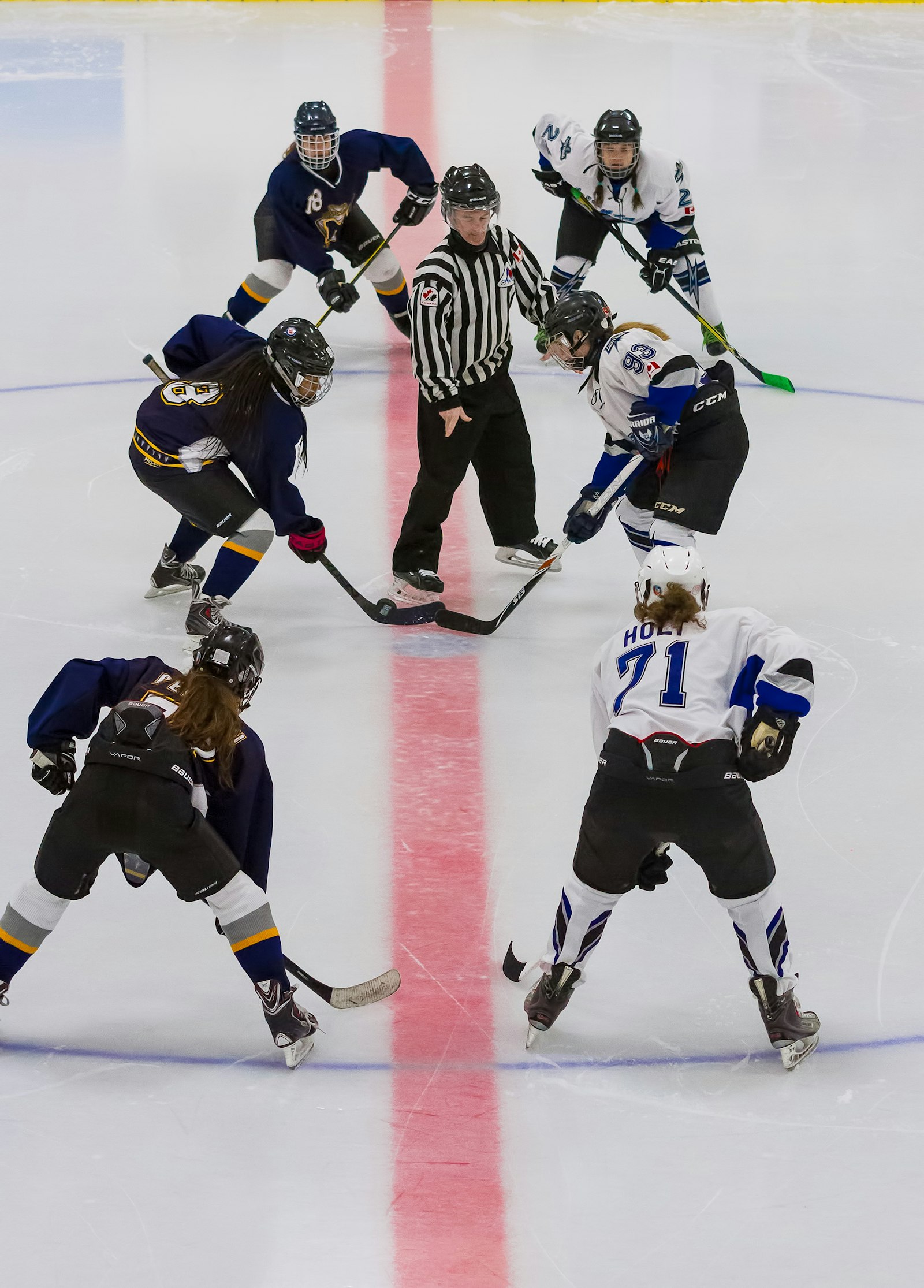
Separate the two things you are buying. Printed gear — warm-up tees, hoodies, parent and fan shirts, coaching polos, tournament tees — is what we do best and what you can build yourself in the studio. Game jerseys are a quote-form or email conversation, because the blank, the cut and the league’s numbering rules need a human to look at them first. Send the league’s requirements with the request and we will tell you what is doable before you collect a cent from anyone.
Names and numbers are where team orders go wrong, and it is always the spreadsheet, not the printing. Every player needs a size, a name spelled the way the family spells it, and a number that does not collide with a teammate’s. The exact format is in how to order team names and numbers; the broader shape of an association order is in custom sports team apparel across the GTA and on the sports team apparel page.
Schools and the two colleges are the same logic on a school-year calendar, and the buyer is usually a student council member or a teacher doing it on top of a real job. School spirit wear covers the standard setups, custom grad and team hoodies settles the weight, fit and where-the-names-go questions that come up every spring, and custom hoodies for the Toronto area applies word for word in Durham.
Crew shirts, workwear and hi-vis for the plant and the site
This is the quiet majority of Durham orders and the one with the least room for error: forty shirts that have to match, in sizes that do not follow a retail curve, with fifteen more needed in spring when the crew turns over. The advice is boring and it works: pick a mainstream blank with a stable colour range and a size run past 2XL, put the logo where a safety vest will not hide it, and use screen or DTF for the floor and embroidery for the office so the supervisor’s polo and the labourer’s tee read as one company. Custom workwear covers the garment options, and construction apparel goes into trade-by-trade durability.
Hi-vis has one rule that catches people out every time. The CSA rating belongs to the garment you buy, not to us as the decorator, and decoration goes on the fabric panels, never across the reflective tape. In practice a chest logo tucks above or beside the tape and a back print is sized to whatever clear panel that specific style has, which varies. Tell us the garment and we will show you the placement on a mockup of that exact product before anything is charged. We are not a safety-compliance authority; your safety officer and the manufacturer are. The hi-vis workwear guide and custom workwear and hi-vis for the Toronto area cover styles, placements and the reorder plan.
Sizing the run, and the reorder you will definitely place
The most common regret is under-ordering by four shirts in the two sizes everyone actually wears; the reorder then costs more per piece than the original run because you pay setup again on a handful. Collect real sizes on one form with one deadline and one person chasing it, order a few spares in your heaviest sizes deliberately, and check where the quantity break sits before you finalise — if you need 44 and the price improves at 50, the extra six may cost almost nothing per piece.
Then plan the reorder in round one, because a crew shirt, a team shirt and a staff polo are all subscriptions you did not know you signed up for. Three things make round two painless: a blank you can get again, artwork stored as proper vector, and a written record of the exact placement and print size, because “same as last time” is not a measurement and the person who placed the first order may have left. We keep your approved artwork and setup on file so the second run matches the shirts already in the building; if your logo only exists as a JPG off a website, our vectorization service rebuilds it once and it is solved permanently. The full process is in how to reorder company uniforms.
For the ten-to-thirty-shirt order — the cafe on Brock Street, the gym on Taunton — the same rules apply, and DTF makes the reorder cheap because there is no setup to repeat. Small business printing covers the shirts-plus-signage bundle those businesses usually end up wanting.
A person checks your file, then you start
What makes ordering from two hundred kilometres away safe is not the preview. It is what happens after you click order. Every order is reviewed by a human designer before it goes to press. A real person opens the file and checks resolution, colour, sizing and placement, then either fixes it or tells you exactly what is wrong. It is not an automated preflight that passes anything above a file-size threshold.
That matters because of what people actually send: a phone screenshot of a logo, a 300-pixel PNG from a website, a PDF with the crest on page four, a left-chest logo sized like a back print. We clean those up or redraw them as vector art and show you the result on a free mockup of the actual product before any payment. Nothing prints until you approve it, and if the file cannot carry the size you want, you hear that before you pay rather than see it in a box of fifty shirts. Preparing logo files for printing explains what to send in the first place.
Starting is simple. Decide roughly how many shirts and how many colours, then either drop your logo on a real garment in the free studio — no account, no deposit, price updating as you change sizes and counts — or send the file through the quote form or to order@yayaprints.ca and we will build the mockup for you. Jerseys, hi-vis, jackets and anything the studio does not make go through the form. Call or WhatsApp 613-666-9292 if it is easier out loud. Approve the mockup, pay, and a week or so later the boxes are in Pickering, Ajax, Whitby or Oshawa and you never saw the 401. That is the point of t-shirt printing done this way.
Frequently asked questions
Do you have a shop in Durham Region?
No. We print in-house in Ottawa, Ontario and ship to Pickering, Ajax, Whitby, Oshawa, Bowmanville, Uxbridge and the rest of Durham. There is no walk-in counter anywhere in the GTA. In exchange you get a shop that handles the whole job remotely: a free mockup by email before any payment, a human designer checking the file, printing in Canada with no customs holds, and typically 1 to 2 days of transit once the order leaves the shop.
How much does custom t-shirt printing cost in Oshawa or Whitby?
It depends on the blank, the method, the number of ink colours, the number of print locations and the quantity, so treat any single number with suspicion. As a realistic anchor, a one-colour screen print on a standard cotton tee runs roughly $12 to $18 each at 50 pieces and drops under $10 each in the hundreds. Full-colour DTF sits slightly higher per piece but has no setup fee, so at ten or twenty shirts it is usually the cheaper total. Every quote is free and includes a mockup.
How long does an order take to reach Durham Region?
Production is 2 to 5 business days, counted from the moment you approve the free mockup and pay. Transit from Ottawa to Durham is typically 1 to 2 days on top of that, so a normal order is about a week from approval to boxes at the door. Rush is available on most apparel jobs — tell us the date before you order and we will say honestly whether it is realistic.
What is the minimum order for custom shirts in Pickering or Ajax?
There is no minimum on DTF or DTG; we will print a single shirt at the same per-piece price. Screen printing has a practical minimum of about 6 pieces because screens have to be made regardless of the count, and it becomes the best value past roughly 24 to 50 pieces. A six-shirt order for a Harwood Avenue clinic and a 300-shirt tournament run are both ordinary jobs here.
Can you do team jerseys with names and numbers for a Whitby or Oshawa association?
Yes. Printed team gear — warm-up tees, hoodies, parent and fan shirts, coaching polos, tournament shirts — can be built in the free studio, including names and numbers. Game jerseys are quoted through the quote form or by email rather than the studio, because the blank, the cut and the league's numbering rules need a person to look at them first. Send the roster as one spreadsheet with size, name spelling and number per player, and the league's requirements alongside it.
Can you print or embroider on hi-vis for plant and site crews?
Yes. The one thing to plan around is the reflective tape: decoration goes on the fabric panels, never across the striping, so the usable print area depends on the specific garment style. The CSA rating belongs to the garment itself, not to the decoration, and we are not a safety-compliance authority. Tell us the garment and we will show you the placement on a mockup of that exact product before you pay anything.
Can I design the shirt myself instead of emailing back and forth?
Yes. The free studio at yayaprints.ca/mockup-creator needs no account and no deposit: upload a logo, place it on a real t-shirt, hoodie, polo, cap, onesie or youth tee in a real colour, add text in print-quality fonts including sports numbers, pick sizes and quantities, watch the price update, and order online. If you would rather a person built it, send the file to order@yayaprints.ca or use the quote form. Both paths end at the same free mockup and the same human designer check.
What if my logo is just a screenshot or a small PNG?
Send it anyway. Every order is reviewed by a human designer before it goes to press, not by an automated preflight. A person checks resolution, colour, sizing and placement and either fixes the file or tells you exactly what is wrong. Screenshots, small website PNGs, PDFs and AI-generated images are all things we clean up or redraw as vector artwork, and you see the result on a free mockup before any payment. Nothing prints until you approve it.
Design it yourself. A human designer still checks every order.
Our free studio gives you the price and the mockup in the browser. What it doesn't do is print your file blindly — every order is reviewed by a real designer before it reaches the press.
- Step 1You design it — free
Upload your logo, drop it on a real garment, set the size and placement, pick colours and quantities. No account, no deposit, no waiting on a reply.
- Step 2A human designer checks it
Before anything prints, one of our designers opens your file and checks resolution, colours, sizing and placement. If it won't print well, we fix it or tell you exactly what's wrong — a person, not an automated preflight.
- Step 3You approve, then we print
You get the corrected mockup back on the actual product. Nothing goes to press until you say yes — and it ships in 2–5 business days.
Skip the drive. See it on the shirt first.
Upload your logo, drop it on a real garment, pick colours, sizes and quantities, and watch the price update as you build. No minimum on DTF or DTG, screen printing from around 6 pieces, printed in-house in Ottawa and shipped to Pickering, Ajax, Whitby and Oshawa in 1–2 days once it leaves the shop.
Every order is reviewed by a human designer before it goes to press. A person checks artwork resolution, colour, sizing and placement, and either fixes the file or tells the customer what is wrong — it is not an automated preflight.