
Custom Event Shirts in Toronto: Charity Runs, Street Festivals, Conferences and the Volunteer Tee That Has to Be There Friday
Event shirts in Toronto are four different orders: participant tees for a charity run, volunteer and crew tees for a street festival, staff and giveaway tees for a conference, and team-day tees for an office — and the date is the whole job for all four. A backwards timeline from the event using the 1–2 week standard turnaround and the rush tiers, why the late sponsor logo is the usual culprit, fixed-spread sizing with spares, one shirt colour with the role printed large, the conference kit with banners from the print studio, and why the boxes go to the office the week before, never to the venue on the morning.
- Minimum order
- None on DTF or DTG — we will print a single shirt, which is what a booth staff of four needs. Screen printing starts around 6 pieces and becomes the best value past roughly 24–50, which is where participant and volunteer runs live.
- Typical cost
- Roughly $12–$18 CAD per screen-printed tee at 50 pieces, dropping under $10 each in the hundreds. Full-colour DTF sits slightly higher per piece with no setup fee. Every quote is free and includes a mockup.
- Turnaround to Toronto
- Standard turnaround on clothing is 1–2 weeks. Most apparel orders can rush — 4–5 business days or 1–3 business days, priced at checkout — and every order shows the dates it will be ready before you pay. Then typically 1–2 days in transit from Ottawa once the order leaves the shop.
- The backwards timeline
- Count back from the event: 1–2 days of transit, then the production window, then the mockup approval and payment that start the clock. Lock the sponsor wall a week before the artwork is due — a late sponsor logo is the usual reason an event order turns into a rush.
- Artwork check
- A human designer reviews every order before it goes to press — resolution, colour, sizing and placement, including every logo on a sponsor back. Not an automated preflight.
- Design it yourself
- Free online studio at yayaprints.ca/mockup-creator builds tees, long-sleeves, hoodies, polos and caps on the real garment with live pricing. No account, no deposit. Banners, posters and flyers have their own builder at yayaprints.ca/print-products.
- Where it is printed
- In-house in Ottawa, Ontario, then shipped to Toronto. No GTA storefront, counter or pickup. Printed in Canada, so no cross-border customs holds or surprise duties, and nothing drop-shipped from overseas.
Four event orders, and why they are not one job
Event shirts reach us from Toronto in four shapes, and a shop that quotes all four the same way gets at least two wrong. A charity run on the waterfront, a street festival on Queen West, a booth at the convention centre downtown and a company volunteer day are all “event shirts”, and they share almost nothing except a date that will not move. The event shirts page covers the category; this article is about how the four differ.
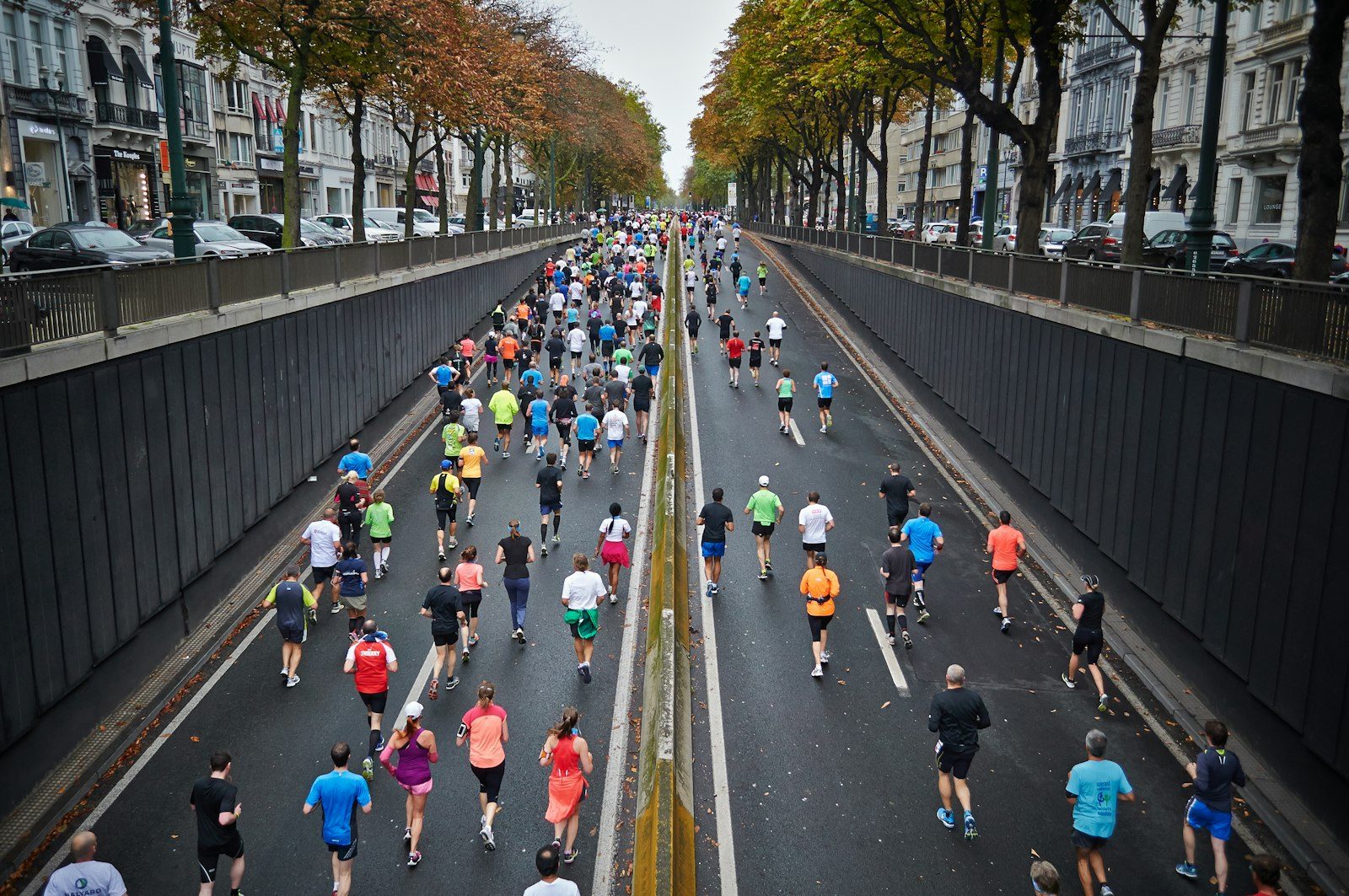
The participant tee goes to every runner or walker at the September charity runs along the waterfront and the spring walks through High Park: one colour on the front, a wall of sponsor logos on the back, and a sizing problem. The volunteer and crew tee serves the lakeside summer festivals and the Distillery District markets: a colour that reads across a crowd and the role printed on the back. Our nonprofit fundraising page is written for the committees running both.
The conference tee is a dozen matching staff shirts for a booth at Exhibition Place or a hotel ballroom on Front Street, always ordered with a banner. The corporate team-day tee is sixty or two hundred shirts for a volunteer day or a summer social. We ship all four into Toronto and the downtown core from our Ottawa shop.
Work the calendar backwards, because the date will not move
Permits, a venue contract and a registration page set the date months before anyone thinks about shirts, so the only sane way to plan is backwards from the morning of the event. First, what we are: an Ottawa shop with no Toronto storefront, counter, pickup or delivery van anywhere in the GTA, so everything is printed in-house in Ottawa, arrives by courier, and transit leads the timeline.
Transit is typically 1–2 days from Ottawa once the order leaves the shop. Before that, standard turnaround on clothing is 1–2 weeks. Most apparel orders can rush — 4–5 business days or 1–3 business days, priced at checkout — and every order shows the dates it will be ready before you pay. The production clock starts only when the free mockup is approved and the order is paid. Before that sit the slow parts: collecting sizes, agreeing on a colour, and waiting for the last sponsor logo.
Most event orders that turn into a rush do so because a gold sponsor signed late and the back print could not be finalized. The fix is a rule, not a rush tier: lock the sponsor wall a week before the artwork is due. Anyone who misses it goes on the banner and the website, not the shirt. Our fastest custom t-shirt printing in Toronto post covers the whole clock, and how to organize a group apparel order covers the sizing stage that eats most of it.
Participant tees: sizing by registration, sizing by spread, and the sponsor back
Sizing a participant run has two honest methods. Register-and-size asks for a shirt size on the registration form and orders exactly what was collected; accurate for early registrants, useless for the late ones, because registration closes long after the artwork did. A fixed spread orders a size curve weighted toward medium, large and extra-large; less precise per person, far more precise per event.
Use both. Take sizes at registration until the artwork deadline, add a fixed spread for everyone who registers after it, then a box of spares in the three middle sizes. Spares in the same run cost the marginal price of a shirt; spares ordered a week later are a new job with a new setup. Bulk t-shirt printing across the GTA has the size curve. A timed run wants a performance polyester tee and a walk a standard cotton one; both run through our t-shirt printing service.
Then the sponsor back: eight logos in eight formats arriving over eight weeks. Ask every sponsor for a one-colour version of their logo; a one-colour wall prints as a single screen and looks deliberate, while a full-colour wall needs DTF. Tier the logos by sponsorship level, and expect half of what arrives to be a screenshot, which our vectorization service redraws as vector art once.
Volunteer shirts: one findable colour, and the role on the back
A volunteer shirt has one job: to be findable by a stranger in a crowd. Pick a shade no participant will be wearing and no sponsor is using, then put VOLUNTEER or the role across the back in the largest type that fits. White ink on a bright orange, kelly or royal tee is the most legible combination we screen print, and the cheapest, because it is one colour.
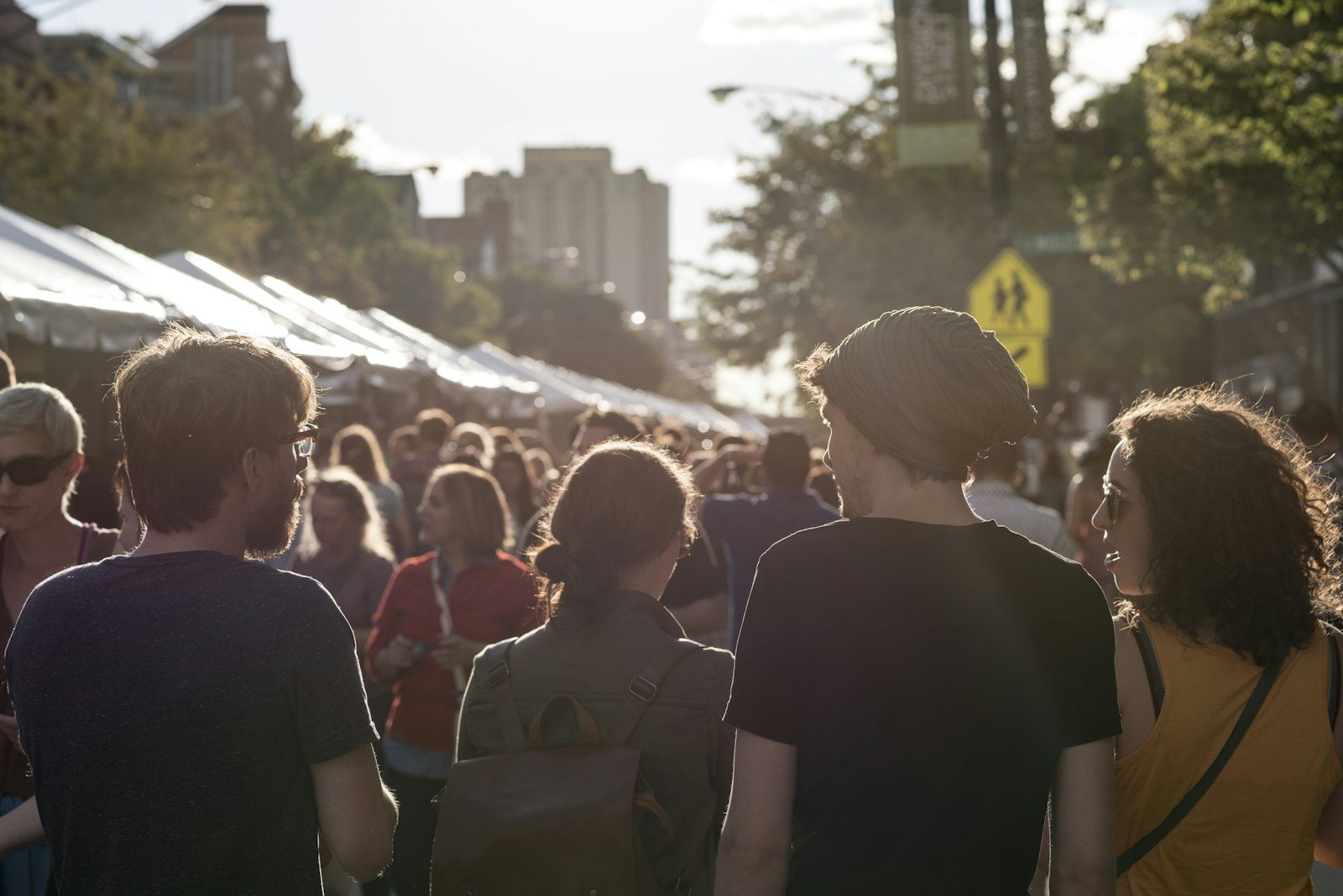
Roles are the request that multiplies cost. Four roles in four shirt colours is four blanks to source in four size spreads. Use one shirt colour and change the back print instead: the two hundred general volunteers are a screen-printing run, and the dozen first-aiders and eight stage crew get the same shirt with their role added by DTF, which has no minimum, so a run of eight is a normal order.
Setup crews start before dawn, and a hoodie with CREW on the back is the piece they keep wearing after the event; the committee usually wants embroidered caps. Tees, long-sleeves, hoodies, polos and caps all build in the free design studio at yayaprints.ca/mockup-creator, so a committee can size the word CREW on a black hoodie tonight and see the price for twelve.
The conference kit: staff tees, banners, posters and flyers together
Booth orders at the convention centre downtown, at Exhibition Place or in a hotel ballroom are the one where the shirts are the smaller half. Staff need matching tees, usually four to twelve of them, a count DTF handles at a flat price with no minimum. A giveaway tee is a separate line, screen printed by the hundred in a spread that leans large; a giveaway that only comes in medium ends up on the floor of the hall.
The rest is print. A retractable banner or two defines the back of a ten-by-ten booth; a larger printed banner covers a back wall or hangs at a race start. Those, with posters and flyers, are built in the print studio rather than the apparel studio: banners, posters and flyers each have a page where you upload the file, pick the size and material and see the price, and the trade show displays page lists the range.
Order the shirts and the banner as one job, or two vendors will read your brand colour two ways and the booth will look like two companies sharing a table. Our trade-show printing checklist covers the booth itself, so this article will not repeat it; the one apparel-side addition is to keep the show name and year off the staff tee. Corporate apparel in Toronto covers the polos and hoodies around it.
What event shirts cost in Toronto, and the fundraiser maths
Five inputs move the price of an event tee: the blank, the method, ink colours, print locations and quantity. The anchor: a one-colour screen print on a standard cotton tee runs roughly $12–$18 each at 50 pieces and drops under $10 each in the hundreds, where participant and volunteer runs live. Full-colour DTF sits slightly higher per piece with no setup fee, so a dozen booth shirts usually cost less that way. Embroidery, for the committee caps, is priced by stitch count. Every quote is free and includes a mockup, and shipping is quoted for your postal code and shown before you pay.
For a fundraiser the shirt is a product as well as a uniform, and the napkin maths is simple: a tee that costs under $10 in the hundreds sells for two to three times that at the registration table. Keep that margin real with a pre-sale: sell the shirt with registration, close it at the artwork deadline, and order what sold plus a small spread of spares. The nonprofit fundraising page goes through the pre-sale model.
To lower the number without lowering the shirt, drop the second ink colour before dropping to a thinner blank; a one-colour print on a decent tee gets worn again. The same anchors run through custom t-shirt printing in Toronto, North York and Markham.
Screen printing, DTF or embroidery: which one for which event
Three methods cover almost every event order, and the quantity plus the sponsor wall usually picks the method for you.
| Method | Typical event order | Practical minimum | Colour handling |
|---|---|---|---|
| Screen printing | Participant runs, volunteer runs, giveaway tees; 1–3 bold colours in the hundreds | ~6 pieces | Priced per colour; brightest ink on coloured shirts |
| DTF | Booth staff tees, role prints for a dozen, a full-colour sponsor wall | 1 piece | Unlimited colours, every shirt can differ; no setup fee |
| DTG | One-offs and the softest hand on cotton | 1 piece | Unlimited colours; flat per-piece price |
| Embroidery | Committee caps, organizer polos | Small runs fine | Thread colours; no gradients or tiny text |
Screen printing pushes ink through a stencilled mesh, one screen per colour, so it costs most at small counts and least in the hundreds; over roughly fifty shirts with a one- or two-colour design it is the answer. DTF prints the design onto a film that is heat-pressed onto the garment, so there is no setup and every shirt can differ at the same price; it wins under about twenty pieces and whenever the sponsor wall carries more colours than a screen job should. Machine embroidery stitches in thread and never cracks in the wash, which is what the committee’s embroidered caps and organizer polos want, and the wrong tool for a sponsor wall.
Between twenty and fifty pieces the artwork breaks the tie: a two-colour event logo goes to screen, a six-colour sponsor wall goes to DTF, and any order where the back of every shirt differs goes digital. If you cannot decide, drop the art onto a tee in the online studio and the answer usually shows itself in a minute.
Shipping to Toronto: the office the week before, never the venue
The order arrives by courier from Ottawa, not from a counter across town, so the address on the label matters, and the wrong address is the venue. A festival site is a closed street with no door number. A convention-centre loading dock takes freight for the show, not a courier box for a person somewhere inside. A race start on the waterfront, or a stage in Nathan Phillips Square, is a spot on a map until the crew builds it that morning.
Ship to the office, or to the organizer’s home, the week before. Open every box, count against the packing list, sort by size, and bring the shirts to the site with the rest of the gear. Transit is typically 1–2 days from Ottawa once the order leaves the shop, and the ready date is shown before you pay. Splitting one order into several boxes is normal: volunteer shirts to the committee chair, staff tees to a Mississauga head office, from one production run.

Everything is printed in Canada, so there is no customs hold and no duty invoice. Nothing is drop-shipped. The press is down the hall from the person who answers the phone, so a moved date or a changed count is one conversation rather than a ticket.
A designer checks every file, and how to start the order
Every order is reviewed by a human designer before it goes to press. A person on our team opens the file and checks resolution, colour, sizing and placement, and either fixes it or tells you exactly what is wrong; it is not an automated preflight. On an event order that means the sponsor back: eight logos, three of them screenshots, one that vanishes on the shirt colour. We fix those and show you the result on a free mockup of the actual shirt before any payment. Nothing prints until you approve it; if a file cannot carry what you asked for, you hear it before you pay, not in three hundred shirts on a Friday.
Tees, long-sleeves, hoodies, polos and caps build in the free online studio at yayaprints.ca/mockup-creator: upload the event logo as a PNG, JPG, SVG or PDF, place it on a real garment in a real colour, add print-quality text for the back, enter sizes and quantities, watch the price update, and order. No account, no deposit. Tote bags, aprons, jerseys and anything else the studio does not build go through the free quote form, to order@yayaprints.ca, or by phone or WhatsApp at 613-666-9292, in English or French.
The event shirts page is the starting point for a committee, and for festival crews in Waterloo Region, custom t-shirt printing in Kitchener–Waterloo covers the October festival season.
Frequently asked questions
How far ahead should I order event shirts in Toronto?
Work backwards from the event. Transit from Ottawa is typically 1–2 days once the order leaves the shop, and standard turnaround on clothing is 1–2 weeks, counted from the moment the free mockup is approved and the order is paid. Most apparel orders can rush — 4–5 business days or 1–3 business days, priced at checkout — and every order shows the dates it will be ready before you pay. Lock the sponsor wall a week before the artwork deadline; a late logo is the usual reason an order becomes a rush.
How much do custom event shirts cost?
A one-colour screen print on a standard cotton tee runs roughly $12–$18 CAD each at 50 pieces and drops under $10 each in the hundreds, where participant and volunteer runs land. Full-colour DTF sits slightly higher per piece with no setup fee, so a dozen booth shirts or a six-colour sponsor wall usually cost less that way. Every quote is free and includes a mockup, and shipping is quoted for your postal code and shown before you pay.
Do you have a shop in Toronto where we can pick up the shirts?
No. We print in-house in Ottawa, Ontario and ship to Toronto and the rest of the GTA. There is no storefront, counter, pickup or delivery van anywhere in the Toronto area, so an order that depends on collecting a box on the morning of the event is not one we can do. In exchange you get printing in Canada with no customs holds or surprise duties, and transit of typically 1–2 days once the order leaves the shop.
Can you ship the shirts straight to the venue on the day of the event?
We can, but we will tell you not to. A festival site is a closed street with no door number, a convention-centre dock takes freight for the show rather than a box for a person, and a race start does not exist until the crew builds it that morning. Ship to the office or the organizer’s home the week before, count the boxes against the packing list, sort by size, and bring the shirts with the rest of the gear.
How do we collect sizes for a charity run with hundreds of participants?
Use both methods. Ask for a shirt size on the registration form and order exactly what was collected up to the artwork deadline, then add a fixed spread weighted toward medium, large and extra-large for everyone who registers after it, plus a box of spares in those three sizes. Spares in the same run cost the marginal price of a shirt; spares ordered a week later are a new job. For a fundraiser, sell the shirt with registration and close the pre-sale at the artwork deadline.
Can we put our sponsor logos on the back of the shirts?
Yes. Ask every sponsor for a one-colour version of their logo: a one-colour wall prints as a single screen, while a full-colour wall needs DTF and costs more per piece. Tier the logos by sponsorship level, keep the event name on the front, and lock the wall a week before your artwork deadline. Screenshots and web JPGs are redrawn as vector art by our designer, and you approve the whole back on a free mockup before paying.
What is the minimum order for volunteer or staff shirts?
There is no minimum on DTF or DTG, so four booth staff tees or eight stage-crew shirts with a role on the back are normal orders at a normal per-piece price. Screen printing has a practical minimum of about 6 pieces and becomes the best value past roughly 24–50 pieces, where a volunteer run or participant tee sits. The two combine well: general volunteers screen printed, the dozen role shirts added digitally on the same blank.
Can you print the banners, posters and flyers along with the shirts?
Yes, and it is worth doing as one job so the brand colour matches between the shirt and the banner behind it. Retractable banners, large banners for a back wall or a race start, posters and flyers are built in the print studio at yayaprints.ca/print-products, separate from the apparel studio: upload the file, pick the size and material, and see the price. Our trade-show printing checklist covers the booth itself.
Design it yourself. A human designer still checks every order.
Our free studio gives you the price and the mockup in the browser. What it doesn't do is print your file blindly — every order is reviewed by a real designer before it reaches the press.
- Step 1You design it — free
Upload your logo, drop it on a real garment, set the size and placement, pick colours and quantities. No account, no deposit, no waiting on a reply.
- Step 2A human designer checks it
Before anything prints, one of our designers opens your file and checks resolution, colours, sizing and placement. If it won't print well, we fix it or tell you exactly what's wrong — a person, not an automated preflight.
- Step 3You approve, then we print
You get the corrected mockup back on the actual product. Nothing goes to press until you say yes — then it's ready in 1–2 weeks, or in 1–3 business days with a rush.
See the event tee on the shirt before you pay a cent
Upload the event logo, drop it on a real tee in a real colour, add the sponsor back, enter sizes and quantities and watch the price update. No minimum on DTF or DTG, screen printing from around 6 pieces, printed in-house in Ottawa and shipped to Toronto in 1–2 days once it leaves the shop.
Every order is reviewed by a human designer before it goes to press. A person checks artwork resolution, colour, sizing and placement, and either fixes the file or tells the customer what is wrong — it is not an automated preflight.