
Bulk T-Shirt Printing in Montreal: Custom Tees by the Hundred for Festivals, Campuses, Studios and Crews
Bulk t-shirt printing for Montreal works best as one planned run: screen-printed tees by the hundred for festival crews, orientation weeks, studios, community groups and work crews. A screen-printed t-shirt runs roughly $12–$18 CAD each at 50 pieces and drops under $10 each in the hundreds. Here is how French, English or bilingual designs change setups and price breaks, how to size a crowd, when to book for summer, and how it ships from Ottawa.
- Volume pricing
- Large orders get volume pricing. In the online design studio the per-piece price drops at 12, 24, 50 and 100 pieces, and every colour of the same garment in one order counts toward the same price break. Orders in the hundreds are usually screen printed and quoted directly — through the free quote form, by email or by phone — and a large order gets the same free mockup and human designer check as a single shirt.
- Typical cost
- A screen-printed t-shirt runs roughly $12–$18 CAD each at 50 pieces and drops under $10 each in the hundreds. Full-colour DTF sits slightly higher per piece with no setup fee. Every quote is free and includes a mockup.
- French, English or both
- One bilingual design prints from one set of screens. Separate French and English versions each need their own setup on a quoted screen-print run, and their own size count. In the online studio, two designs of the same garment in one order count together toward the price break.
- Turnaround for large runs
- Standard turnaround on clothing is 1–2 weeks. Most apparel orders can rush — 4–5 business days or 1–3 business days, priced at checkout — and every order shows the dates it will be ready before you pay. The fastest rush tier is limited to smaller runs, so plan an order in the hundreds on the standard schedule and book summer orders in spring.
- Shipping to Montreal
- Shipping Canada-wide, including the Greater Toronto Area and Greater Montreal, typically arriving 1–2 days after the order leaves the shop. Shipping is quoted for your postal code and shown before you pay. There is no Montreal storefront, counter or pickup; every order ships by courier from Ottawa.
- Where it is printed
- Printed and decorated in-house in Ottawa, Ontario. Nothing is drop-shipped from overseas, so there are no cross-border customs holds or surprise duties.
- Artwork check and language
- Every order is reviewed by a human designer before it goes to press. A person checks artwork resolution, colour, sizing and placement, and either fixes the file or tells the customer what is wrong — it is not an automated preflight. We serve customers in English and French.
Who orders t-shirts by the hundred in Montreal
Most custom tee orders are a few dozen shirts for a team or a shop, and our guide to custom t-shirt printing in Montreal covers that kind of order. This page is for the other kind: t-shirts personnalisés en gros, ordered by the hundred, where every decision about colour, language and size gets multiplied four hundred times. In Montreal those orders come out of a handful of recurring situations, and each has its own reason to want one large run.
Festival season. From June into August the Quartier des spectacles around Place des Arts, and the parks and closed streets beyond it, host one outdoor event after another. Each one needs event t-shirts for staff, volunteers and technical crews in a colour the public can pick out of a crowd, in runs of hundreds, sized for people who will wear them through long shifts in July heat. Our event shirts page covers race, festival and volunteer orders from the organizer’s side.
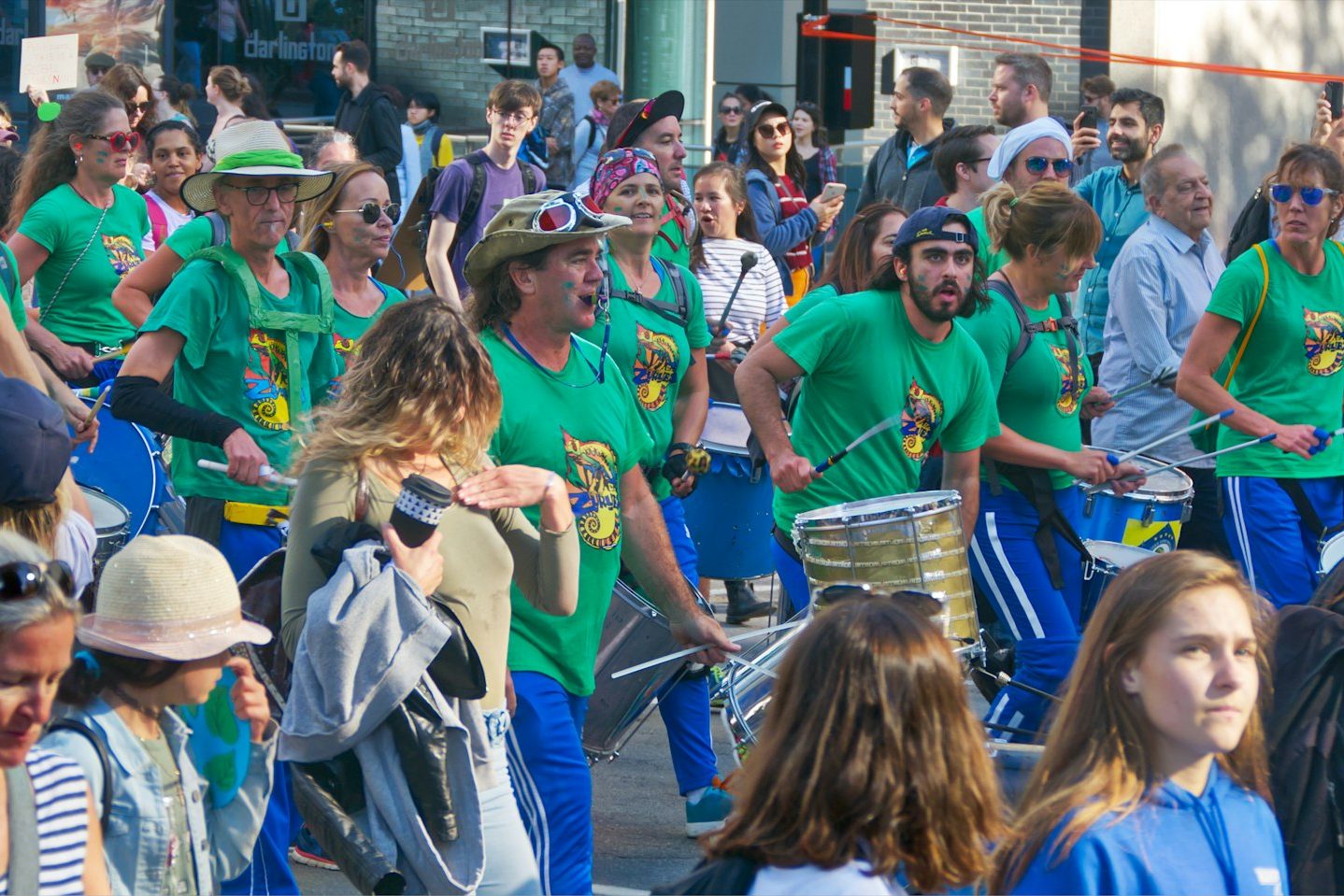
Campuses. McGill, Concordia, the Université de Montréal and UQAM, plus Dawson and the city’s other CEGEPs, welcome new students at the rentrée in late August and early September: frosh on the English campuses, intégration on the French ones. Faculty and student associations order leader and participant shirts by the hundred, often in a different colour per faculty, and our guide to bulk frosh week shirts walks through that order. One rule up front: a university’s name and crest are trademarks the university licenses, so get approval from its brand or licensing office before either goes on a shirt.
Studios, organismes, crews and leagues. Game and tech studios in Mile End (in the Plateau-Mont-Royal), Griffintown and Old Montreal order staff t-shirts for a whole floor, and launch tees when a title ships. Organismes communautaires and fundraising walks need a shirt that is both the volunteer uniform and something to sell at the table; our nonprofit fundraising page is written for them. Contractors and plants in Saint-Laurent, Anjou and across the South Shore buy a season of work tees at once, often with the company name in French, and heavier workwear and hi-vis are covered in custom workwear and uniforms in Quebec. Adult soccer and ball-hockey leagues round out the list with a tee per player per season.
Why one run of 400 beats four runs of 100
The case for ordering once is partly price and mostly consistency. Large orders get volume pricing. In the online design studio the per-piece price drops at 12, 24, 50 and 100 pieces, and every colour of the same garment in one order counts toward the same price break. Orders in the hundreds are usually screen printed and quoted directly — through the free quote form, by email or by phone — and a large order gets the same free mockup and human designer check as a single shirt.
Behind those breaks is the arithmetic of a screen-print run. Making the screens and setting up the press costs the same whether the run is 100 shirts or 400, and the more shirts it is spread across, the less of it each one carries. Split the same 400 shirts into four orders across a summer and you pay for four setups. The studio’s pooling rules favour one big order too: six black and six white tees are priced as twelve, and youth sizes count with the adult tee, so a day camp’s campers and counsellors are one run. Different garments count separately, though, so tees and hoodies each count on their own.
Consistency is the bigger reason. One run means the blanks for the whole order are pulled together, the screens are burned once and the ink is mixed once, so the four-hundredth shirt matches the first. If your festival or company has a brand colour, send its Pantone reference: spot colours in screen printing can be matched to Pantone references. A reorder in August cannot promise the same result. The blank colour may be out of stock mid-season, a new shipment can come from a different dye lot that sits a shade off the first, and the ink is mixed again. On a crew whose whole job is to be recognizable, two oranges side by side is exactly what people notice.
Ordering once is not always right, and we would rather say so. If the final count truly cannot be known until the last week — a walk where registration stays open, a crew still hiring — print the confirmed count as the main run and top up the late additions afterwards with DTF, which has no setup. At the very top of the range the logistics change again, which is what our guide to printing 1,000 custom t-shirts covers.
French, English or both: the language decision at volume
In Montreal the language of the shirt is the first decision on a large order, and it is the one that changes most downstream: how many screen setups the run needs, how the studio price break pools, and how many size counts you have to forecast. There are three ways to do it, and the right one depends on who wears the shirt and who reads it.
| Approach | On a quoted screen-print run | In the online studio | Who it suits |
|---|---|---|---|
| French only | One design: one screen per ink colour per print location | One design; every colour of the garment counts toward the same break | Francophone crews and audiences: intégration week at a French-language campus, a neighbourhood organisme, a South Shore work crew |
| One bilingual design | Still one design and one set of screens; the layout simply carries more words | Priced exactly like a single-language design | Mixed crowds: festival staff and volunteers, events open to the public, English campuses in a French-speaking city |
| Two versions (French and English) | Each version is its own setup, so the screens double for the same total count | Both designs of the same garment count together toward the price break | Copy too long to fit twice, teams where each person picks a language, merch sold to two audiences |
For most mixed crowds, one bilingual design is the efficient answer at volume: one set of screens, one size count, and every shirt is right for every wearer. Put the French first or larger if your audience leans francophone, and build the layout around the French line, which almost always runs longer. Two versions make sense when the copy is a slogan rather than a word, or when the two audiences genuinely never mix. Their real cost is not only setup: you now forecast two size counts instead of one, and the leftovers multiply, because the spare larges end up in English while the French run comes up short.
A word on the law, kept short because we are printers, not lawyers. Quebec’s Charter of the French Language makes French the normal language of work and commerce in the province, and its rules reach things like product inscriptions, commercial advertising and public signs. Whether any of that touches your staff uniform, volunteer tee or merch shirt depends on how it is used. This is not legal advice — check with the Office québécois de la langue française (OQLF) for your case. On the printing side, French-only or bilingual costs nothing extra in setups compared with English-only, as long as it stays one design.
The other Montreal-specific risk is typographic: a display font with no É, an accent that drops off a capital, a cedilla that vanishes. The accents section of our Montreal t-shirt guide covers it, so we will not repeat it here. The one addition at volume: approve the French on the mockup at print size, letter by letter, because a dropped accent on a run of four hundred is four hundred dropped accents. If your committee would rather read all of this in French, there is a guide to l’impression de t-shirts personnalisés au Québec.
Sérigraphie or DTF when the count is in the hundreds
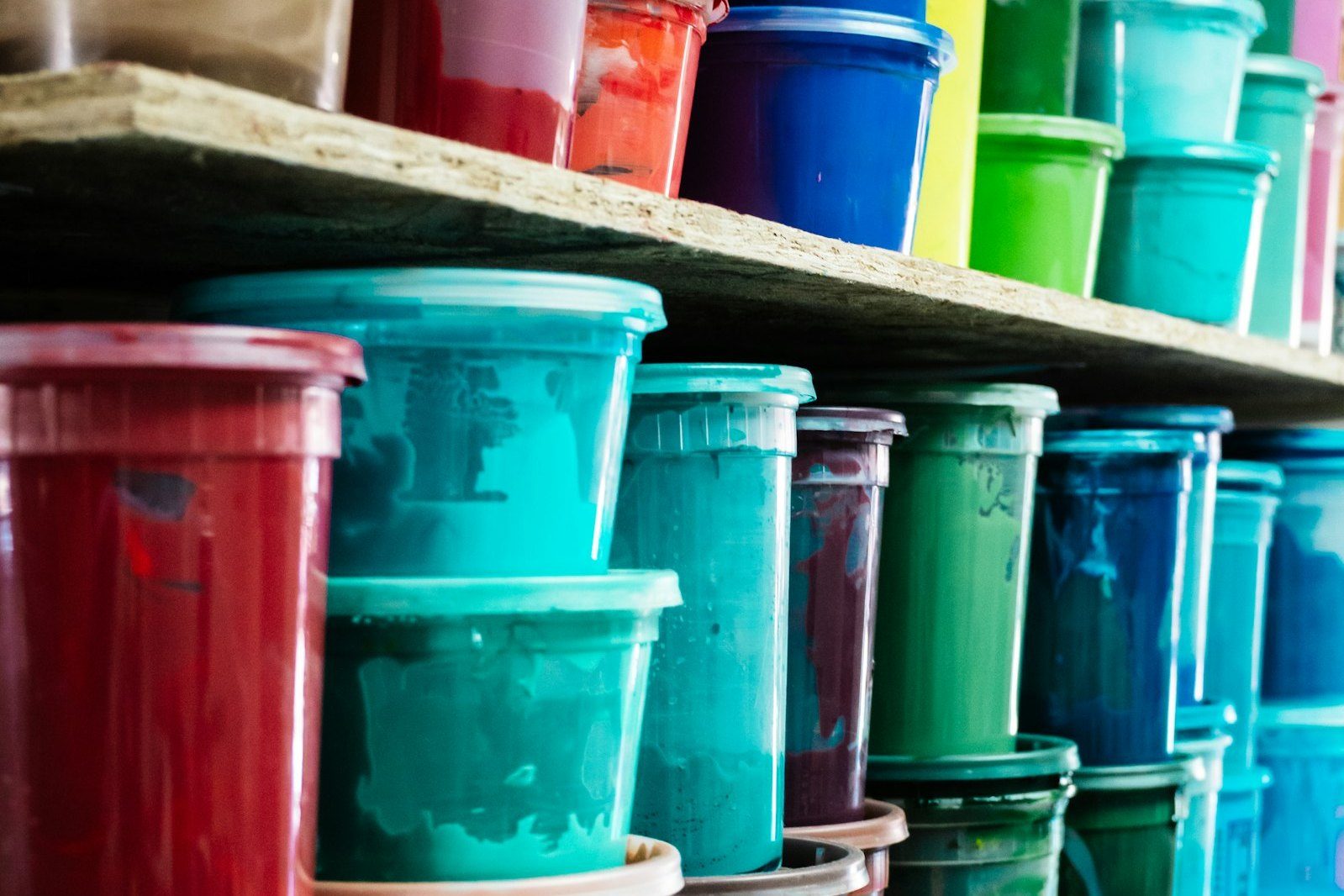
At volume the method usually picks itself. Screen printing — sérigraphie — pushes ink through a stencilled mesh, one screen per ink colour per print location. The setup is fixed and the per-shirt cost falls as the count rises, which is why runs in the hundreds are almost always screened. It gives bold, solid colour that reads from across a street, and it suits the one- to three-colour designs most crew and campus shirts use. For the method in depth, see our guide to screen printing in Montreal.
DTF prints the design onto a film that is then heat-pressed onto the shirt, so there is no screen to make, and every shirt can differ at the same price. Full-colour DTF sits slightly higher per piece with no setup fee. On a large order it earns its place in three spots: artwork with gradients or a photo that would need too many screens, small batches beside the main run, and personalization. A pattern that works well for festivals: four hundred volunteer tees screen printed in one colour, and the twenty role shirts — SÉCURITÉ, PREMIERS SOINS, TECHNIQUE — printed by DTF on the same blank.
Leagues split the same way: the league graphic is screened across every team, and individual names and numbers are added per shirt, for a per-shirt surcharge. And when one design’s count is small — an English version for a few dozen people, a staff run for a single venue — DTF is often the cheaper route. No minimum on DTF and DTG — we will print a single shirt. Screen printing starts around 6 pieces and becomes the best value past roughly 24–50 pieces.
Planning festival and summer orders: book them in spring
The big Montreal dates are set months ahead by permits, academic calendars and contracts. The summer festival season runs roughly June through August, orientation weeks land at the end of August, and construction crews want their season’s shirts before the work picks up in spring. None of those dates move, so the only sane way to plan a run of hundreds is backwards from the day the shirts must be in hand.
Standard turnaround on clothing is 1–2 weeks. Most apparel orders can rush — 4–5 business days or 1–3 business days, priced at checkout — and every order shows the dates it will be ready before you pay. Large runs change the rush part: the fastest rush tier is limited to smaller runs, and an order in the hundreds should be planned on the standard 1–2 week schedule. Rushing a large run is a conversation, not a checkbox, so call 613-666-9292 before counting on it. A run of many hundreds is booked into the shop calendar when the order is confirmed; confirm your date when you book rather than assuming it.
The press is rarely the slow part. The slow parts sit with the committee: agreeing on a design, getting the French and the English signed off by two sets of readers, waiting for the last sponsor logo, and collecting sizes. A workable plan for a late-June festival: settle the design and the language approach in April, lock sponsor logos and copy in early May, collect sizes until mid-May, and confirm the order before the end of May. That leaves the standard schedule and transit with room to spare, plus a few days to open the boxes and sort them. Orientation committees can run the same plan two months later, with the order confirmed by the end of July.
Winter changes the garment more than the plan. From November to March a printed tee spends most of its life under a sweater, so winter events, campus clubs and crews working indoors tend to order hoodies instead; the planning works the same way, and the hoodie version of this guide is bulk hoodie printing in Montreal, coton ouaté included.
Size curves for a crowd of hundreds
On a big order the size breakdown is the order. The artwork gets approved once; the size count is a forecast of four hundred people you have mostly never met, and the forecast is where large runs go wrong, with a box of one size left over and a line of people waiting for another. Our bulk t-shirt size breakdown has starting curves for 100, 250, 500 and 1,000 pieces; here is what changes for a Montreal crowd.
In the online studio the adult tee runs XS to 5XL and the youth tee XS to XL; sizes outside those ranges go through the quote form. The tee is a unisex cut, which matters on campuses and at festivals, where plenty of people wear a unisex XS or S, so do not trim those rows to a token few. Do not round the whole order up “to be safe” either: 2XL and larger carry a small per-piece upcharge that rises with each size, because the blanks are bigger.
Language splits the forecast. Four hundred bilingual shirts need one size count; 240 French and 160 English shirts need two, each a smaller count that is harder to forecast. Youth sizes, on the other hand, pool with the adult tee toward the price break, so a day camp or a family fundraiser can put campers and counsellors in one run. Order the spares in the main run, weighted to the middle sizes: spares in the same run cost the per-piece price of a shirt, while spares ordered in July are a new setup.
Collect sizes where people already sign up: a size column on the volunteer form, a field on the registration page, a line in the onboarding email for a studio team. Close it at the artwork deadline, then fill the gap between the sign-ups and the final count with a fixed spread rather than a guess per person.
What tees by the hundred cost, and what moves the number
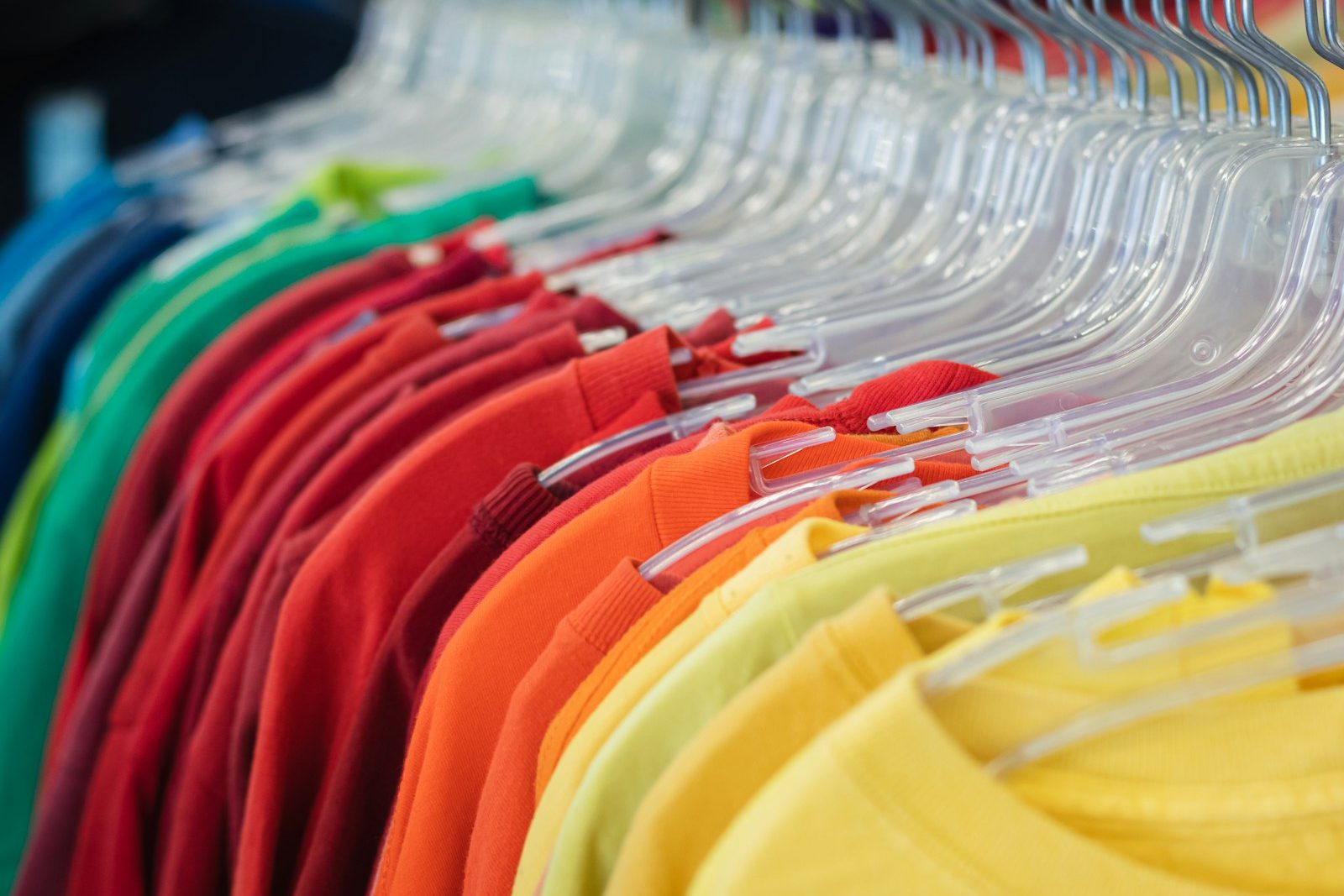
The anchor numbers first. A screen-printed t-shirt runs roughly $12–$18 CAD each at 50 pieces and drops under $10 each in the hundreds. Full-colour DTF sits slightly higher per piece with no setup fee. Every quote is free and includes a mockup. In the online design studio the per-piece price drops at 12, 24, 50 and 100 pieces, and 100 is the last break online; past it, a run in the hundreds is usually quoted directly as a screen-print job.
On a quoted run, five things move the number: the blank, the ink colours, the print locations, the number of versions and the size mix. Each ink colour, each print location and each version is its own screen setup, so a two-colour design in two language versions is four screens where a two-colour bilingual design is two. Sizes 2XL and up carry their per-size upcharge, and names and numbers add a per-shirt surcharge. The blank is the one input we would not cut first; our t-shirt printing page compares the three printing methods on a tee.
To lower the total without cheapening the shirt: drop an ink colour before you drop to a thinner blank, keep it to one bilingual design, put a sponsor wall in one colour, and order once. For a fundraiser the shirt is also a product, and the gap between the per-piece price in the hundreds and the price at the merch table is what pays for the cause; the fundraising page takes on the give-away-or-sell question honestly. Payment is by card or Interac e-Transfer, and shipping is quoted for your postal code and shown before you pay.
Shipping from Ottawa to the island, Laval and the South Shore
We are not a Montreal shop, and we would rather you knew that before you plan around us. There is no storefront, counter, pickup point, showroom or delivery van on the island or off it. Everything is printed and decorated in-house in Ottawa, Ontario, and goes out by courier along the 417, which becomes Autoroute 40 at the Quebec line. Nothing is drop-shipped from overseas, so there are no cross-border customs holds or surprise duties.
From there it is a domestic parcel: shipping Canada-wide, including the Greater Toronto Area and Greater Montreal, typically arriving 1–2 days after the order leaves the shop. Shipping is quoted for your postal code and shown before you pay. That holds for downtown Montreal, for t-shirt printing headed to Laval across the Rivière des Prairies, and for Longueuil, Brossard and the rest of the South Shore across the bridges.
Large orders often need to land in more than one place: crew shirts at a production office and volunteer shirts at a volunteer centre, or tees for a plant in Saint-Laurent and an office in Old Montreal. If yours does, tell us at quote time — it changes how the run is sorted and boxed, and each address is quoted for shipping. For a company with offices in Ottawa, Toronto and Montreal, our guide to one bulk apparel order for three cities covers that version of the problem.
Ship to a place where someone will sign for a stack of boxes in the week before the date, not to a festival site or a campus quad on the morning itself. Then open every box, count against your order and sort by size before anything is handed out; four hundred shirts are far easier to count in an office than on a folding table in the rain.
How to start a bulk order from Montreal
There are two ways in, and both end at the same human check. Customers can design their own product free at yayaprints.ca/mockup-creator — upload a logo, place it on a real garment, add print-quality text, choose colours and sizes, and order online without emailing or phoning anyone. For a bulk tee, that is the easiest way to see the bilingual layout on the actual shirt and the per-piece price at your count: start from the t-shirt design page or go straight into the free design studio.
For a run in the hundreds, the free quote form is usually the better door. Send the garment and colour, the total and the size counts, the language versions, the ink colours and print locations, the date the shirts must be in hand, and every delivery address. Phone 613-666-YAYA (613-666-9292), WhatsApp the same number at wa.me/16136669292, email order@yayaprints.ca, or order online at yayaprints.ca. We serve customers in English and French, so the committee can write in whichever language it works in.
Every order is reviewed by a human designer before it goes to press. A person checks artwork resolution, colour, sizing and placement, and either fixes the file or tells the customer what is wrong — it is not an automated preflight. Every order gets a free digital mockup on the actual product before any payment. Nothing prints until the customer approves it. If the only logo you have is a screenshot, the designer fixes or redraws it, and our vectorization service can rebuild it as clean vector art.
If you are comparing shops for an order this size, the questions in our guide to choosing a custom t-shirt printer in Montreal apply at any quantity and matter more at four hundred: ask who sets the French, ask to see the mockup at print size, and ask for the ready date in writing.
Frequently asked questions
How much does bulk t-shirt printing cost in Montreal?
A screen-printed t-shirt runs roughly $12–$18 CAD each at 50 pieces and drops under $10 each in the hundreds. Full-colour DTF sits slightly higher per piece with no setup fee. Every quote is free and includes a mockup. On a quoted run the number moves with the blank, the ink colours, the print locations, the number of design versions and the size mix, and shipping is quoted for your postal code and shown before you pay.
Is it cheaper to order all our shirts in one run?
Almost always. Large orders get volume pricing. In the online design studio the per-piece price drops at 12, 24, 50 and 100 pieces, and every colour of the same garment in one order counts toward the same price break. On a screen-print run the setup costs the same for 100 shirts or 400, so four separate orders pay for four setups, and one run keeps every shirt on the same blank, screens and ink mix so the colours match. The exception is a count you cannot know until the last week: print the confirmed number and top up afterwards.
Should our shirts be in French, English or both?
For most mixed Montreal crowds, one bilingual design is the efficient choice at volume: one design, one set of screens and one size count. French-only suits francophone crews and audiences. Separate French and English versions make sense when the copy is too long to fit twice, but on a quoted screen-print run each version is its own setup and its own size forecast; in the online studio, two designs of the same garment in one order still count together toward the price break. Quebec’s Charter of the French Language has rules on things like product inscriptions and commercial advertising; this is not legal advice — check with the OQLF for your case.
How far ahead should we order shirts for a summer festival or orientation week?
Book in spring for anything in summer. Standard turnaround on clothing is 1–2 weeks. Most apparel orders can rush — 4–5 business days or 1–3 business days, priced at checkout — and every order shows the dates it will be ready before you pay. The fastest rush tier is limited to smaller runs, so plan an order in the hundreds on the standard schedule and call 613-666-9292 before counting on a rush. A run of many hundreds is booked into the shop calendar when the order is confirmed, so confirm your date when you book rather than assuming it.
What sizes can we order for a large group?
In the online design studio the adult t-shirt runs XS to 5XL and the youth t-shirt XS to XL; sizes outside those ranges go through the free quote form. The tee is a unisex cut, so keep real XS and S rows for campus and festival crowds. 2XL and larger carry a small per-piece upcharge that rises with each size. Youth sizes count with the adult tee toward the price break: 12 adult and 12 youth tees are priced as one 24-piece run.
Can we pick up the order in Montreal?
No. There is no Montreal storefront, counter, pickup point, showroom or delivery van. Everything is printed and decorated in-house in Ottawa, Ontario, and shipped by courier to the island, Laval, Longueuil and the rest of the South Shore, typically arriving 1–2 days after the order leaves the shop. Nothing is drop-shipped from overseas, so there are no cross-border customs holds or surprise duties.
Can one large order be split between several addresses?
Tell us at quote time — it changes how the run is sorted and boxed, and each address is quoted for shipping. Say a festival wants crew shirts at its production office and volunteer shirts at its volunteer centre: list both addresses and the count for each when you ask for the quote. Ship to places where someone can sign for boxes in the week before you need them, never to an event site on the morning itself.
Can we put a university’s name or crest on orientation shirts?
A university’s name, crest and logo are trademarks the university licenses, so get approval from the university’s brand or licensing office before you order. Without that approval, design around your association’s own name and artwork instead. Once the design is cleared, the order works like any other bulk run: one count, a free digital mockup on the actual product before any payment, and a human designer check before it goes to press.
Design it yourself. A human designer still checks every order.
Our free studio gives you the price and the mockup in the browser. What it doesn't do is print your file blindly — every order is reviewed by a real designer before it reaches the press.
- Step 1You design it — free
Upload your logo, drop it on a real garment, set the size and placement, pick colours and quantities. No account, no deposit, no waiting on a reply.
- Step 2A human designer checks it
Before anything prints, one of our designers opens your file and checks resolution, colours, sizing and placement. If it won't print well, we fix it or tell you exactly what's wrong — a person, not an automated preflight.
- Step 3You approve, then we print
You get the corrected mockup back on the actual product. Nothing goes to press until you say yes — then it's ready in 1–2 weeks, or in 1–3 business days with a rush.
See the bilingual tee on the shirt, then order it by the hundred
Upload the logo, set the French and English copy, drop it on a real tee in a real colour and see where the per-piece price drops at 12, 24, 50 and 100 pieces. For a run in the hundreds, send the count through the free quote form. Printed and decorated in-house in Ottawa, Ontario, and shipped to Montreal, Laval and the South Shore.
Every order is reviewed by a human designer before it goes to press. A person checks artwork resolution, colour, sizing and placement, and either fixes the file or tells the customer what is wrong — it is not an automated preflight.