
Corporate Apparel in Toronto: Polos for Bay Street, Hoodies for King West, and Kits for the Team You Never See
Corporate apparel goes wrong when a Toronto company treats it as one order. It is three: embroidered polos and quarter-zips for the people who meet clients, hoodies and crewnecks staff will actually wear on a Saturday, and bulk tees for the conference booth. Here is how to pick the blank tier for each, settle the embroidery-versus-print and left-chest-size arguments, collect sizes without a spreadsheet nightmare, ship onboarding kits to remote staff across Canada, work a conference timeline backwards, and why the holiday hoodie should be ordered in September — decorated in-house in Ottawa, shipped to the GTA in 1–2 days, with a human designer checking every file.
- Three orders, not one
- Corporate apparel is really three separate jobs: client-facing (embroidered polos and quarter-zips), internal culture (hoodies and crewnecks people wear on weekends) and event (bulk conference and volunteer tees). Each wants a different blank, method and quantity.
- Minimum order
- None on DTF or DTG — one hoodie for one new hire is a normal order. Screen printing starts around 6 pieces and becomes the best value past roughly 24–50, which is where conference tees live.
- Typical cost
- Roughly $12–$18 CAD per screen-printed tee at 50 pieces, dropping under $10 each in the hundreds. Full-colour DTF sits slightly higher per piece with no setup fee. Embroidered polos cost more because the blank costs more.
- Turnaround to Toronto
- 2–5 business days in production after mockup approval and payment, then 1–2 days in transit from Ottawa to the GTA. Rush is available on most apparel jobs.
- Artwork check
- A human designer reviews every order before it goes to press — resolution, colour, sizing and left-chest placement. Not an automated preflight.
- Design it yourself
- Free online studio at yayaprints.ca/mockup-creator builds polos, tees and hoodies on the real garment with live pricing. No account, no deposit. Jackets and quarter-zips go through the quote form.
- Where it is made
- Decorated in-house in Ottawa, Ontario and shipped to Toronto and across Canada. No Toronto storefront or pickup, no overseas drop-ship, no customs holds.
Corporate apparel is three different orders, and Toronto companies lump them together
The request usually arrives as one line: “we need company shirts.” Then it turns out the same email is asking for polos for the sales team on the twenty-third floor, hoodies for the developers, and two hundred tees for a booth at the Metro Toronto Convention Centre in six weeks. Those are not one order with three line items. They are three orders with different blanks, different decoration, different quantities and different deadlines, and pricing them as one is how the polos end up cheap and the tees end up expensive.
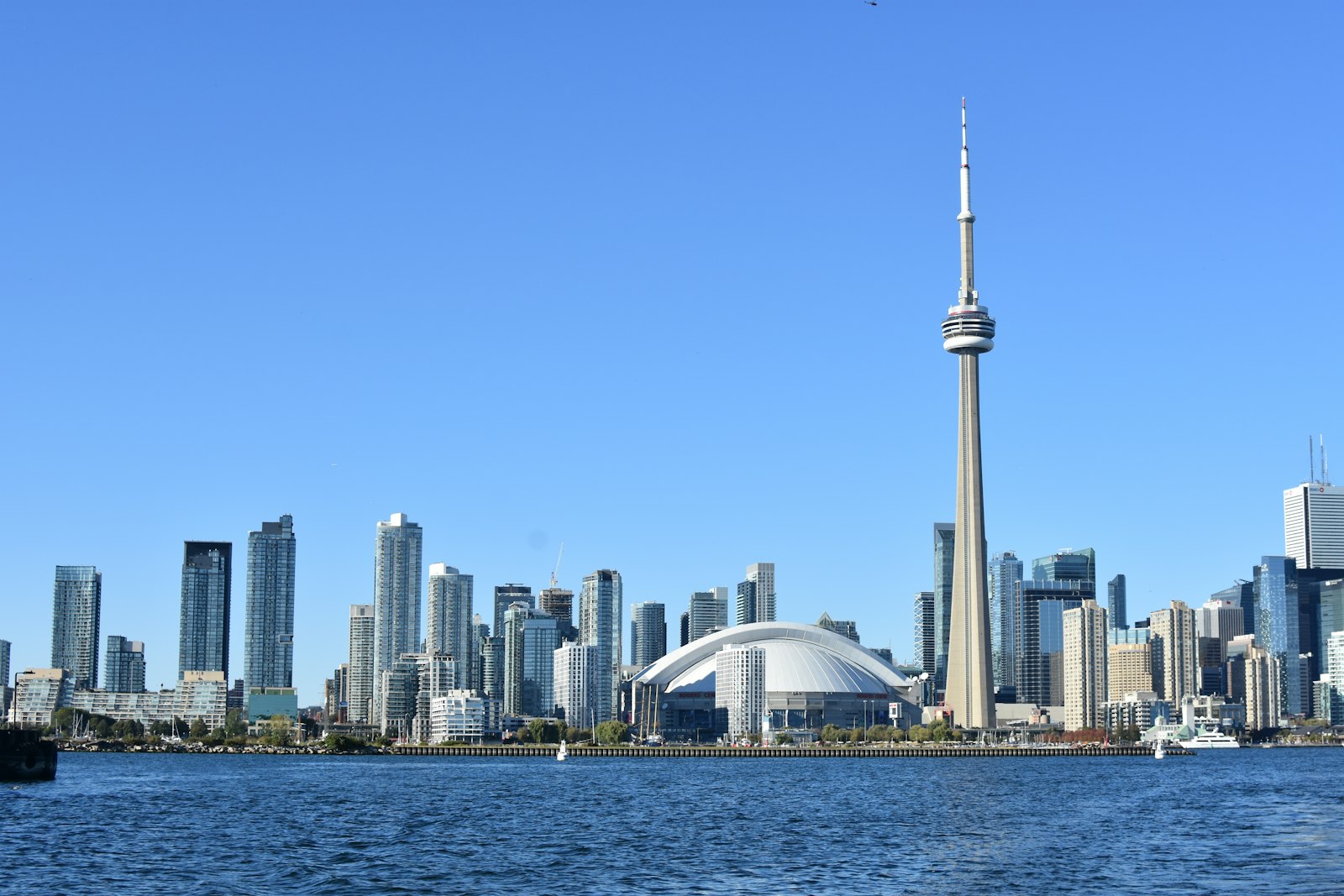
The client-facing order is the one where the garment is doing reputational work. Embroidered polos, quarter-zips and the occasional soft-shell for account managers, brokers, consultants and anyone who stands in a lobby in the Financial District towers or walks a property with a buyer. Quality blank, small clean logo, small quantity, reorderable forever. The internal culture order is the opposite bet: hoodies and crewnecks whose whole purpose is to be worn voluntarily, which means the fabric has to be nicer than the logo. King West and Liberty Village startups order these at every funding round, and mid-size offices around Yonge and Eglinton and North York Centre order them at every holiday. The event order is bulk: conference tees, volunteer-day shirts, the run of a hundred and fifty for the summer social. Cost per piece rules, screen printing wins, and the date cannot move.
Once you split the request into those three, every decision below gets easier, because each order answers a different question. The client-facing one asks “what will this look like across a boardroom table?” The culture one asks “would I wear this if it had no logo?” The event one asks “what does this cost at two hundred and can it land by the fourteenth?” Our business uniforms page covers the first, and the Toronto and downtown Toronto pages cover what we ship into the core.
Picking the blank tier for each of the three
The blank is the biggest lever on both price and whether anyone wears the thing, and it should be chosen per order, not per company. A logo that looks fine on a premium polo looks cheap on a thin one, and the person wearing it knows.
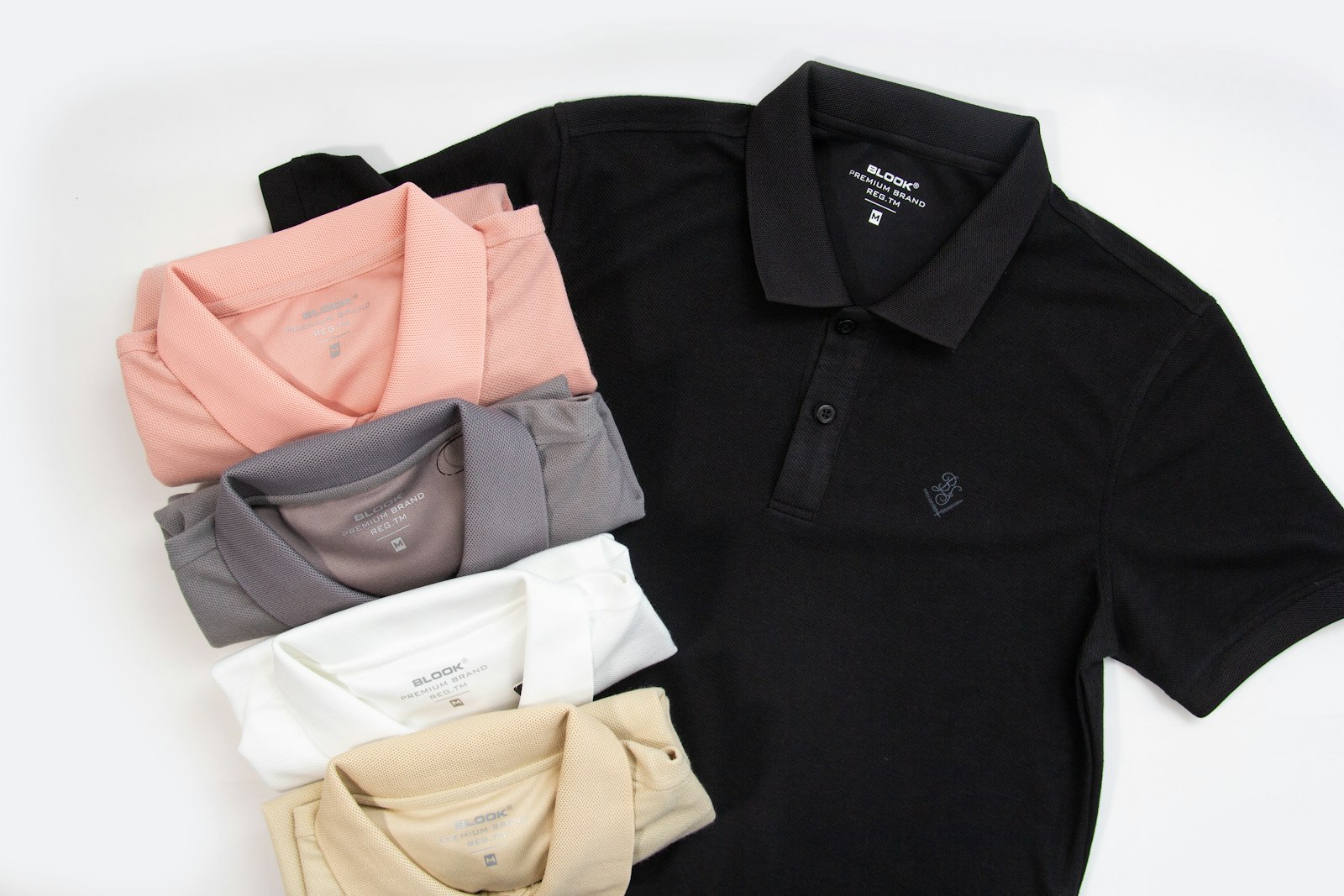
Client-facing: pay for the blank. A mid- to heavyweight pique polo with a stable knit embroiders cleanly and holds its collar through a year of washes; a thin, stretchy one puckers under the stitching and looks tired by March. Quarter-zips follow the same rule. Keep the colour palette to one or two shades the whole company can wear, with a ladies’ cut available in the same colour, and pick a mainstream style you can reorder in eighteen months when the sales team has doubled. We go into fabric, weight and fit in detail in branded polo shirts for business, and the polo shirt service page lists what we run.
Internal culture: this is where a thin blank kills the whole idea. A hoodie that gets worn every weekend for two years is the cheapest marketing a company ever buys; a hoodie that goes in a drawer is the most expensive. Go for a mid-heavy fleece with a real hand feel, a crewneck option for the people who do not wear hoods, and a print that is deliberately smaller and quieter than you first drafted. Our Toronto hoodie guide and crewneck sweatshirt guide cover weights and which prints survive the dryer.
Event: a solid standard-weight cotton tee. Not the papery promotional blank, and not the premium ring-spun either, because two hundred people are going to wear it for one day and a few of them for years. If the budget is tight on an event run, drop a print colour before dropping to a thinner shirt. The full cost curve is in custom t-shirts for small business.
Embroidery or print, and how big the left-chest logo should be
The decoration decision follows the tier almost automatically. Machine embroidery for the client-facing layer, because thread on a pique polo or a quarter-zip reads as permanent and does not crack, fade or peel through three hundred washes. Print for the culture and event layers, because a big soft print on fleece looks better than a stiff embroidered patch and costs a fraction of it at two hundred pieces. The one common exception is a startup that wants an embroidered wordmark on a hoodie precisely because it looks like retail; that works, and it is priced as embroidery.
Embroidery has a one-time digitizing step to convert the logo to a stitch file, and it has limits: no gradients, no photographs, and no text smaller than roughly a quarter inch tall, which is where fine taglines under a logo turn into a blur. If the logo has a thin serif tagline, we will suggest dropping it from the stitched version or running the polo as a DTF print instead. The comparison in embroidery versus a printed logo on polos walks through both with the failure cases, and custom embroidery in Toronto covers what we stitch and ship into the GTA.
Then the argument every company has: how big the left-chest logo should be. The answer is smaller than the marketing team wants. A left-chest mark on a polo sits around 3 to 4 inches wide; wider than that and it stops looking like a uniform and starts looking like a sponsor. On a hoodie the same logo can go slightly larger on the chest or be replaced by a centred print, but the left-chest version is still the one people wear to brunch. We show the placement on a mockup of the actual garment before you pay, and the chest logo size guide has the measurements for every garment so the debate can end with a number rather than an opinion.
Collecting sizes without the spreadsheet nightmare
The slowest part of a corporate order is never the decoration. It is the three weeks between “can everyone send me their size” and the last reply. In a company of sixty, the first forty answer the same day, the next fifteen need two reminders, and the last five are on parental leave, in a client meeting, or genuinely do not know whether they are a medium in this brand.
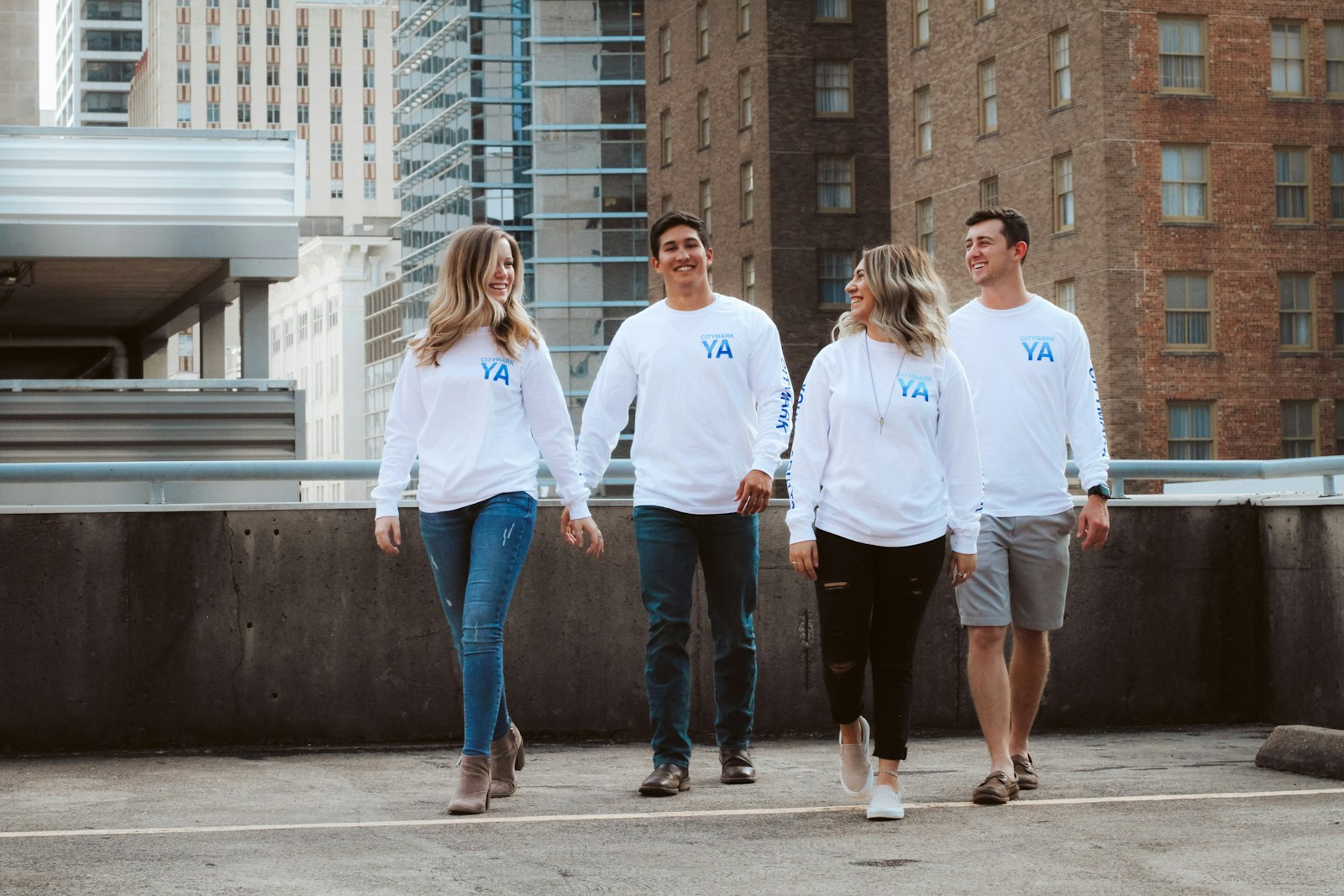
- One form, one owner, one deadline.A short form with name, size and fit (unisex or ladies’), owned by one person, closing on a fixed date. Not a Slack thread, not a reply-all.
- Publish the size chart for the actual blank.Polo, hoodie and tee sizing differ by brand, and “I am usually a large” is how you end up with nine unworn larges. Attach the chart for the garment you chose.
- Default the non-responders.After the deadline, assign the missing sizes from the company’s own distribution and order spares. Waiting for the last five people delays sixty.
- Order spares in your two heaviest sizes. They cover the next two hires, the coffee incident and the person whose form answer was wrong. On a screen run the marginal spares are cheap; ordering four more later is a new job with its own setup.
If you are the person stuck running this, read how to organize a group apparel order before you send the form. It will save you a week.
Onboarding kits and the team you never see
A lot of Toronto companies are now Toronto companies on paper only. Head office is a floor near Union or an airport-corridor building in Mississauga, and the staff are scattered from Hamilton to Oshawa with a handful in Calgary and Halifax. For them, the culture order is not a box of hoodies on a desk. It is an onboarding kit: one hoodie, one tee, maybe a cap, in the right size, arriving at a new hire’s door in their first week.
That changes the maths. Onboarding is a stream of ones and twos, not a run of fifty, which is exactly the order a screen-print minimum turns away. DTF and DTG have no minimum and a flat per-piece price, so a single hoodie for a single hire costs what it costs and does not carry a setup fee. Keep the artwork on file with us, keep the blank mainstream so the same colour is available next quarter, and the kit for hire number forty matches the kit for hire number one.
Shipping is the other half. We ship from Ottawa to anywhere in Canada, so a head-office order can be split by destination rather than landed in one place and re-mailed by an office manager. Transit to the GTA is typically 1–2 days once the order leaves the shop; farther provinces take longer, and Canada Post timing to a rural address is worth checking before you promise a start-date delivery. The full logistics are in shipping custom apparel across Canada, and custom t-shirts for remote teams covers the kit itself: what to include, what to skip, and why the sizing form matters even more when nobody can try one on in the office.
Conference shirts and the timeline that actually works
The event order is where Toronto companies lose sleep, because the date is set by somebody else. The convention centre circuit, the trade show in a hotel ballroom, the volunteer day booked with a charity: none of those move because a shirt file was late. The good news is that event shirts are the most predictable order of the three if you work the calendar backwards.
Production is 2–5 business days and the clock starts only when the free mockup is approved and the order is paid. Add 1–2 days in transit from Ottawa to the GTA. So a conference tee order needs its artwork approved roughly two weeks before the booth opens to have a comfortable margin, and three weeks if sizes still have to be collected. Rush is available on most apparel jobs; tell us the date before you order and we will say honestly whether it is realistic rather than find out together on the Thursday.
Two practical notes from a lot of booth orders. First, the booth shirt is usually a one-colour or two-colour screen print on a coloured tee, because it needs to be readable across an aisle and it needs to cost under twenty dollars at a hundred pieces. Second, order the booth in the same job as the rest of the show kit if you can: a retractable banner in the same colours as the shirts makes a ten-by-ten look planned. The trade show printing checklist walks the whole booth backwards from the load-in date.
The September window for holiday gifts
Every year the same thing happens: the first week of December, a dozen Toronto companies decide the holiday gift is a branded hoodie, and every one of them wants it by the party on the twelfth. Some of those orders make it. All of them would have been calmer, cheaper and better in September.
The reason is the culture order’s weak point: blank availability. The nicer fleece blanks in the popular colours sell down across the whole supply chain in November, so a company that decides in December is choosing from what is left, in the sizes that are left. Deciding in September or October means the garment you actually want, in a full size run, decorated on a normal production schedule and shipped before the courier networks jam. It also means you can order a sample first, hold it, and change your mind about the weight or the colour before committing to eighty of them.
If the gift is going to remote staff, the September window matters twice, because the shipping across provinces stacks on top of production. We wrote the planning calendar out in corporate holiday gifts in Canada, and if the gift is a jacket rather than a hoodie, custom jackets for a Canadian winter covers which shells and soft-shells embroider well and which do not.
Minimums, price bands, and the fact that we are an Ottawa shop
Plain version first: we do not have a Toronto storefront, showroom or pickup counter. Everything is decorated in-house in Ottawa, Ontario and shipped to you. If your plan depends on someone walking to a counter on Bay Street this afternoon, we are the wrong shop, and it is better to know that now.
What that buys you is the price structure of a production shop rather than a retail one. No minimum on DTF or DTG, so the onboarding one-offs are normal orders. Screen printing from around six pieces, with the real value arriving past roughly 24–50, which is where conference and volunteer runs sit. As an anchor, a one-colour screen-printed tee runs roughly $12–$18 each at 50 pieces and drops under $10 in the hundreds; full-colour DTF sits slightly higher per piece with no setup fee, so at ten or twenty pieces the total is usually lower. Embroidered polos cost more than printed tees mostly because the blank does, and the digitizing is a one-time charge you never pay again on a reorder. Every quote is free and includes a mockup on the actual garment.
Because it is decorated in Ontario, there is no cross-border customs hold and no surprise duty invoice, which are the two things that most reliably blow up a conference deadline when a company orders from a fulfilment marketplace. And because the press is down the hall from the person answering the phone, a wrong file or a moved date is one conversation. If you are comparing shops across the region, polo printing near me in Toronto covers the question honestly, and the North York and Markham pages cover the mid-size offices north of the core. For a Markham-specific order, custom t-shirt printing in Markham goes deeper.
A person checks the file, and how to start
Every order is reviewed by a human designer before it goes to press. A real person opens the file and checks resolution, colour, sizing and placement, then either fixes it or tells you exactly what is wrong. It is not an automated preflight. That matters for corporate work specifically, because what arrives is usually a logo pulled from the email signature, a brand guide PDF with the mark buried on page nine, or a wordmark in a colour that will vanish on the navy polo everyone chose. We rebuild it as proper vector, size the left chest correctly, and show you the result on a free mockup of the actual garment before any payment. Nothing prints until you approve it, and if the file cannot carry what you asked for, you hear that before you pay rather than after.
Starting is simpler than the three-order framing suggests. Polos, tees and hoodies can be built in the free online studio at yayaprints.ca/mockup-creator: upload the logo, drop it on the real garment in the real colour, switch to the left-chest placement, enter sizes and quantities, and watch the price move as the count changes. No account and no deposit. Quarter-zips, jackets and anything else outside the studio go through the quote form or to order@yayaprints.ca, and we build the mockup for you. Call 613-666-9292, or WhatsApp the same number, if it is easier to explain out loud.
Send all three orders in one message if you have them. We will price the embroidered polos, the hoodies and the conference tees separately, on the right blank and method for each, and ship them where each one needs to go. If your company is a brokerage or a property team, the real estate marketing page covers the polo-plus-signage combination, and small business printing is the right starting point for a company of ten that needs all three at once. If what you actually run is a kitchen or a front of house, custom restaurant uniforms in Toronto is the better guide.
Frequently asked questions
What counts as corporate apparel, and why do you split it into three orders?
Corporate apparel is any branded garment a company buys for its people: polos, quarter-zips, hoodies, crewnecks, tees, caps and jackets. We split it into three because the orders behave differently. Client-facing pieces (embroidered polos and quarter-zips) need a quality blank, a small logo and small reorderable quantities. Internal culture pieces (hoodies and crewnecks) need a fabric people will wear voluntarily. Event pieces (conference and volunteer tees) need the lowest cost per piece at volume and a hard date. Pricing them as one order gets each of them wrong.
Do you have a shop or pickup location in Toronto?
No. We decorate everything in-house in Ottawa, Ontario and ship to Toronto and across the GTA. There is no Toronto storefront, showroom or pickup counter. Transit to the GTA is typically 1 to 2 days once the order leaves the shop, and because it is made in Ontario there are no customs holds or surprise duties.
How much do branded polos cost compared with printed tees?
A one-colour screen-printed tee runs roughly $12 to $18 each at 50 pieces and under $10 each in the hundreds. An embroidered polo costs more, mostly because a quality pique blank costs more than a cotton tee, plus a one-time digitizing charge to convert the logo to a stitch file that you never pay again on reorders. Full-colour DTF sits slightly higher per piece than a big screen run but carries no setup fee. Every quote is free and includes a mockup on the actual garment.
What is the minimum order for company shirts?
There is no minimum on DTF or DTG, so a single hoodie for a single new hire is a normal order at a normal per-piece price. Screen printing has a practical minimum of about 6 pieces and becomes the best value past roughly 24 to 50, which is where conference and event runs usually land. Embroidered polos are fine in small runs.
How long does a corporate order take to reach Toronto?
Production is 2 to 5 business days, counted from the moment the free mockup is approved and the order is paid. Add 1 to 2 days of transit from Ottawa to the GTA. For a conference, plan to have artwork approved about two weeks before the booth opens, or three if sizes still have to be collected. Rush is available on most apparel jobs — tell us the date before you order and we will say honestly whether it is realistic.
Can you ship onboarding kits directly to remote employees?
Yes. We ship from Ottawa to anywhere in Canada, and an order can be split by destination rather than landed at head office and re-mailed. Onboarding kits are typically ones and twos, which is why we run them on DTF or DTG with no minimum and a flat per-piece price. We keep your artwork on file so the kit for hire number forty matches the kit for hire number one. Transit to the GTA is 1 to 2 days; farther provinces and rural addresses take longer, so check the timing before promising a start-date delivery.
How big should the left-chest logo be on a company polo?
Smaller than most marketing teams want. A left-chest logo on a polo generally sits around 3 to 4 inches wide. Larger than that and the shirt stops reading as a uniform and starts reading as a sponsor. On a hoodie the same logo can go slightly larger or move to a centred chest print. We show the exact placement on a mockup of the actual garment before you pay, and our chest logo size guide has measurements for each garment.
Can I design the polos and hoodies myself, or do I have to email you?
Polos, tees and hoodies can be built yourself in the free studio at yayaprints.ca/mockup-creator: upload a logo, place it on a real garment in a real colour, choose the left-chest placement, enter sizes and quantities and watch the price update. No account and no deposit. Quarter-zips, jackets and other garments outside the studio go through the quote form or order@yayaprints.ca and we build the mockup for you. Either way a human designer reviews the file before it goes to press.
Design it yourself. A human designer still checks every order.
Our free studio gives you the price and the mockup in the browser. What it doesn't do is print your file blindly — every order is reviewed by a real designer before it reaches the press.
- Step 1You design it — free
Upload your logo, drop it on a real garment, set the size and placement, pick colours and quantities. No account, no deposit, no waiting on a reply.
- Step 2A human designer checks it
Before anything prints, one of our designers opens your file and checks resolution, colours, sizing and placement. If it won't print well, we fix it or tell you exactly what's wrong — a person, not an automated preflight.
- Step 3You approve, then we print
You get the corrected mockup back on the actual product. Nothing goes to press until you say yes — and it ships in 2–5 business days.
Price all three orders on the real garments before you pay a cent
Drop your logo on a polo, a hoodie and a tee, set the left-chest placement, enter sizes and quantities and watch the price update. No minimum on DTF or DTG, screen printing from around 6 pieces, embroidered and printed in-house in Ottawa and shipped to Toronto in 1–2 days once it leaves the shop.
Every order is reviewed by a human designer before it goes to press. A person checks artwork resolution, colour, sizing and placement, and either fixes the file or tells the customer what is wrong — it is not an automated preflight.