
Custom T-Shirt Printing in Kitchener–Waterloo: Startup Swag, Campus Clubs, Shop Floors and Oktoberfest Crews
Kitchener–Waterloo orders custom shirts on a four-month clock: startup onboarding hoodies and launch tees, campus club runs timed to the co-op terms, embroidered work shirts for the shop floors along Victoria Street North and in Cambridge, Oktoberfest crew shirts, and rec-league names and numbers. Real per-shirt pricing, the method for each order, the 1–2 week standard turnaround with rush tiers, and 1–2 days in transit from Ottawa into Waterloo Region once it leaves the shop.
- Minimum order
- None on DTF or DTG — we will print one shirt. Screen printing starts around 6 pieces and becomes the best value past roughly 24–50.
- Typical cost
- Roughly $12–$18 CAD per screen-printed tee at 50 pieces, dropping under $10 each in the hundreds. Full-colour DTF sits slightly higher per piece with no setup fee.
- Turnaround to Waterloo Region
- Standard turnaround on clothing is 1–2 weeks. Most apparel orders can rush — 4–5 business days or 1–3 business days, priced at checkout — and every order shows the dates it will be ready before you pay. Then typically 1–2 days in transit from Ottawa once the order leaves the shop.
- Artwork check
- A human designer reviews every order before it goes to press — resolution, colour, sizing and placement. Not an automated preflight.
- Design it yourself
- Free online studio at yayaprints.ca/mockup-creator. No account, no deposit, real garments and colours, and the price updates as you build it.
- The co-op clock
- Waterloo Region orders arrive in three waves, September, January and May, because co-op terms flip every four months, with a fourth surge in early autumn ahead of Oktoberfest.
- Where it is printed
- In-house in Ottawa, Ontario, then shipped to Kitchener, Waterloo, Cambridge and Guelph. No storefront or pickup in Waterloo Region. Printed in Canada, so no cross-border customs holds or surprise duties.
Who orders custom shirts in Kitchener–Waterloo
Kitchener–Waterloo gets said as one word, and for printing it behaves like one market with five kinds of buyer in it. The requests that reach us from Kitchener, Waterloo, Cambridge and Guelph next door sort into the same five piles every year, and the piles order differently enough that a shop quoting them all the same way gets most of them wrong.

Startups are the loudest. The blocks around Communitech and the Innovation District in downtown Kitchener, and the tech and insurance employers at the Northdale and research-park end of Waterloo, order onboarding hoodies, launch tees, conference merch and hackathon shirts in small, frequent, well-designed runs. Campus is the biggest by count: student clubs, faculty societies and residence councils on the University of Waterloo and Wilfrid Laurier campuses order tees by the dozen, orientation crews order them by the hundred, and the Conestoga campus in Kitchener adds its own.
Then the shop floors: the tool shops and manufacturers along Shirley Avenue and Victoria Street North, the machine shops and automotive suppliers along Franklin Boulevard in Cambridge, the farm and equipment businesses in the townships around Guelph, all wanting embroidered work shirts and hats that match the ones ordered last spring. Every October, Oktoberfest takes over the region as a public festival, and the volunteer committees and vendor crews around it need bright shirts by the hundred on a date that will not move. And everything with a bench: ball hockey, rec-league soccer and softball, minor sports in Preston and Hespeler, where every shirt carries a different name.
This article takes each buyer in turn, then covers what is the same for everyone: shipping from Ottawa, price, method and the file check. If you already know what you want, the t-shirt printing page lists what we run in-house.
An Ottawa shop, shipping to Waterloo Region without a storefront
Straight answer first: we do not have a storefront in Kitchener, Waterloo, Cambridge or Guelph, or anywhere else in Waterloo Region. We print everything in-house in Ottawa and ship it to you. There is no counter on King Street, no pickup window in downtown Kitchener and no depot in Galt, so if your plan depends on someone collecting a box this afternoon, we are not the right shop and it is better to know that now.
What it costs you is transit time. Standard turnaround on clothing is 1–2 weeks.Most apparel orders can rush — 4–5 business days or 1–3 business days, priced at checkout — and every order shows the dates it will be ready before you pay. The clock starts when two things have both happened: you have approved the free mockup, and you have paid. Then it is typically 1–2 days in transit from Ottawa once the order leaves the shop. Kitchener, Waterloo, Cambridge and Guelph are one shipping band from where we sit; the courier does not care which side of the Grand River the box lands on. Shipping is quoted for your postal code and shown before you pay.
What you get back is control. The press is down the hall from the person who answers the phone, so when a size list changes or a file is wrong it is one conversation, not a ticket to a fulfilment partner overseas. Everything is printed in Ontario, so there is no cross-border customs hold and no surprise duty invoice three weeks after the launch. For a company with a Kitchener office and a second one in Toronto, run it as one order and split the boxes: one production run, one colour match, one price break. Where to print custom shirts in the GTA walks through the walk-in-versus-shipped decision if you want the comparison rather than our opinion.
Startup swag: onboarding hoodies, launch tees and the conference kit
Startup orders here are small, frequent and judged harshly, because the hoodie is going to be worn in a recruiting photo, at a demo day or on a conference floor beside a competitor’s booth. The pattern that works is one blank, one print, reordered. If a cohort starts every co-op term, decide on the hoodie and the placement once, so the January hires match the September hires in the same photo. A heavyweight fleece hoodie with a small left-chest logo and a larger back or sleeve print is the order we see most; a soft ring-spun tee for the launch sits beside it, and the client-facing layer gets an embroidered polo. Size the logo in the studio, then order the quarter-zips on a quote.
The larger tech and insurance employers at the Northdale end of Waterloo order the same two tiers at a bigger count, and embroidery has one rule for them: simplify the logo to its bones. Thin lines, gradients and text under about a quarter inch will not stitch cleanly, and we prepare the stitched version as part of the job. The most common correction we make on an office order is shrinking a left-chest logo that was sized like a back print; the chest logo size guide gives the real measurements. Corporate apparel in Toronto covers the tiers and blanks in depth, and custom embroidery in Toronto explains what stitching does and does not do well.
Hackathons and conferences are the deadline orders. A hackathon shirt is one colour, one print, a sponsor wall on the back and a logo drawn at two in the morning; send it anyway, because a designer cleans it up before it prints. The conference kit is always the same, booth tees plus a retractable banner or a larger printed banner for the back wall, ordered together so the brand blue matches between shirt and banner. Our trade-show printing checklist lists what to send and when; the short version is three weeks out, not three days. A launch tee, a hoodie or a cap can be built and priced tonight in the free design studio, and the business uniforms page covers the office programme as a whole.
Campus clubs, orientation runs and the four-month co-op clock
Waterloo runs on two campuses and a lot of co-op terms, and the order book shows it. Student clubs, faculty societies, residence councils and intramural teams on the University of Waterloo and Wilfrid Laurier campuses order tees by the dozen; orientation crews order them by the hundred; the Conestoga campus in Kitchener and the University of Guelph campus next door add their own club and residence runs. The buyer is usually a student doing this on top of a full course load, with a budget that was voted on at a meeting.
The co-op rhythm is the thing to understand. Terms flip every four months, so the ordering cycles are September, January and May, and in every one of those months the club executive may have changed hands. Two habits make that painless. Keep the design and the blank the same term to term and reorder rather than reinvent, so the winter cohort matches the fall cohort in the club photo. And write down the exact blank, colour, print size and placement somewhere that survives the turnover, because “same as last time” is not a measurement and the person who ordered last time is now on a work term in Calgary.
On method, the counts decide it. A twelve-person club or a research group is a DTF job: no minimum, no setup fee, full colour, and a sample shirt before the exec meeting is a normal request. Orientation by the hundred is a screen printing job, one or two ink colours on a bright tee, where the setup divides down to nothing and the price drops under ten dollars a shirt. Between twenty and fifty the artwork breaks the tie. Sizes are the other trap: collect them on one form with one deadline, and weight the spares toward medium and large. How to organize a group apparel order is the most useful ten minutes a club treasurer will spend, and bulk t-shirt printing across the GTA shows where the volume breaks land. A club tee or a residence hoodie can be designed and priced in the studio in an evening, with no account and no deposit, which suits a group that has to show the exec a number before anyone commits.
Shop floors and trades: embroidered work shirts that survive the wash
Manufacturing is the quiet majority of what we ship into the region. The tool shops along Shirley Avenue and Victoria Street North, the machine shops and automotive suppliers along Franklin Boulevard in Cambridge, the farm and equipment businesses around Guelph and the contractors framing subdivisions on the edges of all three cities order the same way: a chest logo on a work shirt, a department or a first name on the sleeve, a cap to match, and fifteen more in spring when the crew turns over.
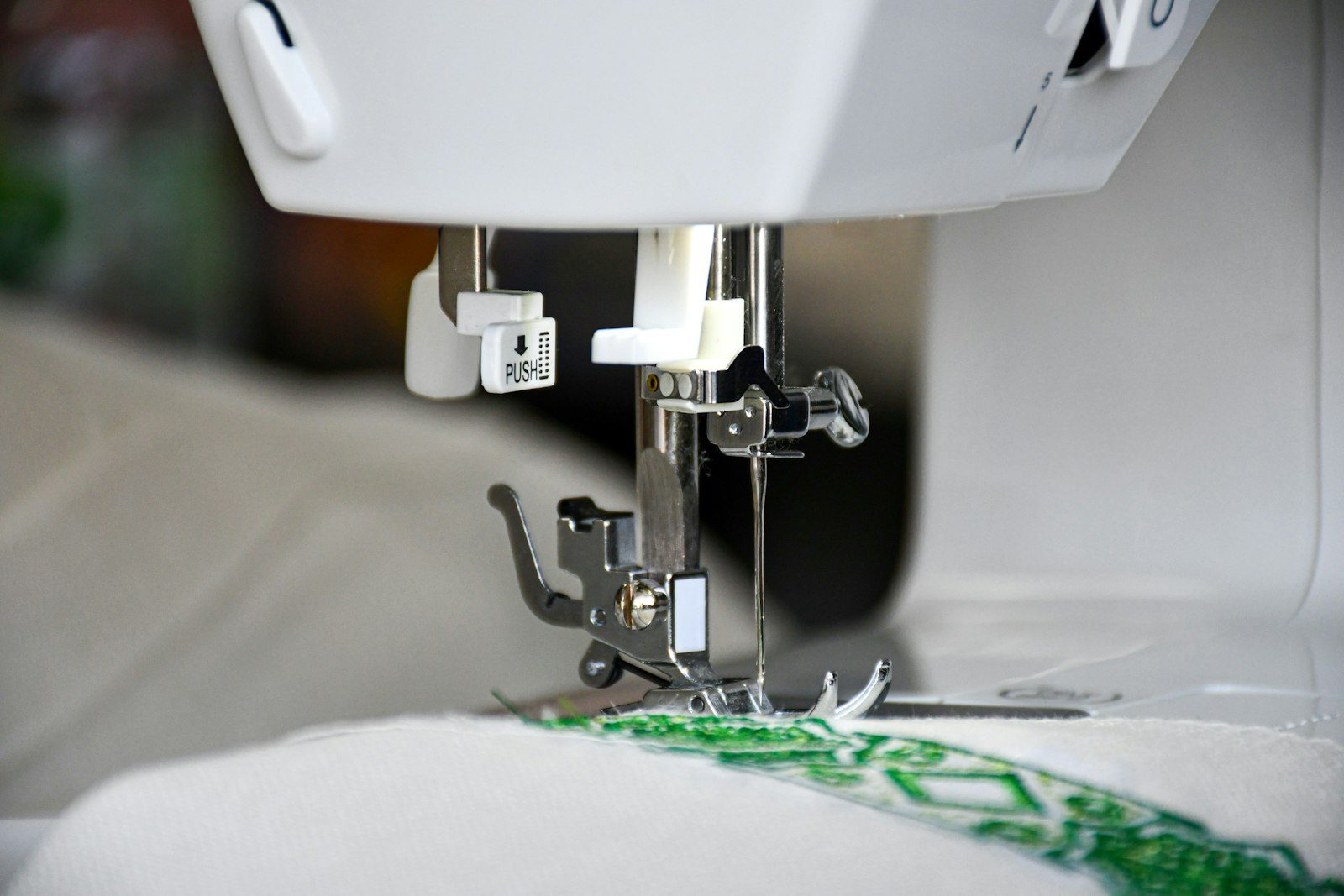
Embroidery wins on the floor because stitching survives washing and abrasion better than a print does, and because it reads as finished on a polo or a work jacket. The usual build is company name on the left chest, first name on the right, crew or department on the sleeve; we digitise the logo for stitching first and show it on a mockup of the actual garment before anything runs. Small crews are fine. Print takes the summer tees and the big back prints, and the split that works for most shops is embroidery for the office and the supervisors, print for the floor, so the two tiers read as one company. Custom workwear covers the garment options, embroidered caps are the piece every crew asks for second, and jackets and hi-vis are quoted by hand through the quote form rather than the studio.
Hi-vis has one rule. The CSA Z96 rating belongs to the garment as it was made; we decorate certified blanks and certify nothing, and print and embroidery stay off the reflective tape. Tell us the style and we show the placement on a mockup of that exact product. For the reorder, which every crew shirt eventually is, keep the blank’s style number and the approved artwork on file with us so the March shirts match the ones already in the building. The construction apparel page goes trade by trade on durability.
Oktoberfest crews, and the festival-timing lesson for next year
Every October, Oktoberfest takes over the region as a public festival, and the people who run the events around it — volunteer committees, vendor crews, parade marshals, the staff at the halls and the pop-up patios — need shirts by the hundred in a colour that reads across a crowded tent. That order has a shape: one or two ink colours, a bright shirt, the role printed large on the back where it can be read from behind, and a date fixed a year ago that will not move. Screen printing was built for it; the setup divides down to nothing across two hundred shirts and the price drops under ten dollars each.
Here is the honest timing lesson, written in late September. Standard turnaround on clothing is 1–2 weeks, the clock starts only when the free mockup is approved and the order is paid, and transit adds 1–2 days on top. For an order placed this week, a standard run may or may not land before the opening weekend, and that is a conversation to have before you order, not after. Most apparel orders can rush — 4–5 business days or 1–3 business days, priced at checkout — and every order shows the dates it will be ready before you pay, so nobody is guessing. What we will not do is take a job we cannot land.
The lesson for next year is simpler. Lock the design in August, collect sizes as a fixed spread weighted to medium, large and extra-large rather than chasing a hundred volunteers who have not confirmed they are coming, and order in the first week of September so the shirts are in the hall with a week to spare. Do not mark four roles with four shirt colours; that turns one job into four setups. One shirt colour, role on the back. The same rules run every fall fair and charity run in the region, and custom event shirts in Toronto works backwards from the event date in detail; the event shirts page covers fundraiser and sponsor-back setups.
Rec leagues and ball hockey: every shirt is different
A ball-hockey team from Kitchener or a rec-league soccer side from Preston has one feature no startup order has: every shirt is different. Fourteen players, fourteen names, fourteen numbers, a coach set, and the two parents who want a hoodie for the bleachers. Individual names and numbers are a digital job, done by DTF or cut vinyl, because every variation is free and there is no screen to set up per player; on a fourteen-player roster the crest on the front goes digital too, and the whole order prices flat per shirt with no setup line.
The roster format we need is simple: one row per player, size, name spelled exactly as it should print, number. Get a second person to check the spelling before it comes to us, because a misspelled name is the one mistake nobody wants to pay to reprint. How to order team names and numbers walks through it. Winter rosters were just registered, so a lot of this is landing now; spring soccer and summer ball hockey are the next window, and sending the roster three weeks before the first game keeps the whole thing relaxed.
One thing to be clear about: the studio builds tees, long-sleeves, hoodies, polos, caps and youth tees, with sports-number fonts built in, so a warm-up shirt or a parent hoodie with a name and number can be designed and priced in the browser tonight. Sublimated game jerseys are a different product that we quote by hand, and running both as one order keeps the crest matching between the jersey and the bench tee. Rowing crews on the Grand, the cycling groups riding out toward Blair and the minor sports clubs in Preston and Hespeler all order in the same shape, and the smaller the roster, the more the no-minimum on DTF matters.
What custom shirts cost in Waterloo Region, and which method fits
Anyone quoting custom shirts in Kitchener from a single number is guessing, because five inputs move the price: the blank, the decoration method, the number of ink colours, the number of print locations and the quantity. The honest anchor is this. A one-colour screen print on a standard cotton tee runs roughly $12–$18 each at 50 pieces and falls under $10 each in the hundreds, which is where the orientation and festival runs live. Full-colour DTF sits a little higher per piece than a big screen run but carries no setup fee, so for a fourteen-player roster or a dozen onboarding hoodies the total is usually lower. Embroidery is priced by stitch count, not by colour, so a small clean left-chest logo on a work shirt is affordable and a large detailed one is not. Every quote is free and includes a mockup.
| Method | Typical Waterloo Region order | Practical minimum | Colour handling |
|---|---|---|---|
| Screen printing | Orientation runs, festival volunteer shirts, 1–3 bold colours | ~6 pieces | Priced per colour; brightest ink on coloured shirts |
| DTF | Club tees by the dozen, rosters with names and numbers, hackathon sponsor walls | 1 piece | Unlimited colours, every shirt can differ; no setup fee |
| DTG | One-offs, a sample before the exec meeting, softest hand on cotton | 1 piece | Unlimited colours; flat per-piece price |
| Embroidery | Work shirts, caps, office polos, quarter-zips on a quote | Small runs fine | Thread colours; priced by stitch count, no gradients or tiny text |
Screen printing pushes ink through a stencilled mesh, one screen per colour, which is why it has a cost floor at small counts and a very low ceiling at large ones. DTF prints the design onto a film that is heat-pressed onto the garment, so there is nothing to set up and every shirt can be different at the same price. Machine embroidery stitches the logo in thread, never cracks or fades in the wash, and is the wrong tool for fine detail, gradients or text under a quarter inch. Between twenty and fifty pieces the artwork breaks the tie: a two-colour crest goes to screen, a sponsor wall or a photograph goes to DTF, and anything where the back of every shirt is different goes digital.
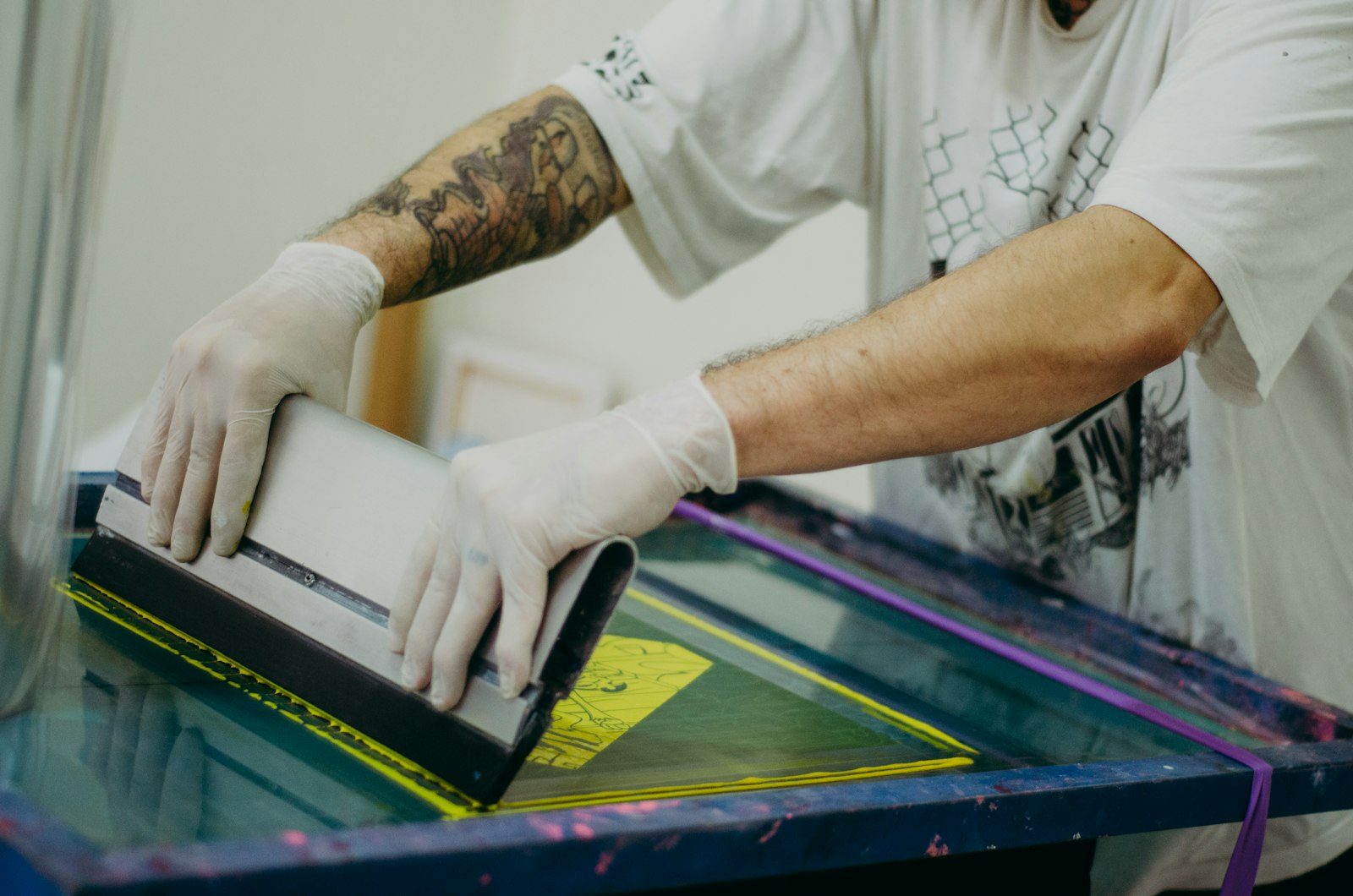
The lever most people pull wrong is the blank. If the budget is tight, drop a print colour before you drop to a thinner shirt; a clean one-colour print on a decent tee outlasts a full-colour print on something papery. Ask any shop for the brand, style number and fabric weight in the quote, because two quotes are only comparable if they are for the same shirt. The Region of Waterloo is one courier band from Ottawa, so the numbers above hold in all three cities and in Guelph.
A human designer checks the file, then you start
The thing that makes ordering from a shop five hundred kilometres away safe is not the preview. It is what happens after you click order. Every order is reviewed by a human designer before it goes to press. A person checks artwork resolution, colour, sizing and placement, and either fixes the file or tells you exactly what is wrong. It is not an automated preflight.
That matters because of what actually arrives from the region: a startup logo exported from a design tool at screen resolution, a club crest that is a screenshot of last year’s shirt, a machine shop’s logo that exists only on the side of the truck, a hackathon wordmark with the fonts missing from the PDF. We clean those up or redraw them as proper vector art, and if the logo needs a real rebuild our vectorization service does it once, permanently. Then you see the result on a free mockup of the actual product before any payment. Nothing prints until you approve it, and if a file cannot carry the size you want, you hear that before you pay rather than see it in a box of two hundred shirts at the hall.
Starting is simple. Decide roughly how many shirts and how many colours, then either drop your logo on a real garment in the free studio at yayaprints.ca/mockup-creator — upload a PNG, JPG, SVG or PDF, place it on a tee, hoodie, polo, cap or youth tee in a real colour, add print-quality text including sports numbers, pick sizes and quantities, and the price updates as you build, with no account and no deposit — or send the file through the free quote form or to order@yayaprints.ca and we build the mockup for you. Jerseys, jackets, hi-vis, aprons and anything else the studio does not build go through the form, in English or French. Call or WhatsApp 613-666-9292 if it is easier out loud. Approve the mockup, pay, and the boxes arrive in Kitchener, Waterloo, Cambridge or Guelph without anyone driving to a print counter. If you are comparing the neighbours, custom t-shirt printing in Hamilton covers the city down Highway 8, and custom t-shirt printing in Halton Region covers Milton and Georgetown on the way to Toronto.
Frequently asked questions
How much does custom t-shirt printing cost in Kitchener or Waterloo?
It depends on the blank, the method, the number of ink colours, the number of print locations and the quantity, so be sceptical of any single number. As a realistic anchor, a one-colour screen print on a standard cotton tee runs roughly $12–$18 CAD each at 50 pieces and drops under $10 each in the hundreds, which is where orientation runs and festival crews usually land. Full-colour DTF sits slightly higher per piece with no setup fee, so a dozen club tees or a fourteen-player roster usually costs less in total that way. Embroidery is priced by stitch count, not by colour. Every quote is free and includes a mockup.
Do you have a shop in Kitchener, Waterloo, Cambridge or Guelph?
No. We print in-house in Ottawa, Ontario and ship to Kitchener, Waterloo, Cambridge and Guelph. There is no storefront, counter or pickup anywhere in Waterloo Region. In exchange you get in-house control instead of a drop-ship network: the press is down the hall from the person answering the phone, it is printed in Canada so there are no customs holds or surprise duties, and transit is typically 1–2 days from Ottawa once the order leaves the shop. Shipping is quoted for your postal code and shown before you pay.
How long does an order take to reach Waterloo Region?
Standard turnaround on clothing is 1–2 weeks. Most apparel orders can rush — 4–5 business days or 1–3 business days, priced at checkout — and every order shows the dates it will be ready before you pay. The production clock starts only when the free mockup is approved and the order is paid, not when you first email. Add typically 1–2 days in transit from Ottawa once the order leaves the shop. Tell us the date you need boxes in hand before you order and we will say honestly whether it is realistic, which matters most in the September, January and May co-op windows and in the weeks before Oktoberfest.
Can a campus club or a hackathon order a small run with no minimum?
Yes. There is no minimum on DTF or DTG, so ten club shirts or a single sample before the exec meeting is a normal order, and the per-piece price does not jump because you only wanted a few. Screen printing starts around 6 pieces because screens have to be made regardless of the count, and it becomes the best value past roughly 24–50 pieces, which is where orientation runs and faculty-wide orders usually sit. If you are weighing fifteen shirts now against fifty next term, send both numbers and we will show what each works out to per shirt.
Can you embroider work shirts and hats for a shop crew in Cambridge or Kitchener?
Yes, and it is a large share of what we ship into the region. Embroidery is the right call for work shirts, polos and caps because stitching survives washing and abrasion better than a print does. Company name on the left chest, a first name on the right and the department on the sleeve is the usual build. We digitise the logo for stitching and show it on a mockup of the actual garment before anything runs, and small crews are fine. Jackets and hi-vis are quoted through the quote form rather than the studio; on hi-vis the CSA rating belongs to the garment as made, and decoration stays off the reflective tape.
Can we still get Oktoberfest volunteer shirts in time this year?
Possibly, and we will tell you plainly before you pay. Standard turnaround on clothing is 1–2 weeks after the mockup is approved and the order is paid, plus typically 1–2 days in transit from Ottawa, which is tight against an early-October date. Most apparel orders can rush — 4–5 business days or 1–3 business days, priced at checkout — and every order shows the dates it will be ready before you pay, so there is no guessing. Send the artwork and a fixed size spread today rather than waiting on individual volunteers. For next year, lock the design in August and order in the first week of September.
Can I design the shirts myself instead of emailing back and forth?
Yes. The free studio at yayaprints.ca/mockup-creator needs no account and no deposit: upload a logo as a PNG, JPG, SVG or PDF, place it on a real t-shirt, long-sleeve, hoodie, polo, cap, onesie or youth tee in a real colour, add text in print-quality fonts including sports numbers, pick sizes and quantities, watch the price update, and order online. Jerseys, jackets, hi-vis and aprons are not in the studio; those go through the quote form or order@yayaprints.ca and we build the mockup for you. Both paths end at the same free mockup and the same human designer check.
What if our logo is a screenshot or a design-tool export at screen resolution?
Send it anyway. Every order is reviewed by a human designer before it goes to press. A person checks artwork resolution, colour, sizing and placement, and either fixes the file or tells you exactly what is wrong; it is not an automated preflight. Screenshots, small website PNGs, PDFs with the fonts missing and AI-generated images are all things we clean up or redraw as vector artwork, and you see the result on a free mockup of the actual product before any payment. Nothing prints until you approve it.
Design it yourself. A human designer still checks every order.
Our free studio gives you the price and the mockup in the browser. What it doesn't do is print your file blindly — every order is reviewed by a real designer before it reaches the press.
- Step 1You design it — free
Upload your logo, drop it on a real garment, set the size and placement, pick colours and quantities. No account, no deposit, no waiting on a reply.
- Step 2A human designer checks it
Before anything prints, one of our designers opens your file and checks resolution, colours, sizing and placement. If it won't print well, we fix it or tell you exactly what's wrong — a person, not an automated preflight.
- Step 3You approve, then we print
You get the corrected mockup back on the actual product. Nothing goes to press until you say yes — then it's ready in 1–2 weeks, or in 1–3 business days with a rush.
See it on the hoodie before you pay a cent
Upload your logo, drop it on a real garment, pick colours, sizes and quantities, and watch the price update as you build. No minimum on DTF or DTG, screen printing from around 6 pieces, printed in-house in Ottawa and shipped to Kitchener, Waterloo, Cambridge and Guelph, typically 1–2 days in transit once it leaves the shop.
Every order is reviewed by a human designer before it goes to press. A person checks artwork resolution, colour, sizing and placement, and either fixes the file or tells the customer what is wrong — it is not an automated preflight.