
No Soliciting Signs: Wording, Size and the Law
No soliciting signs that work: wording door knockers can't miss, sizes that read from the walk, what Ontario's door-to-door rules cover, and building orders.
- What it does
- Asks door-to-door sellers, fundraisers and flyer distributors not to come to the door. Under Ontario's Trespass to Property Act, signs posted so one is clearly visible in daylight from the approach to each ordinary point of access are one way to give notice (s. 5(1)(b)).
- Wording
- Two or three words: NO SOLICITING, NO FLYERS or DO NOT KNOCK, with one exception at most. NO SOLICITING / PAS DE SOLLICITATION covers English and French readers.
- Sizes
- 16″ × 24″ beside the door or in a window; 18″ × 24″ double-sided at the front walk; 24″ × 36″ at a building entrance; any custom size from 12″ up to one 48″ × 96″ sheet (at most 32 sq ft, short side 48″ or less).
- Letter size
- About 1″ of letter height for every 10 feet of reading distance, a common sign-making rule of thumb: SOLICITING across a 24″-wide sign is about 3″ tall and reads from about 30 feet.
- Material
- 4mm coroplast, the only material we offer for these signs, single- or double-sided. Its flutes run vertically, so a wire H-stake slides into the bottom edge.
- Quantities and turnaround
- 1 to 2,000 signs online at any typed quantity, with the price per sign falling as the quantity rises; bigger runs are quoted. Proof before you pay, a human designer check, 5–7 business days to print, then shipped across Canada or delivered locally across Ottawa–Gatineau.
What is a no soliciting sign, and who is it for?
A no soliciting sign, or no solicitation sign, asks people who come to sell, sign you up or ask for money not to come to the door. It is aimed first at door-to-door sales canvassers, and second, with NO FLYERS added, at the people who leave flyers, menus and coupons.
In everyday use, soliciting means selling, signing people up or asking for donations. Other visitors may not see themselves in it: a charity volunteer may feel they are not selling anything, a political canvasser is asking for a vote rather than a sale, and a courier with your parcel is delivering, not soliciting. If you mean everyone, the sign has to say so, and the next section shows how.
A sign is a polite filter, not a lock: what matters is wording read in a second, in a spot seen before anyone reaches the door.
What should a no soliciting sign say?
Two or three words, in the biggest letters the sign allows. NO SOLICITING is the standard, and NO FLYERS or DO NOT KNOCK cover what it misses. People read a door sign in a second or two as they come up the walk, so every extra line makes the important words smaller.
- NO SOLICITING. The standard, understood at a glance. Covers selling and asking for donations; NO SOLICITATION says the same thing.
- NO SOLICITORS, PLEASE. Softer, and common on houses. In Canada a solicitor is also a kind of lawyer, so NO SOLICITING is the clearer of the two.
- DO NOT KNOCK. Covers everyone who would knock, selling or not. Useful for a night-shift worker, a sleeping baby or a dog that barks at every knock.
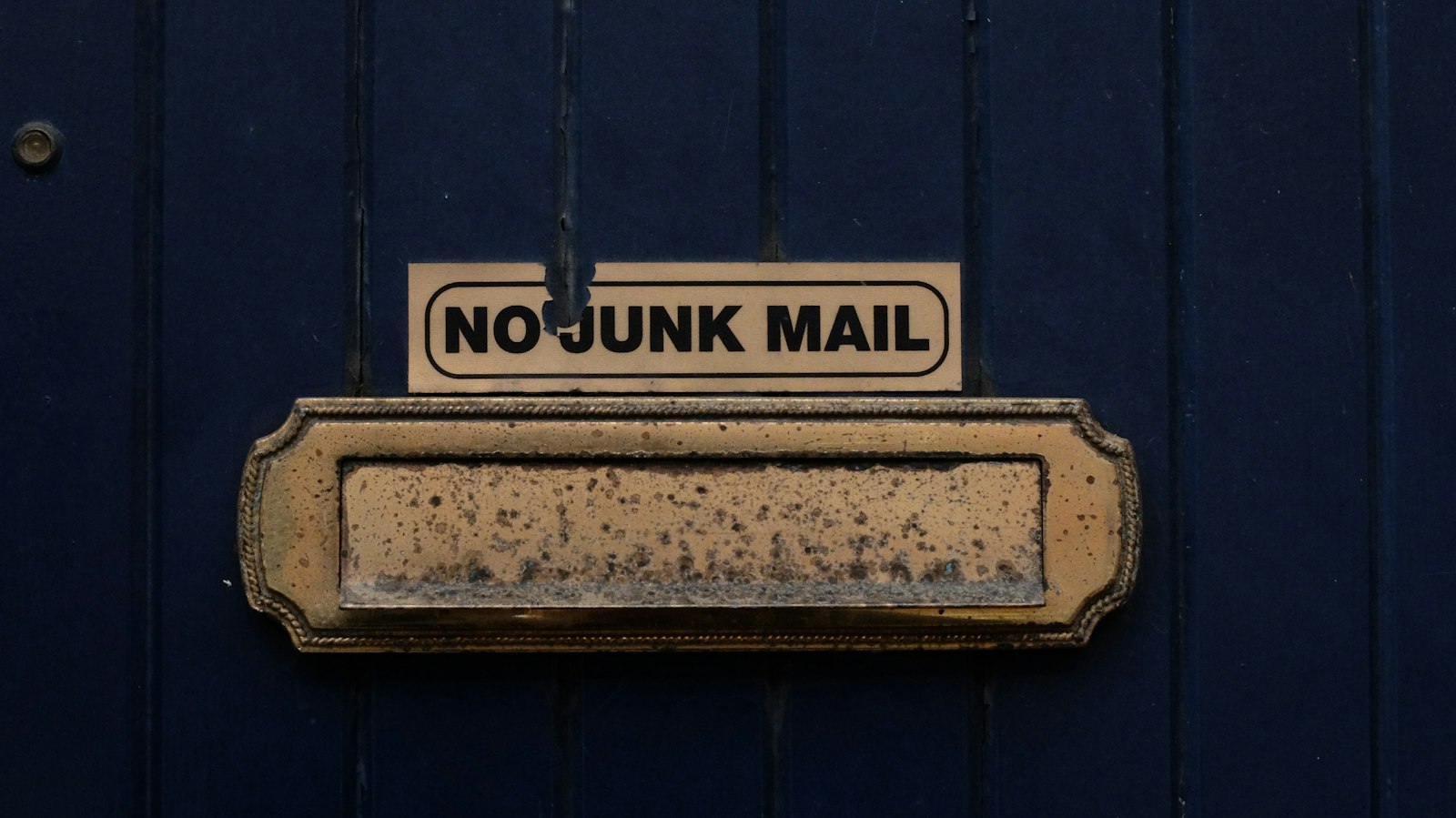
- NO FLYERS or NO JUNK MAIL. For paper rather than people: flyers, menus and coupons. NO SOLICITING · NO FLYERS still fits an 18″ × 24″ sign in large letters.
- Both languages. NO SOLICITING / PAS DE SOLLICITATION on one face speaks to English and French readers across Ottawa–Gatineau. We work in both languages.
Should you list exceptions? One at most, and only if you need it. DO NOT KNOCK · DELIVERIES WELCOME or NO SOLICITING · PARCELS AT SIDE DOOR tells a courier what to do without turning the sign into a paragraph.
Add a symbol. Ontario’s Trespass to Property Act says a sign naming an activity, or showing a graphic of it, with an oblique line drawn through it is sufficient notice that the activity is prohibited (s. 6(2)). A crossed-out symbol beside the words also speaks to people who don’t read English or French. Leave off threats and law numbers copied from signs elsewhere: a short, polite sign is read faster.
What size should a no soliciting sign be, and where does it go?
Size the sign for the distance it is read from: 16″ × 24″ at the door or in a window, 18″ × 24″ double-sided where the walk meets the sidewalk, 24″ × 36″ at a building entrance, and a custom size up to 48″ × 96″ at a plaza or parking entrance. Tap a placement to jump to its card.
Walk
Entrance
Every size is printed on 4mm coroplast, single- or double-sided.
Quick picks: where will the sign go?
House with a front walk
Townhouse, semi or no lawn
Condo, apartment or office lobby
Plaza, office park or many buildings
16 × 24 in · to scale
At the door or in a window: 16″ × 24″
16″ × 24″, or a custom 12″ × 18″ · single-sided · beside the door or inside the glass
The last thing a canvasser sees before knocking is the door itself. A 16″ × 24″ board fixed flat to the wall or a porch post beside the door is read from the top of the steps, and a custom 12″ × 18″ fits the strip of wall beside a narrow door.
With no wall space, stand the board inside a window or a glass storm door, facing out: nothing is stuck to the glass, and one printed side is enough.
18 × 24 in · to scale
At the front walk: 18″ × 24″, double-sided
18″ × 24″ · 3 sq ft · double-sided · seats on a wire H-stake
A sign where the walk meets the sidewalk is read before anyone sets foot on the walk. Set at a right angle to the sidewalk and printed on both sides, it reads to people coming from either direction, and the extra height over a 16″ × 24″ board leaves room for a second line such as NO FLYERS.
The flutes inside 4mm coroplast run vertically, so the legs of a wire H-stake slide into the bottom edge and the sign stands in the lawn without screws or glue.
24 × 36 in · to scale
Building entrance: 24″ × 36″
24″ × 36″ · 6 sq ft · single-sided on a wall or in the lobby glass, double-sided on a lawn
A building entrance is read from farther away, from the parking lot or the sidewalk. A 24″ × 36″ board has twice the area of an 18″ × 24″ sign, so NO SOLICITING can be set in letters about 5″ tall.
Fixed flat beside the doors or standing inside the lobby glass, it needs one printed side. At a lawn entrance to a townhouse complex, print both sides.
36 × 48 in · to scale
Plaza or parking entrance: a custom size up to 48″ × 96″
Custom, e.g. 36″ × 48″ · up to one 48″ × 96″ sheet · single or double
One big sign at the driveway states the rule for the whole property. We print any custom size from 12″ up to one 48″ × 96″ sheet, as long as it is at most 32 sq ft and the short side is 48″ or less.
Pair it with door signs for the people who walk in from the sidewalk.
How big do the letters need to be? A common sign-making rule of thumb is about 1″ of letter height for every 10 feet of reading distance. SOLICITING is ten letters, so the width of the sign sets the letter size. The table assumes a bold, condensed typeface with the word on one line; a wider typeface gives smaller letters.
| Size | Area | Where it goes | Letters, about | Reads from, about |
|---|---|---|---|---|
| 16″ × 24″ | 2.7 sq ft | Beside the front door; inside a window or glass storm door | 3″ | 30 ft |
| 18″ × 24″ | 3 sq ft | Where the front walk meets the sidewalk; room for a second line | 3″ | 30 ft |
| 24″ × 36″ | 6 sq ft | Condo, apartment and office entrances; townhouse complex lawns | 5″ | 50 ft |
| Custom, up to 48″ × 96″ | Up to 32 sq ft | Plaza driveways, parking entrances, office parks | 6″ and up | 60 ft and up |
Placement matters as much as size: put the sign where a visitor decides to come up, at the start of the walk or on the gate. A door sign is only read once someone is already there, so a house with a front walk is best served by both.
For how 4mm coroplast, the flutes and the H-stake work, see our guide to coroplast signs; for the same sizes compared across every kind of lawn sign, see the lawn sign size guide.
Does a no soliciting sign mean anything under Ontario law?
Yes: under Ontario’s Trespass to Property Act, a posted sign is one of the ways an occupier gives notice about entry. Without one, the Act starts from the opposite assumption.
Section 3(2) reads: “There is a presumption that access for lawful purposes to the door of a building on premises by a means apparently provided and used for the purpose of access is not prohibited.” In plain terms, a front walk that leads to a door is taken as open to anyone with a lawful reason to come up and knock, and selling is a lawful reason.
The Act lets the occupier change that. Entry may be prohibited by notice (s. 3(1)), and a notice may be given orally or in writing, by the red and yellow marking system in section 7, or “by means of signs posted so that a sign is clearly visible in daylight under normal conditions from the approach to each ordinary point of access to the premises to which it applies” (s. 5(1)(b)). Substantial compliance with that sign rule is sufficient notice (s. 5(2)).
Three practical points follow. The sign should be visible from the approach, not hidden behind a planter or a screen door. It should be readable in daylight, which is a reason for big, high-contrast letters. And there should be one at each ordinary way in: a house with a front walk and a driveway to a side door has two.
We print signs; we don’t give legal advice. The Act is short and worth reading, and a lawyer is the person to ask about a dispute. For signs that keep people off land altogether, see our guide to no trespassing signs.
What do Ontario's door-to-door sales rules cover?
Ontario’s rules target a list of home products, not door-to-door selling in general. The province’s page on door-to-door sales and home service contracts explains that businesses cannot enter into a contract at your home for certain restricted products and services unless you contacted them first and invited them for that purpose, with some exceptions listed on the page.
The restricted list: furnaces, air conditioners, air cleaners, air purifiers, water heaters, water treatment devices, water purifiers, water filters, water softeners, duct cleaning services, and anything that combines those functions. If a business comes to your home to repair or maintain something, it can only leave information about those products.
Anything not on that list can still be sold door-to-door, as long as the business follows the Consumer Protection Act’s other requirements. The rules cover those contracts with or without a sign; the sign asks everyone else selling not to start at your door.
Do 'No Flyers' and 'No Junk Mail' signs stop flyers?
They ask flyer distributors to skip your door. For Canada Post’s own deliveries there is a separate, official route: a note on the mailbox under Canada Post’s Consumers’ Choice.
To stop unaddressed advertising mail, Canada Post asks you to put a note in or on your mailbox, where your delivery agent can see it, saying you do not wish to receive it; with a community mailbox, the note goes on the inside lip. If ads still arrive a few weeks later, you can open a service ticket with Canada Post.
Some mail keeps coming either way. Canada Post still delivers community newspapers without commercial inserts, public-interest government mailings, election materials (including those from parties and candidates during an election) and all addressed mail.
The note covers Canada Post’s delivery only. Flyers, menus and papers dropped by other distributors are not part of it, so a NO FLYERS sign at the walk or on the door is how you ask them. The mailbox note can be a simple handwritten one; our signs, from 12″ up, are made for the walk, the door and the building entrance.
If you are on the other side of the door, sending print to a neighbourhood: our guide to door hanger advertising says to skip any door with a no-flyers or no-junk-mail sign, and our guide to Canada Post Neighbourhood Mail explains how flyers reach a neighbourhood through Canada Post.
No soliciting signs for condos, property managers and plazas
A building or a portfolio orders one sign in sets: one design, two or three sizes, and a sign at each entrance. For condo corporations, property managers, office parks and plazas, that is often a run of 20 to 500 signs, and the studio takes up to 2,000 at once.
Count the ways in. A condo tower might have a main lobby, a side door, a garage door people walk through and a lawn entrance from the sidewalk: four spots. Multiply by the buildings you manage, and a portfolio of 40 buildings is a run of a few hundred signs.
Match the size to the spot. 24″ × 36″ at lobby doors and inside lobby glass, 18″ × 24″ double-sided on lawns at walkways, 16″ × 24″ at side and service doors. One template keeps every building the same, in English and French if your residents need both.
Check who decides. In a condo, signs on common areas are a decision for the board or the property manager, so check with them before ordering signs for the building.
Big runs are our focus. The lawn sign studio takes 1 to 2,000 signs online at any typed quantity and shows the price for each quantity before you pay. Bigger runs, and versions per building, are quoted through the free quote form, by phone at 613-666-YAYA (613-666-9292) or at order@yayaprints.ca, with the same proof and human designer check. Printing takes 5–7 business days, then the signs ship across Canada, priced for your postal code at checkout, or are delivered locally across Ottawa–Gatineau.
4mm
Coroplast, every size
16″ × 24″ to 48″ × 96″
Stock and custom sizes
1–2,000
Signs online, any quantity
5–7 days
Print turnaround, then shipped
Property managers who also need vacancy signs order them the same way; see our guide to for rent signs.
Frequently asked questions
Are no soliciting signs legal in Ontario?
Yes. Ontario's Trespass to Property Act presumes that access for lawful purposes to the door of a building, by a walk or path provided for that purpose, is not prohibited, and it lets an occupier prohibit entry by notice, including signs posted so one is clearly visible in daylight from the approach to each ordinary point of access (s. 5(1)(b)). A posted sign is one way to give that notice. We print signs and don't give legal advice; the Act and a lawyer are the authority.
What should a no soliciting sign say?
Two or three words in large letters: NO SOLICITING is the standard, DO NOT KNOCK covers every visitor who would knock, and NO FLYERS covers paper left at the door. Add one exception at most, such as DELIVERIES WELCOME, and a crossed-out symbol for people who don't read the words. In Ottawa–Gatineau, NO SOLICITING / PAS DE SOLLICITATION reaches both languages.
What size should a no soliciting sign be?
16″ × 24″ beside the door or inside a window, 18″ × 24″ printed on both sides where the front walk meets the sidewalk, and 24″ × 36″ at a condo, apartment or office entrance. A common rule of thumb is 1″ of letter height for every 10 feet of reading distance, so a 24″-wide sign carries letters about 3″ tall, read from about 30 feet.
Does a no soliciting sign stop flyers and junk mail?
Not Canada Post's. To stop unaddressed advertising mail from Canada Post, put a note in or on your mailbox, where your delivery agent can see it, or on the inside lip of a community mailbox. Community newspapers without commercial inserts, public-interest government mailings, election materials and addressed mail still arrive. For flyers from other distributors, a NO FLYERS sign at the walk or the door is how you ask.
Does a no soliciting sign apply to charities and political canvassers?
Not always in practice. Soliciting usually means selling or asking for donations, and a canvasser asking for a vote, or a courier with a parcel, may not see themselves in it. If you want no one to knock, DO NOT KNOCK says it plainly. A sign states what you want; who must follow it is a legal question, and we don't give legal advice.
Can you print no soliciting signs in bulk for a condo or property manager?
Yes. The lawn sign studio takes 1 to 2,000 coroplast signs online at any typed quantity, with the price per sign falling as the quantity rises. Bigger runs and versions per building are quoted directly through the free quote form, by phone at 613-666-YAYA (613-666-9292) or at order@yayaprints.ca, with the same proof and human designer check. Printing takes 5–7 business days, then the signs ship across Canada.
Set it up yourself. A human designer still checks every order.
Our print studio gives you the price and a proof in the browser. What it doesn't do is print your file blindly — every order is reviewed by a real designer before it reaches the press.
- Step 1You set it up — free
Pick the product, size and quantity in the print studio, then upload your file or start from a ready-made design. The price shows before you pay, with no account and no deposit.
- Step 2A human designer checks it
Before anything prints, one of our designers opens your file and checks resolution, colours, sizing and placement. If it won't print well, we fix it or tell you exactly what's wrong — a person, not an automated preflight.
- Step 3You approve, then we print
You see the proof before you pay. Nothing goes to press until you say yes — then it's printed in 5–7 business days and shipped, with shipping priced for your postal code at checkout.
Design your no soliciting signs and see the proof first
Pick 16″ × 24″, 18″ × 24″, 24″ × 36″ or a custom size, single- or double-sided, see the price for each quantity and approve a proof before you pay. Signing a whole building or portfolio? Send the list for a direct quote.
Every order is reviewed by a human designer before it goes to press. A person checks artwork resolution, colour, sizing and placement, and either fixes the file or tells the customer what is wrong — it is not an automated preflight.