
Custom Workwear and Hi-Vis in Toronto: Outfitting a Crew That Works Outside All Year
A Toronto crew order is really three orders across a calendar: hi-vis tees in July, crew hoodies and toques in January, embroidered polos for the estimator who meets clients. This guide covers the hi-vis truth (the safety rating belongs to the blank, decoration stays off the reflective tape, and the site supervisor decides), embroidery versus print per layer, the chest-logo-plus-back-print standard, sizing S–4XL and tall, winter layers, setting up for reorders, honest pricing, and shipping from our Ottawa shop to the GTA in 1–2 days. A human designer checks every file before press.
- The rating belongs to the blank
- A hi-vis garment's safety rating comes from the manufacturer that made and tested the blank, never from the decoration and never from us. Logos go on the fluorescent fabric panels, never on or across the reflective tape. Your site supervisor and the client's safety officer decide what the site requires; we are not a safety-compliance authority.
- What a Toronto crew orders in a year
- Hi-vis tees and long sleeves for the summer, crew hoodies and toques for the winter, and embroidered polos or a quarter-zip for whoever meets clients. Same logo, same colours, three formality levels.
- Typical cost
- Roughly $12–$18 CAD per screen-printed tee at 50 pieces, dropping under $10 each in the hundreds. Full-colour DTF sits slightly higher per piece with no setup fee. Hi-vis blanks, hoodies and embroidery each add to the garment cost; every quote is free and includes a mockup.
- Turnaround to Toronto
- 2–5 business days in production after you approve the mockup and pay, then 1–2 days in transit from Ottawa to the GTA. Rush is available on most apparel jobs; tell us the date before you order.
- Sizing
- Order the crew's real sizes, not a retail curve: mainstream work blanks run S–4XL or beyond, and tall sizes exist on many of them. Winter hi-vis is worn over layers, so size up.
- Artwork check
- A human designer reviews every order before it goes to press — resolution, colour, sizing and placement against the actual garment. Not an automated preflight.
- Where it is made
- Printed and embroidered in-house in Ottawa, Ontario, then shipped to Toronto and the GTA. We have no Toronto storefront or pickup counter. Printed in Canada, so no customs holds or surprise duties.
What a Toronto crew actually wears across a year
Most requests for custom workwear in Torontoarrive as a single line: “we need shirts for the crew.” The order that actually gets worn is three orders spread across a calendar, and the shops that quote it well are the ones that ask about January while you are talking about July.
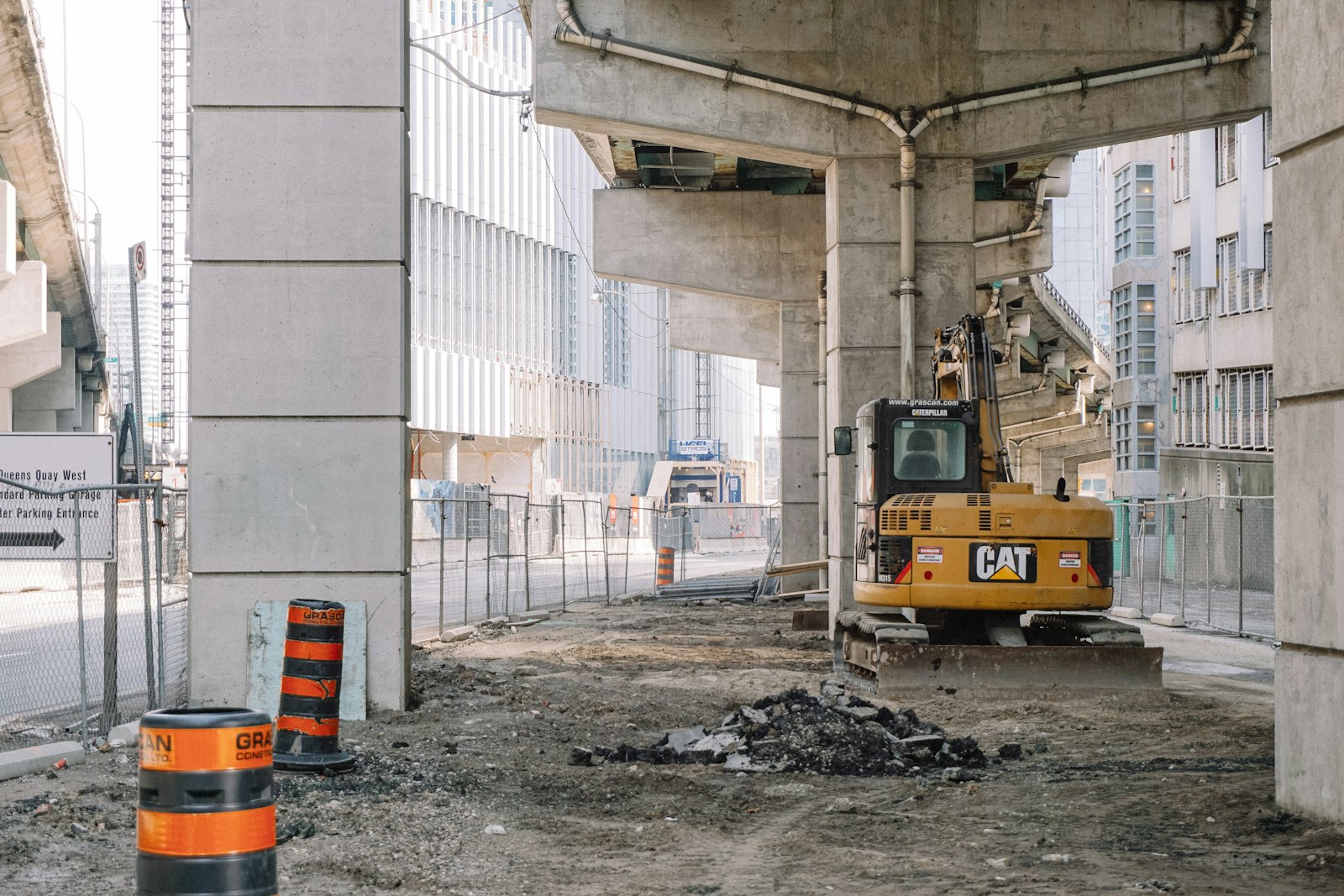
Look at the year the way a site superintendent does. From May to September the crew is under tower cranes on a downtown condo site or on Gardiner and transit work in thirty degrees of humidity, and what they need is a fluorescent tee or long sleeve they can sweat through and wash forty times. From November to March the same people are pouring in wind off the lake, and the tee becomes a base layer under a hoodie, a toque and a hi-vis shell sized to go over all of it. Then there is the estimator, the project manager and the owner, who walk a client through the site in the morning and sit in a boardroom on Bay Street in the afternoon, and who need an embroidered polo or quarter-zip that reads as the same company at a different formality level.
That is the shape of the order whether the company is a framing outfit based in Etobicoke running jobs along the 401, an electrical contractor out of Scarborough, a mechanical crew from North York, a landscaping and property crew cutting a hundred lawns a week, or a delivery fleet working out of the industrial belts around the airport and the 400. The garments differ. The logic is identical: one logo, one colour scheme, a summer layer, a winter layer and a client-facing layer, all bought so they can be bought again.
This article is the Toronto buying guide for that year. If you want the technical deep-dive on the garment itself — what the tape is, where the print windows are, what heat does to a coated shell — that lives in our custom hi-vis workwear guide and we will not repeat it here.
The hi-vis truth: the rating is on the blank, not on the logo
Every conversation about custom hi-vis in Toronto should start with a fact that the decorator side of this industry tends to mumble. The safety rating on a hi-vis garment belongs to the blank. It was earned by the manufacturer who chose the fluorescent fabric, positioned the retroreflective tape and had the garment tested. We did not earn it, we cannot add it, and nothing we print or stitch makes a garment more compliant than it was when it left the factory.
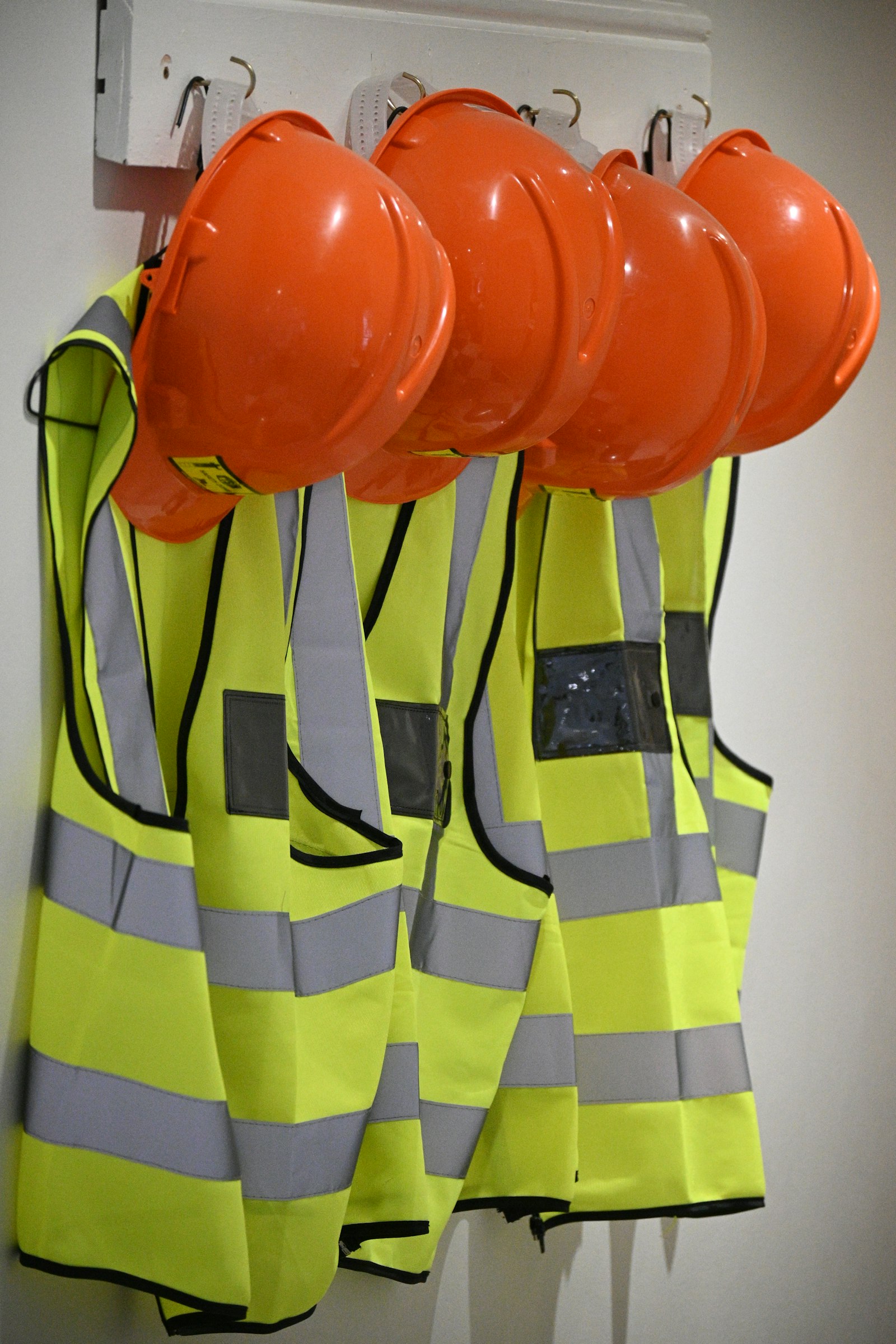
What decoration can do is make a garment less compliant, which is why the one hard rule exists: logos go on the fluorescent fabric panels and never on, across or crowding the reflective tape. Not ink, not thread, not a heat-applied transfer. On a standard vest that means a left-chest logo above the band and a back print in the clear window between the horizontal stripes, sized to the window the specific style actually has. Hi-vis tees and long sleeves usually have more open fabric than vests, which is one reason crews like them in summer, but the tape still dictates where the back print can sit.
The second hard rule is about who decides. We are not a safety-compliance authority. Your site supervisor, the general contractor’s safety plan and the client’s safety officer decide what class of garment the site requires, and the manufacturer of the blank is the authority on what that blank is rated for. The Canadian Centre for Occupational Health and Safety publishes a plain-language overview of high-visibility clothing that is a good starting point, and the background on how the garments work explains why fluorescent and retroreflective are two different jobs. Our role is narrow and we keep it narrow: tell us the garment and the standard your site has asked for, and we will show you the placement on a mockup of that garment before you pay anything, so the conflict between a tall logo and a short panel is found on a screen and not on fifty pressed shirts.
For a Toronto crew this means: buy hi-vis from a mainstream line you can get again next spring, send us the style number, and let the hi-vis decoration be the last, least exciting step.
Embroidery, print, or both: matching the method to the layer
The question we get most from contractors is whether to embroider or print, asked as if it has one answer. It has one answer per layer.
The shop-floor layer — hi-vis tees, work tees, the hoodie that goes through a gravel pit — wants print. A one- or two-colour screen print on a crew of twenty-five or more is the cheapest, brightest and most repeatable thing you can put on a shirt, and on fluorescent fabric a solid black or navy logo reads from across the site. For smaller counts, mixed garment piles or a full-colour logo, DTF does the same job with no setup fee. Either way the print sits flat and does not snag, where a stitched logo on a thin fluorescent tee tends to pucker the fabric around it.
The client-facing layer wants embroidery. A left-chest stitched logo on a polo, a quarter-zip or a softshell reads as established in a way ink never quite does, it survives hundreds of washes without cracking, and it is what people expect on the person who signs the change order. Machine embroidery has real limits — no gradients, no tiny text, a minimum letter height — and we go through those honestly in embroidery versus a printed logo on polos. For Toronto specifically, custom embroidery in Toronto covers what to expect on price and timing.
“Both” is the right answer more often than people expect, and it does not mean both on one garment. It means an embroidered chest logo on the polos and jackets and a printed chest-and-back on the tees and hoodies, from the same vector file, in the same thread and ink colours matched as closely as the two materials allow. The crew and the estimator then look like one company, which is the entire point of contractor branding in the first place.
The back print and chest logo combo, and why it is the standard
Walk any site from Liberty Village to the Port Lands and the shirts that look right share one layout: a small logo on the left chest and a big one across the upper back. It is the standard because of how a crew is seen. From the front, a person is usually close enough to read a three- or four-inch chest logo. From behind, they are thirty feet away, bent over, with a vest half-covering them, and the only thing that identifies the company is a back print sized to be read from the road.
Sizes, so you are not guessing. A left-chest logo on a work tee or polo typically runs three to four inches wide; the numbers and the reasoning are in the chest logo size guide. A full back print on a tee or hoodie is commonly ten to twelve inches wide, sitting a few inches below the collar. On hi-vis the back print shrinks to whatever clear window the garment has, which is why a wide-and-short version of your logo is worth having. Text under the logo — the trade, a phone number, a website — belongs on the back where there is room, not crammed under a chest mark.
Two mistakes we correct constantly. The first is putting the only logo on the left chest of a shirt that will live under a vest: the vest covers it and the crew becomes anonymous, so put the identity on the back and on the vest itself. The second is white text on a fluorescent yellow tee. Fluorescent yellow is light; print dark on it and save the white ink for the navy hoodie. Both show up instantly on a mockup, which is why we insist on one.
Sizing: S to 4XL, tall, and why a crew is not a retail size curve
A retail brand orders sizes on a bell curve centred on medium and large. A Toronto construction crew is not that shape, and the under-ordered sizes are always the same two: 2XL and 3XL. If you buy fifty shirts on a retail curve you will have six smalls in a drawer and a foreman without a shirt by Wednesday.

Three practical rules. First, pick blanks that go past 3XL. Mainstream work tees, hoodies and hi-vis lines run S–4XL as standard and several go to 5XL or 6XL, and many offer tall sizes, which matter for a long-torso worker whose regular hoodie rides up every time they lift. Ask us for the size range in the quote; two quotes for different size ranges are not the same quote. Second, collect real sizes with one form and one deadline, and collect them for the winter layer separately, because a hi-vis shell worn over a hoodie is ordered one or two sizes above the wearer’s tee size. Third, buy spares deliberately in 2XL and 3XL. On a fifty-piece screen run the extra shirts are nearly free; reordering four of them next month means paying setup again on four shirts.
One detail crews forget: the logo does not scale with the garment. A four-inch chest logo is four inches on a small and on a 4XL, and a twelve-inch back print is twelve inches on both. Uniformity is the point. If you want the process for collecting sizes without a group chat, our construction uniform guide has a section on it, and construction apparel is the right starting page if you are pricing a whole kit.
Winter layers: hoodies, toques and the shell that goes over everything
Crew hoodies in Toronto are the single most-worn branded garment in the trades, and the reason is that a hoodie is worn from October to May, at the site, in the truck, at the lumber yard and at the rink on Saturday. A tee is seen in summer. A hoodie is seen everywhere. That makes it the garment to spend a little more on: a heavier fleece, a mainstream brand with a stable colour range, and a proper back print rather than a chest-only logo.
The winter kit that works on a Toronto site has four pieces. A heavyweight hoodie with chest logo and back print, in navy, black or charcoal so it hides a season of concrete dust. A toque with an embroidered logo on the cuff — it is the cheapest branded item in the whole kit and the one people keep the longest; our guide to custom toques and winter hats covers the cuffed-versus-beanie question. A hi-vis shell, vest or bomber sized to go over the hoodie, decorated on the panels exactly as above. And for the estimator, a softshell or insulated jacket with an embroidered chest logo, which custom jackets for a Canadian winter goes through in detail, including what a heat press does to a coated shell and why we test a spare first.
Two winter notes. Embroidery on a hoodie looks premium on the chest, but a large embroidered back is expensive and stiff, so keep the back printed. And do not decorate a flame-resistant or rated garment until its manufacturer has confirmed what may be applied; we will ask before we press. If you are ordering hoodies alone, custom hoodies in Toronto is the shorter read.
Set it up for the reorder, because there will be one
Workwear is a subscription. A Toronto trades company turns over part of its crew every year, adds a truck, wins a job that puts eight new people on site in April, and each of those is a reorder. The first order decides whether the fourth takes ten minutes or a week.
- Artwork on file, as vector. We keep your approved logo, colours, placement and print sizes on file, so a reorder matches the shirts already in the trailer. If the logo only exists as a JPG from the truck-lettering guy, our vectorization service rebuilds it once and that problem is solved for every garment forever.
- Mainstream blanks only. A closeout hoodie at a great price is a one-time garment. Pick the tee, hoodie and hi-vis styles from lines that have been in the catalogue for years and come in the full size range, so the eight April hires get the same shirt as the crew.
- Written placement.“Same as last time” is not a measurement. The mockup you approved is the spec; keep it, and reference it.
- One order, split boxes. A head office in Toronto, a yard in Vaughan and a crew in Mississauga should be one production run with one setup and one price break, shipped to three addresses.
The full procedure, including how to hand the reorder to whoever replaces the office manager, is in how to reorder company uniforms. For fleets specifically — drivers who need the same shirt across forty routes — delivery fleet branding walks through the size and reorder cadence, and property management and landscaping uniforms cover the seasonal crews whose headcount doubles every May.
What it costs, and how it gets from Ottawa to a Toronto site
First the honest part: we do not have a Toronto shop. We print and embroider in-house in Ottawa, Ontario, and ship to Toronto and the rest of the GTA. There is no counter in Etobicoke or Scarborough, so if the plan depends on picking up boxes this afternoon, we are the wrong shop and would rather say so now.
What that costs you is transit. Production is 2–5 business days, and the clock starts when you have approved the free mockup and paid, not when you first emailed. Then 1–2 days in transit from Ottawa to the GTA. A normal crew order is a week, give or take, from approval to a box at the site trailer. Rush is available on most apparel jobs; tell us the date before you order and we will say honestly whether it is realistic. What you get back is that the press and the embroidery heads are down the hall from the person answering the phone, and the whole thing is printed in Canada, so there is no customs hold and no duty invoice a month later.
Now the numbers. A one-colour screen-printed cotton tee runs roughly $12–$18 each at 50 piecesand falls under $10 each in the hundreds; full-colour DTF sits slightly higher per piece with no setup fee, which makes it cheaper on a dozen shirts. From that anchor, workwear moves up in predictable steps: a hi-vis blank costs more than a cotton tee, a heavyweight hoodie more again, an embroidered left chest adds the stitching to the garment cost, and every extra print location is another line. A crew kit is not one number, it is a small table, and the quote we send is that table with each blank’s brand, style number, size range and fabric weight on it so you can compare it to anyone else’s. Screen printing starts around six pieces and is the best value past roughly 24–50; there is no minimum on DTF or DTG, so the two new hires in April are a normal order, not a nuisance.
If you are comparing shops across the region, custom t-shirt printing in Toronto sets the baseline for plain tees, and the same maths applies in Vaughan and Durham Region. Roofers, who wear the shirts hardest of anyone, have their own page at roofing company apparel.
How to start, and the person who checks your file first
Workwear and hi-vis go through the free quote form or to order@yayaprints.ca, because the garment matters: send the logo, the styles you want or a description of the crew, the size counts if you have them, and the standard your site has asked for if hi-vis is involved. We come back with a quote and a mockup on the actual garment. Plain tees, long sleeves, hoodies and polos can be built yourself in the free online studio at yayaprints.ca/mockup-creator — no account, no deposit, real garments and colours, and the price moves as you change the count, which is the fastest way to see what fifty hoodies with a chest-and-back actually cost. Call 613-666-9292, or WhatsApp the same number, if it is easier to explain out loud.
Whichever door you come through, the same thing happens next. Every order is reviewed by a human designer before it goes to press. A real person opens your file and checks resolution, colour, sizing and placement against the actual garment, and then either fixes it or tells you exactly what is wrong. It is not an automated preflight. On workwear that check catches the things that ruin a crew order: a chest logo sized like a back print, white text headed for fluorescent yellow, a stacked logo that will not fit the back window of the vest, a screenshot of the logo off the truck. You see the corrected version on a free mockup of the actual product before any payment, and nothing prints until you approve it.
Where we land for a Toronto crew: one logo across a summer layer, a winter layer and a client-facing layer; workwear and uniforms printed and embroidered under one roof in Ottawa; hi-vis decorated on the panels with the rating left where it belongs; sizes to 4XL and tall; artwork on file for the reorder; a designer who looks before the press does; and a person at 613-666-9292 who will tell you when the answer is no.
Frequently asked questions
Can you print or embroider a logo on hi-vis shirts for a Toronto crew?
Yes. We decorate hi-vis tees, long sleeves, vests, hoodies and shells with one rule: the logo goes on the fluorescent fabric panels and never on or across the reflective tape. On a vest that means a left-chest logo above the band and a back print sized to the clear window between the stripes. Tell us the garment style and we show you the placement on a mockup of that actual garment before you pay anything.
Does adding our logo change the hi-vis garment's safety rating?
The rating belongs to the blank and the manufacturer that made and tested it, never to the decoration and never to us. Decoration cannot add compliance, and decoration placed badly, on or across the tape, can reduce it, which is why we keep logos on the open panels. We are not a safety-compliance authority: your site supervisor, the general contractor's safety plan and the client's safety officer decide what class the site requires, and the blank's manufacturer is the authority on what it is rated for.
Should construction company shirts be embroidered or printed?
One answer per layer. Print the shop-floor layer: hi-vis tees, work tees and crew hoodies take a screen-printed or DTF chest logo and back print that is cheaper, brighter and flatter than stitching. Embroider the client-facing layer: polos, quarter-zips and jackets for the estimator and the owner. Both come from the same vector file in matched colours so the crew and the office read as one company.
What sizes can you do for work shirts and hoodies?
Mainstream work tees, hoodies and hi-vis lines run S to 4XL as standard, and several go to 5XL or 6XL, with tall sizes available on many styles. Order the crew's real sizes rather than a retail curve, buy spares in 2XL and 3XL, and size the winter hi-vis one or two sizes above the tee size because it goes over a hoodie. The logo stays the same size across every garment in the run.
How much does custom workwear cost in Toronto?
A one-colour screen-printed cotton tee runs roughly $12 to $18 each at 50 pieces and under $10 each in the hundreds; full-colour DTF sits slightly higher per piece with no setup fee. Workwear moves up from that anchor in predictable steps: hi-vis blanks and heavyweight hoodies cost more than a cotton tee, embroidery adds the stitching to the garment cost, and each extra print location is another line. Every quote is free, includes a mockup, and names the blank so you can compare it to anyone else's.
Do you have a shop or pickup in Toronto?
No. We print and embroider in-house in Ottawa, Ontario and ship to Toronto, Etobicoke, Scarborough, North York and the rest of the GTA. There is no walk-in pickup counter in Toronto. Transit is typically 1 to 2 days once the order leaves the shop, it is printed in Canada so there are no customs holds or surprise duties, and the press is down the hall from the person who answers the phone.
How long does a crew order take to reach a Toronto site?
Production is 2 to 5 business days, counted from the moment you approve the free mockup and pay. Add 1 to 2 days of transit from Ottawa to the GTA, so a typical crew order is about a week from approval to a box at the site trailer. Rush is available on most apparel jobs; tell us the date before you order and we will say honestly whether it is realistic.
Can I design the crew shirts myself, or do I have to send an email?
Plain tees, long sleeves, hoodies and polos can be built yourself in the free studio at yayaprints.ca/mockup-creator, with no account and no deposit, and the price updates as you change sizes and counts. Hi-vis, jackets, toques and anything rated go through the quote form or order@yayaprints.ca because the specific garment matters. Either way a human designer reviews the file before it goes to press and you approve a free mockup on the actual product before any payment.
Design it yourself. A human designer still checks every order.
Our free studio gives you the price and the mockup in the browser. What it doesn't do is print your file blindly — every order is reviewed by a real designer before it reaches the press.
- Step 1You design it — free
Upload your logo, drop it on a real garment, set the size and placement, pick colours and quantities. No account, no deposit, no waiting on a reply.
- Step 2A human designer checks it
Before anything prints, one of our designers opens your file and checks resolution, colours, sizing and placement. If it won't print well, we fix it or tell you exactly what's wrong — a person, not an automated preflight.
- Step 3You approve, then we print
You get the corrected mockup back on the actual product. Nothing goes to press until you say yes — and it ships in 2–5 business days.
One logo, a whole year of crew gear
Send us the logo and the crew and we will quote the summer layer, the winter layer and the estimator's polo as one kit, with hi-vis decorated on the panels and the rating left where it belongs. Free mockup on the actual garment before you pay, a human designer on every file, printed and embroidered in-house in Ottawa and shipped to Toronto in 1–2 days once it leaves the shop.
Every order is reviewed by a human designer before it goes to press. A person checks artwork resolution, colour, sizing and placement, and either fixes the file or tells the customer what is wrong — it is not an automated preflight.