
Loyalty Cards & Punch Cards for Small Business
Loyalty cards and punch cards that bring customers back: how many punches, what to print on each side, card size and finish, paper vs app, and ordering in bulk.
- Card size
- A printed loyalty card is a business card: 3.5″ × 2″ on 16pt extra-thick card. Build the file at 3.75″ × 2.25″ with 1/8″ of bleed, and keep text inside the 3.25″ × 1.75″ safe area.
- Number of punches
- 8, 10 and 12 punches are common choices: fewer for a bigger purchase such as a car wash or a haircut, more for a daily one such as coffee.
- Front and back
- Front: logo, the offer in one line and the punch circles. Back: the terms, an expiry line if you use one, the address and contact details, and at most one QR code.
- Ontario rules
- Ontario's gift card page lists loyalty cards and club cards used to collect rewards or points among the cards not covered by its gift card rules. Print your terms clearly anyway. This is not legal advice.
- Finishes and corners
- Five finishes: Standard (smooth matte), Spot UV, Gold Foil, Die Cut and Painted Edge, with square or rounded corners, printed front only or on both sides.
- Quantities and turnaround
- 100, 250, 500, 1,000, 2,500 or 5,000 cards per order online. Chains and franchises are quoted through the free quote form, at 613-666-YAYA (613-666-9292) or order@yayaprints.ca. Print takes 5–7 business days, then the cards ship, with a proof before you pay.
How does a loyalty punch card work?
A loyalty punch card gives the customer a reason to come back: each purchase earns a punch or a stamp, and a full card earns a reward. It is the simplest form of a loyalty program: no sign-up, no app and no points maths for the customer.
The customer gets a card on the first visit, with the first punch already in it. Every visit after that, the staff punch it at the till and hand it back. When the last circle is punched, the customer gets the reward and a fresh card. The card works because the customer can see how close they are, and because it sits in a wallet next to their other cards.

Printed loyalty card or a loyalty app?
A printed card is cheaper and easier to start; an app collects customer data and is harder to fake. Neither is right for every business, and some shops run both. Here is how they compare, without invented numbers.
| Printed punch card | Loyalty app | |
|---|---|---|
| Cost to start | One print run, no software | Usually a subscription or fee from the app provider |
| Customer effort | Nothing to download; the card goes in a wallet | A download or sign-up, then the phone at every visit |
| Customer data | None, unless you ask for it | Visit history and contact details, with consent |
| Fraud | Pen marks and stamps can be copied; a shaped punch helps | Tied to an account, so harder to fake |
| Lost card | The punches are lost with it | Kept on the phone or the account |
| At the till | Punch and hand back | Scan or look up the customer |
Paper suits a café, salon or car wash that wants a loyalty program running next week. An app suits a chain that wants to email its customers. A printed card can also carry a QR code that invites customers to the app or a review page.
How many punches should a loyalty card have, and what reward?
Choose the number of punches from how often a customer buys: 10 or 12 for a daily purchase, 8 for a weekly or monthly one. These are common choices, not a rule; the right number is one a regular customer can fill in a few weeks or months.
- Make the reward the thing they already buy. “Buy 9, get the 10th on us” is easy to understand at a glance.
- Say what earns a punch. One per drink, one per wash, one per visit: write it on the card so staff and customers agree.
- Give the first punch away. A card that starts with one circle filled feels closer to the reward.
- Mark the last circle. Draw the reward circle as a cup, a star or your logo, so the goal is obvious.
Loyalty card layouts by business
The layout follows how often customers visit and where they keep the card. Five examples, from a daily coffee card to a card shared across several shops; tap one to jump to it.
10–12 punches
8–10 punches
8 punches or stamps
Every layout prints on the same 3.5″ × 2″, 16pt card; only the number of circles, the finish and the back change.
Quick picks: what matters most?
Lowest cost per card
Hard to fake
A premium feel
Bring the lunch crowd back
Several locations
Coffee shop: the 10-punch card
10 punches · circles on the front · Standard finish · rounded corners
Front: the logo, one line such as “Buy 9 coffees, get the 10th on us”, and two rows of five circles, with the tenth drawn as a cup. Back: the terms, the address and hours, and a QR code to the menu.
A daily purchase suits 10 punches. The Standard finish keeps the cost per card lowest, and rounded corners make it easier to carry in a wallet. Our café and coffee shop branding page covers the cups, menus and signs that go with it.
Restaurants and takeout: the lunch card
8 or 10 punches · both sides · Standard finish
A meal costs more than a coffee, so 8 punches is a common choice. Say what counts: “one punch per lunch combo” is clearer than “one punch per visit”.
Put the takeout phone number on the back, large, with a QR code to the online menu, so the card also works as a menu reminder.
Car washes: a card that lives in the car
8 punches · both sides · Spot UV on the logo
Customers keep this one in the console or the visor, not a wallet, which is why it is worth printing on thick 16pt card. Eight washes and the ninth on the house is a common offer.
Spot UV on the logo adds a glossy raised layer that a photocopy does not reproduce. Put the wash packages on the back, with a line saying which ones earn a punch.
Salons and spas: a stamp card with Gold Foil
8 stamps or punches · both sides · Gold Foil · rounded corners
Visits are weeks apart, so 8 is a common choice, and the reward is often an add-on or an upgrade rather than a whole service. Gold Foil on the name or monogram makes the card feel like part of the salon. Keep the foil off the stamp area.
Back: the booking link as a QR code, the phone number and the terms. Our salon and spa branding page shows the rest of the printed set.
Retail shops: one card for several locations
10 or 12 punches · both sides · one design or one per location
Say what earns a punch, such as one per purchase, and whether the card is good at every location. A shop with several branches either prints one shared design or a version per location, which is covered below.
Busy shops and chains usually start at 1,000 cards, and franchises ordering for every location send the list for a direct quote.
What to print on the front and back of a loyalty card
The front shows what the card is and how close the customer is to the reward; the back holds the rules. On a 3.5″ × 2″ card, keep every word 1/8″ inside the trim and run the background 1/8″ past it, as our business card design guide explains.
- Front: logo, offer and circles. Our guideline: circles about 0.4″ across. Ten fit in two rows of five inside the 3.25″ × 1.75″ safe area, with room for the logo and the offer line.
- Back: the terms. For example: one punch per purchase, no cash value, one card per customer, and what happens to a lost card.
- An expiry line, if you use one. Something like “Reward valid 12 months from the first punch”, printed where the customer sees it on the first visit.
- Contact and one QR code. Address, hours, phone and website, plus a QR code to your reviews, menu or booking page, about 0.8–1″ square. Our guide to QR codes on business cards covers size and testing.
Mind the back of the punch area. A hole punch goes through both sides, so whatever sits behind the circles on the back gets holes in it. Keep that part of the back plain, or put the terms and the QR code on the other half.
What Ontario says. Ontario’s buying or using gift cards page lists loyalty cards and club cards used to collect rewards or points among the cards that are not covered by the gift card rules. That does not mean terms can be vague: print them clearly on the card, so customers know the deal before the first punch. This is not legal advice; read the Ontario page, and if you also sell gift certificates, see our guide to gift certificate printing, which covers the rules that do apply to them.
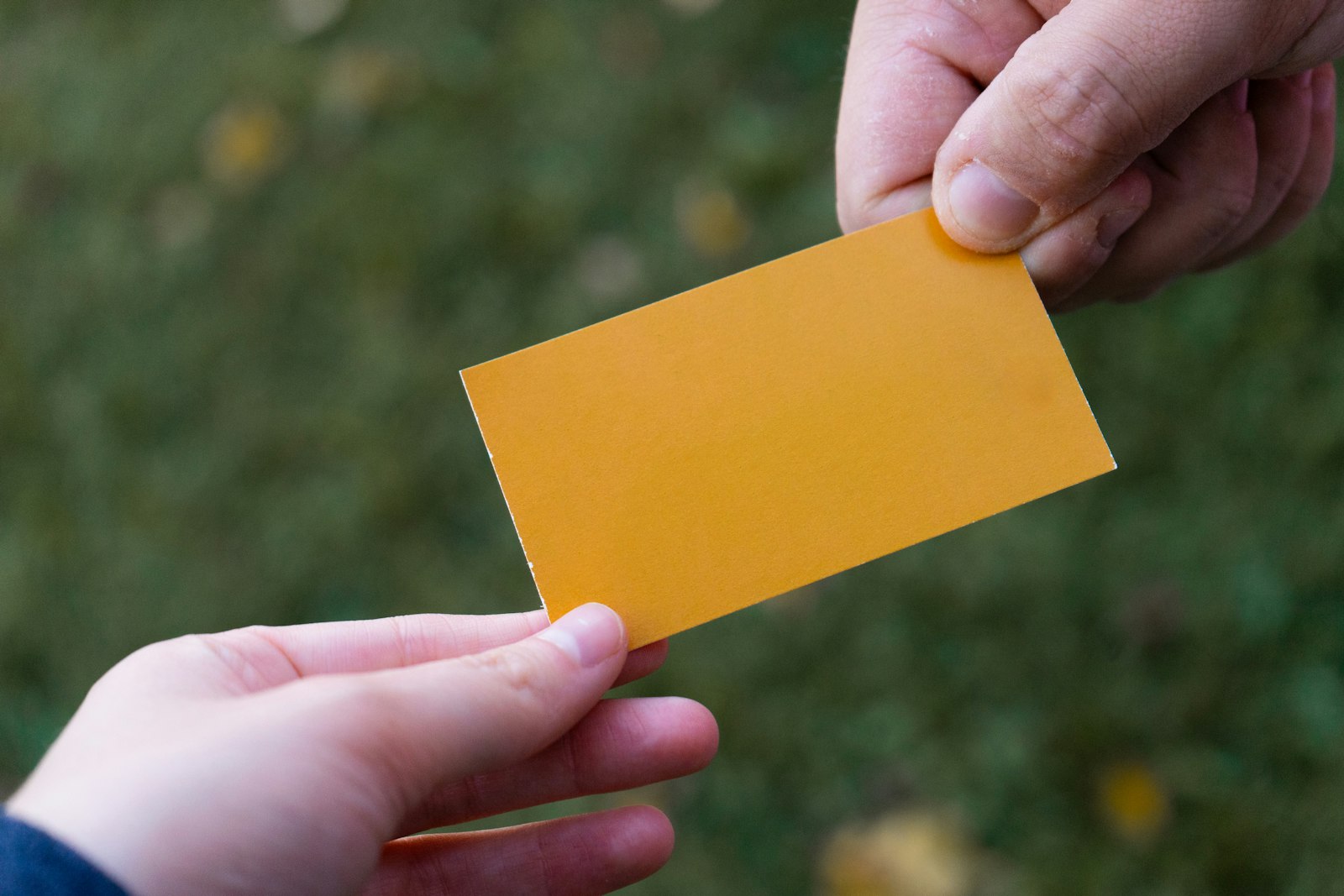
Punch, stamp or initial: which is hardest to fake?
A shaped hole punch is the hardest of the three to fake. A customer can copy a pen tick or an initial, and can buy a similar stamp, but cannot easily match a star- or cup-shaped hole from your punch.
| Method | Hard to fake? | Keep in mind |
|---|---|---|
| Shaped hole punch | Yes, the hardest to copy | Keep it at the till; the hole goes through both sides |
| Custom rubber stamp | Partly; a custom design beats a generic one | Try the stamp and ink on one card from the box first |
| Pen initials | No, the easiest to copy | Try the pen on one card from the box first |
Whatever you use, test it on one card from the box before the cards go out, and try your punch on a card too. Many shops combine methods: a shaped punch for each visit, and staff initials beside the final circle when the reward is given.
Loyalty card printing: finish, corners and how many to order
Most loyalty cards use the Standard finish and rounded corners; Spot UV or Gold Foil on the logo gives a premium look and makes a copied card easy to spot.
- Standard: a smooth matte finish and the plainest base for the circles and terms.
- Spot UV and Gold Foil: glossy raised accents or raised metallic foil on the logo. Keep the circles and terms in ink. Our comparison of Spot UV vs foil business cards shows the difference.
- Die Cut and Painted Edge: a custom shape, such as a cup, or a band of colour around the edge. Keep the circles well inside a shaped edge.
- Rounded corners: softer edges for a card that lives in a wallet.
3.5″ × 2″
Card size
16pt
Extra-thick card
100–5,000
Cards per order online
5–7 days
Business days to print
How many cards. The studio offers 100, 250, 500, 1,000, 2,500 or 5,000 cards, and the price per card falls as the quantity rises. A first run of 100 is a cheap way to test the offer; busy shops and multi-location businesses usually order 1,000 or more.
One design, or one per location? A shared design with “Good at all our locations” on the back is one order and the simplest to run. A version per location carries each shop’s address and lets you see which location’s cards come back. In the business card studio each version is its own order from 100 cards. For a chain or franchise, send the design and the location list through the free quote form, by phone at 613-666-YAYA (613-666-9292) or to order@yayaprints.ca. Big runs are our focus, and every version gets a proof and a human designer check before anything prints. Print takes 5–7 business days, then the cards ship across Canada, priced for your postal code at checkout, with local delivery across Ottawa–Gatineau.
Frequently asked questions
What is a loyalty punch card?
A loyalty punch card is a wallet-size card, usually 3.5″ × 2″, that a business punches or stamps each time a customer buys. When every circle is filled, the customer gets a reward, such as the 10th coffee on the house, and a new card.
How many punches should a loyalty card have?
8, 10 and 12 punches are common choices. Use 10 or 12 for a daily purchase such as coffee, and 8 for a weekly or monthly one such as a car wash or a haircut. Pick a number a regular customer can fill in a few weeks or months.
What size is a loyalty card?
A printed loyalty card is usually business card size, 3.5″ × 2″, so it fits a wallet card slot. We print them on 16pt extra-thick card, front only or both sides, with square or rounded corners.
Do Ontario's gift card rules apply to loyalty cards?
Ontario's buying or using gift cards page lists loyalty cards and club cards used to collect rewards or points among the cards not covered by the gift card rules. Print your terms, and any expiry line, clearly on the card anyway. This is not legal advice; read the Ontario page.
How do I stop customers faking punches on a loyalty card?
Use a shaped hole punch kept at the till: a star- or cup-shaped hole is much harder to copy than a pen tick or an initial. Spot UV or Gold Foil on the logo also makes a photocopied card easy to spot. Try your punch or stamp on one card from the box first.
How many loyalty cards can I order, and can you print them for several locations?
The online studio offers 100, 250, 500, 1,000, 2,500 or 5,000 cards per order. For a chain or franchise, send the design and the list of locations through the free quote form, by phone at 613-666-YAYA (613-666-9292) or to order@yayaprints.ca for a direct quote, with a proof for every version.
Set it up yourself. A human designer still checks every order.
Our print studio gives you the price and a proof in the browser. What it doesn't do is print your file blindly — every order is reviewed by a real designer before it reaches the press.
- Step 1You set it up — free
Pick the product, size and quantity in the print studio, then upload your file or start from a ready-made design. The price shows before you pay, with no account and no deposit.
- Step 2A human designer checks it
Before anything prints, one of our designers opens your file and checks resolution, colours, sizing and placement. If it won't print well, we fix it or tell you exactly what's wrong — a person, not an automated preflight.
- Step 3You approve, then we print
You see the proof before you pay. Nothing goes to press until you say yes — then it's printed in 5–7 business days and shipped, with shipping priced for your postal code at checkout.
Design your loyalty cards and see the proof first
Pick front only or both sides, a finish and your corners, see the price for each quantity, and approve a proof before you pay. Ordering for several locations? Send the design and the list for a direct quote.
Every order is reviewed by a human designer before it goes to press. A person checks artwork resolution, colour, sizing and placement, and either fixes the file or tells the customer what is wrong — it is not an automated preflight.