
Custom T-Shirt Printing in Vaughan: Workwear, Hi-Vis and Crew Hoodies for Woodbridge, Concord and Maple
Vaughan orders working apparel: hi-vis tees for the yards off the 400 and 407, embroidered polos for the office layer, crew hoodies with a big back print so the truck and the crew read as one company. This guide covers what a work shirt has to survive, why the CSA rating belongs to the blank and the logo stays off the tape, embroidery versus print by who wears it, sizing a crew S–4XL with new hires coming, and setting up the first order so a three-shirt reorder in November is one sentence. Roughly $12–$18 per screen-printed tee at 50, 2–5 business days plus 1–2 days transit from our Ottawa shop, and a human designer checks every file before press.
- Minimum order
- None on DTF or DTG — we will print one shirt. Screen printing starts around 6 pieces and becomes the best value past roughly 24–50.
- Typical cost
- Roughly $12–$18 CAD per screen-printed tee at 50 pieces, dropping under $10 each in the hundreds. Full-colour DTF sits slightly higher per piece with no setup fee.
- Turnaround to Vaughan
- 2–5 business days in production after you approve the mockup and pay, then 1–2 days in transit from Ottawa. Rush is available on most apparel jobs.
- Hi-vis
- The CSA rating belongs to the blank garment, not the decorator. Logos go on the fabric panels, never across the reflective tape, and you see the placement on a mockup of the actual garment before paying.
- Artwork check
- A human designer reviews every order before it goes to press — resolution, colour, sizing and placement. Not an automated preflight.
- Design it yourself
- Free online studio at yayaprints.ca/mockup-creator for tees, long-sleeves, hoodies, polos and caps. No account, no deposit, real garments and colours, and the price updates as you build it.
- Where it is printed
- In-house in Ottawa, Ontario, then shipped to Vaughan. No storefront or pickup in York Region. Printed in Canada, so no cross-border customs holds or surprise duties.
Who actually orders custom shirts in Vaughan
Vaughan orders shirts the way it works: in a truck, in a yard, on a lift. If you look at what comes in from the Vaughan area over a year, the merch and the wedding tees are the exception. The rule is a company shirt that somebody will wear five days a week until it falls apart, and then order again.
The distribution belt along Highway 400 and the 407 drives the biggest counts: warehouses, logistics yards, cross-dock terminals and fleet depots that need a crew of twenty to two hundred to be identifiable from across a lot, in sizes from small to 4XL, with new hires starting most weeks. Construction and trades are thick around Concord and the industrial pockets off Keele and Jane — framing, forming, excavation, HVAC, electrical, paving — and those crews want a chest logo and a big back print so the truck and the people around it read as one company. Woodbridge adds food production, fabrication and manufacturing shops where the shirt goes through an industrial wash and a hairnet lives over the collar.
Then there is the newer Vaughan. Offices are stacking up around the Vaughan Metropolitan Centre and order in bursts: embroidered polos for the people who meet clients, then a hundred tees for a summer barbecue. Schools in Maple, Thornhill and Vellore Village run spirit wear, grad hoodies and staff shirts on the same calendar every year. Kleinburg has its shops and galleries that want twelve nice polos, not two hundred. And York Region soccer and hockey clubs order bench tees, warm-ups and parent hoodies in real volume every season.
The working-apparel jobs are the ones this article is about, because they are the ones most shops quote badly. A hi-vis order and a festival order fail in different ways.
What a work shirt in Vaughan actually has to survive
Before you pick a colour or a logo size, be honest about what the shirt is going to live through, because that decides the blank and the method for you. A warehouse tee gets a scanner lanyard across the chest all shift, a forklift seat belt across the back, and a hot wash every two or three days. A trades shirt gets concrete dust, a tool belt and a pressure washer. A food-plant shirt gets bleach.
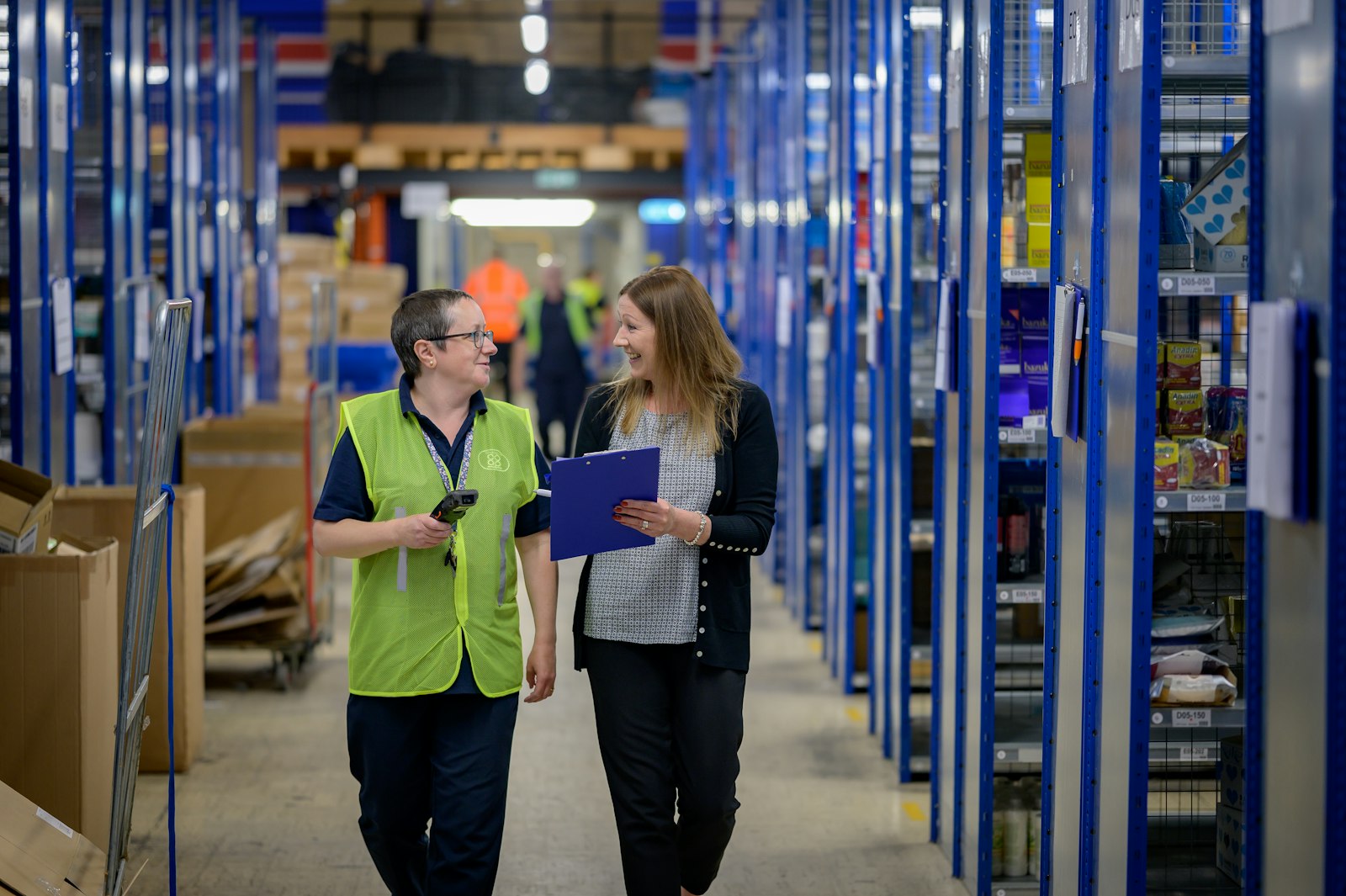
Three things follow from that. First, the blank matters more than the print. A mid-weight cotton or cotton-poly tee, somewhere around 5.5 to 6 ounces, will outlast a fashion-weight shirt by a year, and the extra dollar or two on the blank is the cheapest durability you can buy. If the crew works in heat, a polyester performance tee wicks better and dries faster, and it takes a DTF print cleanly. If they work in cold, a long-sleeve in the same colour with the same logo lets the whole crew stay in uniform from October to April without a second design.
Second, keep the design simple and bold. One or two ink colours in a screen print is the most wash-resistant decoration you can put on a cotton shirt, and it stays readable from thirty metres, which is what a crew shirt is for.
Third, plan the placement around the gear. A left-chest logo under a vest is gone; a logo high on the back between the shoulder blades is visible over a vest, from a forklift, and from the road. We go deeper on the trade-by-trade version in our construction uniform guide and construction apparel page. For fleet crews, drivers and yard staff, delivery fleet branding covers making the truck and the driver match.
Hi-vis shirts: the rating belongs to the blank, not to us
Most Vaughan workwear orders include some hi-vis, and this is the part of the job where people get the wrong idea about what a print shop does. We decorate hi-vis garments. We do not make them compliant. The CSA class and the reflective tape configuration are properties of the blank as it comes from the manufacturer, and your site’s safety requirements decide which class you need. If the yard needs a specific class, buy that class and send us that garment. We are not a safety authority, and any shop that claims its printing makes a shirt “certified” is selling you something.

What we do control is where the decoration goes, and there is exactly one rule: on the fabric panels, never across the reflective tape. Ink or film over reflective striping stops it reflecting, and heat-pressing over tape can lift it. So a chest logo gets tucked into the clear panel above or beside the horizontal stripe, a back print gets sized to the panel between the tapes, and on a shirt with an X-pattern on the back the usable area can be surprisingly small. It varies by style, which is why we show you the placement on a mockup of the exact garment before you pay anything. If the clear panel cannot carry the logo at the size you wanted, you hear that before fifty shirts are pressed.
The practical setup for a Vaughan yard is usually a two-tier order: hi-vis tees or safety-orange tees for anyone who goes outside or onto the floor, and plain company tees or polos in the same brand colour for the office and the dispatch desk, so the whole operation still reads as one company. Our custom hi-vis clothing page covers the garments, and the hi-vis workwear guide and custom workwear and hi-vis for Toronto crews go through classes, colours and placement in detail. For the regulatory side, read the CCOHS high-visibility clothing fact sheet and the background on high-visibility clothing, then confirm with whoever runs safety on your site.
Embroidery or print for workwear
This comes up on nearly every Vaughan order, and the honest answer is that most companies should use both, split by who is wearing it. The two methods fail differently and cost differently, and neither is better across the board.
| Garment | Usual pick | Why |
|---|---|---|
| Crew tees, hi-vis tees | Screen print (or DTF under ~20) | Cheapest per piece, big back print reads from far away, survives hot washes |
| Polos for supervisors, sales, office | Embroidery | Looks like a uniform, never cracks, matches the jacket and the cap |
| Crew hoodies | Screen print back, embroidered or printed chest | Back print is the billboard; small chest logo is where the wear is |
| Jackets, toques, caps | Embroidery | Thread sits on fleece, nylon and knit where ink struggles |
Print wins on tees because it is cheaper at volume, it handles a wide back print, and a properly cured screen print will fade a little in a hot industrial wash but not crack or peel. Embroidery wins on polos, caps and jackets because it looks like a uniform rather than a promo item, it does not care how many washes it gets, and a client across a desk reads it as more established. Its limits are fine detail and small text: anything under about a quarter-inch tall turns into a blob of thread, and gradients do not exist.
The mistake is putting a five-inch embroidered logo on the back of a hoodie. It is expensive, it is stiff, and it is the wrong tool. Screen print the back, and embroider the left chest if you want the premium feel. Everything else about the decision is in embroidery versus a printed logo on polos. For the cold half of the year, custom jackets for a Canadian winter and custom toques and winter hats cover the outer layer; those go through the quote form rather than the studio. Embroidery for Vaughan companies ships from the same Ottawa shop as the printing, which means the polo thread and the tee ink get matched to the same brand colour by the same person.
Sizing a crew from S to 4XL, with new hires coming
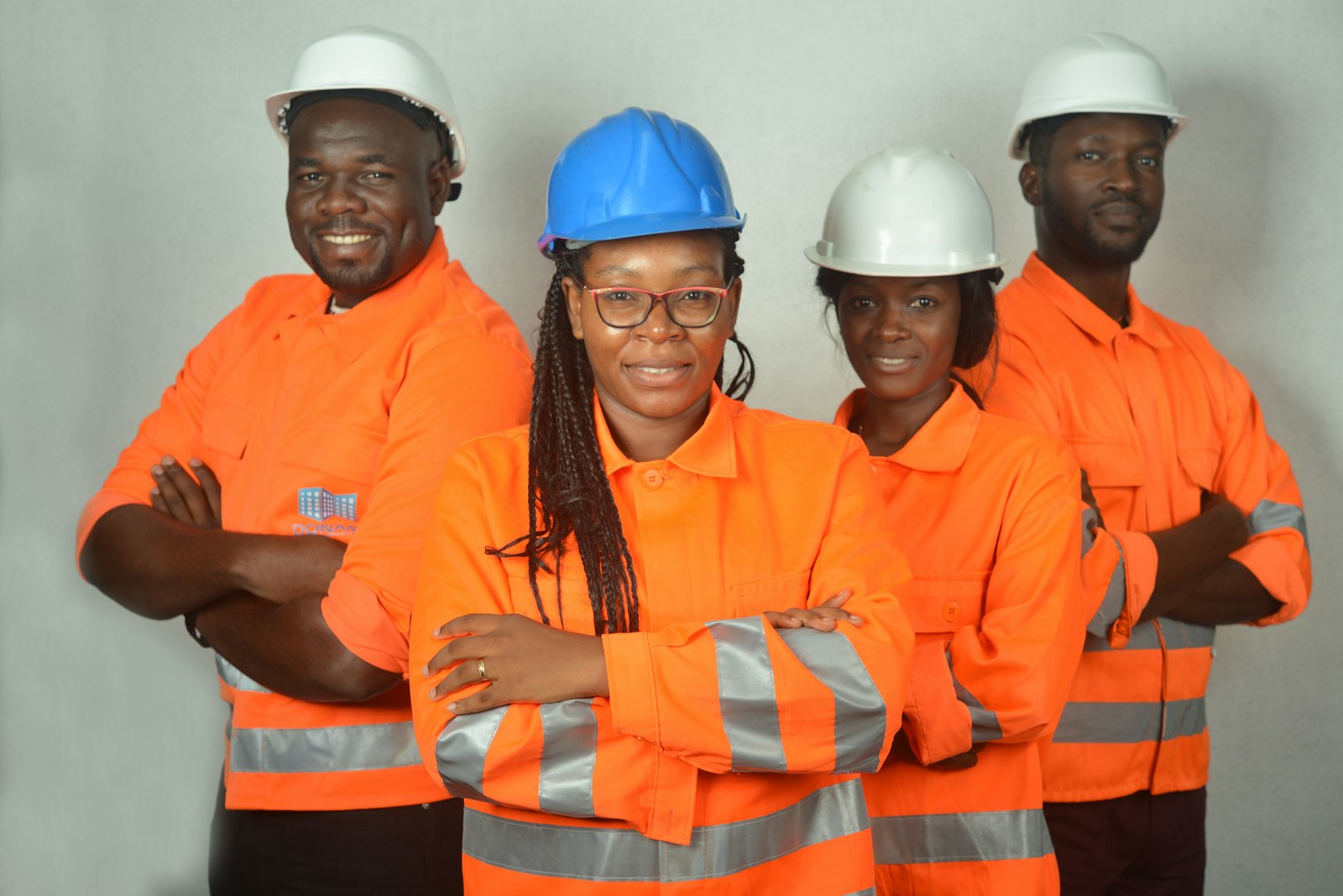
A crew roster is not shaped like a retail size curve, and the single most common mistake on a Vaughan work order is ordering as if it were. A logistics floor or a forming crew runs heavy on L, XL and 2XL, has real people in 3XL and 4XL, and has almost nobody in small. If you order the standard S–M–L–XL spread, you end up with nine smalls in a drawer and three guys wearing shirts a size too tight.
- Collect real sizes. One form, one deadline, one person chasing it. A 2XL in a slim performance tee and a 2XL in a heavy cotton tee are not the same shirt.
- Pick a blank that goes to 4XL or 5XL in the colour you want. Not every style does, and not every colour in a style does. Safety orange and safety green are usually fine to 4XL or 5XL; a fashion colour might stop at 2XL. Check before you fall in love with a colour.
- Order spares deliberately. Two or three extras in each of your two heaviest sizes covers the person who starts in three weeks, the shirt that meets a grinder, and the guy who was on days off when sizes were collected. On a fifty-piece screen run those extras cost close to the per-piece price; ordering them alone later costs setup again.
- Expect a small upcharge on 2XL and up. It is a couple of dollars on the blank and it belongs on the quote up front.
Load your counts into the studio and watch the price move as you change quantities. You can see exactly where the break lands and whether adding the spares tips you into a better price. If you are gathering sizes from a team or a club, organizing a group apparel order has the form and the deadline strategy laid out.
Set up the first order so the November reorder is one sentence
Company shirts are not a one-time job, they are a subscription. Somebody will start in November and need three shirts and a hoodie. If the first order was set up properly, the reorder is one line in an email: “three more of the same in XL, ship to the yard.” If it was not, it is a week of hunting for the logo file, guessing the print size and hoping the colour matches.
Four things make the reorder trivial. A mainstream blank you can get again in the same colour next year, not a closeout that was cheap this month. Vector artwork, so the logo can be re-output for a cap, a chest, a back or a truck door without redrawing it; if yours only exists as a JPG from the website, our vectorization service rebuilds it once and it is solved forever. Written specs: the exact print width, the placement, the ink or thread colour, the blank style number. And a named contact on our side who has the file, because the person who placed the first order will not always be the person placing the third.
We keep your approved artwork and setup on file, so a second run matches the shirts already on the floor rather than being a fresh guess. One honest note: a three-shirt reorder of a screen-printed design will usually go on DTF to avoid paying screen setup again, and on a simple one- or two-colour logo nobody on the floor will spot the difference. The full process is in how to reorder company uniforms, and the contractor branding checklist is the list of everything that should carry the same logo, from the shirt to the truck.
If you run more than one site — a yard in Vaughan, a shop in Brampton, crews working out in Caledon or King City — run it as one order and split the boxes. One production run means one colour match, one setup and one price break instead of three of each.
What it costs, and how long it takes from Ottawa
Anyone quoting custom work shirts in Vaughan from a single number is guessing, because five inputs move it: the blank, the method, the number of ink colours, the number of print locations, and the quantity. Hi-vis blanks cost more, a chest plus a back is two locations, and extended sizes add a little.
The anchor is this. A one-colour screen print on a standard cotton tee runs roughly $12–$18 each at 50 pieces, and can fall under $10 each in the hundreds. Full-colour DTF sits a little higher per piece than a big screen run but carries no setup fee, so at ten or twenty shirts the total is usually lower. Embroidered polos sit above printed tees because the blank is better and the stitching is slower; a crew hoodie with a printed back and chest sits above both because the blank is a hoodie. Every quote is free and includes a mockup.
The lever most people pull wrong is dropping to a thinner shirt to hit a number. Drop a colour or a print location before you drop the blank. Ask for the brand, style number and fabric weight on every quote; two quotes are only comparable if they are for the same shirt. If you are comparing across the region, custom t-shirt printing in Brampton and custom t-shirt printing in Markham walk through the same numbers for the cities on either side, and custom hoodies in Toronto breaks down what moves the price on a hoodie specifically.
On timing, the straight answer first: we do not have a Vaughan storefront, a Woodbridge counter or a pickup desk anywhere in York Region. We print everything in-house in Ottawa and ship it to you. If your deadline depends on someone driving to a counter that afternoon, we are not the right shop.
What that costs you is a couple of transit days. Production is 2–5 business days and the clock starts when both things have happened: you have approved the free mockup, and you have paid. Then it is typically 1–2 days in transit to the GTA once it leaves the shop. So a normal Vaughan order is about a week from approval to boxes at the yard. Rush is available on most apparel jobs; tell us the date before you order and we will say honestly whether it is realistic.
What you get back for those days is control. The press is down the hall from the person who answers the phone, so a wrong file or a queue change is one conversation, not a ticket to a fulfilment partner in another country. It is printed in Ontario, so there is no customs hold and no duty invoice three weeks later. A box ships to a dock on Highway 7 as easily as to an office at the VMC; tell us the receiving hours.
The delays that actually happen are almost never the printing. They are a screenshot logo, a size list stuck in a group chat, and an approval unread in a foreman’s inbox. Lock those three and almost any timeline works. For crews that go out to Richmond Hill and the rest of York Region, one shipment to the yard beats three to the sites.
A person looks at your file before the press does
The thing that makes ordering work shirts online safe is not the preview. It is what happens after you click order. Every order is reviewed by a human designer before it goes to press. A real person on our team opens the file and checks resolution, colour, sizing and placement, and then either fixes it or tells you exactly what is wrong. It is not an automated preflight that passes anything above a file-size threshold.
That matters on workwear because of what actually arrives: a logo photographed off the side of the truck, a 300-pixel PNG from the website header, black text destined for a navy shirt, or a left-chest logo drawn at back-print size. On hi-vis it also means a person checks that the placement clears the tape on the garment you chose. We clean up or redraw as proper vector and show you the result on a free mockup of the actual product before any payment. Nothing prints until you approve it.
The honest version is that we will also tell you no. If your file cannot carry a fourteen-inch back print, you hear it before you pay rather than see it in a box of eighty shirts. Preparing logo files for printing covers what to send, and the chest logo size guide settles the how-big argument with measurements.
Starting a Vaughan order
Nothing is charged before you have seen what you are buying. For tees, long-sleeves, hoodies, polos and caps, the fastest path is to drop your logo on a real garment at yayaprints.ca/mockup-creator: no account, no deposit, upload a PNG, JPG, SVG or PDF, place it front and back with a print-zone guide, enter sizes and quantities, and watch the price update. For hi-vis, jackets, toques and anything with a safety spec, send the garment and the logo through the free quote form or to order@yayaprints.ca and we build the mockup for you. Call or WhatsApp 613-666-9292 if it is easier to explain out loud.
Where we land: no minimum on DTF or DTG, screen printing from around six pieces with real volume pricing past 24–50, workwear, uniforms and printed tees under one roof with the embroidery, a free mockup before a dollar moves, a designer who checks the file, and a real person at 613-666-9292 who will tell you when the answer is no. If you are still comparing, where to print custom shirts in the GTA lays out the options across the region, and landscaping uniforms is the right starting point for the crews that live outdoors from April to November.
Frequently asked questions
How much does custom t-shirt printing cost in Vaughan?
It depends on the blank, the method, the number of colours, the number of print locations and the quantity, so treat any single number with suspicion. As a realistic anchor, a one-colour screen print on a standard cotton tee runs roughly $12 to $18 each at 50 pieces and can drop under $10 each in the hundreds. Full-colour DTF sits slightly higher per piece but has no setup fee, so for ten or twenty shirts the total is usually lower. Hi-vis blanks and extended sizes add a little. Every quote is free and includes a mockup.
Do you have a shop in Vaughan or Woodbridge?
No. We print in-house in Ottawa, Ontario and ship to Vaughan, Woodbridge, Concord, Maple and the rest of York Region. There is no walk-in pickup in the GTA. What you get in exchange is in-house control instead of a drop-ship network: the press is down the hall from the person answering the phone, it is printed in Canada so there are no customs holds or surprise duties, and transit to the GTA is typically 1 to 2 days once the order leaves the shop.
How long does an order take to reach Vaughan?
Production is 2 to 5 business days, counted from the moment you approve the free mockup and pay, not from the moment you first contact us. Add 1 to 2 days of transit from Ottawa on top. So a typical order is about a week from approval to boxes at your yard or office. Rush is available on most apparel jobs — tell us the date before you order and we will say honestly whether it is realistic.
Can you print on hi-vis shirts, and will they still be CSA compliant?
We decorate hi-vis garments, and the CSA class belongs to the blank as it comes from the manufacturer, not to the printing. Your site's safety requirements decide which class you need; buy that garment and send it to us. Our one rule is that decoration goes on the fabric panels and never across the reflective tape, so the usable print area depends on the style. We show the placement on a mockup of the exact garment before you pay. We are not a safety-compliance authority, so confirm the class with whoever runs safety on your site.
Should I embroider or print our company shirts?
Both, split by who wears them. Screen print (or DTF for small runs) the crew tees, hi-vis tees and the big back print on hoodies, because it is cheaper at volume, reads from far away and holds up in a hot wash. Embroider the polos, caps and jackets for supervisors, sales and office staff, because thread looks like a uniform, never cracks and sits well on fleece and nylon. Avoid large embroidered back logos on hoodies; they are expensive and stiff.
What sizes can you do for a work crew?
Most mainstream work blanks run from S to 4XL, and many safety colours go to 5XL. Not every colour in every style goes that far, so tell us the size spread before you settle on a colour. Extended sizes usually carry a small upcharge on the blank, which we put on the quote up front. We recommend ordering a few spares in your two heaviest sizes to cover new hires until the next full run.
What is the minimum order for company shirts in Vaughan?
There is no minimum on DTF or DTG; we will print a single shirt for a new hire. Screen printing has a practical minimum of about 6 pieces, since screens have to be burned and set up regardless of how many shirts run, and it becomes the best value past roughly 24 to 50 pieces. A three-shirt reorder in November and a two-hundred-shirt crew order in March are both normal jobs here.
Can I design our work shirts myself online?
For t-shirts, long-sleeves, hoodies, polos and caps, yes. The free studio at yayaprints.ca/mockup-creator needs no account and no deposit: upload a logo, place it on a real garment in a real colour, add text, pick sizes and quantities, watch the price update, and order online. Hi-vis, jackets, toques and anything with a safety spec go through the quote form or order@yayaprints.ca and we build the mockup for you. Either way, a human designer reviews the file before it goes to press.
Design it yourself. A human designer still checks every order.
Our free studio gives you the price and the mockup in the browser. What it doesn't do is print your file blindly — every order is reviewed by a real designer before it reaches the press.
- Step 1You design it — free
Upload your logo, drop it on a real garment, set the size and placement, pick colours and quantities. No account, no deposit, no waiting on a reply.
- Step 2A human designer checks it
Before anything prints, one of our designers opens your file and checks resolution, colours, sizing and placement. If it won't print well, we fix it or tell you exactly what's wrong — a person, not an automated preflight.
- Step 3You approve, then we print
You get the corrected mockup back on the actual product. Nothing goes to press until you say yes — and it ships in 2–5 business days.
See it on the shirt before you pay a cent
Upload your logo, drop it on a real garment, pick colours, sizes and quantities, and watch the price update as you build. No minimum on DTF or DTG, screen printing from around 6 pieces, printed in-house in Ottawa and shipped to Vaughan in 1–2 days once it leaves the shop.
Every order is reviewed by a human designer before it goes to press. A person checks artwork resolution, colour, sizing and placement, and either fixes the file or tells the customer what is wrong — it is not an automated preflight.