
Custom Embroidered Shirts: T-Shirts to Polos
Custom embroidered shirts explained: which shirts embroider well, logo sizes, thread colours, tees vs polos vs hoodies, and how to order embroidery for a team.
- What it is
- A logo stitched into the shirt with thread by an embroidery machine, from a stitch file made once from your artwork (digitizing) and reused on every reorder.
- Shirts that embroider best
- Polos, button-down shirts, crewnecks, hoodies, fleece and jackets. We don't recommend embroidery on lightweight t-shirts, because the stitches can distort thin fabric.
- Standard logo size
- 3.5 in wide on the left chest and 3 in on a sleeve; a jacket back can take up to about 11 in. The height follows your artwork.
- Smallest text
- Capital letters at least 5 mm (about 0.2 in) tall. Below that, thread crowding makes the letters unreadable.
- Thread colours
- Hundreds of stock thread colours. Send Pantone or RGB values and the logo is matched to the closest available thread; custom-dyed thread for an exact match adds a week.
- Large orders
- Large orders get volume pricing, and the digitizing fee is waived on orders of 24 or more pieces. Orders in the hundreds are quoted directly — through the free quote form, by email or by phone — with the same free mockup and human designer check as a single shirt.
- Turnaround
- Standard turnaround on clothing is 1–2 weeks, and every order shows the dates it will be ready before you pay.
What are custom embroidered shirts?
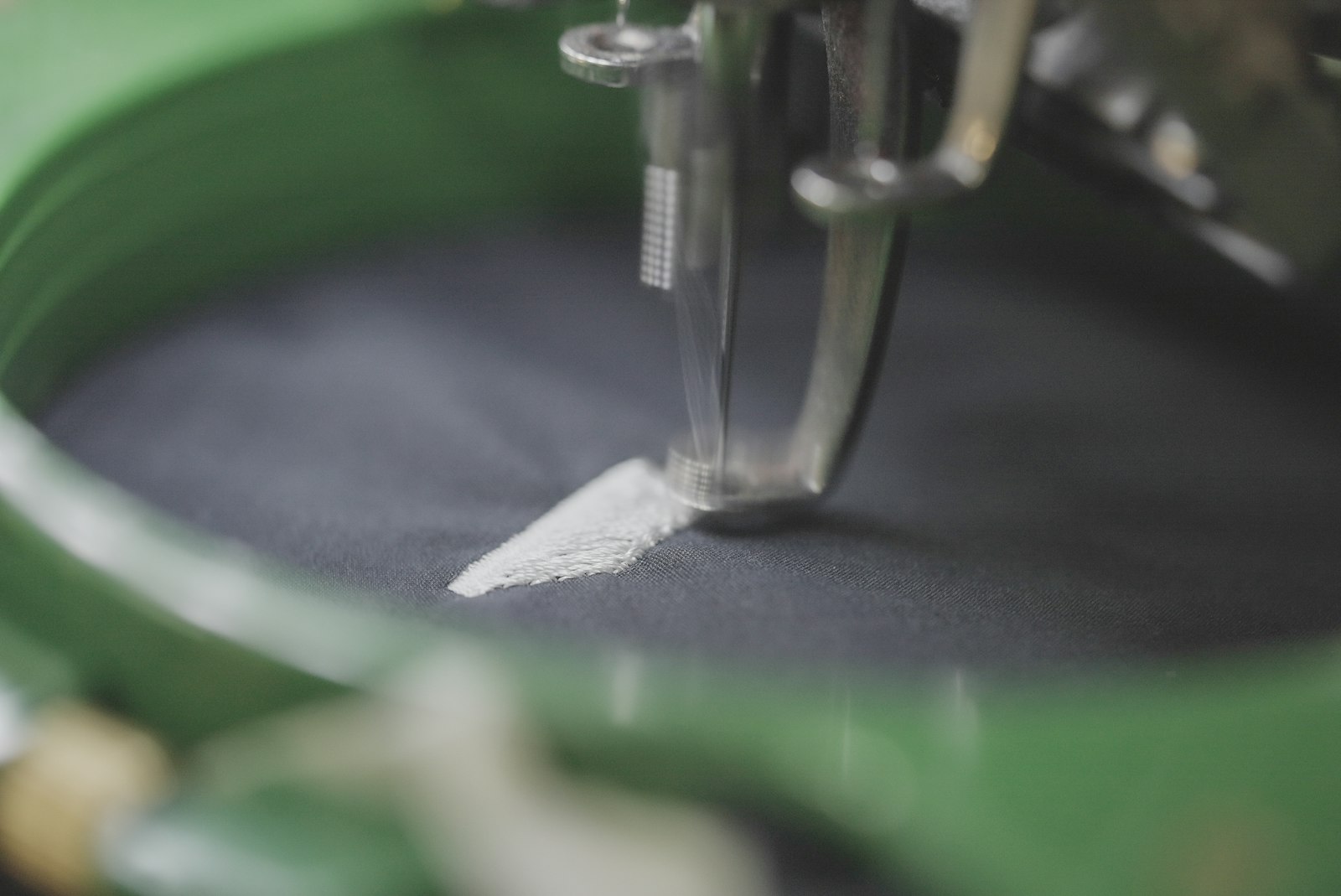
A custom embroidered shirt has your logo sewn into it with thread instead of printed on it. A multi-needle embroidery machine stitches the logo through the fabric, following a stitch file that was made once from your artwork, so every shirt in the run and every reorder comes out the same. The Wikipedia article on machine embroidery explains how the machines work.
The logo is raised, slightly textured and part of the shirt. The thread is dyed before it is stitched, so it does not crack or fade the way a worn print can, which is why embroidery is the usual choice for staff uniforms. To weigh the two methods, see screen printing vs embroidery. This guide is about the other half of the decision: which shirt you embroider.
Which shirts embroider well? From t-shirts to work jackets
The firmer and heavier the fabric, the better it embroiders. A dense logo pulls on the fabric as it is stitched; a heavy fleece or a woven work shirt holds still, while a light, stretchy tee gives way and puckers. Here is every common shirt on one scale. Tap a shirt to jump to its card.
Light jersey
Mid-weight knit
Fleece
Woven & canvas
Every shirt on this scale can carry a 3.5″ chest logo. What changes is how dense that logo can be and how big you can go.
Quick picks: who are the shirts for?
Office & sales staff
Trades & construction crews
Restaurants & front of house
Schools, clubs & grad classes
Golf days & tournaments
Brand merch
Every embroidered shirt, one by one
What each shirt takes, what it suits and what to watch for. The weights are the published fabric weights of the shirts in our range.
Embroidered t-shirts
Light cotton jersey · small left-chest logo only
A t-shirt is the trickiest shirt to embroider. Light jersey is thin and stretchy, and a dense, solid-filled logo pulls the knit together around it, so the fabric puckers. We don’t recommend embroidery on lightweight t-shirts for that reason: the soft 4.5 oz Gildan 64000 tee in our range is made for printing.
If you want an embroidered tee anyway, keep the logo small (a left-chest logo, 3.5″ wide or less), choose an open design such as lettering or an outline rather than a solid badge, and pick a heavier cotton tee: thicker jersey holds stitches better. A stabiliser, or backing, is hooped behind the logo so the stitches have something firm to lock into. For a big front design on a tee, print it.
Embroidered long sleeve shirts
Gildan 2400 · 6.0 oz cotton jersey · chest or sleeve logo
A heavyweight long sleeve is a much better embroidery candidate than a light short-sleeve tee. The Gildan 2400 in our range is 6.0 oz, 100% cotton, about a third heavier than the light tee, with a dense jersey that takes print, embroidery and heat transfer well, and taped neck and shoulders that help it keep its shape. A 3.5″ chest logo with a 3″ sleeve logo is a common pair for crews working outside in spring and fall.
Embroidered polo shirts
Gildan 8800 · 6.0 oz DryBlend jersey · 3.5″ left chest
The polo is the classic embroidered shirt and where most staff uniforms start. Polos are knit in piqué, a textured, waffle-like knit, or in smooth jersey like the 6.0 oz Gildan 8800 DryBlend polo in our range (52% cotton, 48% polyester). Either way the fabric is heavier and steadier than a fashion tee, so a chest logo stitches flat.
The logo goes on the left chest at 3.5″ wide, clear of the three-button placket, and a 3″ sleeve logo is the usual second spot. See custom polo shirts.
Embroidered crewnecks and hoodies
Gildan 18000 / 18500 · 8.0 oz 50/50 fleece · chest logo or bigger
Fleece is one of the easiest fabrics to embroider. At 8.0 oz, the Gildan 18000 crewneck and 18500 hoodie are almost twice the weight of the light tee, and the thick fleece holds dense, solid-filled stitching without puckering. A crewneck has a flat, smooth front with no pocket, so it can take a larger stitched design across the chest as well as the standard 3.5″ chest logo.
On a hoodie the pouch pocket and drawcords take up the lower front, so the chest is the usual stitched spot, and a big back design is usually printed. A stitched chest with a printed back is a common split.
Embroidered work shirts and jackets
Button-down shirts · 330 gsm canvas jackets · chest and full back
Woven fabrics are the steadiest of all, because they do not stretch the way a knit does. Button-down and work shirts, canvas jackets and vests all embroider cleanly. The CX2 Big Red work jacket we stock is 330 gsm (9.7 oz/yd²) cotton canvas, which takes a 3.5″ chest logo and a full back design up to about 11″ wide.
Pockets, plackets, seams and zips decide exactly where a logo can sit, so the mockup shows it on the actual garment.
3.5″
Left-chest logo
5 mm
Smallest capital letters
24+
Pieces: digitizing fee waived
1–2 wks
Standard turnaround
How big should an embroidered logo be on a shirt?
The standard embroidered logo is 3.5″ wide on the left chest, and the height follows your artwork: a wide wordmark might stand under an inch tall, a square crest 3.5″. The other placements have their own widths.
| Placement | Logo width | What to watch |
|---|---|---|
| Left chest | 3.5″ | Clear of the polo placket or the jacket zipper |
| Right chest | 3.5″ | Usually a second mark beside the main logo |
| Sleeve | 3″ | A narrow tube: wide, short marks sit best |
| Full back (jackets) | Up to about 11″ | Far more stitches; on tees and hoodies a back design is usually printed |
Fine detail has a floor. Capital letters need to be at least 5 mm (about 0.2″) tall; below that, the threads crowd together and the letters become unreadable. On a 3.5″ chest logo that usually means the tagline goes, thin outlines are thickened, and gradients, shadows and photos are dropped, because thread cannot blend. Fine print belongs on a printed shirt. Our chest logo size guide covers the measurements, and the logo embroidery guide covers every placement, caps and toques included.
Thread colours and digitizing: what happens to your logo
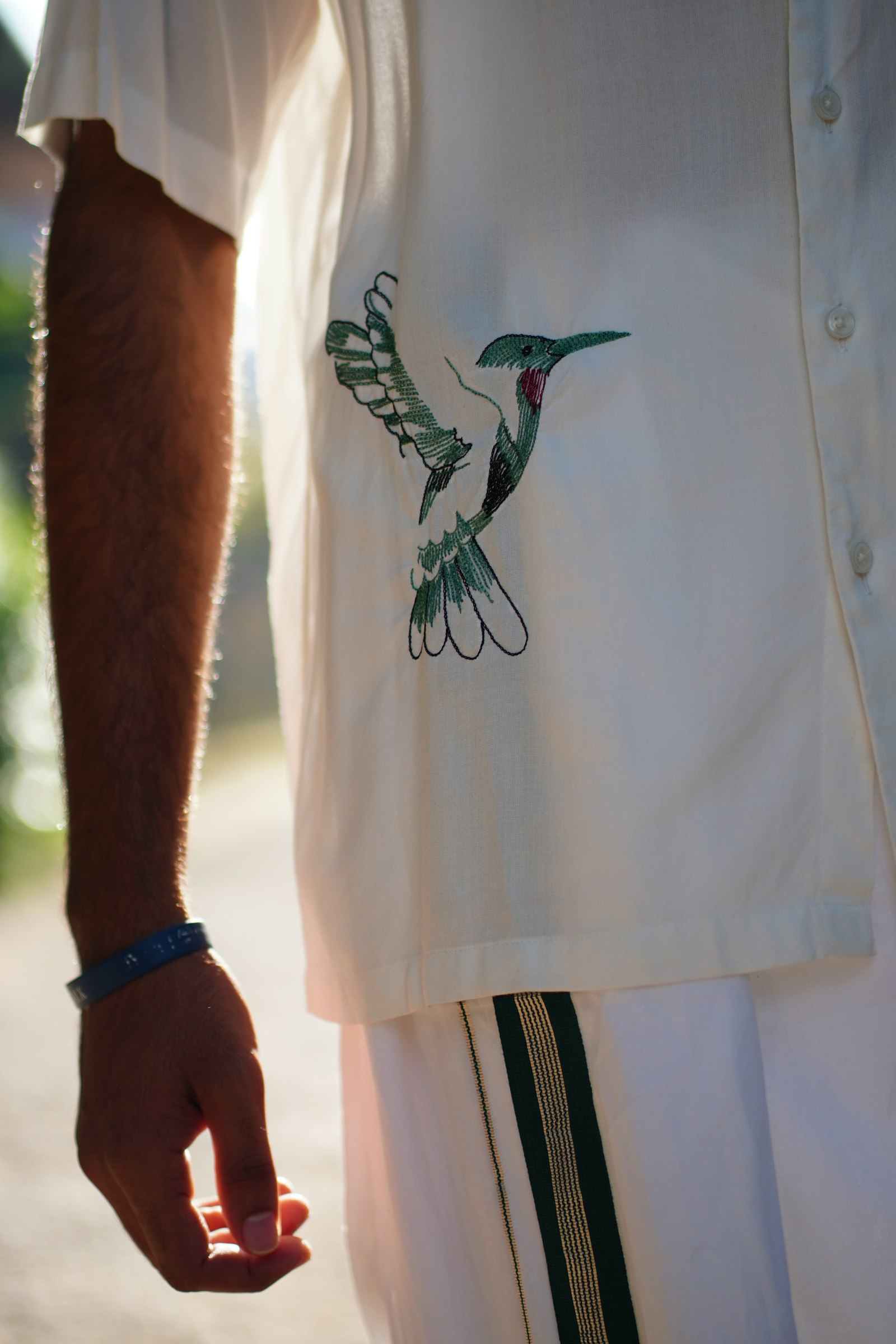
Your logo is redrawn as a stitch file and matched to the nearest stock thread colours before anything is sewn. Thread comes in set colours rather than mixed ink, so a brand colour is matched, not mixed. Send Pantone or RGB values and we match each one to the closest available thread from hundreds of stock colours; when the match is mission-critical, custom-dyed thread can be ordered, which adds a week.
A logo with a dozen close shades is usually reduced to the handful of solid colours that read at chest size, which also keeps the stitching crisp.
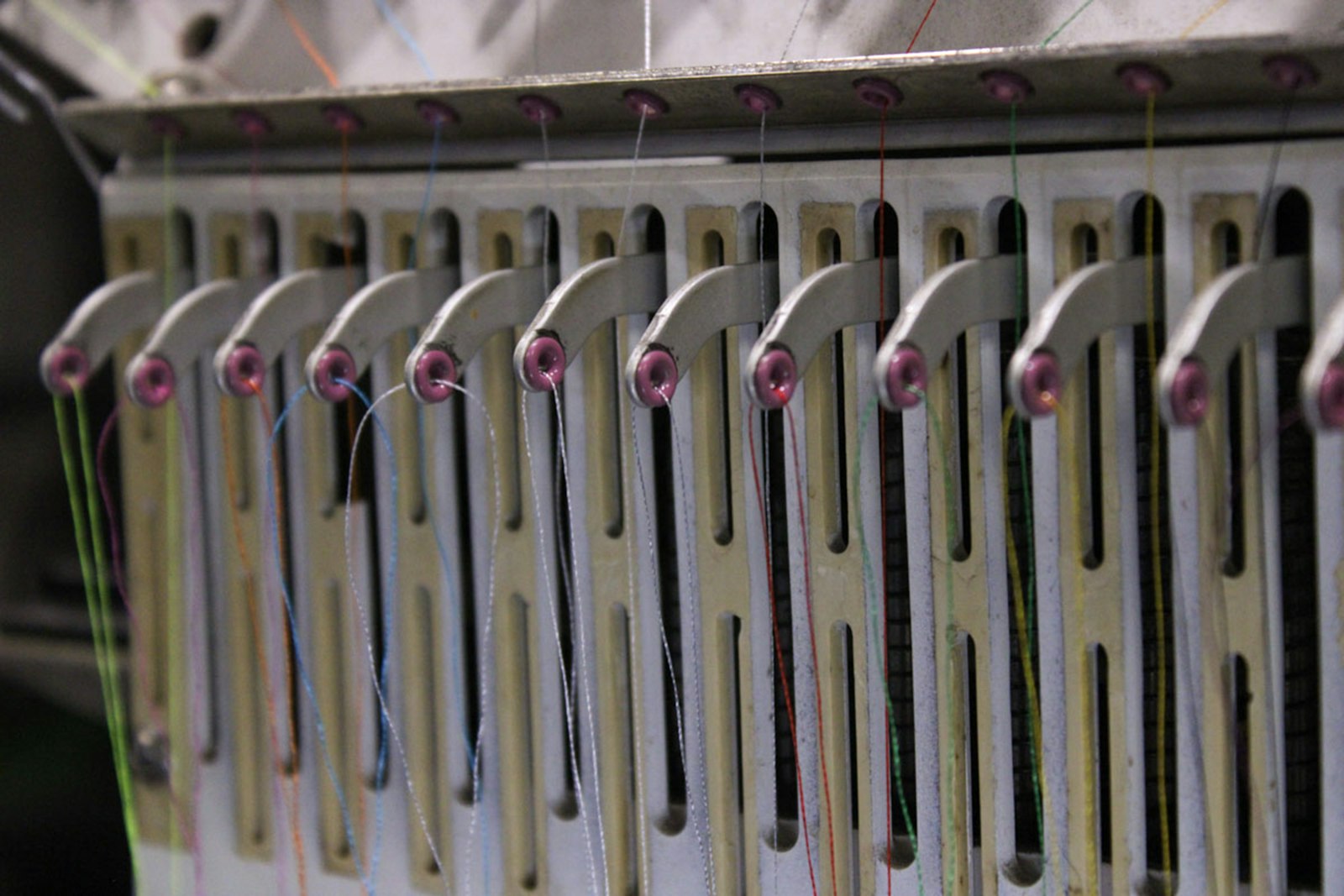
Digitizing is the one-time setup that turns your artwork into a stitch file: where every stitch goes, in what direction and how dense. The file is kept and reused on every reorder, so a shirt ordered next year matches this year’s, and the digitizing fee is waived on orders of 24 or more pieces. A vector file (AI, EPS or PDF) or a high-resolution PNG is ideal. A chest logo and a jacket back are different sizes, so each gets its own file. Our guide to embroidery digitizing explains the process in detail.
How do you wash embroidered shirts?
Wash embroidered shirts inside out, cold or warm, on a gentle cycle, and dry them low or on a hanger. Inside out stops the stitches rubbing against other clothes and catching on zips. Skip bleach, which can lift colour from both the thread and the shirt. If the shirt needs ironing, iron it from the inside, or lay a cloth over the logo, so the stitches stay raised. Cared for this way, an embroidered logo often outlasts the shirt around it.
Can you mix embroidered polos and printed tees in one team order?
Yes, and it is one of the most common team and company orders: embroidered polos for the people who meet customers, printed tees for the crew, the volunteers or the event. The same logo is prepared twice, as a simplified stitched version at 3.5″ for the polos and a full-detail printed version for the tees, where it can run 11″ wide across the front or back.
The thread on the polos and the ink on the tees are matched to the same brand colours, as closely as thread and ink allow, so the two read as one set. Send the whole order in one quote request and it is planned and proofed together. If you only need the printed tees, you can design and price them yourself in the online design studio; the embroidered shirts are quoted.
How to order custom embroidered shirts for a team or company
Send the logo, the shirts, the count and the sizes through the free quote form or the embroidery page, and you get a free mockup on the actual shirt before you pay. Large orders are our focus. They get volume pricing, and orders in the hundreds are quoted directly, through the quote form, by phone at 613-666-YAYA (613-666-9292) or by email at order@yayaprints.ca, with the same free mockup and human designer check as a single shirt. There is no big minimum either: we embroider single pieces right up to full staff and team orders.
Sizes. Collect real sizes from the people who will wear the shirts rather than guessing a spread; the polos in our range run S to 5XL. The 3.5″ logo stays the same size on every shirt in the run.
Names. If each shirt needs a person’s name, say so in the quote request and send the names as a list matched to sizes, so every shirt is checked against it.
Reorders. The stitch file is kept, so a new hire’s polo next spring matches the first batch. Our guide to bulk corporate embroidery covers company-wide orders and staged reorders. We embroider in Ottawa, deliver locally across Ottawa–Gatineau and ship Canada-wide, priced for your postal code and shown before you pay. If you resell apparel to your own clients, apply for a reseller account.
Frequently asked questions
Can you embroider a t-shirt?
Yes, but lightweight t-shirts are the hardest shirt to embroider and we don't recommend it on them: the stitches can distort thin jersey and pucker around the logo. For an embroidered tee, keep to a small left-chest logo in an open design and choose a heavier cotton tee; for a big front design, print the tee instead.
What size is an embroidered logo on a shirt?
The standard is 3.5 inches wide on the left chest, with the height following your artwork. A sleeve logo is 3 inches wide, and a full back on a jacket can run up to about 11 inches wide.
What is the smallest text you can embroider?
Capital letters need to be at least 5 mm (about 0.2 inches) tall. Below that, the threads crowd together and the letters become unreadable, so taglines and fine print are usually dropped from a chest logo or printed instead.
Is there a minimum order for custom embroidered shirts?
There is no big minimum: we embroider single pieces right up to full staff and team orders. Large orders get volume pricing, the digitizing fee is waived on orders of 24 or more pieces, and orders in the hundreds are quoted directly through the free quote form, by email or by phone.
Which shirts are best for embroidery?
Firm, heavier fabrics: polos, button-down and work shirts, crewnecks, hoodies and canvas jackets. Fleece holds dense stitching, and woven shirts do not stretch. Light, stretchy t-shirts are the hardest, because a dense logo can pucker the jersey.
How do you wash embroidered shirts?
Turn the shirt inside out, wash cold or warm on a gentle cycle without bleach, and tumble dry low or hang to dry. If it needs ironing, iron from the inside or lay a cloth over the embroidery so the stitches stay raised.
Design it yourself. A human designer still checks every order.
Our free studio gives you the price and the mockup in the browser. What it doesn't do is print your file blindly — every order is reviewed by a real designer before it reaches the press.
- Step 1You design it — free
Upload your logo, drop it on a real garment, set the size and placement, pick colours and quantities. No account, no deposit, no waiting on a reply.
- Step 2A human designer checks it
Before anything prints, one of our designers opens your file and checks resolution, colours, sizing and placement. If it won't print well, we fix it or tell you exactly what's wrong — a person, not an automated preflight.
- Step 3You approve, then we print
You get the corrected mockup back on the actual product. Nothing goes to press until you say yes — then it's ready in 1–2 weeks, or in 1–3 business days with a rush.
Quote your custom embroidered shirts
Send the logo, the shirts, the count and the sizes, and we will quote the embroidered order with a free mockup on the actual shirt before you pay.
Every order is reviewed by a human designer before it goes to press. A person checks artwork resolution, colour, sizing and placement, and either fixes the file or tells the customer what is wrong — it is not an automated preflight.