
Logo Embroidery: Sizes, Detail Limits & Ordering
Logo embroidery sizes for every spot — 3.5 in chest, 3 in sleeve, about 4 in cap, up to 11 in back — plus the detail limits, digitizing and how to order.
- Standard logo sizes
- 3.5 in wide on the left chest, 3 in on a sleeve, about 4 in on a cap front and up to about 11 in across a full back. The height follows your artwork.
- Smallest detail
- About a quarter inch (6 mm). Lettering under about 5 mm fills in; hairlines, gradients and photos don't stitch.
- Digitizing
- A one-time setup that turns your logo into a stitch file. The file is kept and reused on every reorder.
- Before you pay
- Every order gets a free digital mockup on the actual product before any payment, and a human designer checks size and placement. Nothing is stitched until you approve it.
- Minimum
- No minimum on embroidery: a single cap or jacket is a normal order.
- Turnaround
- Standard turnaround on clothing is 1–2 weeks. Most apparel orders can rush — 4–5 business days or 1–3 business days, priced at checkout.
- Where it is made
- Embroidered in-house in Ottawa, Ontario, with local delivery across Ottawa–Gatineau and shipping Canada-wide, priced for your postal code and shown before you pay.
Logo embroidery size chart: every placement
Where a stitched logo can go, from the smallest to the largest. The width is fixed by the placement; the height follows your artwork. Tap a placement to jump to its card.
Cuff & sleeve · 3 in
Chest · 3.5 in
Cap front · about 4 in
Full back · up to 11 in
Sizes are logo widths. A wide wordmark at 3.5 in might stand under an inch tall; a square crest stands 3.5 in.
Quick picks: where should your logo go?
Staff uniforms
Corporate gifts
Winter crews
Restaurants & cafés
Events & giveaways
Every logo embroidery placement, one by one
The size each placement takes, what it suits and what to watch for. The drawings share one scale, the dashed 11 in full back, so you can see how much smaller a chest or sleeve logo really is.
Logo embroidery on a toque cuff
Folded cuff · 3 in tall
On a toque the logo sits on the folded cuff, and the cuffed toque we stock has a 3 in fold-over, so the whole mark has to fit inside that height with room to spare. A one-line wordmark or a single icon works; a round crest with small lettering inside it does not.
The cuff is two layers of knit, the flattest spot on a toque, which is why a cuffed toque stitches cleaner than an uncuffed or slouch style. See custom toques.
3 in sleeve logo · to scale
Sleeve logo embroidery
Sleeve · 3 in wide
A sleeve logo is 3 in wide and is almost always the second spot on a garment: a flag, a short wordmark or a sponsor's mark beside the chest logo. The sleeve is a narrow tube, so a mark that is wider than it is tall sits best. It is a separate placement, which means a separate run on the machine and a higher price per piece.
3.5 in chest logo · to scale
Left-chest logo embroidery
Left chest · 3.5 in wide
The spot most embroidered orders use: 3.5 in wide on the wearer's left chest, with the height following your artwork. On a polo it sits clear of the button placket; on a zip hoodie or a jacket it sits beside the zipper.
Check the smallest part of your logo at this size. On a 3.5 in logo, letters need to stand at least a quarter inch tall, about one-fourteenth of the logo's width, so a tagline usually has to go. Our chest logo size guide covers the measurements in detail.
Apron logo embroidery
Apron bib · chest-sized logo
On an apron the logo goes on the bib, about where a chest logo sits on a shirt, so it stays visible above a counter or a table. Twill and canvas aprons are firm, flat fabrics, which makes them one of the easiest things to embroider cleanly. See custom aprons.
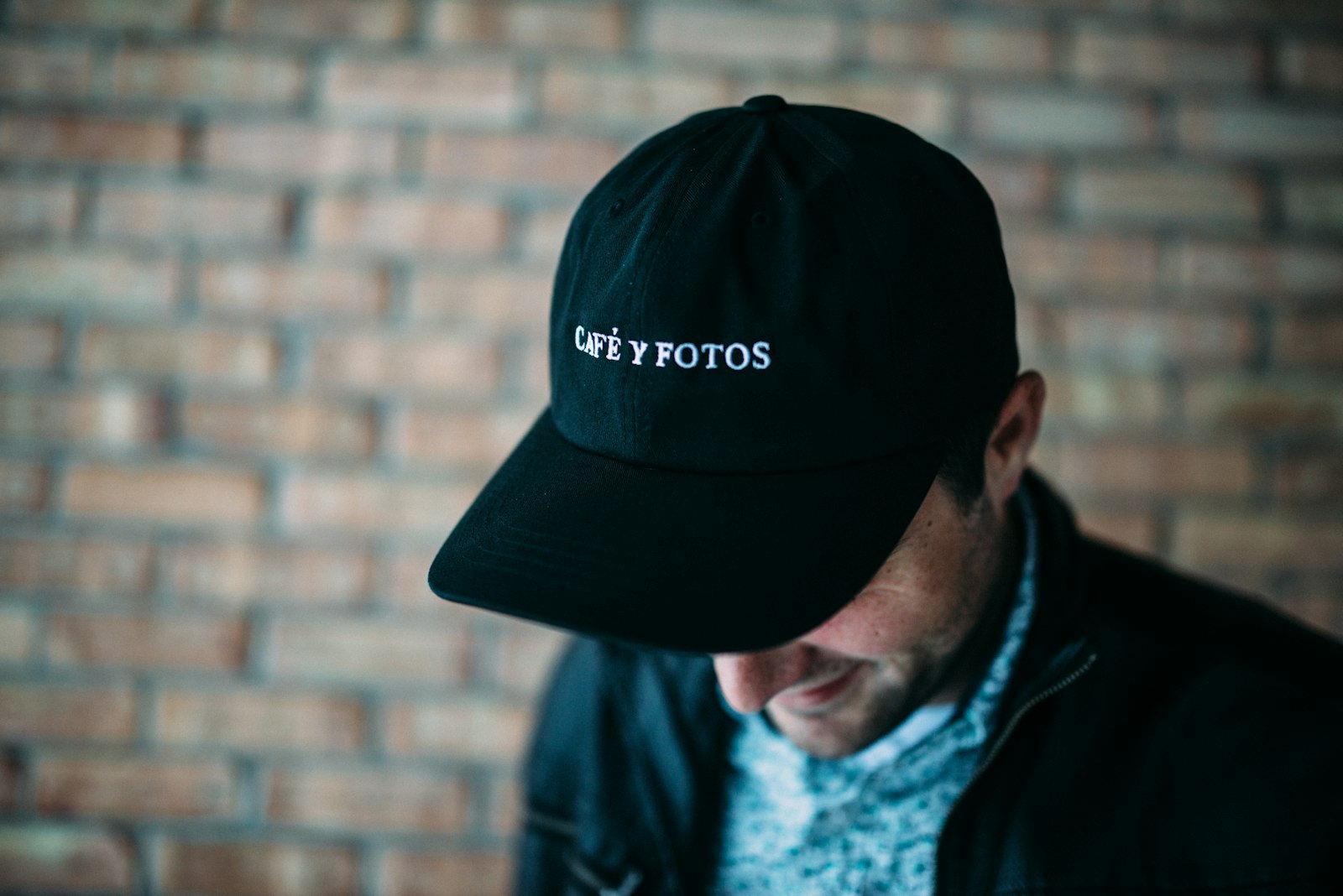
Cap logo embroidery
Front panel · about 4 in wide
A cap front logo runs about 4 in wide and has to fit between the brim and the top of the crown, so wide logos suit caps better than tall ones, and taglines or web addresses usually get dropped. A one-line wordmark, like the one in the photo, is the shape caps handle best.
A structured front, like the buckram-backed panel on our standard trucker cap, holds stitches flatter than a soft, unstructured dad hat. More in embroidered hats.
11 in full back · to scale
Full-back embroidery on jackets
Full back · up to about 11 in wide
The largest placement: a design up to about 11 in wide across the back of a jacket, for crews and clubs that want to be read from across a site or an arena. It covers about ten times the area of a 3.5 in chest logo, so it takes far more stitches and is the costliest spot to embroider. On a hoodie or a light shirt a back design this size is usually printed instead, with the chest logo stitched.
3.5 in
Left-chest logo
3 in
Sleeve logo
~4 in
Cap front logo
¼ in
Smallest detail
What makes a logo embroider well
Thread is not ink. Every part of a stitched logo is built from rows of stitches with a physical width, so some things a screen shows perfectly cannot be sewn. The rule of thumb: if the smallest part of your logo is under a quarter inch at the size it will be stitched, it will fill in. Capital letters around 5 mm tall are the practical floor; below that they turn into blobs.
| Logo feature | Stitches well | Needs changing |
|---|---|---|
| Text | A quarter inch tall or more | Taglines, fine print, letters under about 5 mm |
| Lines | Bold strokes and solid shapes | Hairlines and thin outlines (thickened or removed) |
| Colour | Flat, solid colours | Gradients, fades and drop shadows |
| Images | An icon, a monogram or a wordmark | Photos and textures (print them instead) |
| Shape | Wide marks on caps and cuffs | Tall crests squeezed onto a cap front |
Colour count and stitch count are different things. Each thread colour is another needle and another stop on the machine, so a logo with a dozen close shades is usually reduced to the handful that read at size, and thread is matched to the nearest stock shade of your brand colours. What makes a logo slow and costly to stitch is its stitch count: how big it is and how densely it is filled. A solid-filled crest takes far more stitches than an outlined one of the same width. In our online studio the number of thread colours does not change the price; the size and the number of placements do. The other drivers are in how much embroidery costs.
Digitizing: done once, reused on every reorder
An embroidery machine cannot read a JPG, a PNG or even a vector file. It reads a stitch file: the path of every stitch, its direction and density, the underlay beneath it and the order the colours go down. Making that file from your logo is called digitizing, and it is where a logo is adapted for thread: small text is enlarged or dropped, hairlines are thickened, and the stitches are set to allow for the fabric pulling as it is sewn.

Digitizing is a one-time setup per logo. The file is kept, so a reorder of three polos months later uses exactly the same file and matches the first run. A stitch file is built for one size and fabric, though, so a logo stitched at 3.5 in on a chest and at 11 in across a jacket back may need a file for each. Our digitizing explainer goes through the process step by step.
What to send: a vector file (AI, EPS or PDF) or a high-resolution PNG is ideal. If all you have is a small screenshot or a logo pulled off a website, our vectorization service rebuilds it as a clean vector first.
Which garments take logo embroidery
Embroidery suits garments with some body to them: polos, caps, toques, hoodies and crewnecks, jackets and softshells, work shirts and aprons. Heavier fabric holds the stitches flat and survives constant washing, which is why stitched logos are the norm on uniforms.
Lightweight t-shirts are the exception. Dense stitching distorts thin fabric, so on a t-shirt a printed logo looks better and lasts as well. The same goes for large, detailed or full-colour designs. Our comparison of screen printing vs embroidery and the polo-specific embroidery vs a printed logo help you choose. If you want one stitched logo that can move between garments, an embroidered patch is the flexible option, covered in our custom patches guide.
How to order logo embroidery
There are two ways in. For a handful of pieces up to a team order, the free online design studio lets you place the logo on a real garment and see the price. For hundreds of pieces, or a garment or placement the studio doesn't offer, send the details through the free quote form. Either way, the steps are:
- Send the logo. A vector or a high-resolution PNG. A designer tells you if any detail is too small to stitch.
- Pick the garments and the placement. Left chest at 3.5 in is the default; add a sleeve, a cap front or a back as needed.
- Approve the free mockup. You see the logo on the actual product, at its real size and position, before you pay anything.
- Choose the turnaround and pay. Standard is 1–2 weeks; most orders can rush in 4–5 or 1–3 business days, priced at checkout.
- We stitch it in Ottawa. Local delivery across Ottawa–Gatineau, shipping Canada-wide, or pickup in Ottawa by appointment.
Ordering for a whole company? Our guide to bulk and corporate embroidery covers size breakdowns, price breaks and keeping reorders consistent. Ordering locally? See embroidery near me in Ottawa or custom embroidery in Toronto.
Frequently asked questions
What size should an embroidered logo be?
Use the standard size for the placement: 3.5 inches wide on the left chest, 3 inches on a sleeve, about 4 inches on a cap front and up to about 11 inches across a jacket back. The height follows the shape of your logo, so a wide wordmark stands much shorter than a square crest at the same width.
How small can text be in logo embroidery?
Keep every letter at least a quarter inch (about 6 mm) tall at the size it will be stitched. Capitals around 5 mm are the practical floor; anything smaller fills in. On a 3.5-inch chest logo that rules out most taglines, so they are usually dropped or the logo is simplified.
Can any logo be embroidered?
Most logos can, once they are digitized and simplified for thread. Bold shapes, solid colours and text a quarter inch tall or more stitch well. Gradients, photos, hairlines and tiny text do not, and a designer will tell you what has to change before anything is stitched — or suggest printing instead.
Do I pay for digitizing every time I reorder?
No. Digitizing is a one-time setup per logo: the stitch file is kept and reused on every reorder, even a reorder of 3 pieces, so the new pieces match the first run. A logo stitched at two very different sizes, such as a 3.5-inch chest and an 11-inch back, may need a file for each size.
How much does it cost to embroider a logo on a shirt in Canada?
It depends on the garment, the logo's size and density, the number of placements and the quantity. In our online studio you see the exact per-piece price before you pay, it drops at 12, 24, 50 and 100 pieces, and quotes are free. Lightweight t-shirts are usually printed instead, because dense stitching distorts thin fabric.
Is there a minimum order for custom logo embroidery?
No. A single embroidered cap or jacket is a normal order. Volume pricing starts at 12 pieces, and every colour of the same garment in one order counts toward the same price break.
Design it yourself. A human designer still checks every order.
Our free studio gives you the price and the mockup in the browser. What it doesn't do is print your file blindly — every order is reviewed by a real designer before it reaches the press.
- Step 1You design it — free
Upload your logo, drop it on a real garment, set the size and placement, pick colours and quantities. No account, no deposit, no waiting on a reply.
- Step 2A human designer checks it
Before anything prints, one of our designers opens your file and checks resolution, colours, sizing and placement. If it won't print well, we fix it or tell you exactly what's wrong — a person, not an automated preflight.
- Step 3You approve, then we print
You get the corrected mockup back on the actual product. Nothing goes to press until you say yes — then it's ready in 1–2 weeks, or in 1–3 business days with a rush.
Get your logo embroidered
Send your logo and the garments you have in mind. You get a free mockup at the real size and position before you pay, and a designer checks that every detail will stitch cleanly.
Every order is reviewed by a human designer before it goes to press. A person checks artwork resolution, colour, sizing and placement, and either fixes the file or tells the customer what is wrong — it is not an automated preflight.