
One Apparel Order for Offices in Ottawa, Toronto and Montreal: Print Once, Match Everywhere, Ship Three Ways
Company apparel for offices in Ottawa, Toronto and Montreal works best as one order: one design, one run and one blank order, so all three offices match and the whole count goes toward the price break. Here is how to collect sizes per office, choose between one bilingual design and separate English and French versions, add embroidered polos for client-facing staff, split the run into a box per office, and plan the launch date.
- Volume pricing
- Large orders get volume pricing. In the online design studio the per-piece price drops at 12, 24, 50 and 100 pieces, and every colour of the same garment in one order counts toward the same price break. Orders in the hundreds are usually screen printed and quoted directly — through the free quote form, by email or by phone — and a large order gets the same free mockup and human designer check as a single shirt.
- Typical cost
- A screen-printed t-shirt runs roughly $12–$18 CAD each at 50 pieces and drops under $10 each in the hundreds. Full-colour DTF sits slightly higher per piece with no setup fee. Every quote is free and includes a mockup.
- One run, three offices
- One design, printed in one run on one blank order, so the shirt colour, ink colour, logo size and placement match in Ottawa, Toronto and Montreal. To split the run into a box for each office, tell us at quote time — it changes how the run is sorted and boxed, and each address is quoted for shipping.
- English and French
- We serve customers in English and French. In the online studio, an English and a French version of the same garment in one order count together toward the price break; on a quoted screen-print run each version is its own screen setup, so one bilingual design is usually the leaner choice at volume.
- Turnaround
- Standard turnaround on clothing is 1–2 weeks. Most apparel orders can rush — 4–5 business days or 1–3 business days, priced at checkout — and every order shows the dates it will be ready before you pay. Plan a run in the hundreds on the standard schedule: rushing a large run is a conversation, not a checkbox, so call 613-666-9292 before counting on it.
- Shipping and pickup
- Shipping Canada-wide, including the Greater Toronto Area and Greater Montreal, typically arriving 1–2 days after the order leaves the shop. Shipping is quoted for your postal code and shown before you pay. No storefront or pickup in Toronto or Montreal; Ottawa staff can ask about pickup — ask when you order.
- Artwork check
- Every order is reviewed by a human designer before it goes to press. A person checks artwork resolution, colour, sizing and placement, and either fixes the file or tells the customer what is wrong — it is not an automated preflight. Every order gets a free digital mockup on the actual product before any payment.
Why one run beats three local orders for offices in Ottawa, Toronto and Montreal
A lot of Canadian organizations live along one stretch of highway. The head office is in Toronto, a studio or a sales team works out of Montreal, and an Ottawa office sits between them, all on the Quebec City–Windsor corridor that Highway 401 and Highway 417 stitch together. Companies run this way, and so do industry associations, sports federations and national nonprofits. When they want staff shirts for a launch, a rebrand or the annual all-hands, the instinct is to let each office buy locally. This guide argues for the opposite: one design, one run and one blank order for everyone, then a box for each city. We print in-house in Ottawa and ship to Toronto and Montreal; staff in the Ottawa office are local to the shop.
The trouble with three local orders is that matching is a property of the run, not of the logo file. Three shops working from the same file make three sets of reasonable decisions: which navy tee to buy, how to mix the brand colour, and how wide a left-chest logo should be. The Toronto team ends up in one navy, the Montreal studio in a slightly purpler one, and the Ottawa logo sits a little lower and a little smaller. Nobody notices until the all-hands photo, when three offices stand in one row and read as three organizations.
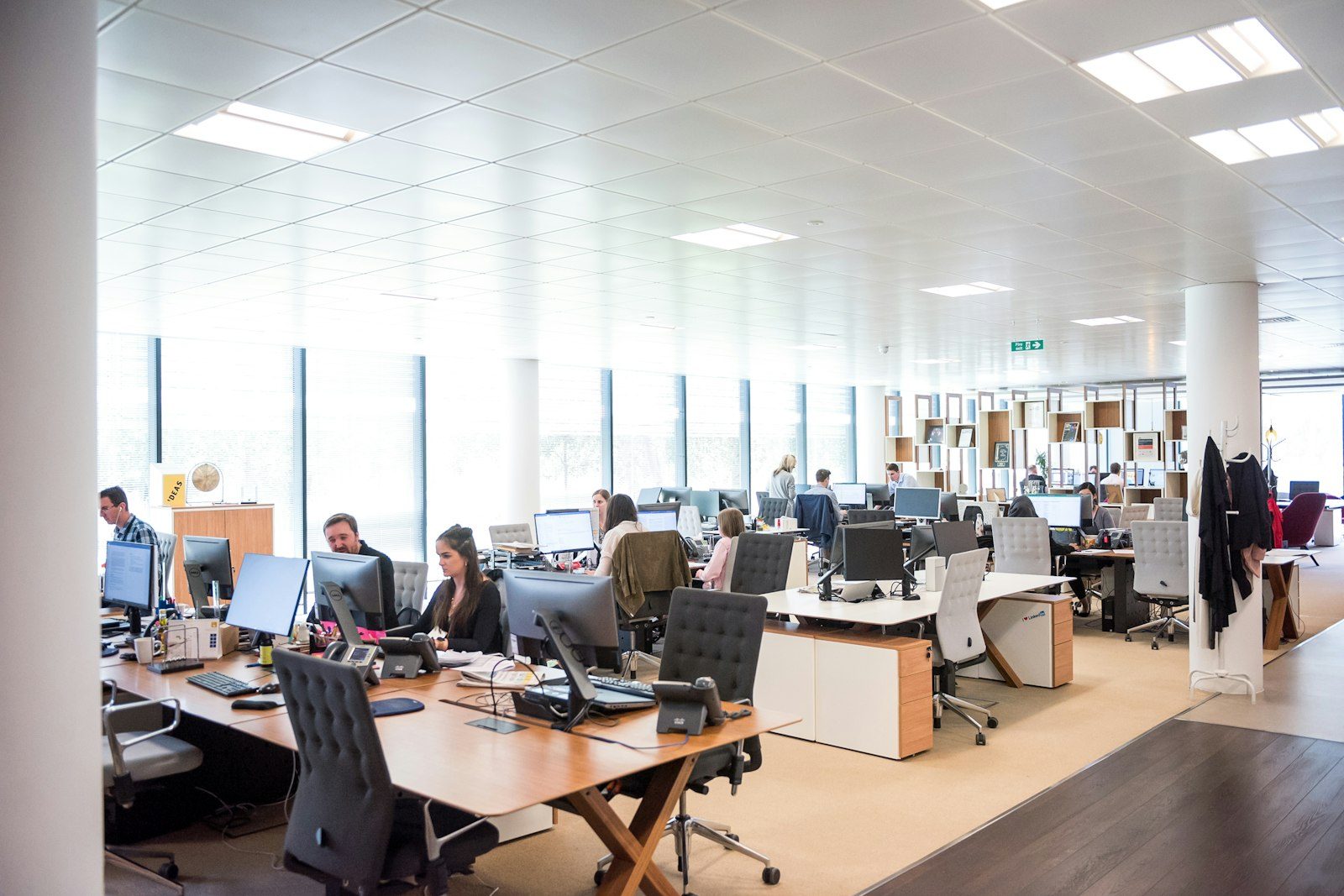
One run removes all three variables. The blank is bought once, for everyone, and buying it once is the most reliable way to keep every piece in the same colour lot, because garment colours can drift slightly between a mill’s production lots. Spot colours in screen printing can be matched to Pantone references, so the brand colour is one number instead of three opinions. The logo is sized and placed once, on one approved mockup. Splitting the finished run by office comes last, and it is a packing question, not a reason to print three times.
| What has to match | Three local orders | One order, shipped three ways |
|---|---|---|
| The blank | Three suppliers’ idea of navy | One style and colour, bought once for everyone |
| Brand colour | Mixed three times, by three people | Spot colours matched to one Pantone reference |
| Logo size and placement | Three judgment calls | One approved mockup |
| Price break | Each office priced on its own count | Every colour of the same garment counts toward the same break |
| Artwork check | Three proofs to chase and compare | One mockup and one human designer check |
| Reorders | Three records in three filing cabinets | One record: blank, colour, ink or thread, placement |
| The hand-off | Collected across town in each city | Ottawa can ask about pickup; Toronto and Montreal by courier, each address quoted for shipping |
The one row where three local vendors win is the hand-off: each office can collect its own box across town. One order trades that for a courier box to two of the three cities, which is a planning problem rather than a quality problem, and the timing section below deals with it. Every other row favours one run, and the gap widens with every piece you add.
How pooling three offices into one order moves the price per piece
The money argument is the simplest one. Large orders get volume pricing. In the online design studio the per-piece price drops at 12, 24, 50 and 100 pieces, and every colour of the same garment in one order counts toward the same price break. Orders in the hundreds are usually screen printed and quoted directly — through the free quote form, by email or by phone — and a large order gets the same free mockup and human designer check as a single shirt. Three small orders each pay for being small; one order pays for being the size your organization actually is.
Say the Ottawa office needs 40 tees, the Montreal studio 35 and the Toronto head office 110. Ordered separately, Ottawa and Montreal each sit at the 24-piece break and Toronto at the 100. Ordered together, that is one 185-piece tee line, and every shirt prices at the 100-piece break, Montreal’s 35 included. That holds even if the Montreal studio insists on black while Toronto wears navy, because colour does not split the count. Youth sizes count with the adult version too, which matters more to a federation with a kids’ program than to an office.
The 100-piece break is the floor online, and a quoted run is priced on its own count, design and ink colours. For budgeting, a screen-printed t-shirt runs roughly $12–$18 CAD each at 50 pieces and drops under $10 each in the hundreds. Full-colour DTF sits slightly higher per piece with no setup fee. Every quote is free and includes a mockup. Our screen printing page explains how setup spreads across a run, and what printing 1,000 custom t-shirts involves covers the far end of the curve.
Two rules keep the math honest. Different garments count on their own: tees pool with tees and hoodies with hoodies, so 60 hoodies do nothing for the tee count. And 2XL and larger carry a small per-piece upcharge that rises with each size, because bigger blanks cost more. Pooling is not always right, either. If the Montreal studio is twelve people who want a full-colour illustration while everyone else wears a one-colour logo, that is two jobs, and the twelve are better served by DTF, which has no setup fee. For what “wholesale” really means on a decorated run, see wholesale custom t-shirts in Ottawa, Toronto and Montreal.
Collecting sizes from three offices: one form, one deadline, a count per site
The slowest part of a three-office order is never the press. It is getting sizes out of three offices on three schedules, with the Montreal team on a client deadline, Toronto at a conference and Ottawa parents away for March Break. Our guide on how to organize a group apparel order covers the form itself, from fixed size choices to fit and names. This section covers only what changes when the people are in three cities.
One form, one owner, one date. Use a single form for the whole organization with an office column, owned by one person at head office and closing on the same date in all three cities. Then name a site lead in each office whose only job is chasing their own people; a coordinator on King Street cannot usefully nag someone in Mile End. When the date passes, each site lead fills the gaps from their own office’s size spread rather than holding the whole order for the last three replies.
A count per site, not one total. Send a count of each size for each office, plus the total. That sheet is the order, and later it is the checklist each office counts its box against. Put a few spares in every office’s count rather than all of them at head office: a medium in a Toronto closet does nothing for a new hire in Ottawa. If you are planning before anyone has filled in a form, our size breakdown for 100, 250, 500 and 1,000 shirts gives a starting spread.
Check the size range before the form goes out. In the studio the adult tee, a unisex cut, runs XS–5XL; hoodies, crewnecks, long-sleeves and polos run S–3XL. Anyone outside those ranges goes on the quote form rather than the studio cart, so ask for those sizes on the form, not in a follow-up email. Circulate the size chart for the actual garment with the form, because “I am usually a large” is how a box of unworn larges ends up in three cities instead of one.
English, French or both: one bilingual design or two versions?
Any organization with a Montreal office meets the language question early, and it is cheaper to answer before the artwork is final than after the mockup. Words are where it lives. A logo with no tagline reads the same in both languages; a slogan, a team name, a job title or an event name does not. Quebec’s Charter of the French Language sets French as the normal and everyday language of work, commerce and business in Quebec, and the Office québécois de la langue française (OQLF) is the body that applies it. If words on a staff shirt will be worn at work in Quebec, ask how the Charter applies to you before the design is locked. This is not legal advice — check with the OQLF for your case.
The design decision is the part we can help with, and it has three routes. Logo only leaves nothing to translate. One bilingual design puts both languages on one shirt, usually as a stacked lockup such as ÉQUIPE over TEAM, or a short tagline set twice. Two versions means an English shirt and a French shirt, with each office ordering the one it wants. We serve customers in English and French, so the mockup conversation can happen in either.
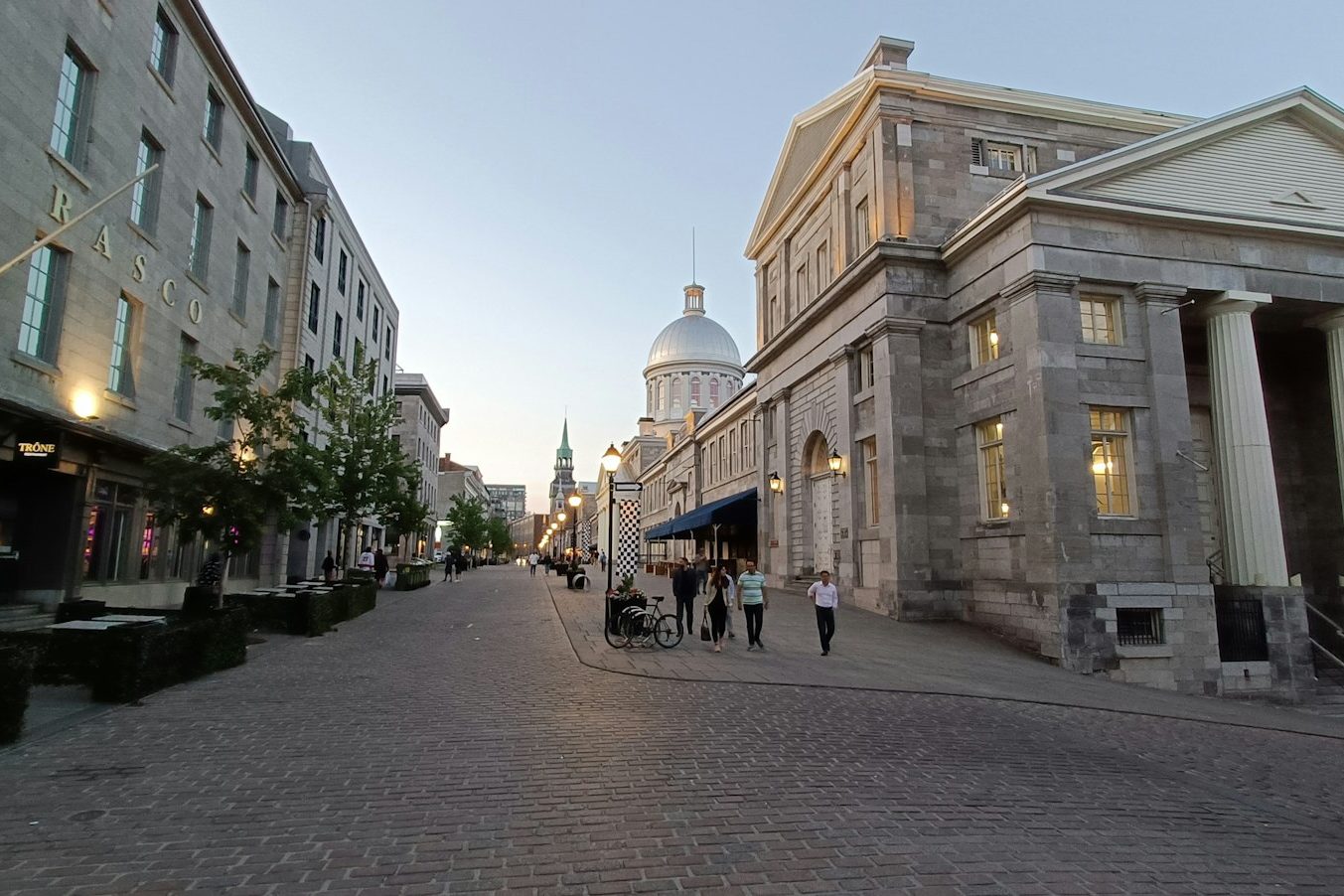
The price mechanics differ between the studio and a quoted screen-print run, and the difference is the honest reason to keep versions few at volume. In the studio, two designs of the same garment in one order count together toward the price break, so 60 English and 40 French tees price as one 100-piece line. In screen printing, though, every separate design is its own screen setup, and so is every print location and every ink colour. On a quoted run the French version adds a second setup, and French on the front with English on the sleeve adds a second print location. Spread across 600 shirts, that cost thins out; across 60, it does not.
| What changes | One bilingual design | English and French versions |
|---|---|---|
| Studio price break | Every piece counts toward one break | Both versions of the same garment count together |
| Screen setups on a quoted run | One set of screens | A set of screens per version |
| Size planning | One count per office | One count per version, per office |
| Reorders | One record to keep | Two records to keep matched |
| Design challenge | Two languages in one layout; keep the words short | Each version stays simple |
| Best when | Offices mix languages and everyone wears one shirt | One office wants French only and another English only, at real volume |
Two versions also split everything downstream: a size count per version per office, two stacks to sort, two records to reorder from, and an Ottawa office that may want some of each. One bilingual design keeps one count, one record and one set of screens. Our guide to bulk t-shirt printing in Montreal covers the Montreal side of a large run, and workwear and uniforms in Quebec covers bilingual name tags and French job titles.
A two-tier order: embroidered polos for client-facing staff, printed tees and hoodies for everyone
Most organizations with three offices do not need everyone in the same garment; they need everyone in the same brand. The shape that works is two tiers. The first is a printed tee and a hoodie for everyone, screen printed in one run. The second is a smaller line of embroidered polos or hoodies for the people who meet clients: the Toronto sales team on King Street West, the producers who run client reviews in the Montreal studio, and the Ottawa staff who sit across the table from public-sector clients.
Embroidery costs more per piece than print, which is exactly why it belongs on the smaller tier. Hoodies, crewnecks, polos and caps can all be embroidered. Our guide to corporate apparel in Toronto covers blank tiers and left-chest logo sizes, and branded polo shirts for business covers fabric and placement for the polo itself, so neither is repeated here. If the question is whether the polo logo should be stitched at all, read embroidery vs a printed logo on polos.
The three-office rule is the one those guides do not need: pick one polo and one hoodie for the whole organization. Different garments count toward their price breaks separately, so when each office chooses its own polo, one polo count becomes three smaller ones, each further from the next break, and three slightly different looks walk into the same client meeting. One style, one colour and one thread colour, in all three cities.
The hoodie is the piece that earns its place in all three cities from November to April. The default is a 50/50 cotton-poly fleece, with a polyester performance hoodie as the alternative, and the custom hoodies page covers both. If hoodies are most of your order, read bulk hoodie printing for Toronto or bulk hoodie printing for Ottawa. Zip hoodies and jackets are not in the studio; they go through the quote form.
Splitting the run into a box for each office
Printing once does not mean shipping once. If you want the run split into a box for each office, tell us at quote time — it changes how the run is sorted and boxed, and each address is quoted for shipping. Send the per-office size count with the quote request, along with each office’s full street address, suite number and the name of the person receiving the box.
On the receiving end, the site lead from the sizing stage is the right person. They take the box, open it the day it arrives rather than the morning of the launch, and count it against their office’s size count. A downtown tower’s mailroom or a shared reception in an old Mile End factory building needs a name on the label to know whose box it is; a box addressed to “the office” can sit in a loading area for days.

There is no storefront, counter or pickup in Toronto or Montreal; those boxes go by courier from Ottawa. Everything is printed and decorated in-house in Ottawa, Ontario. Nothing is drop-shipped from overseas, so there are no cross-border customs holds or surprise duties. Shipping is quoted for your postal code and shown before you pay, and our guide to custom apparel shipping across Canada covers transit by region and what to check when a box lands.
Timing a launch or an all-hands across three cities
Large runs are planned, not rushed. Standard turnaround on clothing is 1–2 weeks. Most apparel orders can rush — 4–5 business days or 1–3 business days, priced at checkout — and every order shows the dates it will be ready before you pay. The shortest rush tier is limited to smaller runs, though. An order in the hundreds should be planned on the standard 1–2 week schedule, and rushing a large run is a conversation, not a checkbox: call 613-666-9292 before counting on it. A run of many hundreds is booked into the shop calendar when the order is confirmed, so confirm your date when you book rather than assuming it.
Then work backwards from the day people wear the shirt. Toronto and Montreal boxes typically arrive 1–2 days after the order leaves the shop. Ottawa staff can ask about pickup — ask when you order. The production clock starts when the free mockup is approved and the order is paid, and everything before that is on your side: the size form across three offices, the English-and-French decision, and sign-off from whoever owns the brand. Those are the slow parts, and none of them happen at a press.
For a run in the hundreds, about five weeks out is a comfortable start: two weeks for sizes, a few days for the mockup and sign-off, 1–2 weeks of production, 1–2 days of transit and a few days of slack. Keep that slack between December and March, when a storm on the 401 or the 417 is a real reason for a box to land a day later than planned. Set the launch a few days after the ready date, so the shirts wait in a closet rather than the launch waiting for the shirts. If the reveal matters, ask each site lead to count the box and then keep it out of sight until the day.
New hires in three offices: keeping every reorder identical
The launch run is the easy order. The hard ones come after it: a new hire in Toronto in March, two in Montreal in May, a new Ottawa team in September. Three office managers reordering on their own is how a matched organization drifts back into three, one “close enough” navy at a time.
Keep one record for the whole organization, held centrally with the approved mockup: the blank’s brand, style and exact colour name; the ink colours with their Pantone references, or the thread colours for embroidery; the print size; and the placement, measured rather than described. Our guide on how to reorder company uniforms has the full checklist, including what to do when a blank colour is discontinued.
Then batch. Collect new-hire sizes from all three offices and reorder on a schedule, quarterly say, so each batch reaches a real count instead of three one-offs. The spares in each office’s box cover the first few hires in between. When someone cannot wait for the batch, the method changes, not the record. No minimum on DTF and DTG — we will print a single shirt. Screen printing starts around 6 pieces and becomes the best value past roughly 24–50 pieces. A new hire’s shirt printed by DTF uses the same artwork at the same size and placement; the print feels slightly different from a screen print, which matters far less on one shirt than on a row of them.
Some people never sit in any of the three offices: the salesperson in Kingston, the designer working from the Laurentians, the developer in Oakville. Give them their own column on the form as a fourth office, and read our guide to custom t-shirts for remote teams for the options on getting shirts to people who work from home.
A designer checks the file, and how to start a three-office order
Every order is reviewed by a human designer before it goes to press. A person checks artwork resolution, colour, sizing and placement, and either fixes the file or tells the customer what is wrong — it is not an automated preflight. On a three-office order that matters more than usual, because the logo file tends to come from whichever office answered the email first: a web PNG, a screenshot from a slide deck, last year’s version. A low-resolution file gets fixed or redrawn, and our vectorization service redraws a logo as vector art, which is the file every reorder should print from.
Every order gets a free digital mockup on the actual product before any payment. Nothing prints until the customer approves it. Send the mockup to all three site leads before head office approves: it is the last cheap moment for Montreal to flag the tagline or for Ottawa to ask for the logo a size up.
Customers can design their own product free at yayaprints.ca/mockup-creator — upload a logo, place it on a real garment, add print-quality text, choose colours and sizes, and order online without emailing or phoning anyone. Start in the free design studio to see the shirt and the price for the whole organization. For a run in the hundreds, or anything the studio does not build, such as zip hoodies, jackets and toques, send the per-office counts and the logo: phone 613-666-YAYA (613-666-9292), WhatsApp the same number at wa.me/16136669292, email order@yayaprints.ca, or order online at yayaprints.ca. Payment is by card or Interac e-Transfer.
The custom uniforms page sets out the full range for staff programs, and business uniforms shows the garments and decoration businesses usually pick. One design, one run, one record, and three offices that look like one organization.
Frequently asked questions
Can one apparel order cover staff in Ottawa, Toronto and Montreal?
Yes. One design is printed in one run on one blank order for everyone, then split into a box for each office. Tell us the split at quote time — it changes how the run is sorted and boxed, and each address is quoted for shipping. Toronto and Montreal boxes go by courier, typically arriving 1–2 days after the order leaves the shop, since there is no storefront or pickup in either city. Ottawa staff can ask about pickup — ask when you order.
Does combining three offices into one order lower the price per piece?
Usually, yes. Large orders get volume pricing. In the online design studio the per-piece price drops at 12, 24, 50 and 100 pieces, and every colour of the same garment in one order counts toward the same price break. Say Ottawa needs 40 tees, Montreal 35 and Toronto 110: ordered separately, two of the offices sit at the 24-piece break, while ordered together all 185 price at the 100-piece break. Different garments count separately, so tees pool with tees and hoodies with hoodies.
Should our staff shirts be bilingual, or should we print separate English and French versions?
At volume, one bilingual design is usually the leaner choice. In the online studio, two versions of the same garment in one order count together toward the price break, but in screen printing every separate design is its own screen setup, so on a quoted run each extra version adds setup, a second size count and a second reorder record. Separate versions make sense when one office wants French only and another English only. Quebec’s Charter of the French Language sets French as the normal and everyday language of work, commerce and business in Quebec; this is not legal advice — check with the OQLF for your case.
How do we collect sizes from three different offices?
Use one form for the whole organization with an office column, one owner at head office, one closing date for everyone and a site lead in each office to chase their own people. Send us a count of each size for each office plus the total. In the studio, adult tees run XS–5XL and hoodies, crewnecks, long-sleeves and polos run S–3XL; sizes outside those go through the free quote form. 2XL and larger carry a small per-piece upcharge that rises with each size.
How far ahead should we order shirts for a company launch or all-hands?
For a run in the hundreds, about five weeks out is a comfortable start. Standard turnaround on clothing is 1–2 weeks. Most apparel orders can rush — 4–5 business days or 1–3 business days, priced at checkout — and every order shows the dates it will be ready before you pay. The shortest rush tier is limited to smaller runs, and rushing a large run is a conversation, not a checkbox — call 613-666-9292 before counting on it. Add 1–2 days of transit for the Toronto and Montreal boxes, plus time for the size form.
Can client-facing staff get embroidered polos while everyone else gets printed shirts?
Yes, and it is a sensible shape for a multi-office order: printed tees and hoodies for everyone, embroidered polos or hoodies for the people who meet clients. Hoodies, crewnecks, polos and caps can be embroidered, and embroidery costs more per piece than print, which is why it suits the smaller tier. Pick one polo style and one hoodie style for all three offices; different garments count toward their price breaks separately, so three office-chosen polos split one count into three.
How do we reorder for new hires in different offices so the shirts still match?
Keep one record for the whole organization: the blank’s brand, style and exact colour name, the ink colours with their Pantone references or the thread colours, the print size and placement, and the approved artwork. Collect new-hire sizes from all three offices and reorder in batches. No minimum on DTF and DTG — we will print a single shirt. A new hire who cannot wait for the batch gets the same artwork at the same size and placement.
Do you have a location in Toronto or Montreal?
No. Everything is printed and decorated in-house in Ottawa, Ontario. Nothing is drop-shipped from overseas, so there are no cross-border customs holds or surprise duties. There is no storefront, counter or pickup in Toronto or Montreal; boxes ship by courier, typically arriving 1–2 days after the order leaves the shop, and shipping is quoted for your postal code and shown before you pay.
Design it yourself. A human designer still checks every order.
Our free studio gives you the price and the mockup in the browser. What it doesn't do is print your file blindly — every order is reviewed by a real designer before it reaches the press.
- Step 1You design it — free
Upload your logo, drop it on a real garment, set the size and placement, pick colours and quantities. No account, no deposit, no waiting on a reply.
- Step 2A human designer checks it
Before anything prints, one of our designers opens your file and checks resolution, colours, sizing and placement. If it won't print well, we fix it or tell you exactly what's wrong — a person, not an automated preflight.
- Step 3You approve, then we print
You get the corrected mockup back on the actual product. Nothing goes to press until you say yes — then it's ready in 1–2 weeks, or in 1–3 business days with a rush.
Put all three offices in the same shirt
Upload the logo, place it on a real garment, choose colours and sizes, and see the price for the whole organization — every colour of the same garment in one order counts toward the same price break. For a run in the hundreds, send the size count for each office through the free quote form; each address is quoted for shipping.
Every order is reviewed by a human designer before it goes to press. A person checks artwork resolution, colour, sizing and placement, and either fixes the file or tells the customer what is wrong — it is not an automated preflight.