
Custom Staff Uniforms for Toronto Small Businesses: Cleaners, Landscapers, Security, Delivery Fleets and Salons
The Toronto businesses the restaurant, construction and corporate guides do not cover: cleaning companies, landscapers, security firms, delivery fleets, salons, auto shops, property managers and clinic front desks. Why a uniform is a recognition tool first, the two-tier order that puts embroidery on whoever meets the customer and print on the crew, buying a size spread for turnover, names on shirts, what Ontario’s security-uniform rules mean for the mockup, and real per-shirt pricing shipped from Ottawa in 1–2 days once it leaves the shop.
- Minimum order
- None on DTF or DTG — we will print one shirt, so one polo for one new hire is a normal order. Screen printing starts around 6 pieces and becomes the best value past roughly 24–50.
- Typical cost
- Roughly $12–$18 CAD per screen-printed tee at 50 pieces, dropping under $10 each in the hundreds. Full-colour DTF sits slightly higher per piece with no setup fee. Embroidered polos cost more because the blank costs more, and embroidery is priced by stitch count. Every quote is free and includes a mockup.
- Turnaround to Toronto
- Standard turnaround on clothing is 1–2 weeks. Most apparel orders can rush — 4–5 business days or 1–3 business days, priced at checkout — and every order shows the dates it will be ready before you pay. Then typically 1–2 days in transit from Ottawa once the order leaves the shop.
- The two-tier uniform
- Embroidered polos for whoever meets the customer, printed tees or hoodies for the crew, same logo and colours on both. First names go on in DTF or embroidery for supervisors and the front desk; crew tees stay unnamed so a spare fits anyone.
- Artwork check
- A human designer reviews every order before it goes to press — resolution, colour, sizing and placement. Not an automated preflight.
- Design it yourself
- Free online studio at yayaprints.ca/mockup-creator builds polos, tees, hoodies and caps on the real garment with live pricing. No account, no deposit. Aprons, jackets, work shirts, quarter-zips and hi-vis go through the quote form.
- Where it is printed
- In-house in Ottawa, Ontario, then shipped to Toronto and the GTA. No Toronto storefront, pickup or rep. Printed in Canada, so no cross-border customs holds or surprise duties.
A uniform does three jobs: the door, trust and the reorder
Most of the businesses that ask us for staff uniforms in Toronto are not restaurants, construction crews or head offices. They are a cleaning company with fourteen people spread across office towers downtown, a landscaper whose crew doubles every May, a security firm covering condo desks overnight, a courier fleet working the industrial belts around the airport, a salon on the Danforth, a two-bay auto shop in Scarborough, a property manager with concierge desks in three towers. This guide is for them. If you run a room, custom restaurant uniforms in Toronto covers aprons, kitchen tees and the bar tee that turns into merch. If your crew wears hi-vis on a site, custom workwear and hi-vis in Toronto is about the rating on the blank and the winter layer. If you are outfitting a head office with polos for sales and hoodies for the developers, corporate apparel in Toronto splits that into its three orders. Everyone else, read on.
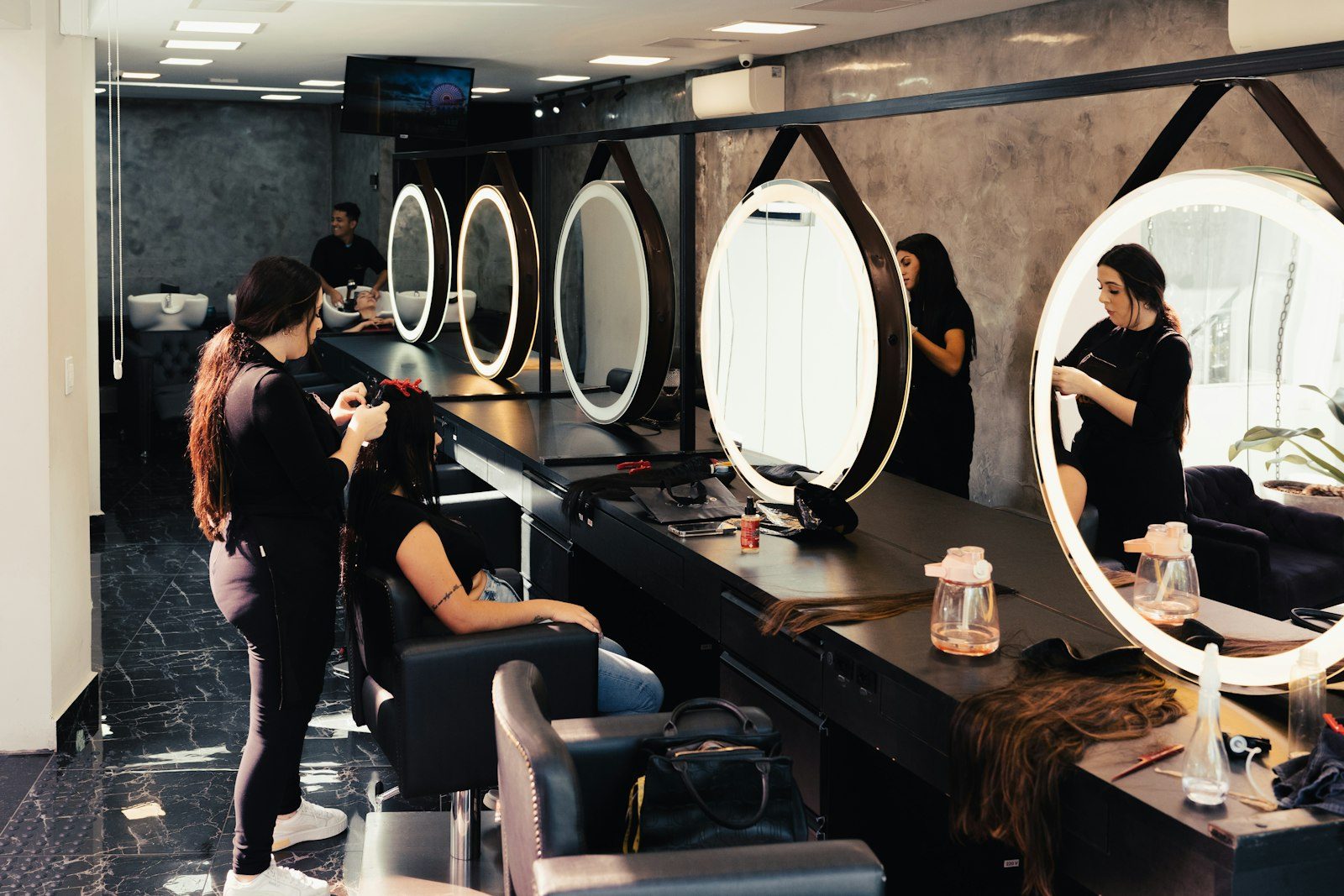
A uniform earns its keep at the door. The person answering the buzzer in a Liberty Village condo wants to know in half a second that the stranger with the mop caddy is the company they hired, and a logo on a dark polo does that faster than an explanation. It does trust work at a distance too: a crew in matching shirts on a lawn in Bayview Village reads as a company rather than three people with a truck, and the neighbour watching them all morning is your next quote. And it has to be reorderable, which nobody thinks about at the first order. Staff leave, seasons turn, someone bleaches a polo in week two, and the uniform that works is the one you can buy again in September to match the one from March.
One thing to say early, because it decides whether we are the right shop. We are an Ottawa shop: everything is printed and embroidered in-house here and shipped to Toronto, there is no counter, pickup, van or rep anywhere in the GTA, and nothing is drop-shipped from overseas. If your plan needs someone to collect a box on Queen West this afternoon, we are the wrong fit and would rather say so in the first section than the last. If it needs a shirt that matches last year’s and a person who answers the phone, keep reading.
Cleaning companies and landscapers: dark polos and seasonal crews
Cleaning crews are the easiest uniform on this page to get right and the most common one to get wrong. What they need is a polo or tee in a dark colour with the logo on the left chest and, for the supervisor, a first name under it. Dark matters twice: navy, black and charcoal hide the splash from a mop bucket and the smear from a bleach wipe, and they show lint, which means the shirt looks maintained when it is clean. A white polo on a cleaning crew is a weekly reorder. Polos go to anyone the client sees, because a contract for the towers around King and Bay is partly won on how the crew looks crossing a lobby at seven in the evening; tees go to the overnight crew who meet nobody. The cleaning company uniforms page lists the pieces, polo shirt printing covers the blanks, and embroidery is the method for anyone who is seen.
Landscapers are the same logo on a different calendar. The crew doubles in May, works in tees and caps until September, pulls on hoodies for the fall cleanups, and every piece is bought so it can be handed to someone hired last Tuesday. So buy a spread, not a roster: tees weighted to medium, large and extra-large with a couple of 2XL, a box of spares, caps in one size. Tees and hoodies are a print job, and a one-colour screen print on a green or navy tee is the cheapest thing on this page once the count passes roughly 24–50, while the estimator who walks a property with a homeowner in Etobicoke gets an embroidered polo. Crews on road verges and commercial lots need hi-vis, and that is a quote, not a studio order: the safety rating (CSA Z96) belongs to the garment as made, we decorate certified blanks, we do not certify anything, and the print stays off the reflective tape. Landscaping uniforms and custom hi-vis clothing cover it; custom hats has the caps.
Security companies: the uniform has rules, and they are not ours
Security is the one trade on this page where the uniform is regulated, so the conversation starts differently. Ontario’s Private Security and Investigative Services Act and its uniform regulation set rules for what a licensed guard’s uniform must and must not show — it has to identify the wearer plainly as security and must not look like a police uniform — so send us the wording from your licensing paperwork before we mock anything up. We print what you specify; we do not give legal advice. The province’s page on private security and investigative services is the place to start if the licence is new to you.
What we can speak to is the build. A security order usually wants a dark duty polo with a crest on the left chest and a word across the upper back large enough to read across a parking lot at two in the morning, a jacket for the winter posts, hi-vis for traffic and event work, and a cap. The polo is an embroidery job, because thread survives a daily wash and reads as authority in a way ink on a polo never quite does; the back is a print, because a stitched word twelve inches wide is stiff, heavy and expensive. Jackets, hi-vis and shoulder patches go through the quote form because the specific garment matters. Polos and caps can be built and priced in the studio once the wording is settled. Same crest, same wording, on every piece, so the guard at a waterfront condo desk and the one walking a plaza in Scarborough look like one company. The security uniforms page lists everything we decorate for security firms.
Delivery fleets and auto shops: the shirt, the cap and the vehicle
A courier or delivery fleet working out of the industrial belts around the airport, along the 400 or off the 401 in Scarborough has a uniform that is seen through a windshield and from a porch camera, which changes what matters. The driver needs a tee that survives forty washes and a cap that reads as the company from the doorstep, and both build in the studio. Hi-vis for the drivers who work loading docks and roadsides is a quote, with the same rule as the landscapers: rating on the blank, print off the tape. Names are rarely needed on a fleet, but a depot or a route on the sleeve is cheap and useful. Turnover is high and constant, so buy the spread and the bin of spares described below, and pick a blank you can get again in February, because you will need to.

Then the vehicle, which is the part of a delivery uniform that does the most work. Vans the company owns take vehicle decals and lettering, quoted through the form and shipped like everything else. Leased vehicles, and drivers using their own cars, want magnets: they come off at the end of the shift, they move to the replacement vehicle, and they can be designed and ordered online in the print studio at car magnets, which ships anywhere. The vehicle magnets page explains when a magnet beats a decal. Order the magnets and the shirts together so the logo colour matches between the door and the chest; two vendors will each interpret your red differently. Delivery fleet branding is the hub for fleets.
Auto shops are a work-shirt trade. The mechanic wants a shirt that can be washed hot and worn under a hoist, which means a heavier work shirt with an embroidered name and logo, and that is a custom workwear quote rather than a studio build, because the blank matters more than the decoration. The service writer at the counter, who is the one the customer actually talks to, gets a polo. Caps go to everybody, because the shop cap is the piece a customer takes home. Keep the colour consistent between the shirt, the cap and the courtesy-car decal and a two-bay garage reads like the dealership down the road; automotive shop branding covers the signage side.
Salons, condo staff, retail floors and the reception desk
Salons and spas are the black-tee trade. Hair colour and product land on everything, a black tee absorbs the evidence, and stylists work with their arms up all day and want the drape of a tee rather than the collar of a polo. The apron is where the logo lives for most of a stylist’s shift, and aprons go through the quote form because the cut, the fabric and whether the front needs to shrug off colour are decisions a person should make with you; the custom aprons page covers the options. The tee builds in the studio. Embroidery on the apron and the front-desk piece, print on the tee, the same split as a restaurant for the same reason: what gets washed hardest gets thread. Salon and spa branding adds the window vinyl, cards and retail labels that usually go in the same order.
Property managers buy uniforms for two very different people. The concierge at a waterfront condo tower or a North York Centre building sits at a desk and greets owners all day, so that is an embroidered polo, with a quarter-zip on a quote for the building manager. The maintenance and cleaning staff who work the garage and the mechanical rooms get a tee or a hoodie with a print, and more of them, because that is where the turnover is. Keep both tiers in one colour scheme and residents can tell the building’s own staff from a contractor at a glance; property management has the sign and notice side of the same order.
Retail floors are the simplest version of all this: a tee or polo in the store’s colour with the logo on the chest, bought by the dozen and replaced as the roster changes, plus a hoodie for the stockroom in December. Retail store branding covers the signage and labels that go with it. Dental and medical reception sits at the other end, where a stitched logo on a good polo does quiet work at the front desk. This guide covers the polo the receptionist wears, not clinical scrubs, which are a separate conversation; dental clinic printing has the rest of what a practice orders.
The two-tier uniform, and first names on the shirts
Nearly every business on this page lands on the same structure once the first order has been worn for a month, so start there and skip the month. Embroider the people who meet the customer; print the people who do the work. The estimator, the concierge, the service writer, the salon front desk and the cleaning supervisor get a stitched left-chest logo on a polo. The crew, the drivers, the stockroom and the overnight cleaners get the same logo printed on a tee or a hoodie. Same colours, same logo, two levels of formality, and the customer reads them as one company. Machine embroidery locks thread through the fabric, so it survives hot washing indefinitely and reads as established; its limits are detail, no gradients and no text under about a quarter inch, and it is priced by stitch count rather than colour, so a small clean logo is affordable and a large detailed one is not. Custom embroidery in Toronto covers what we can and cannot stitch, and branded polo shirts for business is the guide to choosing the polo itself.
Names are the second decision. A first name on the shirt turns a stranger into “Maria from the cleaning company,” which is worth a lot at a front door, and it costs less than people expect because it is a digital job. On printed tees, first names go on in DTF: every shirt can be different at one price, with no setup per name. On polos, a name embroidered under the logo is the classic, and it is small enough to stitch cleanly. Two rules from twenty years of misspelled names: collect the spellings in writing from the staff themselves, not from the schedule, and have a second person check the list before you send it. A named shirt cannot be handed to a replacement, so keep names to the supervisors and the client-facing staff and leave the crew tees unnamed, so a spare fits whoever was hired on Tuesday.
Sizing for turnover: buy the spread, keep a bin, record the blank
Nobody finishes a uniform order for a small business, because the staff list is never finished. The cleaner hired in week three needs a polo that matches the ones from opening day, and if matching it means a new quote, a new mockup and a minimum, most owners give up and the crew ends up in whatever was in the closet. Three habits prevent that.
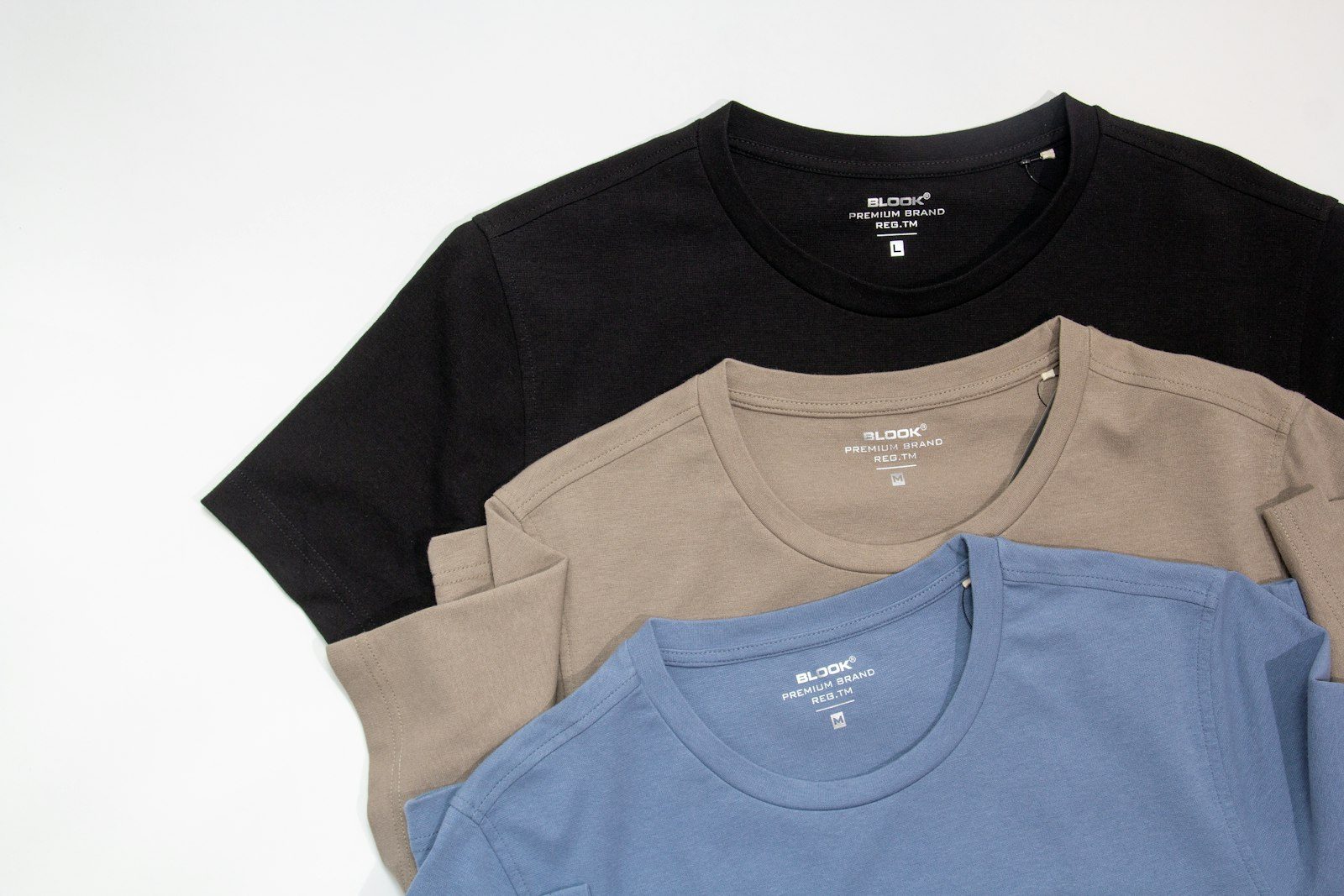
- Buy the spread, not the roster. Order on a size curve weighted to medium, large and extra-large, with 2XL and 3XL in it, rather than for the exact people on staff today. Landscapers and fleets, whose headcount doubles in a season, should buy the spread for the season, not the month.
- Keep a bin of spares.Two or three of each common size on a shelf, so a new hire is dressed on day one and a bleach accident is not an emergency. On a screen-printed run the extra shirts are nearly free; reordering four of them next month means paying the setup again on four shirts. There is no minimum on DTF or embroidery, so a top-up is a normal order, but the bin means it happens on your schedule rather than the new hire’s.
- Write down the blank. Brand, style number, colour and the mockup you approved. A closeout polo at a great price is a one-time garment, and the navy from a different line will not match in a lobby. We keep your artwork, thread colours, placement and stitch file, so a reorder is an email with sizes and a count; the full procedure, including how to hand it to whoever replaces the office manager, is in how to reorder company uniforms.
The Toronto version of this is the second crew. A company with a team downtown and another in North York or Scarborough should run one order and split the boxes: one embroidery run, one thread match, one price break, and the two crews match when they overlap on a job.
Method, cost and getting it from Ottawa to Toronto
Three methods run under our roof, and each is the wrong answer somewhere. The table is the short version for uniform orders.
| Method | Typical uniform use | Practical minimum | How it wears |
|---|---|---|---|
| Embroidery | Client-facing polos, front-desk pieces, aprons, caps, supervisor names | Small runs fine | Thread; survives hot washing; no gradients or tiny text; priced by stitch count |
| Screen printing | Crew tees and hoodies in 1–2 colours, past roughly 24–50 pieces | ~6 pieces | Priced per colour; cheapest per piece in volume; brightest on dark shirts |
| DTF | Small crews, first names, full-colour logos, mixed garments | 1 piece | Unlimited colours; every shirt can differ; no setup fee |
| DTG | One-offs and the softest hand on a cotton tee | 1 piece | Unlimited colours; flat per-piece price |
Screen printing pushes ink through one stencilled screen per colour, so it has a cost floor at around six pieces and almost none at two hundred; a one-colour logo on thirty crew tees is where it belongs. DTF prints the design onto a film that is heat-pressed onto the garment, so there is nothing to set up and every shirt can be different at the same price, which is why a twelve-person crew with first names goes DTF without a second thought. Embroidery is the client-facing layer, as above. The t-shirt printing page lists what we run in-house, and screen printing has the volume breaks.
On cost, the honest anchors. A one-colour screen-printed tee runs roughly $12–$18 each at 50 pieces and drops under $10 each in the hundreds. Full-colour DTF sits slightly higher per piece with no setup fee, so at the dozen-shirt scale most businesses on this page order, it usually totals less. Embroidered polos cost more than printed tees because the blank costs more and stitching is slower. Aprons, jackets, work shirts and hi-vis are quoted per piece from your logo and headcount, because the blank drives the number. Every quote is free and includes a mockup, and shipping is quoted for your postal code and shown before you pay.
Standard turnaround on clothing is 1–2 weeks.Most apparel orders can rush — 4–5 business days or 1–3 business days, priced at checkout — and every order shows the dates it will be ready before you pay. The clock starts when two things have both happened: you have approved the free mockup, and you have paid. Then it is typically 1–2 days in transit from Ottawa once the order leaves the shop, to downtown, North York, Scarborough or the airport belt alike, and because it is printed in Canada there is no customs hold and no duty invoice a month later. For the plain-tee baseline, custom t-shirt printing in Toronto and custom t-shirt printing in North York use the same anchors, and custom t-shirts for small business is the wider read on branded apparel without a retail markup.
A person checks the file, and how to start a Toronto order
Ordering uniforms from a shop four hundred kilometres away is safe because of what happens after you click. Every order is reviewed by a human designer before it goes to press. A person opens your file and checks resolution, colour, sizing and placement, and either fixes it or tells you what is wrong; it is not an automated preflight. On uniform orders that check catches the same things every week: a logo that only exists as a photo of the van, a script under the wordmark too fine to stitch at left-chest size, a navy polo chosen without looking at what a navy logo does on it, a chest logo sized like a back print. We sort those out and you see the corrected version on a free mockup of the actual product before any payment. Nothing prints until you approve it.
Starting is two doors into the same room. For polos, tees, hoodies and caps, open the free studio at yayaprints.ca/mockup-creator: upload the logo as a PNG, JPG, SVG or PDF, place it on a real garment in a real colour, add a name or a department in print-quality text, enter sizes and quantities and watch the price update. No account, no deposit. For aprons, jackets, work shirts, quarter-zips and hi-vis, send the logo, the pieces and a rough headcount through the free quote form or to order@yayaprints.ca and we build the mockup for you; call or WhatsApp 613-666-9292 if it is easier out loud, in English or French. The custom uniforms page is the hub for every piece we decorate for staff, and business uniforms is the industry page if the office side is what you need.
Where we land for a Toronto small business: two tiers under one logo, a size spread with a bin of spares, first names on the people who meet the customer, artwork and stitch file kept for the reorder, no minimum on DTF or DTG, a free mockup before a dollar moves, a designer who looks before the press does, and 1–2 days in transit from Ottawa once it leaves the shop.
Frequently asked questions
Do you have a shop or pickup in Toronto?
No. We print and embroider in-house in Ottawa, Ontario and ship to Toronto, North York, Scarborough, Etobicoke and the rest of the GTA. There is no Toronto storefront, pickup counter, delivery van or sales rep, and nothing is drop-shipped from overseas. Transit is typically 1–2 days once the order leaves the shop, it is printed in Canada so there are no customs holds or surprise duties, and the embroidery heads are down the hall from the person who answers 613-666-9292. If your deadline depends on collecting a box this afternoon, we are honestly the wrong shop.
How long does a staff uniform order take to reach Toronto?
Standard turnaround on clothing is 1–2 weeks, counted from the moment you approve the free mockup and pay, not from your first email. Most apparel orders can rush — 4–5 business days or 1–3 business days, priced at checkout — and every order shows the dates it will be ready before you pay. Add typically 1–2 days in transit from Ottawa once the order leaves the shop. If a crew starts on a fixed date, tell us before you order and we will say honestly whether it is realistic.
What do staff uniforms cost, and is there a minimum?
There is no minimum on DTF or DTG; we will print a single shirt, so one polo for one new hire is a normal order. Screen printing starts around 6 pieces and becomes the best value past roughly 24–50 pieces. A screen-printed t-shirt runs roughly $12–$18 CAD each at 50 pieces and drops under $10 each in the hundreds; full-colour DTF sits slightly higher per piece with no setup fee. Embroidered polos cost more because the blank costs more, and embroidery is priced by stitch count, not by colour. Aprons, jackets, work shirts and hi-vis are quoted per piece. Every quote is free and includes a mockup.
Should staff uniforms be embroidered or printed?
Both, split by who wears them. Embroider the people who meet the customer — the estimator, the concierge, the service writer, the salon front desk, the cleaning supervisor — with a stitched left-chest logo on a polo that survives hot washing and reads as established. Print the crew: the same logo by screen print or DTF on tees and hoodies, which is cheaper per piece and flatter on a working garment. Use the same colours on both tiers and they read as one company at the door. Embroidery cannot do gradients or tiny text, so a detailed wordmark is simplified before it is stitched.
Can you put employee names on the uniforms?
Yes. On printed tees, first names go on in DTF, so every shirt can be different at the same price with no setup per name. On polos, a first name embroidered under the logo is the classic and stitches cleanly at that size. Collect the spellings in writing from the staff themselves and have a second person check the list before you send it, because a misspelled name is a reprint. Keep names to supervisors and client-facing staff, and leave the crew tees unnamed so a spare fits whoever is hired next.
Are there rules about what a security guard’s uniform can show in Ontario?
Yes. Ontario’s Private Security and Investigative Services Act and its uniform regulation set rules for what a licensed guard’s uniform must and must not show — it has to identify the wearer plainly as security and must not look like a police uniform — so send us the wording from your licensing paperwork before we mock anything up. We print what you specify; we do not give legal advice. Once the wording is settled, the usual build is an embroidered crest on a dark polo, a printed word across the upper back, and a jacket and hi-vis on a quote.
Can you print our logo on hi-vis for a landscaping or delivery crew?
Yes, on a quote rather than in the studio, because the specific garment matters. The safety rating (CSA Z96) belongs to the garment as made: we decorate certified blanks, we do not certify anything, and the print or embroidery stays off the reflective tape. Send us the style you are buying and we show the placement on a mockup of that garment before you pay. Your own site or client requirements decide what the work needs; our custom workwear and hi-vis guide for Toronto goes through the garment side in detail.
Can I design the staff uniforms myself online?
Polos, tees, hoodies and caps can be built in the free studio at yayaprints.ca/mockup-creator with no account and no deposit: upload the logo as a PNG, JPG, SVG or PDF, place it on a real garment in a real colour, add a name or department in print-quality text, pick sizes and quantities, watch the price update and order online. Aprons, jackets, work shirts, quarter-zips and hi-vis are not in the studio; send the logo, the pieces and a rough headcount through the quote form or to order@yayaprints.ca and we build the mockup for you. Every order gets a free mockup, and a human designer reviews every file before it goes to press.
Design it yourself. A human designer still checks every order.
Our free studio gives you the price and the mockup in the browser. What it doesn't do is print your file blindly — every order is reviewed by a real designer before it reaches the press.
- Step 1You design it — free
Upload your logo, drop it on a real garment, set the size and placement, pick colours and quantities. No account, no deposit, no waiting on a reply.
- Step 2A human designer checks it
Before anything prints, one of our designers opens your file and checks resolution, colours, sizing and placement. If it won't print well, we fix it or tell you exactly what's wrong — a person, not an automated preflight.
- Step 3You approve, then we print
You get the corrected mockup back on the actual product. Nothing goes to press until you say yes — then it's ready in 1–2 weeks, or in 1–3 business days with a rush.
One logo, every person your customer meets
Embroidered polos for the front desk and the estimator, printed tees and caps for the crew, first names where they matter, and the artwork kept on file for the reorder. No minimum on DTF or DTG, a free mockup on the actual garment before you pay, a human designer on every file, decorated in-house in Ottawa and shipped to Toronto in 1–2 days once it leaves the shop.
Every order is reviewed by a human designer before it goes to press. A person checks artwork resolution, colour, sizing and placement, and either fixes the file or tells the customer what is wrong — it is not an automated preflight.