
Custom Polo & Golf Shirts in Canada
Same garment, two names. The Gildan 8800 DryBlend at 52/48, why decoration is left-chest only at 3.5 inches, and when to embroider instead of print.
- The polo we stock
- Gildan 8800 DryBlend Adult Jersey Polo — 52% cotton / 48% polyester, 6.0 oz/yd², with a welt-knit collar, a three-button placket with dyed-to-match buttons and a double-needle hem. Sport Grey is 90/10 and Graphite Heather 62/38.
- Decoration is left-chest only
- On our stock polo the print or stitch goes on the left chest. A polo has no flat panel for a large front graphic, and the placket and collar interrupt anything centred — so plan on a logo, not a design.
- Golf shirt and polo are the same garment
- They are two names for the same thing. What makes a shirt suit a golf day is the fabric — a cotton-poly or polyester knit that wicks — rather than a different cut.
- Embroidery is usually the right call
- On a polo, stitched thread reads as more professional than print and survives commercial laundering better. Digitizing — converting your logo to a stitch file — is a one-time setup you then reuse on every future order.
- Fit runs roomy
- The 8800 runs roomy and true to size with a classic cut. For staff ordering sight-unseen, that is usually a help rather than a problem, but it is worth saying before a size count goes out.
- Volume pricing
- Large orders get volume pricing. In the online design studio the per-piece price drops at 12, 24, 50 and 100 pieces, and every colour of the same garment in one order counts toward the same price break.
- Turnaround
- Standard turnaround on clothing is 1–2 weeks. Most apparel orders can rush — 4–5 business days or 1–3 business days, priced at checkout — and every order shows the dates it will be ready before you pay.
Polo, golf shirt, same shirt
People search for both and often assume they are different products. They are not. A golf shirt isa polo — a knit shirt with a collar and a short buttoned placket. The name changes with the context, not the pattern.
What legitimately changes for a golf day is the fabric. Four hours in the sun calls for a knit that moves moisture rather than holding it, which means a cotton-poly blend or a full polyester performance knit rather than heavy all-cotton piqué. Our stock polo is already a blend for that reason, so the same shirt covers an office, a trade-show booth and a tournament.
If you want the long-sleeve equivalent, that is a different garment — see custom long-sleeve shirts — and if the brief is really “something smarter than a tee for staff”, branded polo shirts for business looks at it from the uniform angle.
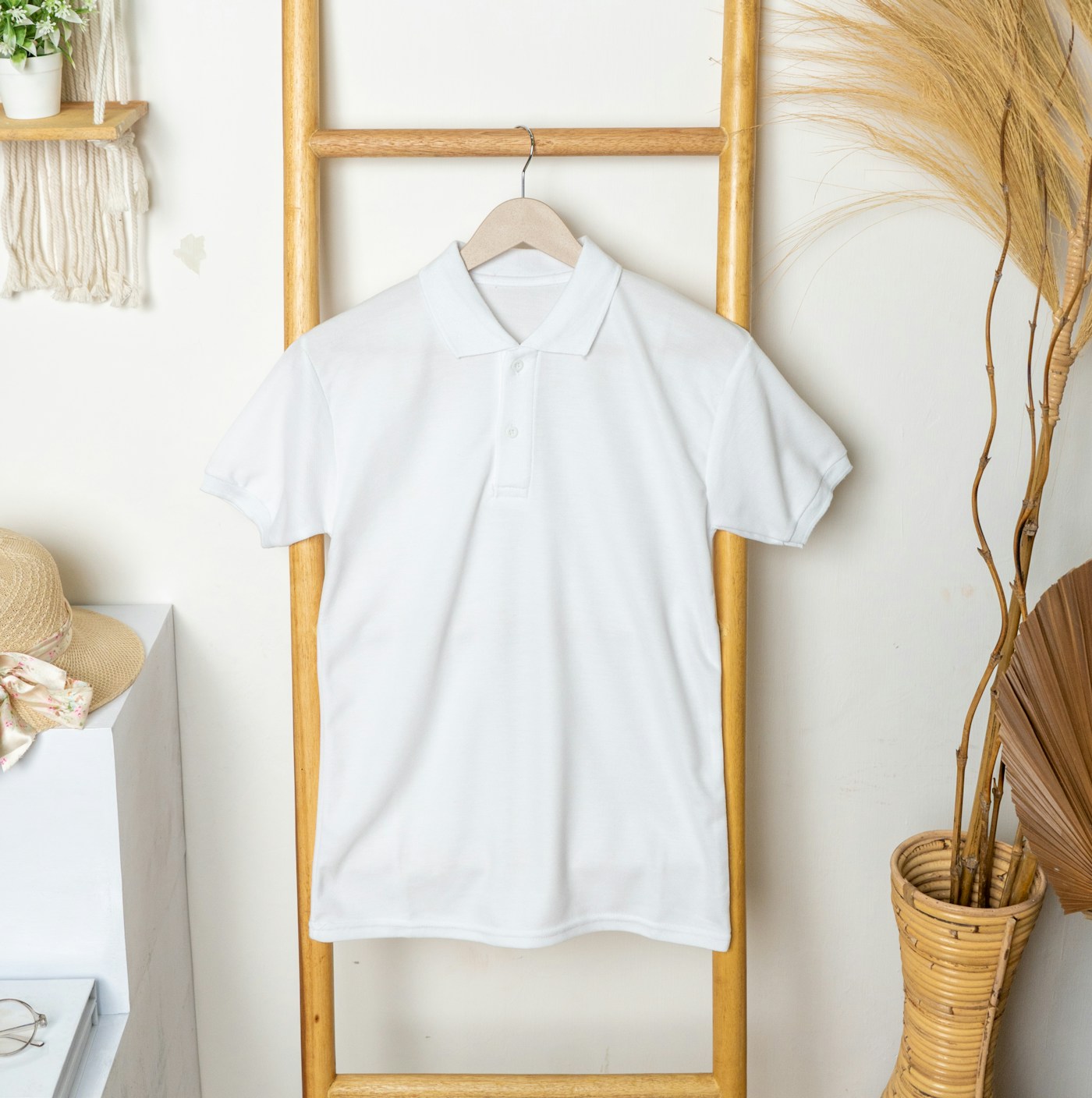
The blank: Gildan 8800 DryBlend
Our stock polo is the Gildan 8800 DryBlend Adult Jersey Polo: 52% cotton / 48% polyester at 6.0 oz/yd². The blend is close to an even split, which is the useful middle — enough cotton to feel like a shirt rather than sportswear, enough polyester to wick and to come out of a wash without needing an iron.
The construction details that matter day to day: a welt-knit collar and cuffs, which is what stops a polo collar going wavy after a month; a clean three-button placket with dyed-to-match buttons; and a double-needle hem. The body is seamless, which is part of why it decorates cleanly.
Two honest caveats on fabric. Sport Grey is 90/10 and Graphite Heather is 62/38rather than the standard 52/48 — heather shades are made differently, which is normal across the industry but worth knowing if you are matching a spec sheet. And the fit runs roomy, true to size with a classic cut. For a staff order where nobody tries anything on, roomy is generally forgiving; for a retail-fit look it is not what you want.
Why a polo is a left-chest garment
This is the constraint that surprises people, so it is worth being direct: on our stock polo, decoration goes on the left chest.
The reason is physical. A polo has no flat front panel. Down the middle there is a placket with buttons standing proud of the fabric, and above it a collar with a seam. A screen cannot make even contact across a placket, and a heat press cannot apply even pressure over buttons. Anything centred is interrupted by hardware.
So the design language of a polo is different from a tee’s. Where a t-shirt can carry an 11-inch graphic across the chest, a polo carries a 3.5-inch left-chest mark— that is our standard chest width, and it is the same number on a shirt, a hoodie or a polo. Which means the logo has to work small. A wordmark with a tagline under it usually does not; the tagline is the first thing to go.
If your brief genuinely needs a big front graphic, a polo is the wrong garment and a tee or a crewneck is the right one. We would rather tell you that than shrink your artwork until it stops reading.
Embroidery or print on a polo
On a polo, embroidery is usually the right answer, and for once the reason is not durability alone.
A polo is bought to look professional. Stitched thread reads as finished and considered; a printed logo on a collared shirt can read as a promotional giveaway, which is the opposite of the point. Embroidery also survives commercial laundering better than print, which matters for hospitality and clinic staff whose shirts get washed hot and often.
The cost structure is different from printing. Embroidery needs digitizing— a one-time conversion of your logo into a stitch file, deciding stitch types, directions and densities. It is a setup you pay once and then reuse on every future order, which is why embroidery gets better value the more times you reorder rather than the more pieces you buy at once. Our digitizing explainer covers what the file is and why your logo is not already one.
Embroidery’s limit is fine detail. Below roughly a quarter inch, stitched letterforms fill in and stop being legible — and on a 3.5-inch chest mark, a lot of logos have elements that small. That is the case where print wins on a polo: gradient-heavy or very detailed artwork that simply cannot be stitched at that size. Embroidery versus a printed logo on polos walks through the comparison with examples.
Who orders polos, and what they usually get wrong
Polos are the default staff garment across a lot of industries, and the mistakes repeat.
- Restaurants and cafés.Front-of-house polos take a beating and get washed hot. Embroider, choose a dark colour, and expect to reorder — which is why keeping the stitch file on record matters. See restaurant uniforms.
- Clinics and offices. The most common error is ordering one size curve for a mixed team. The 8800 runs roomy, which helps, but ask people rather than guessing.
- Golf days and charity tournaments.These are deadline orders with a fixed date and usually a sponsor logo involved. Order early and get the sponsor’s artwork in writing — sponsor files arrive in whatever state the sponsor keeps them.
- Trades and service companies. Polos for the office, workwear for the crew. One logo, two garment types, one order.
- Reorders as staff turn over. The real test of a uniform supplier. Because digitizing is a one-time setup, a three-shirt reorder in March matches the forty you bought in October.
Cost, quantity breaks and timing
A polo costs more per piece than a t-shirt because the blank costs more — there is a collar, a placket, buttons and a heavier knit in it. Embroidery is priced by stitch count rather than by ink colour, so a dense logo costs more to stitch than a simple one, and the digitizing is a separate one-time line.
In the online design studio the per-piece price drops at 12, 24, 50 and 100 pieces, and every colour of the same garment in one order counts toward the same price break. For staff orders that is the clause to remember: navy for the office and white for the tournament are one quantity, not two orders. Orders in the hundreds are usually quoted directly through the free quote form, and they get the same free mockup and human designer check as a single shirt.
Standard turnaround on clothing is 1–2 weeks.Most apparel orders can rush — 4–5 business days or 1–3 business days, priced at checkout — and every order shows the dates it will be ready before you pay. Embroidered orders on a first run include the digitizing step, so if you have a hard date, say the date.
You can put your logo on a real polo in the free design studio with no account and no deposit, see it at left-chest scale, and order online. And every order is reviewed by a human designer before it goes to press — a person checks artwork resolution, colour, sizing and placement, and either fixes the file or tells you what is wrong. On a 3.5-inch mark that check earns its keep, because the usual verdict is that something in the logo has to get bigger.
Colour, sun and the sweat problem
Polos get worn in the two situations most likely to make a garment look bad: a hot day outdoors, and a full shift on your feet. Colour choice is what decides how that goes.
Mid-tone solids — navy, charcoal, forest, burgundy — are the safe choices, because they hide both sweat and the general wear of a working day. The colours that cause complaints are light heathers and mid greys, which show sweat marks at the chest and underarms more visibly than anything else, and pure white, which is sharp for a tournament and unforgiving in a restaurant. If the shirt is for staff who will wear it hard, that is worth more than matching the brand palette exactly.
For a golf day specifically, the fabric is doing the work. A 52/48 cotton-poly knit moves moisture far better than heavy all-cotton piqué, which is why the DryBlend suits four hours in the sun. If the tournament is in July and the shirts are for players rather than volunteers, a full polyester performance knit is worth asking about when you quote.
Mixed teams, fit and commercial laundering
Two practical issues come up on nearly every polo order, and neither is about decoration.
Fit across a mixed team.The 8800 is a classic unisex cut that runs roomy. For most staff orders that is forgiving, but it does not fit everyone the same way, and a roomy unisex polo is a different experience depending on the body wearing it. If that matters for your team, raise it when you quote rather than after — ask about a women’s-cut option and we will tell you honestly what is available for your quantity and colour rather than assuming the unisex blank is fine for everybody.
Commercial laundering.Hospitality and clinic polos get washed hot and often, which is the hardest life a decorated garment has. It is the main argument for embroidery: thread survives repeated hot washes where a surface print eventually gives up. If the shirts go through a commercial service rather than a home machine, say so when you order — it changes our recommendation, and it is the difference between a uniform that lasts a year and one that looks tired in three months.
For home washing the usual routine applies: cold water, inside out, and avoid the highest dryer heat. The collar is the part that shows age first on any polo, and heat is what relaxes the welt knit that keeps it standing up.
Frequently asked questions
Is a golf shirt the same as a polo shirt?
Yes — two names for the same garment, a knit shirt with a collar and a short buttoned placket. What makes a shirt suit a golf day is the fabric rather than the cut: a cotton-poly or polyester knit that moves moisture, instead of heavy all-cotton piqué. Our stock polo is a 52/48 DryBlend for that reason, so one shirt covers the office and the tournament.
Can you print a large design on the front of a polo?
No, and it is a physical limit rather than a policy. A polo has no flat front panel — the placket has buttons standing proud of the fabric and the collar adds a seam, so a screen cannot make even contact and a press cannot apply even pressure. Decoration goes on the left chest at our standard 3.5 inches. If you need a big front graphic, a tee or a crewneck is the right garment.
Should I embroider or print my logo on polos?
Embroider, in most cases. Stitched thread reads as professional on a collared shirt where a print can read as promotional, and it survives commercial laundering better. The exception is fine detail: below roughly a quarter inch stitched letters fill in, so a very detailed or gradient-heavy logo at 3.5 inches is a print job. We will tell you which one your artwork suits before you pay.
What is digitizing and do I have to pay it again on a reorder?
Digitizing converts your logo into a stitch file — embroidery machines read stitch paths, not images, so your logo is not already one. It is a one-time setup per design, and you do not pay it again on reorders. That is why embroidery gets better value the more often you reorder, which suits uniforms where staff turn over.
How does the Gildan 8800 fit?
It runs roomy and true to size with a classic cut. For a staff order where nobody tries anything on, that is usually forgiving. If you want a closer retail fit it is not the right blank, and it is worth saying so before you send a size count out to a team.
How many polos do I need for bulk pricing?
The per-piece price drops at 12, 24, 50 and 100 pieces in the online design studio, and every colour of the same garment in one order counts toward the same break — so navy for the office and white for a tournament price as one quantity. Orders in the hundreds are quoted directly and get the same free mockup and designer check.
Design it yourself. A human designer still checks every order.
Our free studio gives you the price and the mockup in the browser. What it doesn't do is print your file blindly — every order is reviewed by a real designer before it reaches the press.
- Step 1You design it — free
Upload your logo, drop it on a real garment, set the size and placement, pick colours and quantities. No account, no deposit, no waiting on a reply.
- Step 2A human designer checks it
Before anything prints, one of our designers opens your file and checks resolution, colours, sizing and placement. If it won't print well, we fix it or tell you exactly what's wrong — a person, not an automated preflight.
- Step 3You approve, then we print
You get the corrected mockup back on the actual product. Nothing goes to press until you say yes — then it's ready in 1–2 weeks, or in 1–3 business days with a rush.
Put your logo on a real polo
See your mark at left-chest scale on a Gildan 8800, pick colours and sizes, and watch the per-piece price drop at 12, 24, 50 and 100. Embroidery digitizing is a one-time setup you reuse on every reorder.
Every order is reviewed by a human designer before it goes to press. A person checks artwork resolution, colour, sizing and placement, and either fixes the file or tells the customer what is wrong — it is not an automated preflight.