
Printing 1,000 Custom T-Shirts or Hoodies: What It Costs, How It Is Scheduled and How It Reaches Ottawa, Toronto and Montreal
What 1,000 custom t-shirts or hoodies really cost, and how a thousand-piece order works: one blank in one colour, printed in one run, with the same free mockup and human designer check as a single shirt. See which design choices move the per-piece price at that size, how a large run is booked into the shop calendar, and how the boxes reach Ottawa, Toronto and Montreal.
- Typical cost
- A screen-printed t-shirt runs roughly $12–$18 CAD each at 50 pieces and drops under $10 each in the hundreds. Full-colour DTF sits slightly higher per piece with no setup fee. Every quote is free and includes a mockup. At 1,000 pieces, ink colours, print locations, the blank and the 2XL-and-up share move the price more than the last few hundred pieces do.
- Volume pricing
- Large orders get volume pricing. In the online design studio the per-piece price drops at 12, 24, 50 and 100 pieces, and every colour of the same garment in one order counts toward the same price break. Orders in the hundreds are usually screen printed and quoted directly — through the free quote form, by email or by phone — and a large order gets the same free mockup and human designer check as a single shirt.
- Tees vs hoodies
- A fleece hoodie costs more per piece than a tee. Each garment counts toward its own price break, so 700 tees and 300 hoodies count as a 700-piece tee run and a 300-piece hoodie run, while every colour of the same garment in one order counts toward the same price break.
- One run, one colour
- A thousand of one blank in one colour across a full size run has to exist in stock, and we confirm it at quote time against your size breakdown. One run gives one consistent colour across all thousand shirts.
- Schedule
- Standard turnaround on clothing is 1–2 weeks. Most apparel orders can rush — 4–5 business days or 1–3 business days, priced at checkout — and every order shows the dates it will be ready before you pay. A 1,000-piece run is booked into the shop calendar when the order is confirmed: confirm your date when you book, and call 613-666-9292 before counting on a rush.
- Approval and payment
- Every order gets a free digital mockup on the actual product before any payment. Nothing prints until the customer approves it. Every order is reviewed by a human designer before it goes to press. Payment is by card or Interac e-Transfer once the mockup is approved.
- Delivery
- Printed and decorated in-house in Ottawa, Ontario. Shipping Canada-wide, including the Greater Toronto Area and Greater Montreal, typically arriving 1–2 days after the order leaves the shop. Shipping is quoted for your postal code and shown before you pay. Splitting the run across addresses: tell us at quote time — it changes how the run is sorted and boxed, and each address is quoted for shipping.
What a 1,000-piece order really involves
A thousand custom t-shirts or hoodies is where an apparel order stops being a shopping cart and becomes a small project, with a stock check, a place in the shop calendar and a delivery plan. The buyers are usually organizing something large. Say a company wants every employee in its offices in Kanata North, downtown Toronto and Montreal’s Saint-Laurent borough in the same anniversary shirt, an orientation committee is dressing an incoming class, or a charity walk has a thousand registrants. Nobody buys a thousand shirts for the sake of the number. They want a crowd that reads as one group.
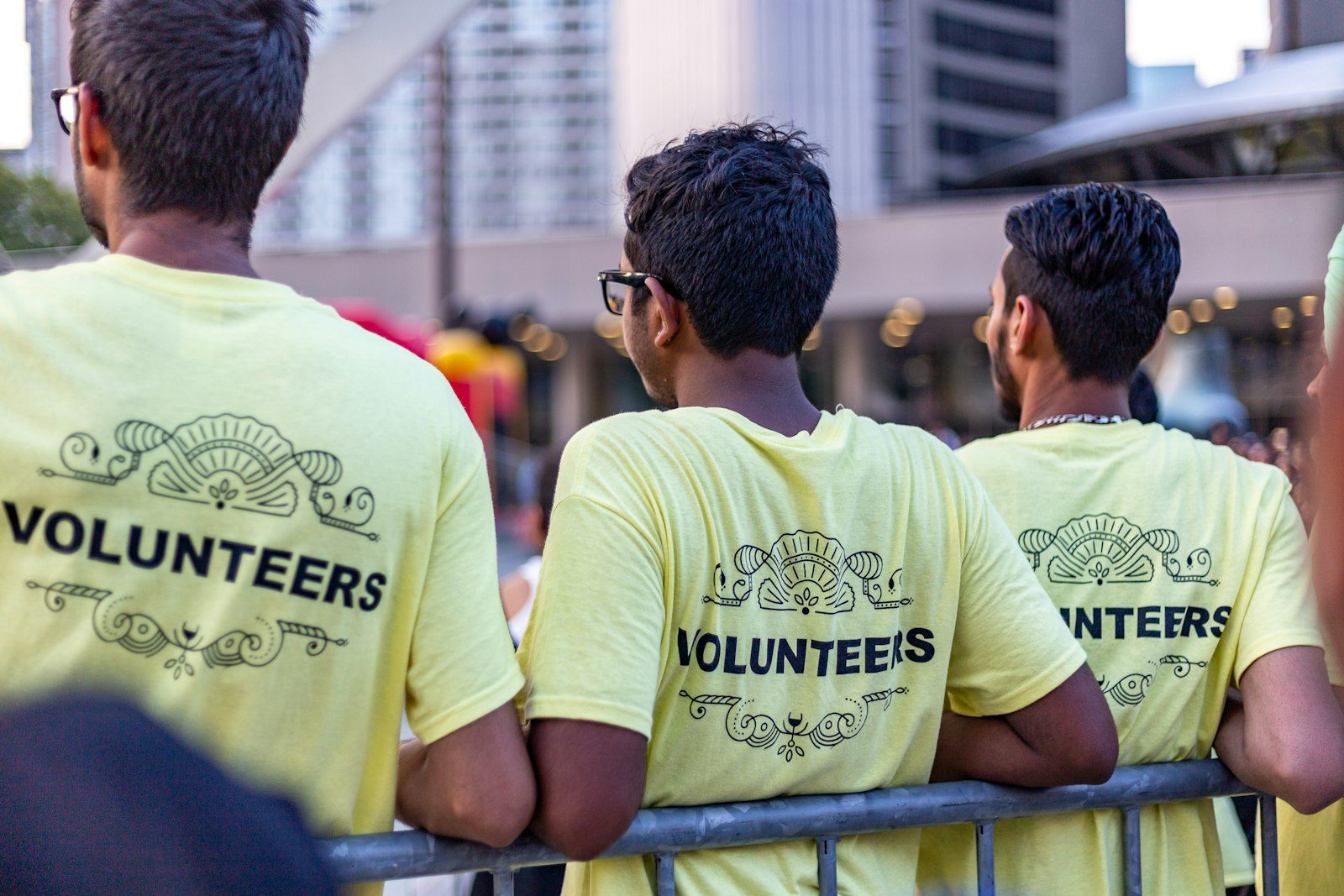
That is the real case for one run. A thousand shirts printed together share one blank, one colour, one set of screens and one approved mockup. The same thousand bought as four orders of 250 over a year are four purchases that may not match: a slightly different shade of the same colour, a blank discontinued before the third order, a print set up again a few millimetres higher. One run also puts the whole quantity on one quote, which is where the per-piece price is at its lowest.
This guide starts where the “500 and up” band of our bulk t-shirt printing guide for the GTA stops, and goes deeper on a thousand: the price, the garment, sourcing, approval, scheduling and delivery to all three cities. The smaller quantity bands are covered in bulk t-shirt printing in Ottawa, and if you came looking for wholesale pricing, what wholesale means for custom t-shirts explains how the word applies to decorated shirts.
How much do 1,000 custom t-shirts cost?
Start from the anchor. A screen-printed t-shirt runs roughly $12–$18 CAD each at 50 pieces and drops under $10 each in the hundreds. Full-colour DTF sits slightly higher per piece with no setup fee. Every quote is free and includes a mockup. A thousand pieces sits past the steep part of that curve. In screen printing, the setup work of making a screen for each ink colour, registering the screens and mixing the ink is spread across so many shirts that it barely shows in the per-piece price. What is left is what happens to every single shirt: the blank it is printed on, each layer of ink, and each time it is loaded for another print location.
That is why, at a thousand, the design choices move the price more than the last few hundred pieces do. The table shows the levers and which way each one pushes the per-piece price.
| Price lever | Lower per piece | Higher per piece | Why it matters at 1,000 |
|---|---|---|---|
| Ink colours | One or two spot colours | Four or more colours, or photographic art | Each colour is another screen and another layer of ink on every shirt |
| Print locations | Front only, or a left chest | Front, full back and a sleeve | Each location is its own setup, and every shirt is loaded again |
| Shirt colour | White or a light shirt | Black, navy or another dark shirt | A bright print on a dark shirt usually needs a white underbase first |
| The blank | A standard cotton tee | A heavier tee or a performance polyester blank | You buy the blank a thousand times, so a small step up is multiplied by 1,000 |
| Size mix | Mostly S to XL | A large 2XL-and-up share | 2XL and larger carry a small upcharge that rises with each size |
| Versions | One design for everyone | A version per office, or French and English | In screen printing every separate design is its own setup |
| Personalization | The same print on every shirt | A name or number on each shirt | Individual names and numbers add a per-shirt surcharge |
| Garment | T-shirts | Fleece hoodies, or embroidery | Fleece costs more than a tee; embroidery costs more per piece than print |
Two of those levers are easy to underestimate. A bright print on a black or navy shirt usually needs a white underbase printed first so the colours on top stay opaque; without enough white underneath, colours look dull and white looks grey, which how to tell quality shirt printing explains. And on a thousand shirts, even a modest 2XL-and-up share is a lot of shirts, each carrying a small upcharge that rises with each size, because the bigger blanks cost more to buy.
Large orders get volume pricing. In the online design studio the per-piece price drops at 12, 24, 50 and 100 pieces, and every colour of the same garment in one order counts toward the same price break. Orders in the hundreds are usually screen printed and quoted directly — through the free quote form, by email or by phone — and a large order gets the same free mockup and human designer check as a single shirt. The real number for a thousand comes from a quote on your design and your blank, so send it through the free quote form. The per-piece arithmetic and the fee questions worth asking any shop are in custom t-shirt printing cost in Canada, and the method itself is on our screen printing page.
1,000 tees, 1,000 hoodies or a mix: what changes?
After the design, the garment is the biggest decision on a thousand-piece order. A custom t-shirt is a unisex cut in cotton or polyester, and the studio builds it from XS to 5XL. A pullover custom hoodie is a 50/50 cotton-poly fleece by default, or a polyester performance hoodie, from S to 3XL in the studio; sizes outside those ranges go through the quote form. Fleece is a heavier garment that costs more to buy, so the same print costs more per piece on a hoodie than on a tee before anything else changes.
Each garment counts toward its own price break, and every colour of the same garment in one order counts toward the same price break. A thousand tees split between black, navy and heather grey still count as a thousand tees. A 700/300 split between tees and hoodies counts as 700 tees and 300 hoodies: two runs on two garments, each at its own break. One catch with mixed shirt colours is that a logo printed in black on the grey shirts needs a different ink on the black ones, and in screen printing each ink colour is its own screen.
| Order | Per-piece cost | Price break | Suits | Plan for |
|---|---|---|---|---|
| 1,000 tees | The lowest of the three | One 1,000-piece tee run, every shirt colour pooled | Summer events, giveaways, all-staff days | The size curve and the 2XL-and-up share |
| 1,000 hoodies | The highest: fleece costs more than a tee | One 1,000-piece hoodie run | Fall and winter, orientation, team gear people keep | More cartons; the front pocket sets how low the print sits; S–3XL in the studio |
| 700 tees + 300 hoodies | Tees at the tee price, hoodies at the hoodie price | Two breaks: 700 tees and 300 hoodies, each counted on its own | A tee for everyone, a hoodie for staff, volunteers or a committee | Two size breakdowns, and one design that works on both garments |
The mix is often the smartest of the three: everyone gets a tee for the day, and the people who will wear the shirt all winter get a hoodie in the same colour with the same mark. Hoodies can also be embroidered, which costs more per piece than print but suits a left-chest logo on a smaller group. The hoodie print placement guide covers where a print sits on a hoodie, bulk hoodie printing in Toronto covers a hoodie-only run for the GTA, and you can try your logo on a hoodie in the studio before you ask for the quote.
Can 1,000 of one shirt be sourced in one colour?
Before a single shirt is printed, a thousand of one blank, in one colour, across a full size run has to exist in stock. Popular colours in the middle sizes usually do. The edges are where a large order runs into trouble: an uncommon heather in 4XL, a fashion colour in XS, the polyester version of a tee in a shade that mostly sells in cotton. We confirm stock at quote time, against your size breakdown, before you approve or pay anything, so a gap shows up while there is still room to choose a neighbouring shade or a different blank.
Colour consistency is the quiet reason to order in one run. Fabric is dyed in batches, and two batches of the same named colour can come out slightly different; the textile trade tracks each batch as a dye lot. One run gives one consistent colour across all thousand shirts. The same quantity bought as several orders months apart can sit side by side in a team photo and not quite match, and a blank that is in production this spring can be discontinued by the fall.
The size breakdown is what we check stock against, so build it before you ask for a quote. How many of each size to order gives starting curves for 100, 250, 500 and 1,000 pieces. Then treat the count as frozen once you approve: the blanks are bought against it, and forty more mediums after the run has printed are a second job with its own setup.
How do you approve a design that prints a thousand times?
Every order gets a free digital mockup on the actual product before any payment. Nothing prints until the customer approves it. Every order is reviewed by a human designer before it goes to press. A person checks artwork resolution, colour, sizing and placement, and either fixes the file or tells the customer what is wrong — it is not an automated preflight. A thousand-piece run gets that check exactly as a single shirt does, and it matters more at this size: a typo approved once is printed a thousand times.
Ask how the print sits across the size range. A mockup shows one shirt, and a print sized for a large can look lost on a 4XL and crowd an XS. On a run from XS to 5XL, one print size has to work at both ends, or the small sizes get a second, smaller print, which in screen printing is a second set of screens. Bring each brand colour as its Pantone reference, since spot colours in a screen print can be matched to it. A blurry PNG is a fine place to start: the designer fixes it, and our vectorization service redraws a logo as clean vector art.
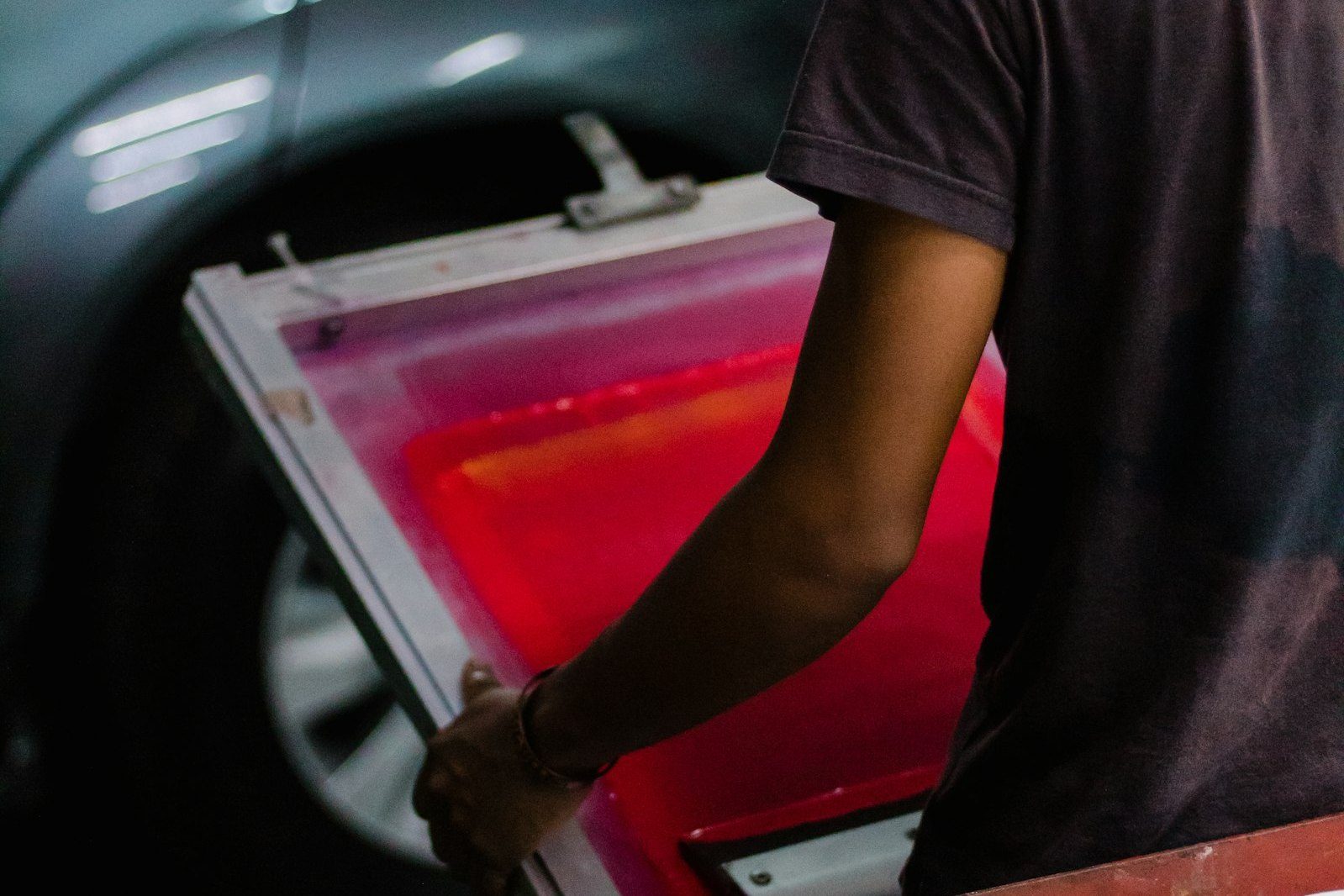
If the design is untested — a new logo, a garment you have never ordered, a shirt colour nobody has seen in person — ask whether a small first batch makes sense before the balance. Two runs mean two setups, so it costs more in total, but a real shirt is in your hands before the rest are printed. Customers can design their own product free at yayaprints.ca/mockup-creator — upload a logo, place it on a real garment, add print-quality text, choose colours and sizes, and order online without emailing or phoning anyone. For a thousand pieces, build the design in the studio to see it on the real shirt, then send it for a direct quote.
How is a 1,000-piece run scheduled?
Standard turnaround on clothing is 1–2 weeks. Most apparel orders can rush — 4–5 business days or 1–3 business days, priced at checkout — and every order shows the dates it will be ready before you pay. For a thousand pieces, read the standard schedule as the starting point. A run this size is booked into the shop calendar when the order is confirmed, meaning the mockup is approved and the order is paid, so confirm your date when you book rather than assuming it.
The 1–3 business day tier is limited to smaller runs, and an order in the hundreds should be planned on the standard 1–2 week schedule. Rushing a thousand pieces is a conversation, not a checkbox: call 613-666-9292 before counting on it, and you will get a straight answer about whether your date works. Large runs go well when they are planned, and they are planned backwards from the day the shirts are handed out.
The slow part of a thousand-piece order is rarely the printing. It is everything before the order is confirmed: collecting sizes from a thousand people, getting a design signed off by a committee or a marketing team, agreeing on one shirt colour. Work backwards from the hand-out date: delivery, typically arriving 1–2 days after the order leaves the shop; the production dates you confirmed when you booked; mockup approval and payment; and before all of it, your own deadline for final sizes and final artwork. An orientation week in early September means sizes and artwork settled in the summer, and a January kickoff in Ottawa means a design approved before the holidays. How to organize a group apparel order covers the size collection that eats most of that time.
How do 1,000 shirts reach Ottawa, Toronto and Montreal?
All thousand shirts come out of one shop, and that shapes how they travel. Printed and decorated in-house in Ottawa, Ontario. Nothing is drop-shipped from overseas, so there are no cross-border customs holds or surprise duties. Shipping Canada-wide, including the Greater Toronto Area and Greater Montreal, typically arriving 1–2 days after the order leaves the shop. Montreal is east along the 417 and Highway 40, and Toronto is down the 416 and the 401; both get the same courier service from the shop, and shipping is quoted for your postal code and shown before you pay.
A thousand shirts is a lot of cartons, and more again if they are hoodies, so ship to a staffed address with room to receive them: an office with a receiving desk, a loading dock, a school office during term. Not a home porch, and not a venue on the morning of the event. Someone has to sign for the boxes, count them and keep them dry until the hand-out. In Ottawa, customers can ask about picking up their order — ask when you order. In Toronto and Montreal there is no storefront, counter, pickup or delivery van: everything ships from Ottawa by courier.
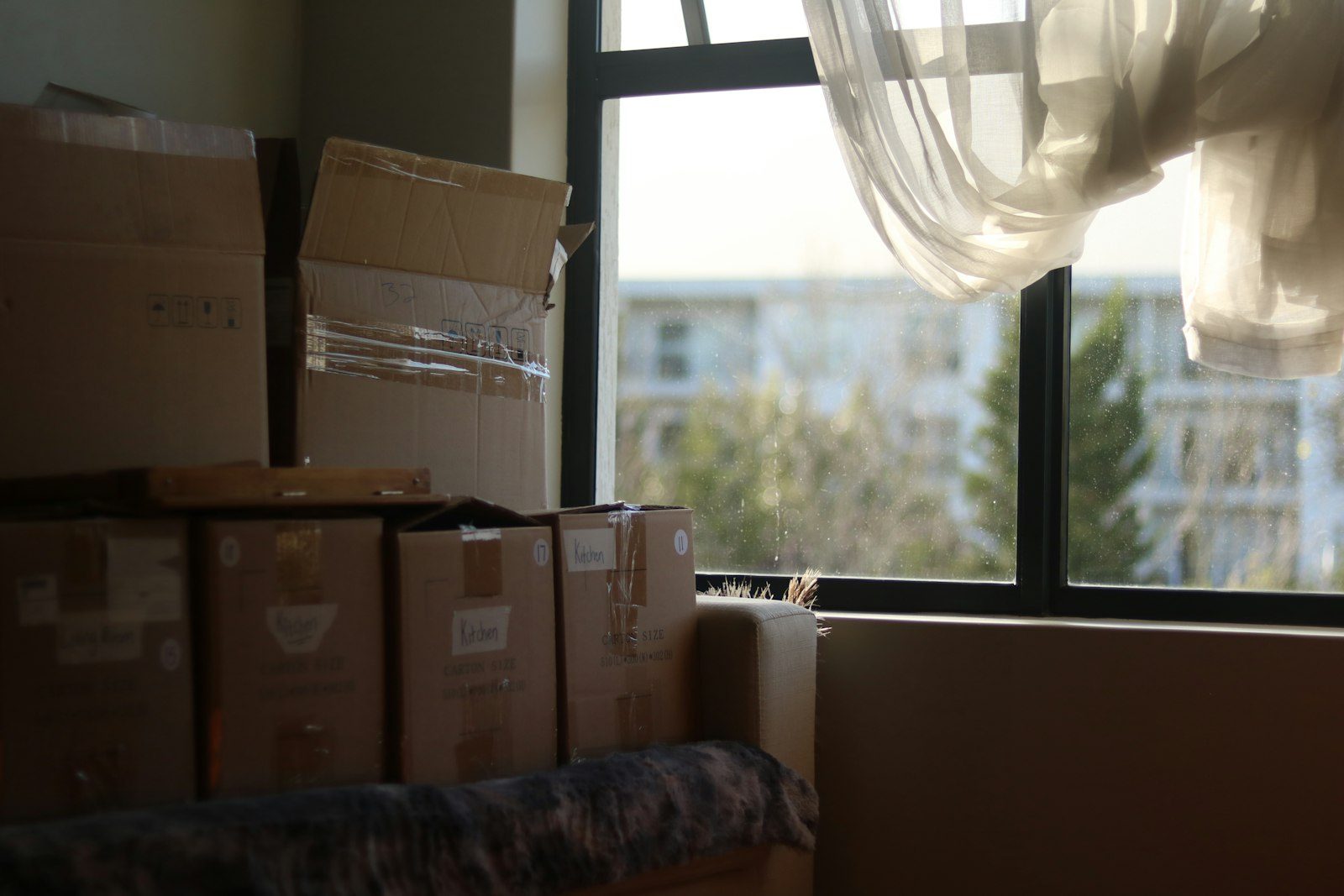
A thousand-piece order is often several deliveries in one: a head office, two branches, a campus. If your run goes to addresses in Ottawa, Toronto and Montreal, tell us at quote time — it changes how the run is sorted and boxed, and each address is quoted for shipping. One apparel order for offices in all three cities walks through that order end to end, and shipping custom apparel across Canada covers transit and packing. Montreal buyers searching for sérigraphie will find the method explained for their city in screen printing in Montreal.
When is a smaller run or DTF the better order?
A thousand in one run is the right order when the design is settled, the count is real and the shirts are needed together. When one of those is missing, a smaller order is usually smarter, and the shop is set up for it. No minimum on DTF and DTG — we will print a single shirt. Screen printing starts around 6 pieces and becomes the best value past roughly 24–50 pieces.
The classic miss is a headcount mistaken for a size list. If three hundred of the thousand are for people who have not registered yet, print the seven hundred you can size and plan a second run for the rest: a second run is a second setup, but it costs less than three hundred shirts in the wrong sizes sitting in a back room. The other miss is a design where every shirt is different. Individual names and numbers can be added per shirt, at a per-shirt surcharge, and a photographic, many-colour design may suit DTF better than screens. Full-colour DTF sits slightly higher per piece with no setup fee, and the number of colours does not change its price.
The two methods also combine well. Screen print the thousand identical shirts, then print the few dozen variants — staff, volunteers, a role on the back — by DTF on the same blank, so nobody pays for a second set of screens to make twelve shirts. The full comparison is in DTF vs screen printing.
What to send for a 1,000-piece quote, and how payment works
A quote for a thousand comes back accurate when the request is complete. Send these six things together:
- The garment and colour, and the total for each garment if you are mixing tees and hoodies.
- The size breakdown, built with the bulk size breakdown guide rather than guessed from a headcount.
- The artwork, in whatever form you have it; the designer handles the rest.
- Print locations and ink colours, with Pantone references for brand colours.
- Every delivery address with its postal code, and how the run splits between them.
- The hand-out date, so the schedule is checked against it when you book.
Send them through the free quote form or whichever channel suits you. Phone 613-666-YAYA (613-666-9292), WhatsApp the same number at wa.me/16136669292, email order@yayaprints.ca, or order online at yayaprints.ca. We serve customers in English and French.
Payment is by card or Interac e-Transfer, after the mockup is approved, and shipping is quoted for your postal code and shown before you pay. Once the order is paid it is confirmed, and that is the moment the run is booked into the shop calendar.
When a thousand shirts arrive: count, store and record the reorder
Open every carton and count against the packing list before anything is handed out, by size and not just in total. A shortfall found the day the boxes arrive is a phone call; a shortfall found at the hand-out table is a line of people without shirts. Pull a few shirts from each size and check the print: clean edges, even coverage, and a gentle stretch to see that the ink moves with the fabric, the checks our print quality guide walks through. If a count or a print looks wrong, email photos and the packing list to order@yayaprints.ca while every carton is still in one place.
Then store them flat and dry until the hand-out. Keep the cartons closed, off a concrete floor and away from radiators, sunny windows and any basement that takes on water in the spring thaw. Shirts kept flat in closed cartons come out ready to hand out; shirts dumped into bins come out creased, and a damp corner can leave a musty smell that only a wash removes.
Last, write down what you ordered while the box is still open: the blank’s brand, style and colour name, the print size and position for each location, the ink colours or Pantone references, and the size breakdown, plus which sizes ran out first. Keep two unworn shirts from the run as the reference. That is everything a reorder needs, and how to reorder company uniforms shows how to turn the next thousand into one email.
Frequently asked questions
How much do 1,000 custom t-shirts cost?
A screen-printed t-shirt runs roughly $12–$18 CAD each at 50 pieces and drops under $10 each in the hundreds. Full-colour DTF sits slightly higher per piece with no setup fee. Every quote is free and includes a mockup. At 1,000 pieces the setup is spread so thin that the design sets the price: the number of ink colours, the print locations, the blank, a dark or light shirt and the share of 2XL-and-up sizes. For the real number, send the design and size breakdown through the free quote form.
Is ordering 1,000 shirts much cheaper per piece than 500?
Cheaper, but by less than most buyers expect. The steep part of the price curve runs from a few dozen pieces into the low hundreds, while the setup is still being spread across more shirts. By 500 the setup is a small share of each shirt, so the last few hundred pieces move the per-piece price less than the design does: dropping an ink colour or a second print location usually saves more. Order the quantity you can actually size and hand out, not a round number.
Do 1,000 hoodies cost the same as 1,000 t-shirts?
No. A fleece hoodie is a heavier, more expensive garment than a tee, so the same print costs more per piece on a hoodie. Each garment counts toward its own price break, and every colour of the same garment in one order counts toward the same price break, so 700 tees and 300 hoodies are two runs, each at its own break. Hoodies can also be embroidered, which costs more per piece than print.
How long does it take to print 1,000 custom shirts?
Standard turnaround on clothing is 1–2 weeks. Most apparel orders can rush — 4–5 business days or 1–3 business days, priced at checkout — and every order shows the dates it will be ready before you pay. For a thousand pieces, plan on the standard schedule: the run is booked into the shop calendar when the order is confirmed, so confirm your date when you book. The 1–3 business day tier is limited to smaller runs, and rushing a large run is a conversation — call 613-666-9292 before counting on it.
Can one 1,000-piece order ship to Ottawa, Toronto and Montreal?
Yes — tell us at quote time. It changes how the run is sorted and boxed, and each address is quoted for shipping. Shipping Canada-wide, including the Greater Toronto Area and Greater Montreal, typically arriving 1–2 days after the order leaves the shop. There is no storefront or pickup in Toronto or Montreal; everything ships from Ottawa by courier, and Ottawa customers can ask about pickup when they order. Send each part of the run to a staffed address with room to receive the cartons.
Will all 1,000 shirts be the same colour?
That is the main reason to order them as one run. A thousand of one blank in one colour across a full size run has to exist in stock, and we confirm it at quote time against your size breakdown, before you approve or pay. One run gives one consistent colour across all thousand shirts. Fabric is dyed in batches, so the same quantity bought as several smaller orders months apart can differ slightly in shade, and a blank can be discontinued between orders.
Can I check the design before 1,000 shirts are printed?
Yes. Every order gets a free digital mockup on the actual product before any payment. Nothing prints until the customer approves it. Every order is reviewed by a human designer before it goes to press. On a thousand pieces, ask how the print sits on the smallest and largest sizes in your breakdown, and if the design, garment or shirt colour is untested, ask whether a small first batch makes sense before the balance. Two runs mean two setups, so it costs more in total.
How do I pay for a large custom t-shirt order?
By card or Interac e-Transfer, after the mockup is approved, and shipping is quoted for your postal code and shown before you pay. Orders in the hundreds are usually screen printed and quoted directly — through the free quote form, by email or by phone — and a large order gets the same free mockup and human designer check as a single shirt. Phone 613-666-YAYA (613-666-9292), WhatsApp the same number at wa.me/16136669292, email order@yayaprints.ca, or order online at yayaprints.ca.
Design it yourself. A human designer still checks every order.
Our free studio gives you the price and the mockup in the browser. What it doesn't do is print your file blindly — every order is reviewed by a real designer before it reaches the press.
- Step 1You design it — free
Upload your logo, drop it on a real garment, set the size and placement, pick colours and quantities. No account, no deposit, no waiting on a reply.
- Step 2A human designer checks it
Before anything prints, one of our designers opens your file and checks resolution, colours, sizing and placement. If it won't print well, we fix it or tell you exactly what's wrong — a person, not an automated preflight.
- Step 3You approve, then we print
You get the corrected mockup back on the actual product. Nothing goes to press until you say yes — then it's ready in 1–2 weeks, or in 1–3 business days with a rush.
Put the design on the real shirt before you order a thousand
Build the design on the actual tee or hoodie in the free studio, then send the size breakdown and every delivery address for a quote. Orders in the hundreds are usually screen printed and quoted directly — through the free quote form, by email or by phone — and a large order gets the same free mockup and human designer check as a single shirt.
Every order is reviewed by a human designer before it goes to press. A person checks artwork resolution, colour, sizing and placement, and either fixes the file or tells the customer what is wrong — it is not an automated preflight.