
Wholesale Custom T-Shirts in Ottawa, Toronto and Montreal: What “Wholesale” Really Means When You Need Hundreds of Printed Shirts
Wholesale custom t-shirts can mean blank shirts by the case, decoration sold to other print shops, or volume pricing on finished printed shirts — and only the last one puts hundreds of decorated shirts in a box. Here is what a per-piece price is made of in the hundreds, why buying blanks yourself rarely saves money, how resellers and fundraisers should order, and how one Ottawa shop prints for Toronto and Montreal.
- What “wholesale” means here
- Volume pricing on finished, decorated garments: the blank, the print and the file check in one per-piece price that falls as the count rises. We are not a blank supplier, and we are not a wholesale transfer or gang-sheet supplier.
- Volume pricing
- Large orders get volume pricing. In the online design studio the per-piece price drops at 12, 24, 50 and 100 pieces, and every colour of the same garment in one order counts toward the same price break. Orders in the hundreds are usually screen printed and quoted directly — through the free quote form, by email or by phone — and a large order gets the same free mockup and human designer check as a single shirt.
- Typical cost
- A screen-printed t-shirt runs roughly $12–$18 CAD each at 50 pieces and drops under $10 each in the hundreds. Full-colour DTF sits slightly higher per piece with no setup fee. Every quote is free and includes a mockup.
- How the count pools
- Every colour of the same garment in one order counts toward the same price break, so 6 black and 6 white tees are priced as 12, and youth sizes count with the adult version. Tees and hoodies each count on their own. On a quoted screen-print run, every extra design, print location or ink colour is its own setup.
- Planning a large run
- Standard turnaround on clothing is 1–2 weeks. Plan an order in the hundreds on that standard schedule: a run of many hundreds is booked into the shop calendar when the order is confirmed, so confirm your date when you book rather than assuming it.
- Toronto and Montreal
- Printed and decorated in-house in Ottawa, Ontario. Shipping Canada-wide, including the Greater Toronto Area and Greater Montreal, typically arriving 1–2 days after the order leaves the shop. Shipping is quoted for your postal code and shown before you pay. No storefront or pickup in either city.
- Mockup and designer check
- Every order gets a free digital mockup on the actual product before any payment. Nothing prints until the customer approves it. Every order is reviewed by a human designer before it goes to press. A 500-piece run gets the same check as a single shirt.
What “wholesale custom t-shirts” actually means: three different businesses
Type “wholesale custom t-shirts” into a search bar in Ottawa, Toronto or Montreal and three different kinds of business answer, each sure it is what you meant. In the classic sense, wholesaling means selling goods in bulk to other businesses rather than to the people who use them, and two of the three really are wholesale in that sense: their customers are mostly other decorators. The third is what most people typing that phrase actually want, which is a few hundred finished, printed shirts at a per-piece price that reflects the quantity. That is a different purchase, with different work left on your desk and a different answer to the question of who is responsible when a shirt comes out wrong.
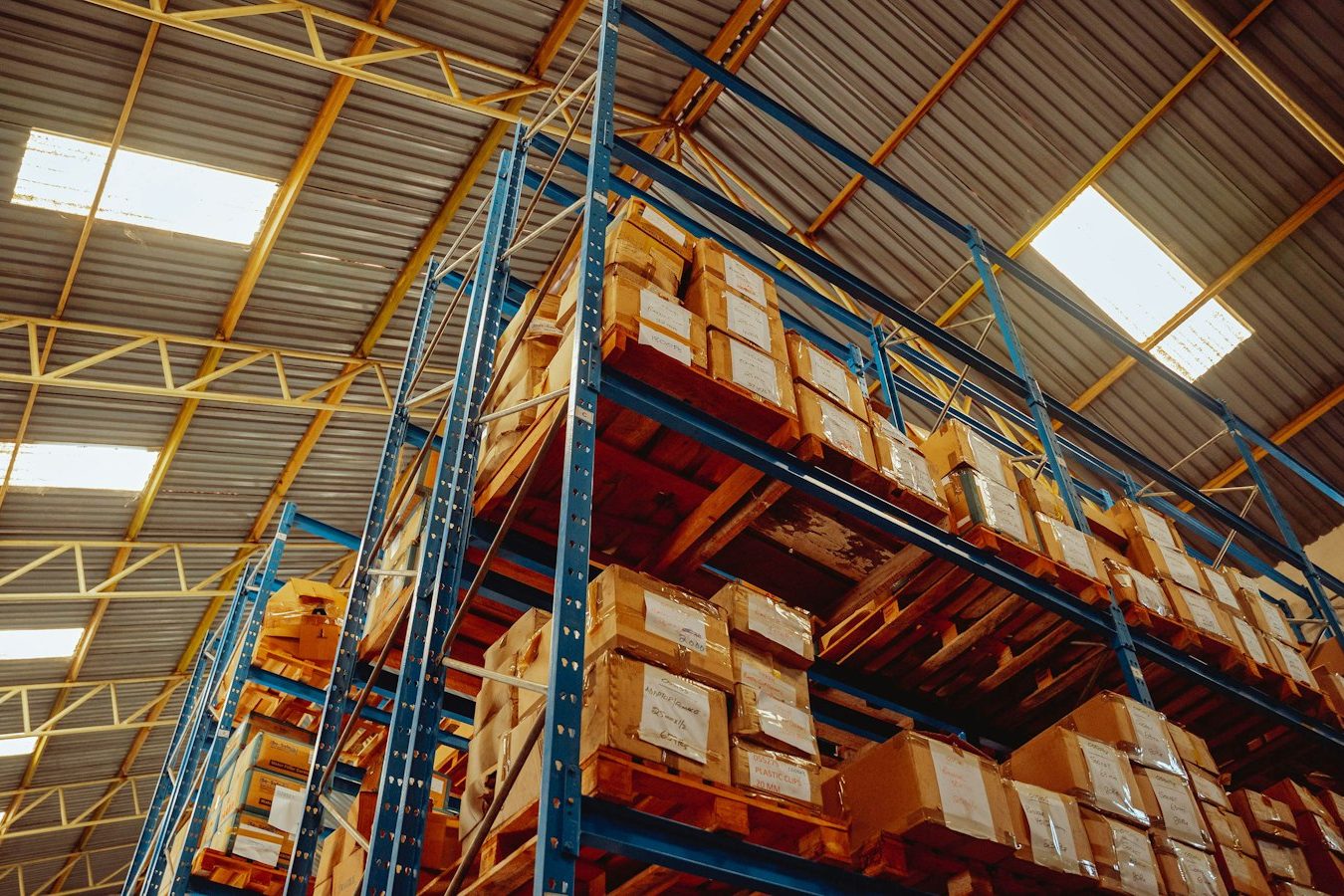
The table sorts the three. Read the “still on you” column before you compare any prices, because the cheapest-looking row is usually the one that leaves the most work, and the most risk, in your hands.
| What people mean | What arrives | What is still on you | Do we sell it? |
|---|---|---|---|
| Blank wholesale | Undecorated shirts from a distributor that sells to the trade, priced best by the full case | Picking case counts by size before you know the sizes, finding a decorator, getting the blanks to them, and the spoilage and leftovers | No |
| Transfer or gang-sheet wholesale | Printed DTF film, often ganged onto large sheets, ready to be heat-pressed by someone else | A heat press, the blanks, pressing every shirt by hand and checking every press | No |
| Volume pricing on finished shirts | Printed, checked and counted shirts in boxes, at a per-piece price that falls as the quantity rises | Approving the mockup and sending the size split | Yes — this is what we sell |
If you run a print shop and you need blanks or film, the first two rows are your suppliers and this article is not for you. If you are the person who needs 300 shirts for a charity run, 500 tees for a merch drop or a thousand for an orientation week, you are shopping for the third row, even if “wholesale” is the word that came to mind. The rest of this guide is about that row: what a custom t-shirt printing price is made of at volume, how it falls as the count climbs, who buys this way, and how an order reaches Ottawa, Toronto or Montreal.
What we are, and what we are not
We are a decorating shop, so the honest answer to “do you sell wholesale?” starts with two noes. We are not a blank supplier: we sell finished, decorated garments, not cases of undecorated shirts. We do not sell film, transfers or printing supplies either, and our own fact sheet puts that in one sentence: “We are not a wholesale transfer or gang-sheet supplier.”
DTF is one of the methods we use to decorate the garments we sell, as the DTF printing page sets out, and what DTF printing is explains the film, the powder and the heat press. But the film never leaves the shop on its own. It goes onto a shirt, the shirt goes into a box, and the box goes to you.
What we do sell is the finished garment, at a price that follows the quantity. Large orders get volume pricing. In the online design studio the per-piece price drops at 12, 24, 50 and 100 pieces, and every colour of the same garment in one order counts toward the same price break. Orders in the hundreds are usually screen printed and quoted directly — through the free quote form, by email or by phone — and a large order gets the same free mockup and human designer check as a single shirt.
The distinction is more than vocabulary, because responsibility follows the product. Buy blanks, and the distributor answers for the blank while nobody answers for the shirt. Buy transfers, and you answer for every press. Buy finished shirts, and one shop answers for the blank, the print, the count and the colour on every piece in the box. That last arrangement is the only one we offer.
What a decorated per-piece price is made of at volume
A finished shirt’s price has three layers: the blank, the decoration, and the setup spread across the run. The full line-by-line, with print locations, ink colours and tax, is in custom t-shirt printing cost in Canada, so this section sticks to one question: how the weight of those three layers shifts as the count climbs from fifty to five hundred.
The setup is the layer that volume eats. In screen printing, every ink colour in every print location is its own screen, and each screen has to be made, lined up on the press and cleaned off afterwards. That work is the same whether 50 shirts follow or 500, which makes it a textbook fixed cost: at 50 pieces each shirt carries a fiftieth of it, at 500 a five-hundredth. It is the main reason the per-piece price falls the way it does, and the reason every extra design, print location or ink colour on a big run shows up in the quote. Each one adds a setup, even when it adds no shirts.
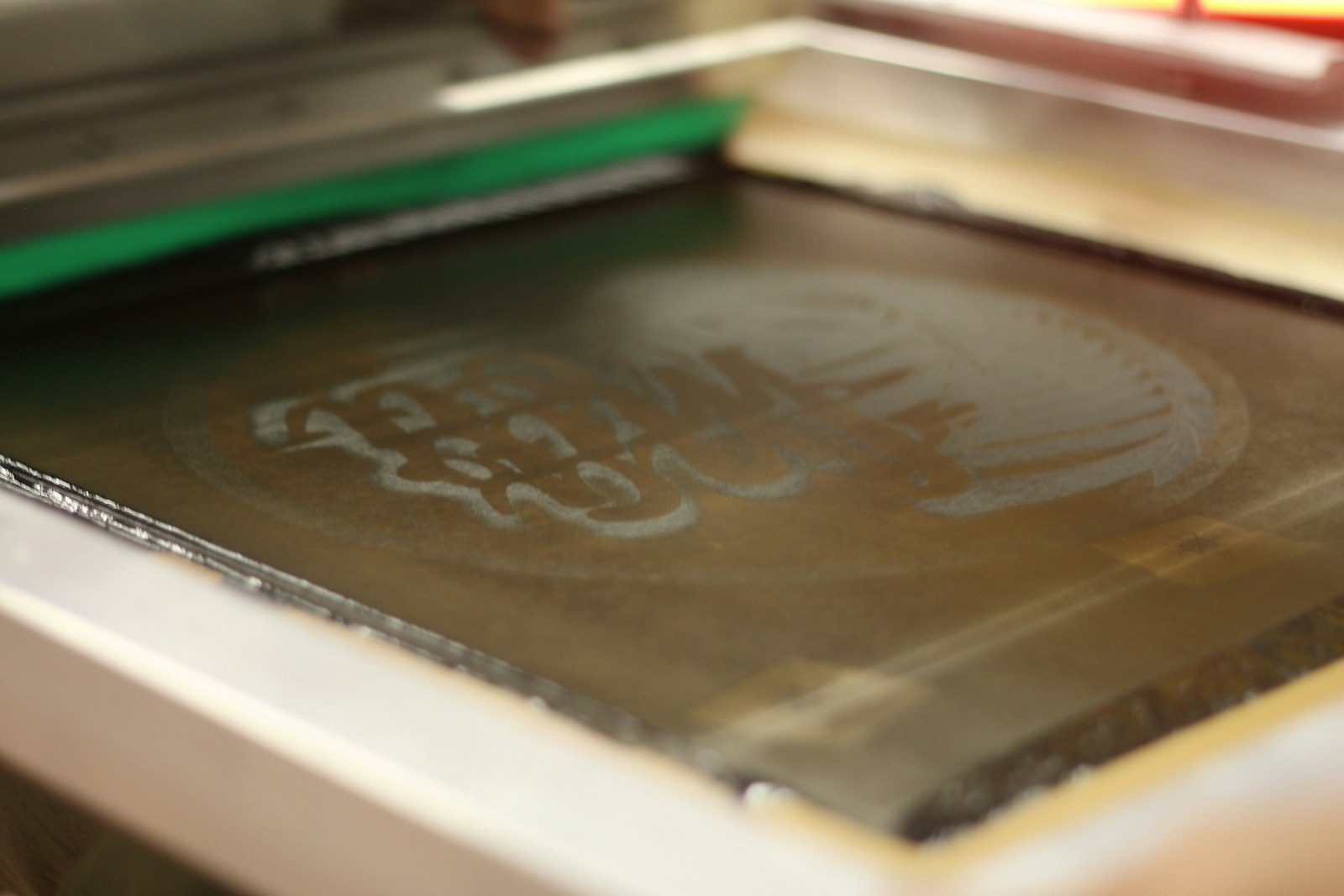
The other two layers shrink far less. The decoration itself (ink, press time, and the labour of loading and unloading every shirt) is paid per piece and gets only somewhat cheaper on a long run. The blank costs what it costs, whether it is the tenth shirt or the four hundredth, and 2XL and larger carry a small per-piece upcharge that rises with each size, because the bigger blanks cost more. So as the setup thins out, the blank becomes the biggest part of what you pay, which is why the choice of blank deserves more of your attention at 500 pieces than it did at 12. A thin tee saves a little on every shirt and costs you every time someone decides not to wear it.
DTF behaves differently. Full-colour DTF sits slightly higher per piece with no setup fee, so there is nothing to spread and its price falls far less steeply with quantity. That is why DTF wins at small counts and on designs with many colours, and screen printing wins once a design of a few spot colours climbs into the hundreds. The honest corollary is that a volume run is the wrong tool for twenty shirts in six designs. No minimum on DTF and DTG — we will print a single shirt. Screen printing starts around 6 pieces and becomes the best value past roughly 24–50 pieces. That end of the scale has its own guide in no-minimum custom t-shirt printing.
The price curve: studio breaks, pooled colours and quoted hundreds
Here is the anchor, stated the way we state it everywhere: a screen-printed t-shirt runs roughly $12–$18 CAD each at 50 pieces and drops under $10 each in the hundreds. Full-colour DTF sits slightly higher per piece with no setup fee. Every quote is free and includes a mockup. The gap between the two figures is the setup layer from the last section, spread thinner, and it is most of the case for ordering a season’s shirts in one run rather than three. One run also means one blank, one colour lot and one set of screens, so the first shirt and the five-hundredth match; three smaller runs months apart are three chances for the black to drift.
Online, the curve moves in steps. In the online design studio the per-piece price drops at 12, 24, 50 and 100 pieces, and the 100-piece break is the lowest price the studio shows. The step is set by the total count of one garment across the whole order, not by colour or by design, which changes how an order should be planned:
| In the order | How it counts toward the price break |
|---|---|
| 6 black tees and 6 white tees | Priced as 12 tees: every colour of the same garment in one order counts toward the same price break |
| 12 adult tees and 12 youth tees | One 24-piece run: youth sizes count with the adult version |
| 60 tees and 40 hoodies | Two counts, 60 and 40: different garments each count on their own |
| 80 French and 70 English tees | One 150-piece count in the studio; on a quoted screen-print run, two designs are two setups |
| Any order with 2XL and up | Same break, plus a small per-piece upcharge that rises with each size |
The fourth row deserves a second look. The studio pools two versions of a design into one count, but a quoted screen-print run cannot pool the screens: every separate design, every print location and every ink colour is its own setup. That is the honest reason to keep versions few at volume. The levers that move the number are laid out one at a time in the cheapest way to print custom shirts.
The studio’s 100-piece break is its floor. A run in the hundreds or thousands is usually screen printed and quoted directly, because the price then depends on the run itself: how many screens, how many locations, which blank. That is where the under-$10 figure lives. The same logic covers wholesale custom hoodies on a higher base; a hoodie counts separately from a tee, comes in 50/50 cotton-poly fleece or a polyester performance version, and has its own guide in bulk hoodie printing in Ottawa. The top of the t-shirt curve is in what a 1,000-piece order involves.
Why buying blanks yourself rarely saves money at volume
The instinct goes like this: the decorated price includes a blank, a distributor sells that blank for less, so buy the blanks at wholesale and pay a printer only for the print. On a spreadsheet it looks like found money. At volume it rarely survives contact with the real costs, and the reasons have nothing to do with which shop does the printing.
Case quantities. Distributor pricing is built around full cases, a fixed count of one style in one colour and one size, and the attractive per-piece figure assumes you take whole ones. Your size curve will not come in whole cases. Round up and you own a stack of extra larges; round down and you pay the broken-case price or come up short. Guessing sizes. The blanks have to be bought before the size list closes, so the guess happens earlier, and every wrong guess is a shirt you paid for and cannot use.
Spoilage. Any press run can lose a few shirts: a print that lands off-register, a blank with a flaw that only shows once it is on the press. When the printer supplied the blank, a spoiled shirt is the printer’s problem to replace. When you supplied it, it is a hole in your count, and one replacement in the right size and the right colour lot is the most expensive shirt in the order. Colour lots. Blanks are dyed in batches, and two batches of the same “black” bought a month apart can sit side by side on a table and not quite match.
Two vendors, two freight bills. The blanks travel to you or to the printer, then the finished shirts travel to you: two invoices, two schedules, two piles of boxes to count. On a decorated order the only freight you see is the finished boxes, and shipping is quoted for your postal code and shown before you pay. Nobody owns the result. If the print cracks or the shirt twists after its first wash, the printer points at the blank and the distributor points at the print. When one shop buys the blank and decorates it, one shop answers for the finished shirt. Add the hours spent receiving, opening and checking cases, and the saving is usually gone before the first shirt is printed.
Who buys custom tees “wholesale”, and what each buyer needs
Four kinds of buyer ask us for wholesale pricing, and they want different things from the same price curve. Clothing brands and merch resellers come first: a streetwear label selling through a Queen West pop-up or a Plateau boutique, a band with a merch table, a shop selling city souvenirs in the ByWard Market. They are buying stock, not uniforms: the same shirt every time, and a size curve that is a forecast rather than a list of names. The clothing brands page is written for them, and the next section covers resale in detail.
Event organizers need one count and one date: participant tees for a September run along the Rideau Canal, with the spares in the same run and the boxes in hand before the event. A second run a week later is a second setup, so the spares belong in the first. The event shirts page covers participant runs and sponsor logos. Companies need matching staff tees, often for offices in more than one city, and one apparel order for offices in Ottawa, Toronto and Montreal explains how a single run is split between them.
Schools, clubs and fundraisers resell at a margin, so for them the price curve is the profit. Say a high-school student council orders 300 tees for a spirit-week sale. A screen-printed t-shirt runs roughly $12–$18 CAD each at 50 pieces and drops under $10 each in the hundreds, so at 300 each shirt costs the council under $10. Sold at $20, every shirt clears more than $10, and the run has paid for itself before half of it is gone; every sale after that is the fundraiser. Run the same design at 50 and the same $20 shirt clears far less, with roughly 30 to 45 of the 50 needing to sell just to break even. All of that is before tax and shipping.
The catch is that a bigger run carries more unsold stock, so sell before you print. Take orders with a deadline, order what sold plus a short spread of spares in the middle sizes, and if the pre-sale clears a hundred or more, the run sits where the curve is kindest. The nonprofit fundraising page covers when to sell merch and when to give shirts away.
Custom shirts for resale: reorders, size curves and one strong design
Reorders. A reseller’s second order matters more than the first, because the second is when customers notice whether the shirt changed. Write the spec down the day you approve the mockup: the blank’s brand and style number, the colour name, the ink colours with their Pantone references, and the print size and placement. Spot colours in screen printing can be matched to Pantone references, so the ink on run two is specified rather than remembered. Blanks and colours do get discontinued, so ask whether a shade is a long-running one before you build a brand around it. The reorder habits in bulk t-shirt printing across the GTA apply to resale runs as much as to staff shirts.
Size curves. A staff order is sized from a list of real people; a retail order is sized from a guess about who will buy. A retail run should lean on the middle sizes and stay thin at the edges, because a leftover XS or 4XL is dead stock, while a sold-out large is a reorder with data behind it. The studio’s adult tee runs XS to 5XL, and how many of each size to order has starting curves for 100, 250, 500 and 1,000 pieces; for a retail run, trim the edges.
One strong design beats six weak ones. Six designs at 50 each are six setups, six size curves to forecast and six chances to be left holding a shirt nobody wanted. One design at 300 sits in the hundreds on the price curve, needs one forecast, and gives you one clean sell-through number for the next run. Launch the strongest design at volume, test the others in small DTF runs where there is no setup to waste, and promote only the winners to a screen-printed run. If the brand is new, ask whether a small first batch makes sense before the big one.
Labels, licences and the law. Neck labels, hang tags and packaging are their own topic: how to start a clothing brand in Canada and starting a clothing brand in Toronto cover them. Canada’s Textile Labelling Act generally requires consumer textile articles to be labelled with their fibre content and the dealer’s identity, and the Competition Bureau’s guide to the textile labelling regulations explains who counts as a dealer; read it before you remove or replace a manufacturer’s label. Print only artwork you own or have a licence for: a university’s name and crest, for example, are trademarks the university licenses, so get approval from its brand or licensing office first. None of this is legal advice.
Ottawa, Toronto and Montreal: one shop, three cities
Printed and decorated in-house in Ottawa, Ontario. Nothing is drop-shipped from overseas, so there are no cross-border customs holds or surprise duties. Ottawa is a highway away from both bigger cities: Highway 417 runs east to the Quebec border, where it becomes Autoroute 40 into Montreal, and Highway 416 meets the 401 for the drive west to Toronto. Orders go out by courier, with shipping Canada-wide, including the Greater Toronto Area and Greater Montreal, typically arriving 1–2 days after the order leaves the shop. Shipping is quoted for your postal code and shown before you pay.

Ottawa, Toronto and the GTA. Whether the order is for an office in Kanata North or a student association at Carleton or the University of Ottawa, an Ottawa buyer is the closest to the press, and Ottawa customers can ask about picking up their order: ask when you order. The Ottawa page covers the city, and bulk t-shirt printing in Ottawa covers volume runs there. In Toronto there is no storefront, counter, pickup, showroom or delivery van; everything ships from Ottawa by courier, which rarely matters for a run planned against a date. See the Toronto page and bulk t-shirt printing in the GTA. If one run is going to several addresses, tell us at quote time — it changes how the run is sorted and boxed, and each address is quoted for shipping.
Montreal. The same applies: no storefront, counter, pickup, showroom or delivery van, and every box ships from Ottawa. We serve customers in English and French. For wholesale printed t-shirts in Montreal, settle the language question early, because one bilingual design is one set of screens and two language versions are two. If you are reselling in Quebec, the Charter of the French Language generally requires French on what is written on a product, its label and its packaging, and on commercial signs and advertising; the Office québécois de la langue française publishes the Charter and its regulations. This is not legal advice — check with the OQLF for your case. The Montreal page, bulk t-shirt printing in Montreal and screen printing (sérigraphie) in Montreal go further.
Timing. Standard turnaround on clothing is 1–2 weeks. Most apparel orders can rush — 4–5 business days or 1–3 business days, priced at checkout — and every order shows the dates it will be ready before you pay. The shortest tier is limited to smaller runs, though, so plan an order in the hundreds on the standard 1–2 week schedule. A run of many hundreds is booked into the shop calendar when the order is confirmed, and rushing one is a conversation, not a checkbox: call 613-666-9292 before counting on it, and confirm your date when you book rather than assuming it.
How to get a wholesale-volume quote
There are two doors, and the quantity usually picks one. Customers can design their own product free at yayaprints.ca/mockup-creator — upload a logo, place it on a real garment, add print-quality text, choose colours and sizes, and order online without emailing or phoning anyone. The online design studio builds t-shirts, long-sleeves, crewneck sweatshirts, pullover hoodies, polos, caps, youth sizes and baby onesies, and it is the simplest way to watch the per-piece price drop at 12, 24, 50 and 100 pieces. For a run in the hundreds, or for zip hoodies, jackets, toques, tote bags, aprons, jerseys or hi-vis, which the studio does not build, use the free quote form. A request that arrives with these five things can be priced on the first read:
- The garment and the colour, or colours, plus anything riding along, such as hoodies for the staff.
- The total count and a rough size split. A rough split is enough to start the quote.
- The artwork, every print location and the ink colours, with Pantone references if you have them.
- The date the boxes need to be in hand, and every delivery postal code.
- Whether this is a one-off or the first of several runs, because it changes which blank and colour are worth choosing.
Then comes the check that does not shrink with the order. Every order is reviewed by a human designer before it goes to press. A person checks artwork resolution, colour, sizing and placement, and either fixes the file or tells the customer what is wrong — it is not an automated preflight. On a run of 500 that matters more, not less, because a logo that is slightly soft on one shirt is soft on all 500. Every order gets a free digital mockup on the actual product before any payment. Nothing prints until the customer approves it. If the only copy of your logo is a screenshot, our vectorization service redraws it as vector art once, and you have a clean file for every run after that.
Payment is by card or Interac e-Transfer. Phone 613-666-YAYA (613-666-9292), WhatsApp the same number at wa.me/16136669292, email order@yayaprints.ca, or order online at yayaprints.ca. We serve customers in English and French, whether the run is twelve shirts or twelve hundred.
Frequently asked questions
Do you sell wholesale blank t-shirts?
No. We are not a blank supplier; we sell finished, decorated garments, not cases of undecorated shirts. Large orders get volume pricing. In the online design studio the per-piece price drops at 12, 24, 50 and 100 pieces, and every colour of the same garment in one order counts toward the same price break. Orders in the hundreds are usually screen printed and quoted directly — through the free quote form, by email or by phone — and a large order gets the same free mockup and human designer check as a single shirt.
Do you sell DTF transfers or gang sheets wholesale?
No. We are not a wholesale transfer or gang-sheet supplier. DTF is one of the methods we use to decorate the garments we sell, along with screen printing, DTG and embroidery: the print is pressed onto a shirt in our Ottawa shop and is never sold on its own. If what you need is finished, printed shirts in quantity, that is exactly what we make.
How much do wholesale custom t-shirts cost per piece in Canada?
A screen-printed t-shirt runs roughly $12–$18 CAD each at 50 pieces and drops under $10 each in the hundreds. Full-colour DTF sits slightly higher per piece with no setup fee. Every quote is free and includes a mockup. In the online design studio the per-piece price drops at 12, 24, 50 and 100 pieces; runs in the hundreds or thousands are usually screen printed and quoted directly. Shipping is quoted for your postal code and shown before you pay.
Does buying blank shirts myself save money on a large order?
Rarely, at volume. Distributor pricing assumes whole cases of one size and one colour, so you buy before the size list is final and keep whatever is left over. A spoiled shirt becomes a hole in your count, colour lots can differ between batches, you pay two freight bills to two vendors, and if the shirt or the print fails, the printer and the distributor can each blame the other. A decorated per-piece price includes the blank, the print and one party responsible for the finished shirt.
Do different colours, sizes and designs count toward the same price break?
In the online design studio, yes: every colour of the same garment in one order counts toward the same price break, so 6 black and 6 white tees are priced as 12, youth sizes count with the adult version, and two designs of the same garment count together. Different garments count on their own, so tees and hoodies are separate counts. On a quoted screen-print run, every separate design, print location and ink colour is its own setup. Sizes 2XL and larger carry a small per-piece upcharge that rises with each size.
Can you print custom shirts for my brand to resell?
Yes. Finished, decorated shirts for resale are an ordinary order. For consistent reorders, record the blank’s brand and style number, the colour name, the ink colours with their Pantone references, and the print size and placement, and keep the approved mockup. Lean the size curve toward the middle sizes, since leftover edge sizes are dead stock, and launch one strong design at volume rather than six at 50 each. Print only artwork you own or are licensed to use. Neck labels and hang tags are covered in our clothing-brand guides.
How long does an order of several hundred shirts take?
Standard turnaround on clothing is 1–2 weeks. An order in the hundreds should be planned on that standard schedule: a run of many hundreds is booked into the shop calendar when the order is confirmed, so confirm your date when you book rather than assuming it. Rushing a large run is a conversation, not a checkbox — call 613-666-9292 before counting on it. Then transit: shipping Canada-wide, including the Greater Toronto Area and Greater Montreal, typically arriving 1–2 days after the order leaves the shop.
Is there a pickup location in Toronto or Montreal?
No. Every order is printed and decorated in-house in Ottawa, Ontario and ships by courier; there is no storefront, counter, pickup, showroom or delivery van in Toronto or Montreal. Nothing is drop-shipped from overseas, so there are no cross-border customs holds or surprise duties. Ottawa customers can ask about picking up their order — ask when you order. We serve customers in English and French.
Design it yourself. A human designer still checks every order.
Our free studio gives you the price and the mockup in the browser. What it doesn't do is print your file blindly — every order is reviewed by a real designer before it reaches the press.
- Step 1You design it — free
Upload your logo, drop it on a real garment, set the size and placement, pick colours and quantities. No account, no deposit, no waiting on a reply.
- Step 2A human designer checks it
Before anything prints, one of our designers opens your file and checks resolution, colours, sizing and placement. If it won't print well, we fix it or tell you exactly what's wrong — a person, not an automated preflight.
- Step 3You approve, then we print
You get the corrected mockup back on the actual product. Nothing goes to press until you say yes — then it's ready in 1–2 weeks, or in 1–3 business days with a rush.
Price a volume run on the real shirt, then send us the count
Upload your logo, place it on a real tee, choose colours and sizes, and watch the per-piece price drop at 12, 24, 50 and 100 pieces. Running into the hundreds? Send the count, the size split and the artwork through the free quote form; a large order gets the same free mockup and human designer check as a single shirt.
Every order is reviewed by a human designer before it goes to press. A person checks artwork resolution, colour, sizing and placement, and either fixes the file or tells the customer what is wrong — it is not an automated preflight.