
Bulk Custom Hoodies in Toronto: Ordering 100, 250 or 500 Printed and Embroidered Hoodies for the GTA
Bulk custom hoodies for Toronto and the GTA, ordered 100, 250 or 500 at a time: why one planned run beats three small ones, and how to settle colours, print or embroidery, fleece, sizes, cost and dates. Large orders get volume pricing, every order is reviewed by a human designer before it goes to press, and the run ships from Ottawa to Toronto, Mississauga and Brampton.
- Volume pricing
- Large orders get volume pricing. In the online design studio the per-piece price drops at 12, 24, 50 and 100 pieces, and every colour of the same garment in one order counts toward the same price break. Orders in the hundreds are usually screen printed and quoted directly — through the free quote form, by email or by phone — and a large order gets the same free mockup and human designer check as a single shirt.
- Price anchor
- A screen-printed t-shirt runs roughly $12–$18 CAD each at 50 pieces and drops under $10 each in the hundreds. Full-colour DTF sits slightly higher per piece with no setup fee. Every quote is free and includes a mockup. A hoodie lands above a tee at every quantity, because the fleece blank costs more, and follows the same downward curve.
- Turnaround
- Standard turnaround on clothing is 1–2 weeks. Most apparel orders can rush — 4–5 business days or 1–3 business days, priced at checkout — and every order shows the dates it will be ready before you pay. The shortest rush tier is limited to smaller runs, so plan an order in the hundreds on the standard schedule and call 613-666-9292 before counting on a rush.
- Sizes and fabrics
- Adult pullover hoodies build in the studio in S–3XL, in 50/50 cotton-poly fleece or a polyester performance fabric. Youth hoodies come in XS–XL in the standard fabric and count with the adult version toward the price break. 2XL and up carry a small per-piece upcharge that rises with each size. Zip hoodies and other sizes go through the free quote form.
- Before anything prints
- Every order gets a free digital mockup on the actual product before any payment. Nothing prints until the customer approves it. Every order is reviewed by a human designer before it goes to press. A person checks artwork resolution, colour, sizing and placement, and either fixes the file or tells the customer what is wrong — it is not an automated preflight.
- Where it is made
- Printed and decorated in-house in Ottawa, Ontario. Nothing is drop-shipped from overseas, so there are no cross-border customs holds or surprise duties. Shipping Canada-wide, including the Greater Toronto Area and Greater Montreal, typically arriving 1–2 days after the order leaves the shop; shipping is quoted for your postal code and shown before you pay. No storefront, counter or pickup in the GTA.
- Contact and payment
- Phone 613-666-YAYA (613-666-9292), WhatsApp the same number at wa.me/16136669292, email order@yayaprints.ca, or order online at yayaprints.ca. We serve customers in English and French. Payment by card or Interac e-Transfer.
Who orders hoodies by the hundred across the GTA
Most hoodie orders are a few dozen pieces for a team or a staff room. The ones that run into the hundreds come from a short list of buyers, and each one orders for a different reason. Offices downtown, in King West and Liberty Village, and up Yonge Street in North York order onboarding stock and the company-wide drop: the hoodie handed out at the fall all-hands that half the floor is still wearing in March. Our guide to corporate apparel in Toronto covers where the hoodie sits beside the polos and the event tees.
Warehouses and distribution centres along the 401, 407 and 427 corridors in Mississauga, Brampton and Vaughan buy hoodies as shoulder-season shift wear, the layer for April and October when the dock doors are open and the building never quite warms up. Anything that has to be high-visibility is a different garment altogether, and our workwear and hi-vis guide for Toronto covers that side.
Clubs, societies and programs at U of T, TMU, York, Humber and George Brown often order by the hundred, usually paid for by a pre-sale. One rule comes before any design work: a university’s name and crest are trademarks the university licenses, so get approval from its brand or licensing office first. At U of T that is University of Toronto Trademark Licensing.
GTA hockey and soccer associations often order a hoodie for every rep and house-league player plus the coaches, youth and adult sizes in one order; the sports team apparel guide for Toronto covers the rest of the kit. Clothing brands move to volume on a second or third drop once a small test has sold through, the stage our guide to starting a clothing brand in Toronto builds toward. Schools round out the list. What they all share is a fixed date and a group that has to look like one team, and that is the case for a single run.
Why one run of 300 beats three runs of 100
Three hundred hoodies ordered as one run come from one blank style bought at one time, printed through one set of screens with one ink mix, in one booking. Three runs of a hundred, months apart, are three separate jobs that are meant to match, and they usually come close. But fabric is dyed in batches, a shade can shift from one dye lot to the next, and screens are set up again and ink is mixed again for every run. Side by side at an all-hands, close is not the same as matching.
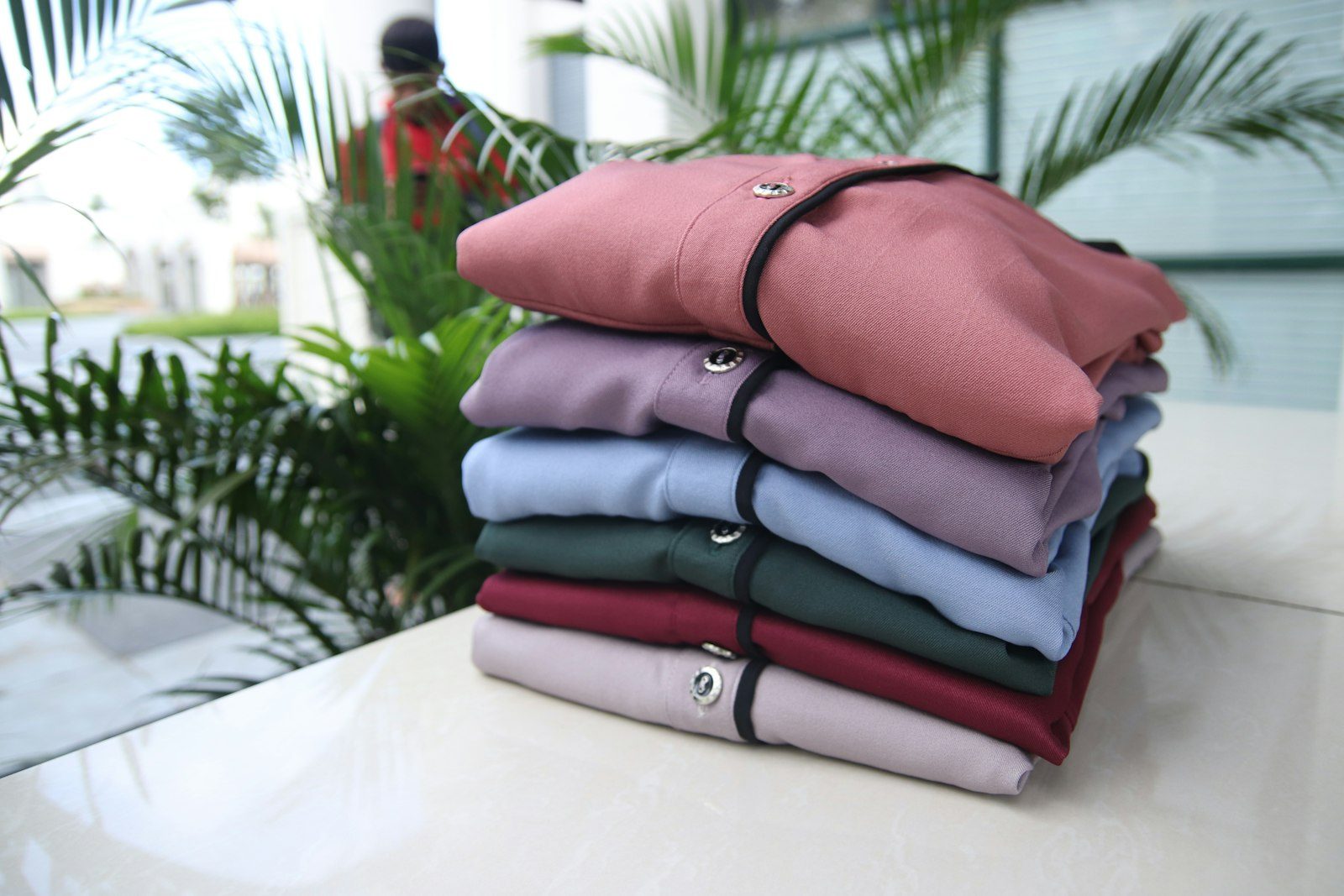
The second reason is the price curve. Large orders get volume pricing. In the online design studio the per-piece price drops at 12, 24, 50 and 100 pieces, and every colour of the same garment in one order counts toward the same price break. Orders in the hundreds are usually screen printed and quoted directly — through the free quote form, by email or by phone — and a large order gets the same free mockup and human designer check as a single shirt. The mechanics are simple: on a screen-printed run every screen is set up once, whether it prints 100 hoodies or 500, so the bigger the run, the less of that setup each hoodie carries.
The third reason is the one buyers forget: fewer reorders. Every reorder is a new size collection, a new approval, a new booking and a new shipment, and somebody in the office has to run each one. Spares and next season’s new-hire stock ordered in the same run cost the marginal price of a hoodie; the same twenty hoodies ordered in February are a new job with a new setup.
The trade-offs are real. One big run spends the whole budget at once, puts any sizing mistake into hundreds of garments instead of dozens, and leaves boxes of spares on a shelf. If headcount is genuinely unknown, the design is still changing, or a brand is testing a colourway nobody has bought yet, a smaller first run is smarter. No minimum on DTF and DTG — we will print a single shirt. That makes a top-up of five hoodies for new hires a normal order later; just expect it to sit close to the screen-printed run rather than match it exactly.
Print, embroidery or both at 100, 250 and 500
Quantity changes the decoration answer less than people expect; what the hoodie is for changes it more. Screen printing is the default for a run in the hundreds: one to three bold colours, opaque ink that holds up on fleece, and a per-piece cost that keeps falling as the run grows. Spot colours can be matched to Pantone references, which is how a brand colour stays the same on the first hoodie and the five-hundredth.
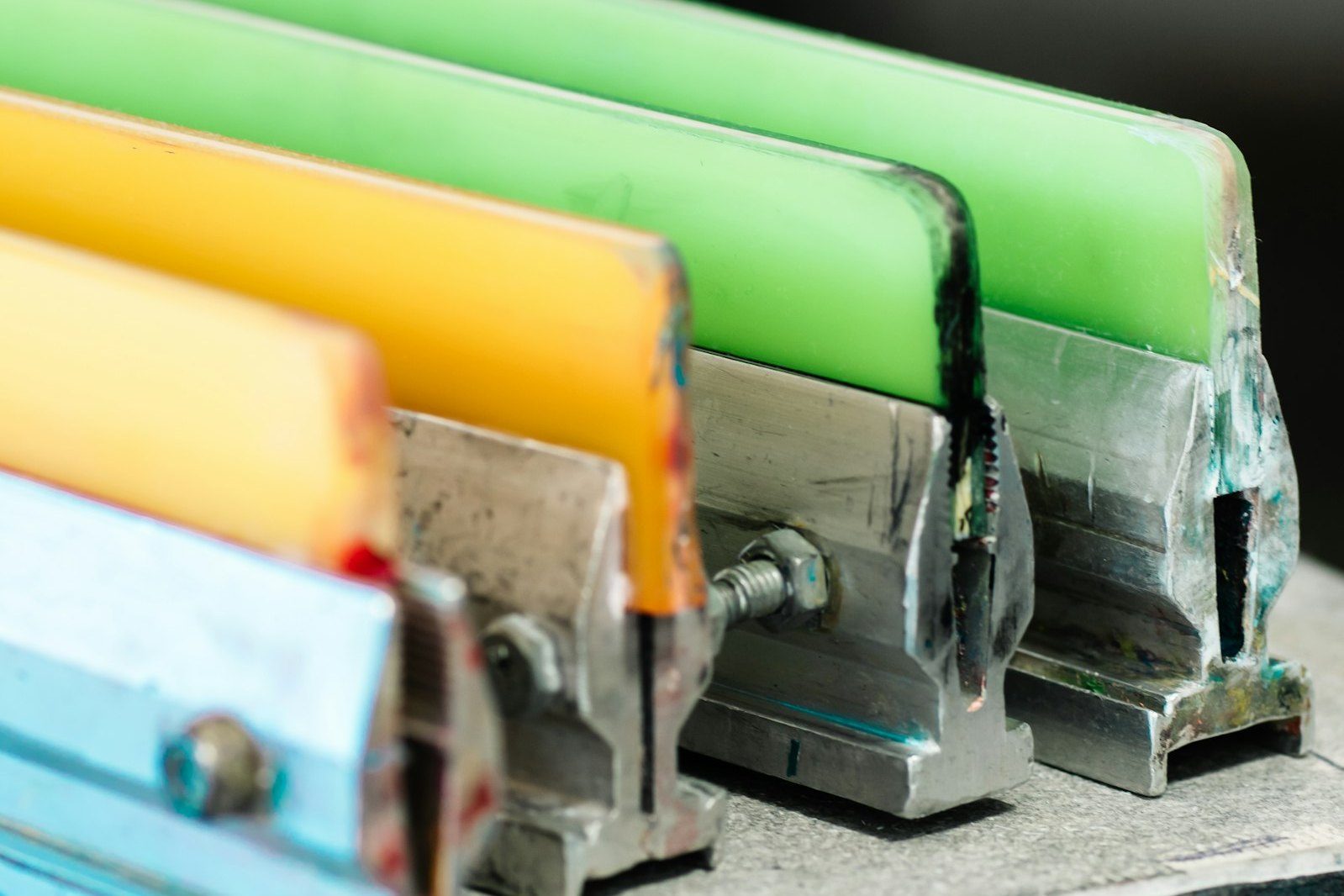
Embroidery is the staff and corporate answer. A stitched left chest on fleece reads as a uniform rather than merch, and thread does not crack in the wash. It costs more per piece than print, and it barely gets cheaper with volume, because every hoodie is stitched in full; only the digitizing, turning the logo into a stitch file, happens once. At 500 pieces embroidery is also a real block of machine time, which is one more reason to book it early.
Both together is the common corporate build: an embroidered left chest and a screen-printed back, each priced as its own step. Clubs and teams usually go the other way, with a big printed front or back and a small sleeve hit, and every extra print location is another pass and another screen. Names or numbers on individual hoodies are possible at a per-hoodie surcharge, which suits a hockey roster better than an office of three hundred.
Where DTF still wins at volume is artwork a screen cannot carry well: photographs, gradients, a full-colour illustration. Full-colour DTF sits slightly higher per piece with no setup fee, so on a 400-piece run of a one-colour logo it loses to screen printing, and on a ten-colour illustration it can win. If the design has more colours than a screen job should, ask for both prices.
Fleece at volume: 50/50, polyester, or a crewneck instead
The pullover hoodie in our studio comes in two fabrics. The default is a 50/50 cotton-poly fleece, which is what most people picture when they say hoodie: warm, soft on the inside, and less prone to shrinking than all-cotton fleece. The other is a polyester performance hoodie, which sheds moisture and dries sooner than cotton-rich fleece, and suits a soccer association warming up on a wet October field or a team that wears it over training gear.
At volume, pick one fabric for the whole run. A mix is two different blanks and two size spreads, and a decoration that suits cotton-rich fleece is not always the one that suits polyester, so it can mean two setups as well. For an office, a campus club or a warehouse floor the 50/50 is the safe default; for a team that sweats in it, the polyester. Our custom hoodies guide for Toronto goes deeper on the blank itself: weight, blend and the finish inside.
The crewneck sweatshirt is the alternative nobody suggests. It drops the hood, the drawcords and the kangaroo pocket, so the front is a flat, uninterrupted print area, and it comes in the same 50/50 fleece. It is a different garment, so in the studio it counts toward its own price break rather than the hoodies’, the way tees and hoodies do. Some companies split a run on purpose, giving people a choice of garment instead of a choice of colour; see custom crewneck sweatshirts for that side.
The studio builds pullover hoodies, crewnecks and their youth versions. Youth hoodies come in the standard fabric only and count with the adult version toward the price break, which matters to a hockey association ordering both at once. Zip hoodies are not in the studio: a full-zip is a different garment with a split front, and it goes through the free quote form, as does any size outside the studio’s ranges.
Sizing 250 hoodies: people size up, and the spread is where the money goes
The same people size a hoodie differently from a tee. Many go one size up for room over a shirt or for a looser fit, so a hoodie spread leans larger than the t-shirt spread for the same group. Plan for that rather than copying last summer’s tee order; a run that copies the tee spread ends with a box of smalls nobody wants and a list of people waiting for an XL. Our size breakdown for 100, 250, 500 and 1,000 pieces gives starting curves, and how to order custom hoodies in Toronto covers collecting the count.
The studio builds adult hoodies in S–3XL and youth hoodies in XS–XL. 2XL and up carry a small per-piece upcharge that rises with each size, because the bigger blanks cost more, and on a run of 250 with a generous tail of 2XL and 3XL it adds up enough to budget for. Anyone who needs a size outside those ranges goes through the quote form, so ask before the size sheet closes rather than after.
Where the curve comes from depends on the buyer. An office should collect sizes with a hard deadline, then add a few spares in the middle sizes for latecomers and new hires. A club selling by pre-sale should order what sold plus a small buffer. A clothing brand on its second drop has the best data of anyone: sell-through by size from the first drop. If the large sold out first and the small sat on the shelf, the second run should look like the sales, not like a generic curve; our page for clothing brands covers the rest of a drop.
What 100, 250 or 500 custom hoodies cost
We do not publish a hoodie rate card, because the blank, the decoration and the quantity move the price too much for one number to be honest. The anchor we do publish is the t-shirt: a screen-printed t-shirt runs roughly $12–$18 CAD each at 50 pieces and drops under $10 each in the hundreds. Full-colour DTF sits slightly higher per piece with no setup fee. Every quote is free and includes a mockup. A hoodie lands above a tee at every quantity, because a fleece blank costs much more than a tee blank, but it follows the same downward curve; the bulk t-shirt printing guide for the GTA walks through the tee bands.
What moves a hoodie quote at volume, roughly in order: the blank and its fabric; the method, since embroidery costs more per piece than print; the number of ink colours and print locations, since each one is a screen; the number of separate designs; the share of 2XL and up; and any names or numbers. Quantity shrinks the setup-driven lines and barely touches the blank. Ontario HST is 13% on top, and shipping is quoted for your postal code and shown before you pay.
The studio is the easiest place to watch the price move as you add a back print or change the count, and 100 pieces is its last break. Past that, a run in the hundreds is quoted directly, usually as screen printing, on the same downward curve. That is all “wholesale” means for custom hoodies: the per-piece price of a big decorated run, not a case of undecorated blanks — we sell finished, decorated garments. Our guide to wholesale custom t-shirts unpacks the term, and payment is by card or Interac e-Transfer.
Planning the date: book the calendar, don’t count on a rush
Standard turnaround on clothing is 1–2 weeks. Most apparel orders can rush — 4–5 business days or 1–3 business days, priced at checkout — and every order shows the dates it will be ready before you pay. On a large run, read that second sentence with care. The shortest rush tier is limited to smaller runs, so an order in the hundreds should be planned on the standard schedule, and rushing a large run is a conversation, not a checkbox — call 613-666-9292 before counting on it.
A run of many hundreds is booked into the shop calendar when the order is confirmed, so confirm your date when you book rather than assuming it. The production clock starts when the mockup is approved and the order is paid, which means most of the real lead time sits before that: agreeing on the design, collecting 250 sizes, getting the budget signed. Collecting sizes from a whole company takes longer than printing for it. Then add transit to the GTA.
Hoodie season sets the rest. The holiday hoodie is ordered in September, not December, because from September on every school, team and company in the country is buying fleece from the same supply, and a popular colour in a full size run can run thin. Orientation hoodies have to be on campus before the first week of term, and our guide to frosh week shirts in bulk covers that calendar. Hockey associations want theirs before the season opens, and the warehouse hoodie is worth ordering before the first cold shift in October rather than after it. Lock the blank and the colour early, even while the artwork is still being argued over.
Shipping 500 hoodies into Toronto, Mississauga, Brampton and beyond
Every hoodie is printed and decorated in-house in Ottawa, Ontario. Nothing is drop-shipped from overseas, so there are no cross-border customs holds or surprise duties. We have no storefront, counter, pickup, showroom or delivery van anywhere in Toronto or the rest of the GTA; every order ships from Ottawa by courier. We offer shipping Canada-wide, including the Greater Toronto Area and Greater Montreal, typically arriving 1–2 days after the order leaves the shop, and shipping is quoted for your postal code and shown before you pay.
Five hundred hoodies are a lot of cardboard. Fleece is bulky, and a run that size arrives as a stack of cartons, not a parcel, so ship it somewhere with a loading dock or a reception desk that knows it is coming. Open the boxes the day they arrive, count them against the packing list and check the sizes then, not the night before the all-hands.

If the hoodies are going to more than one place, say a head office in North York, a distribution centre in Brampton and a satellite office in Mississauga, tell us at quote time — it changes how the run is sorted and boxed, and each address is quoted for shipping. For offices in more than one city, see one apparel order for Ottawa, Toronto and Montreal, and the companion guides to bulk hoodies in Ottawa and bulk hoodies in Montreal cover the other two cities.
How to start a bulk hoodie order
Customers can design their own product free at yayaprints.ca/mockup-creator — upload a logo, place it on a real garment, add print-quality text, choose colours and sizes, and order online without emailing or phoning anyone. For a hoodie run, open the studio on the hoodie, put the logo where it belongs, try it on two or three colours and enter a rough size split; the price updates as you go. It is the simplest way to settle the colour argument before anyone writes a purchase request.
For a run in the hundreds, send the details through the free quote form: the garment and fabric, the colours, the artwork, the size plan, the date you are working toward and every delivery address. If the logo only exists as a screenshot or a blurry PNG, send it anyway; our designer fixes it or redraws it, and the vectorization service redraws a logo as clean vector art once, for this run and every one after it.
Every order is reviewed by a human designer before it goes to press. A person checks artwork resolution, colour, sizing and placement, and either fixes the file or tells the customer what is wrong — it is not an automated preflight. Every order gets a free digital mockup on the actual product before any payment. Nothing prints until the customer approves it. On 400 hoodies, that check is the cheapest insurance in the whole order.
To talk a run through before quoting it: phone 613-666-YAYA (613-666-9292), WhatsApp the same number at wa.me/16136669292, email order@yayaprints.ca, or order online at yayaprints.ca. We serve customers in English and French. The full garment range is on our custom hoodies page, and if a brand is unsure about a new colourway, ask whether a small first batch makes sense before committing the whole run.
Frequently asked questions
How much do 100, 250 or 500 custom hoodies cost in Toronto?
We don’t publish a hoodie rate card, because the blank, the decoration and the quantity move the price too much for one number to be honest. The anchor is the t-shirt: a screen-printed t-shirt runs roughly $12–$18 CAD each at 50 pieces and drops under $10 each in the hundreds. Full-colour DTF sits slightly higher per piece with no setup fee. Every quote is free and includes a mockup. A hoodie lands above a tee at every quantity, because a fleece blank costs much more than a tee blank, and it follows the same downward curve.
Is it cheaper to order all of our hoodies in one run?
Usually, yes. Large orders get volume pricing. In the online design studio the per-piece price drops at 12, 24, 50 and 100 pieces, and every colour of the same garment in one order counts toward the same price break. Orders in the hundreds are usually screen printed and quoted directly — through the free quote form, by email or by phone — and a large order gets the same free mockup and human designer check as a single shirt. On a screen-printed run every screen is set up once, so one run of 300 carries that setup once, while three runs of 100 pay for it three times. The trade-off is that the whole budget, and any sizing mistake, lands at once.
Can we order hoodies in several colours and still get the bulk price?
In the studio, yes: every colour of the same garment in one order counts toward the same price break, so 60 black and 40 grey hoodies are priced as 100. Youth hoodies count with the adult version, while a different garment, such as a crewneck or a tee, counts on its own. On a quoted screen-print run, every separate design, print location and ink colour is its own screen setup, so a colour menu that needs a second ink colour adds setup. Choose shirt colours that one ink reads well on and the screens stay the same.
How long does a bulk hoodie order take?
Standard turnaround on clothing is 1–2 weeks. Most apparel orders can rush — 4–5 business days or 1–3 business days, priced at checkout — and every order shows the dates it will be ready before you pay. The shortest rush tier is limited to smaller runs, so plan an order in the hundreds on the standard schedule. A run of many hundreds is booked into the shop calendar when the order is confirmed, so confirm your date when you book, and treat a rush on a large run as a conversation: call 613-666-9292 before counting on it. Transit to the GTA comes after the order leaves the shop.
Is there a Toronto location where we can pick up the hoodies?
No. Everything is printed and decorated in-house in Ottawa, Ontario. Nothing is drop-shipped from overseas, so there are no cross-border customs holds or surprise duties. There is no storefront, counter, pickup, showroom or delivery van anywhere in Toronto or the GTA; every order ships from Ottawa by courier. We offer shipping Canada-wide, including the Greater Toronto Area and Greater Montreal, typically arriving 1–2 days after the order leaves the shop, and shipping is quoted for your postal code and shown before you pay.
Can one hoodie order be shipped to several offices or warehouses across the GTA?
Tell us at quote time — it changes how the run is sorted and boxed, and each address is quoted for shipping. Say a head office in North York and warehouses in Mississauga and Brampton: send the address list and the count for each address with the quote request, not after the hoodies are printed. For offices in Ottawa, Toronto and Montreal at once, our guide to one apparel order for all three cities walks through it.
What sizes do bulk hoodies come in?
In the online studio, adult pullover hoodies come in S–3XL and youth hoodies in XS–XL, and youth sizes count with the adult version toward the price break. 2XL and larger carry a small per-piece upcharge that rises with each size, because the bigger blanks cost more. Zip hoodies and sizes outside those ranges go through the free quote form. People tend to size up in a hoodie, so plan a spread that leans larger than your t-shirt order.
Should bulk hoodies be printed or embroidered?
For a run in the hundreds, screen printing is usually the value answer for a one- to three-colour logo, because each screen is set up once and the per-piece cost falls as the run grows. Embroidery suits staff and corporate hoodies: it costs more per piece than print and barely gets cheaper with volume, but a stitched left chest reads as a uniform. Many corporate orders use both, an embroidered left chest and a printed back. Full-colour artwork with photos or gradients often suits DTF, which sits slightly higher per piece with no setup fee.
Design it yourself. A human designer still checks every order.
Our free studio gives you the price and the mockup in the browser. What it doesn't do is print your file blindly — every order is reviewed by a real designer before it reaches the press.
- Step 1You design it — free
Upload your logo, drop it on a real garment, set the size and placement, pick colours and quantities. No account, no deposit, no waiting on a reply.
- Step 2A human designer checks it
Before anything prints, one of our designers opens your file and checks resolution, colours, sizing and placement. If it won't print well, we fix it or tell you exactly what's wrong — a person, not an automated preflight.
- Step 3You approve, then we print
You get the corrected mockup back on the actual product. Nothing goes to press until you say yes — then it's ready in 1–2 weeks, or in 1–3 business days with a rush.
See your hoodie on the real garment before you order 300 of them
Upload your logo, place it on a real hoodie in your colour, enter sizes and quantities and watch the price update: the per-piece price drops at 12, 24, 50 and 100 pieces. Orders in the hundreds are usually screen printed and quoted directly — through the free quote form, by email or by phone — and a large order gets the same free mockup and human designer check as a single shirt.
Every order is reviewed by a human designer before it goes to press. A person checks artwork resolution, colour, sizing and placement, and either fixes the file or tells the customer what is wrong — it is not an automated preflight.