
How Much Does Custom T-Shirt Printing Cost in Canada?
Real Canadian price ranges by quantity and method, why the per-shirt number drops so sharply with volume, the hidden fees to ask about up front, and five legitimate ways to bring the cost down without cheapening the shirt.
Custom t-shirt printing cost in Canada, by quantity
There is no single honest answer to "how much does it cost to print t-shirts" — anyone who gives you one number without asking a question first is guessing. But the shape of the price curve is completely predictable, and once you can see it you can plan a budget before you ever ask for a quote.
The table below is what a single-location print on a standard cotton tee tends to land at across Canada, in Canadian dollars, before tax. Treat every number as an approximate range rather than a price list: the blank you choose, how much ink is sitting on the shirt, and where you put it will all push you up or down inside the band.
| Quantity | Approx. per shirt | Method that usually wins | Why |
|---|---|---|---|
| 1–5 | $25–$40 | DTF or DTG | No setup to spread out; you pay for the labour of a tiny run |
| 6–11 | $22–$32 | DTF or DTG | Screen is possible at six, but the screen cost lands on too few shirts |
| 12–23 | $18–$26 | DTF, or screen if it is 1 colour | The crossover zone; per-piece cost drops noticeably here |
| 24–49 | $15–$22 | Screen printing (1–2 colours) | Setup is now split across enough shirts to pay for itself |
| 50–99 | $12–$18 | Screen printing | Bulk discounts begin; blanks start pricing by the case |
| 100–249 | $10–$15 | Screen printing | Setup is now a rounding error per piece |
| 250+ | Often under $10 | Screen printing | You are essentially paying for blanks, ink and press time |
Two things stand out immediately. The first is that the top of the table is expensive per shirt and cheap in total — one custom shirt at $30 is not a bad deal, it is simply a small order. We have no minimum on DTF or DTG, so ordering a single piece is a real option rather than a favour; we walk through that in no-minimum custom t-shirt printing.
The second is that the steepest part of the curve is between about six and fifty pieces. That is where choosing the right method changes your bill more than negotiating ever will — see picking a method by order size for the full comparison, or go straight to our t-shirt printing page for what we actually run.
Why the t-shirt printing cost per shirt falls so sharply
Printed apparel is one of the few things you buy where the per-unit price genuinely collapses with volume, and it is worth understanding why, because the reason tells you exactly which levers you can pull.
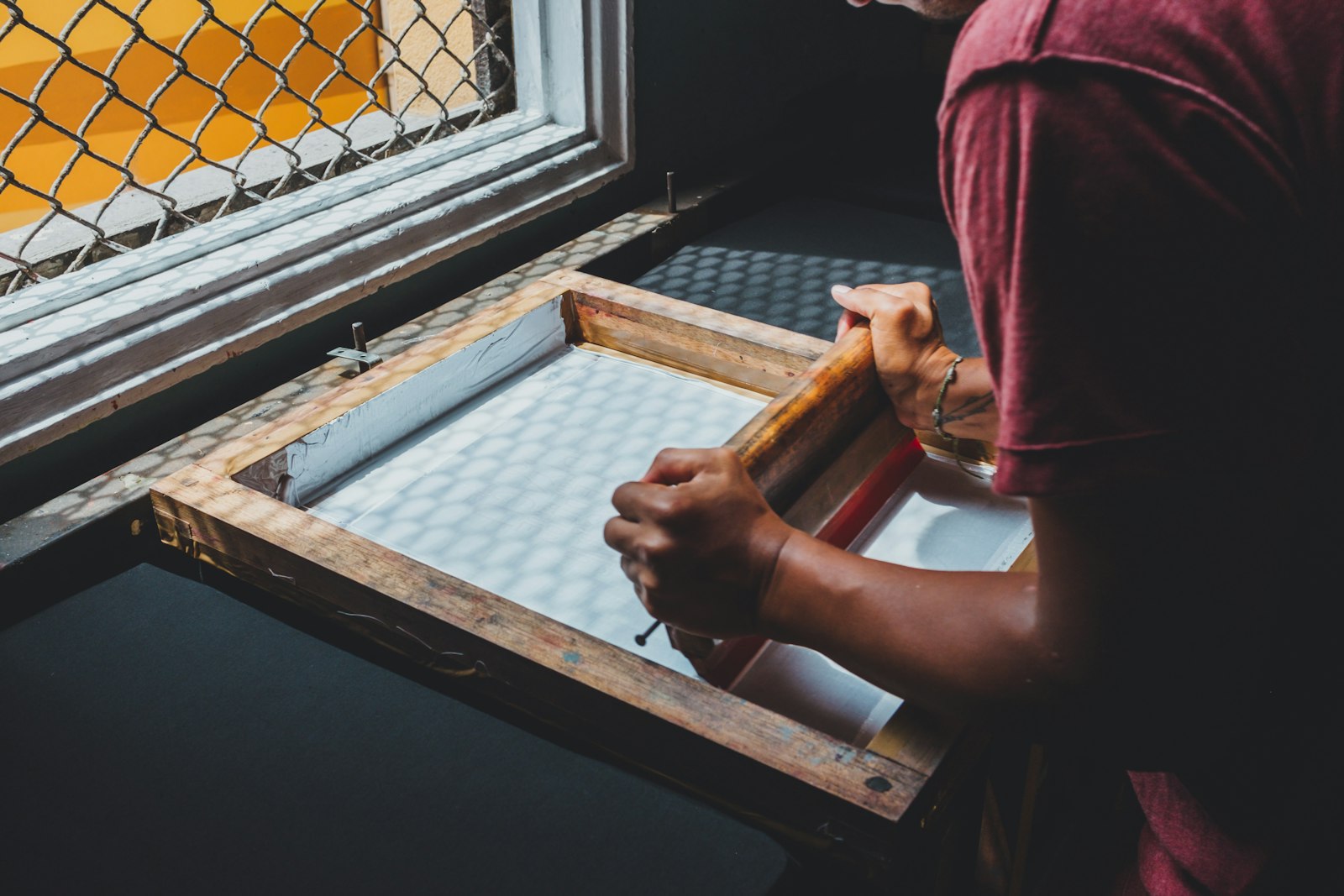
Most of the cost of a print run happens before the first shirt. With screen printing, each colour in your design needs its own screen: the mesh is coated with emulsion, the artwork is burned into it, it is washed out, dried, taped, and then locked into the press and registered so every colour lands in the same spot within a hair. That work takes the same amount of time whether the run behind it is twelve shirts or twelve hundred. Split across twelve, it is brutal. Split across twelve hundred, you stop noticing it.
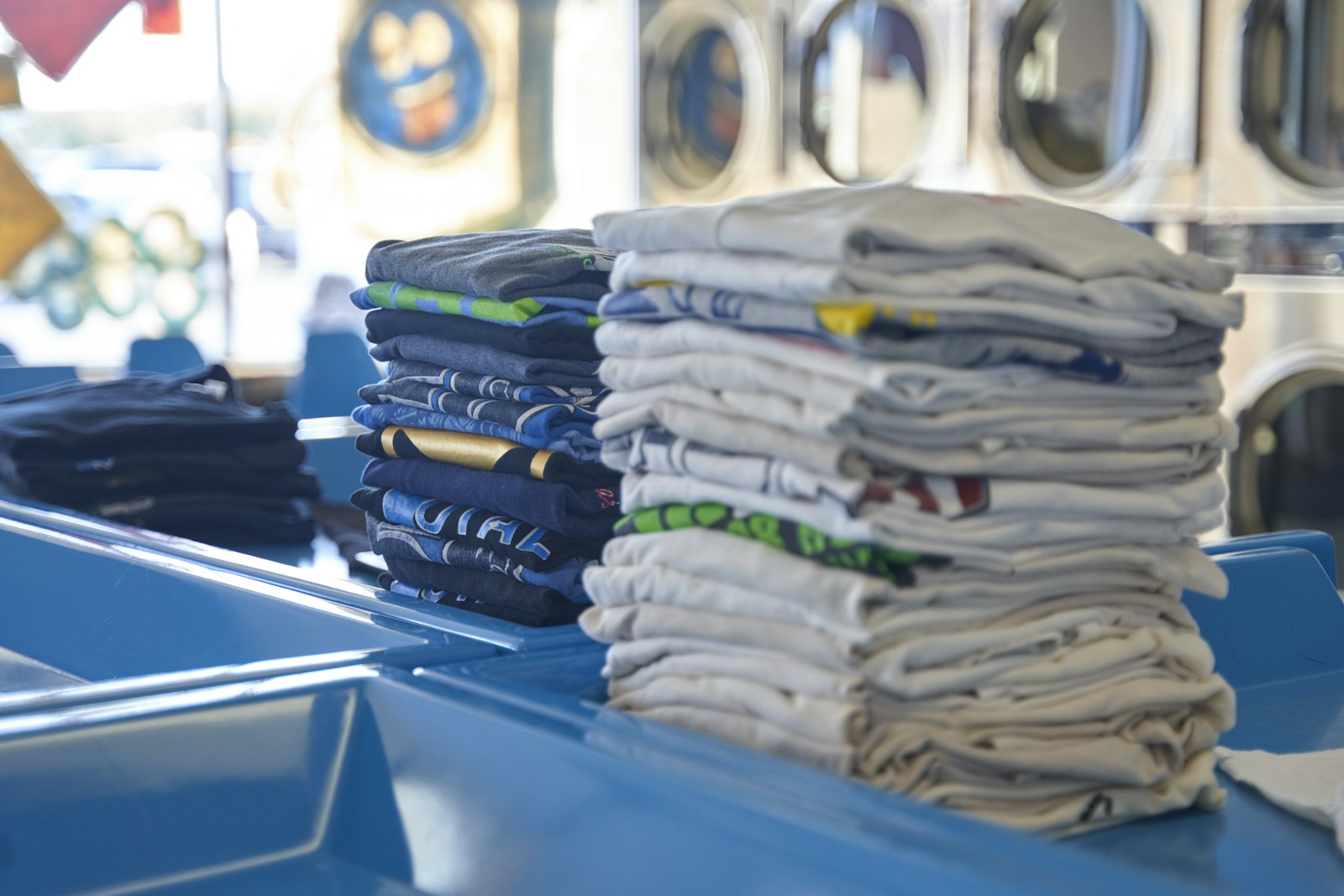
Blanks get cheaper by the case. Garment suppliers price in dozens and in full cases, and the difference between buying eighteen shirts and buying a case of the same style is real money per piece. When you order a mixed bag of six colours in nine sizes, nothing gets bought by the case and you pay closer to list on all of it.
One setup covers the whole run. Once the press is registered and the first good print is pulled, the marginal cost of shirt number four hundred is a squeegee pass and a trip through the dryer. That is the entire reason screen printing dominates the bottom half of the table while being a poor choice at the top of it.
Digital methods invert this. There is no screen to burn, so there is no fixed cost to amortise — which is exactly why a single shirt is possible, and also why a digital print does not get dramatically cheaper at four hundred pieces the way a screen print does. The two curves cross somewhere in the twenties for a simple one-colour design, and later than that for anything full-colour.
What you are actually paying for on a custom shirt
A quote looks like one number, but it is really five, and knowing which of the five is driving your price tells you where to push.
- The blank. Usually the single biggest line. A basic 100% cotton tee and a ring-spun, side-seamed, heavier-weight tee can differ by several dollars before anyone prints anything. Fabric weight is measured in ounces per square yard or grams per square metre, and heavier almost always means pricier.
- The decoration itself. Ink, press time and the labour of loading and unloading every shirt by hand. This is the part that shrinks with volume.
- How many locations you print. Every location is a separate pass. A back print is roughly +$7 per piece on top of a front print, and embroidery is roughly +$10 per piece. Sleeve hits and left-chest-plus-full-back combinations follow the same logic.
- Colour count, on screen printing only. A three-colour design means three screens, three setups and three passes. On DTF the colour count is free — a photograph costs the same as a single-colour wordmark.
- Size upcharges. Most blank manufacturers charge more for 2XL and up, and that cost passes straight through. It is normal, it is not a shop inventing a fee, and it is worth counting your big sizes before you budget.
Then there is tax. Everything above is pre-tax; in Ontario you add 13% HST. On a fifty-piece order that is not a rounding error, so build it into the budget you take to your boss or your team rather than discovering it at checkout.
The same breakdown applies to everything else we decorate — the numbers just shift. A hoodie costs more because the blank costs more, not because printing a hoodie is harder, and a polo is usually embroidered rather than printed, which shifts the decoration line instead of the garment line.
Screen printing vs DTF: how method changes your custom t-shirt price
The method is the biggest single decision in your quote, and the right answer is almost entirely a function of quantity and colour count.
Screen printing wins on volume and loses on complexity. Its cost scales with the number of colours, not the number of shirts, so a bold two-colour logo on two hundred tees is about as cheap as custom apparel gets in Canada. Ask it to reproduce a six-colour gradient illustration and the setup stacks up fast — at which point the same job printed digitally is cheaper and looks better.
DTF and DTG win on small and complicated. Unlimited colours at one price, no screens, and no setup fee at all on DTF. A small full-colour DTF run sits a little higher per piece than a comparable screen print at the same quantity, but you are not paying a setup charge to get there — so for anything under a couple of dozen pieces the total is usually lower.
The practical dividing line: screen printing has a working minimum of about six pieces because of the screen setup, and it only starts to feel cheap somewhere past twenty-four. Below that, digital. Above fifty with a simple design, screens. If you want the full technical comparison rather than the pricing summary, read DTF vs screen printing.
One more honest note: do not choose screen printing purely because you have read that it is the cheap one. For an eight-shirt team order it is the expensive one. Tell us the quantity and the artwork and we will quote both ways when it is genuinely close, because the wrong method is the most common reason a bulk t-shirt printing price comes back higher than someone expected.
Five ways to lower bulk t-shirt printing prices without cheapening the shirt
There is a difference between spending less and buying worse. These five moves genuinely reduce the invoice while leaving you with the same shirt on the other side.
1. Consolidate to one print location. This is the fastest saving available. Dropping a back print takes roughly $7 per piece off — on a hundred shirts that is $700, which is often more than the entire design budget. A well-placed left-chest logo reads as more professional than a big back slogan anyway, in most business contexts.
2. Simplify to fewer screen colours. If you are in screen-printing territory, every colour you remove removes a screen, a setup and a pass. A two-colour version of a four-colour logo is usually a twenty-minute design exercise and it can move your per-shirt number by several dollars. Send us the file first and we will tell you honestly whether it will survive the simplification or whether you are better off staying digital.
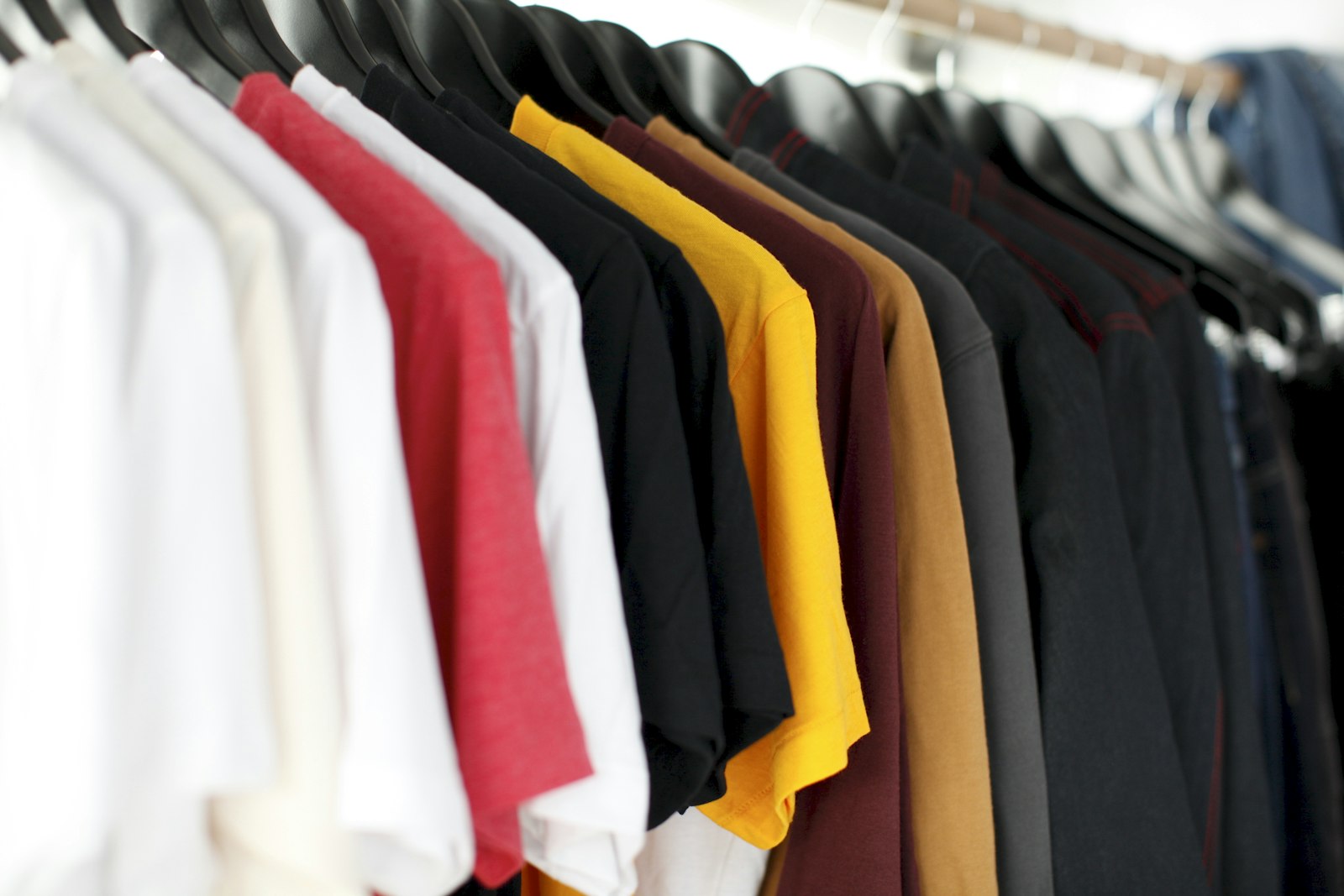
3. Choose the right blank, not the cheapest one. There is a floor below which a tee simply feels like a giveaway, and if the shirts end up unworn you have not saved money, you have wasted all of it. Equally, nobody needs a premium fashion blank for a warehouse crew. Match the blank to the job — which fabric prints best walks through cotton, polyester and blends, and why the difference between a $4 blank and a $7 blank is usually visible in the hand within seconds.
4. Combine departments, teams or locations into one run. Three managers ordering twenty shirts each pay small-order prices three times. The same sixty shirts on one purchase order lands in a much better band, and the shirts match — which is the whole point of a uniform. Organising a group order has the collection method we recommend, and for multi-site companies custom uniforms are almost always quoted as one annual run rather than a dozen small ones.
5. Order up to the next price break — but only if the total actually drops. Sometimes 48 shirts cost more in total than 50, because 50 crosses into a better band. That is a genuinely free upgrade and you should take it. Buying 100 when you need 60 because "it is cheaper per shirt" is not the same thing — it is spending more money to feel efficient. Ask us to price both; we will tell you which way the total actually goes.
Cheap custom t-shirts in Canada vs cost per wear
The phrase "cheap custom t-shirts" hides two completely different purchases. One is a shirt that cost less and does the same job. The other is a shirt that cost less because something was left out — and that something is usually the print.
Do the arithmetic that actually matters. A $14 shirt that someone wears a hundred times costs fourteen cents a wear. A $9 shirt whose print cracks after a month of washes costs you the full $9, plus the reorder, plus the impression it made on everyone who saw a staff member in a peeling logo. Sticker price is not cost. Cost is what you paid divided by how many times the thing got used.
This is especially true for anything customer-facing. A cracked chest print on a workwear shirt does more damage to a small company's reputation than the $5 per shirt it saved. For a one-night stag party, cheap is entirely rational. For the uniform your team wears in front of clients for two years, it is the expensive choice wearing a disguise.
Durability is also partly in your hands after the shirts arrive. Cold wash, inside out, no fabric softener on the print, and skip the high-heat dryer — that alone is the difference between a print that lasts a season and one that lasts years. The details are in washing printed shirts.
When we quote you, we will happily point at the cheaper blank if the cheaper blank is genuinely fine for what you are doing. We will also tell you when it is not. That is a more useful conversation than any price list.
How to get a real custom t-shirt printing quote in Canada
Ranges are useful for budgeting and useless for deciding. To turn the table at the top of this page into a number you can actually approve, we need four things: your quantity, your garment, your artwork, and where you want it printed. Everything else we can figure out.
The fastest route is our free online design studio. Upload a PNG, JPG, SVG or PDF, knock the background out with one click, drag and resize it onto the front, back, left chest or sleeve, switch the garment colour, add text from the font library if you need it, punch in your sizes and quantities, and you will see live pricing as you go. You can check out from the studio or just use it to sanity-check a budget before you talk to anyone.
If your job has moving parts — mixed garments, several departments, a deadline — send it to us instead through the quote form and a named person here will work it out and come back with a free digital mockup and an itemised quote before you pay a cent. Or call 613-666-9292 and an actual human picks up; email order@yayaprints.ca works just as well.
Everything is printed in-house in Ottawa — nothing is drop-shipped in from overseas, which is why we can quote a real turnaround and then hit it. Standard production is 2–5 business daysafter you approve the mockup and pay, rush is often 1–2 business days, and same-day is occasionally possible on small digital runs but is never something we will guarantee. We ship anywhere in Canada by post and courier at a rate shown on your quote, and pickup or delivery is free across Ottawa, Kanata, Barrhaven, Nepean, Orléans, Stittsville and Gatineau.
For a wider look at ordering across the country — provinces, timelines and what to expect from a Canadian shop — read custom t-shirt printing in Canada, or browse everything we decorate.
Frequently asked questions
How much does it cost to print t-shirts in Canada?
For a single-location print on a standard cotton tee, expect roughly $25-$40 per shirt for one to five pieces, about $18-$26 at a dozen, around $12-$18 at 50, and often under $10 each once you are into the hundreds. These are approximate ranges in Canadian dollars before HST, and they move with the blank you choose, the number of ink colours and how many print locations you add. A back print adds about $7 per piece and embroidery about $10.
How much do custom t-shirts cost for 50 people?
A simple one-colour screen print on a standard cotton tee usually lands around $12-$18 per shirt at 50 pieces, so roughly $600-$900 before Ontario's 13% HST. Fifty is also where bulk discounts start and where screen printing clearly beats digital on price. Adding a second print location pushes it up about $7 per shirt, a heavier or premium blank adds a few dollars, and 2XL and larger sizes carry the manufacturer's size upcharge.
Why are custom t-shirts so much cheaper in bulk?
Because most of the cost of a print run happens before the first shirt is printed. Burning a screen, taping it and registering the press takes the same time for 12 shirts as for 1,200, so that fixed cost divided across more pieces shrinks fast. Blanks also drop in price when they are bought by the case rather than in odd mixed quantities. Past about 50 pieces you are mostly paying for the garment, the ink and press time.
Is DTF cheaper than screen printing?
For small orders, yes. DTF has no screens to burn and no setup fee, so a run of one to about two dozen shirts usually comes out cheaper in total even though the per-piece rate is a little higher. Screen printing takes over once the quantity is high enough to spread its setup cost, typically past 24-50 pieces on a simple one or two-colour design. DTF also prints unlimited colours at the same price, so complex artwork stays cheap.
Do t-shirt printing companies charge setup fees?
Many do, usually per screen colour on screen printing, and it is the single most common reason a quote comes back higher than the advertised per-shirt price. We charge no setup fee on DTF at all. Before you compare two shops, ask specifically about screen fees, art or digitizing fees, rush fees, shipping and what a reorder costs later. You should always see the complete number, including tax and shipping, before you pay anything.
How do I get cheap custom t-shirts without them looking cheap?
Cut print locations before you cut garment quality — dropping a back print saves about $7 a shirt with no visible downgrade. Simplify a screen-printed design to fewer colours, combine several small departmental orders into one run, and order up to the next price break only when the total genuinely drops. Then pick the blank that suits the job rather than the cheapest one on the shelf. A $14 shirt worn a hundred times beats a $9 shirt that cracks in a month.
Design it yourself. A human designer still checks every order.
Our free studio gives you the price and the mockup in the browser. What it doesn't do is print your file blindly — every order is reviewed by a real designer before it reaches the press.
- Step 1You design it — free
Upload your logo, drop it on a real garment, set the size and placement, pick colours and quantities. No account, no deposit, no waiting on a reply.
- Step 2A human designer checks it
Before anything prints, one of our designers opens your file and checks resolution, colours, sizing and placement. If it won't print well, we fix it or tell you exactly what's wrong — a person, not an automated preflight.
- Step 3You approve, then we print
You get the corrected mockup back on the actual product. Nothing goes to press until you say yes — then it's ready in 1–2 weeks, or in 1–3 business days with a rush.
Get a real number, not a range
Tell us your quantity, garment and artwork and we will send back a free digital mockup and an itemised quote - garment, printing, every location, shipping and tax - before you pay anything. Printed in-house in Ottawa, shipped Canada-wide.
Every order is reviewed by a human designer before it goes to press. A person checks artwork resolution, colour, sizing and placement, and either fixes the file or tells the customer what is wrong — it is not an automated preflight.