
No-Minimum Custom T-Shirt Printing: Order One Shirt or a Thousand
Most Canadian print shops make you buy twelve. We will print one. Why minimums exist, which methods genuinely do not need them, and how to order a single custom shirt without paying a silly premium.
Why most Canadian print shops have a minimum order
You called three shops. All three said "minimum twelve." You need one shirt. It feels like a shakedown — but the number usually comes from a real constraint, and knowing what it is tells you exactly which shops can help you.
Nearly every minimum traces back to screen printing. Before one shirt hits the press, someone separates the art by colour, outputs film, coats a screen with emulsion, exposes it, washes it out, tapes it, mounts it, registers it against the other colours, mixes ink to match, and pulls test prints until it lines up. That takes the same hour whether you ordered 3 shirts or 300, and every extra ink colour adds another screen.
So a three-piece screen printing job costs the shop the same setup as a three-hundred-piece one. A minimum is simply how a shop avoids spending an hour of setup to earn forty dollars. It's arithmetic, not attitude.
There's a quieter second reason. Plenty of "print shops" own no press at all — they broker your job to a larger production house with its own minimums and margin, so the number you get quoted is somebody else's floor with a markup on it. We print in-house in Ottawa, which is the whole reason we can say yes to one shirt: there's nobody downstream whose rules we have to pass along.
None of which makes minimums dishonest. It just means a minimum is a limitation of one printing method, not a law of the industry— and a shop that applies "minimum 12" to every job is mostly telling you what equipment is in the building.
How no minimum custom t-shirt printing actually works
Digital printing deleted the setup step, and that one change is what makes an order of one possible. Two methods matter here, and neither builds anything by hand.
DTF (direct-to-film) prints your art onto a transfer film in full colour, powders it with adhesive, cures it, and heat-presses it onto the garment. No screen to burn, no separations to pay for, no per-colour charge — a six-colour gradient costs what a one-colour wordmark costs. The long version is in what DTF printing is.
DTG (direct-to-garment) is closer to an inkjet that takes a shirt instead of paper — water-based ink sprayed into the cotton fibres. The print sits in the fabric rather than on it, which is why a DTG shirt feels like nothing when you wear it. It's our pick for photographs and soft-handed one-offs.
Because the printhead lays every colour in one pass, there's no registration to dial in — the step that makes a small screen order uneconomical simply doesn't exist. A one-shirt job and a fifty-shirt job differ only in press time. That's why we offer custom t-shirts with no minimum and no setup fee on DTF, and why a single shirt runs the same workflow as a bulk order: same free mockup, same press, same person checking it before it's folded.
Be clear about the trade-off: screen printing still lays a thicker, more opaque ink film, and on a big run of a bold two-colour design it wins on look and price. Digital doesn't beat screen at everything — it beats it decisively at small quantities. Wider picture on custom t-shirt printing.
Print 1 t-shirt, 5, or 20 — which method fits which run
The right answer moves with quantity and with how many colours your design uses. Here's roughly how we decide before anyone talks price.
| Order size | What we reach for | Why |
|---|---|---|
| 1–2 pieces | DTF or DTG | No setup at all; full colour costs the same as one colour |
| 3–10 pieces | DTF | Screens still aren't worth burning; mixed garments are easy |
| 10–25 pieces | DTF, sometimes screen | Screen starts to make sense at 1–2 colours, especially if you'll reorder |
| 25–50 pieces | Screen printing | Setup spreads thin enough that per-piece cost drops hard |
| 50+ pieces | Screen printing | Bulk discounts begin; the cheapest way to buy shirts, full stop |
| Any quantity, logo work | Embroidery | Digitizing happens once; one hat or one polo is fine |
There's no hard line, because the crossover point moves with colour count. A one-colour design can beat DTF on price at twenty pieces — that's one screen. A six-colour illustration might not cross over until past a hundred. Tell us the design and the number and we'll quote it both ways; sometimes the answer surprises us too. Longer comparisons live in DTF vs screen printing and choosing a method by order size.
Embroidery sits outside that logic. Its one-time cost is digitizing — turning your logo into stitch instructions — and after that the machine runs any quantity. A single embroidered polo or cap is normal, at roughly +$10 per piece over the blank.
Real reasons people order one custom t-shirt
If you've been told no a few times, you may have started assuming your request is odd. It isn't. Single-shirt orders are a steady part of our week:
- One birthday or memorial shirt. A milestone birthday, a shirt for a grandparent, a memorial tee with a photo and a date. These matter enormously to the person ordering, and a twelve-piece minimum makes them impossible.
- One sample before a bulk order. The smartest use of a no-minimum shop, and the subject of the next section.
- A replacement for the person who joined in March. You bought forty staff shirts in January and now have a new hire and no spare medium. One shirt, matched to the original art and placement — see custom uniforms.
- A prototype for a clothing brand's first drop. Before you order a hundred of anything, hold one.
- One photo shirt as a gift.A dog, a wedding photo, a kid's drawing. DTG handles photographs beautifully; photo shirts are a category of their own.
- A spare jersey. Someone lost theirs, or a player signed after the team order went in. One custom jersey with the right name and number is a five-minute problem.
The mid-season replacement draws the most frustration. A shop that won't print one shirt is telling a small business to either buy eleven it doesn't need or send a new employee out in the wrong colour. The one-off gift jobs matter for a different reason, and they get handled accordingly: you deal with a named person here rather than a ticket number, and if a photo needs cleaning up before it prints we'll tell you and fix it rather than pressing something disappointing and letting you discover it.
What a single custom shirt actually costs
The part nobody enjoys saying out loud: one shirt costs more per shirt than fifty do.That's not a penalty for ordering small. The blank costs what it costs, and the handling — pulling the garment, setting the platen, pressing, checking, folding — takes nearly as long for shirt number one as for the first shirt of a big run.
For scale, in Canadian dollars and always depending on garment, ink coverage and placement: a basic one-colour screen print on a standard cotton tee runs roughly $12–$18 each at 50 pieces, and can drop under $10 each in the hundreds. Small full-colour DTF runs sit a little higher per piece — but carry no setup cost at all, which is the whole point. A back print adds about +$7/piece, embroidery about +$10/piece, and Ontario HST of 13% goes on top. Our full cost breakdown walks through each lever.
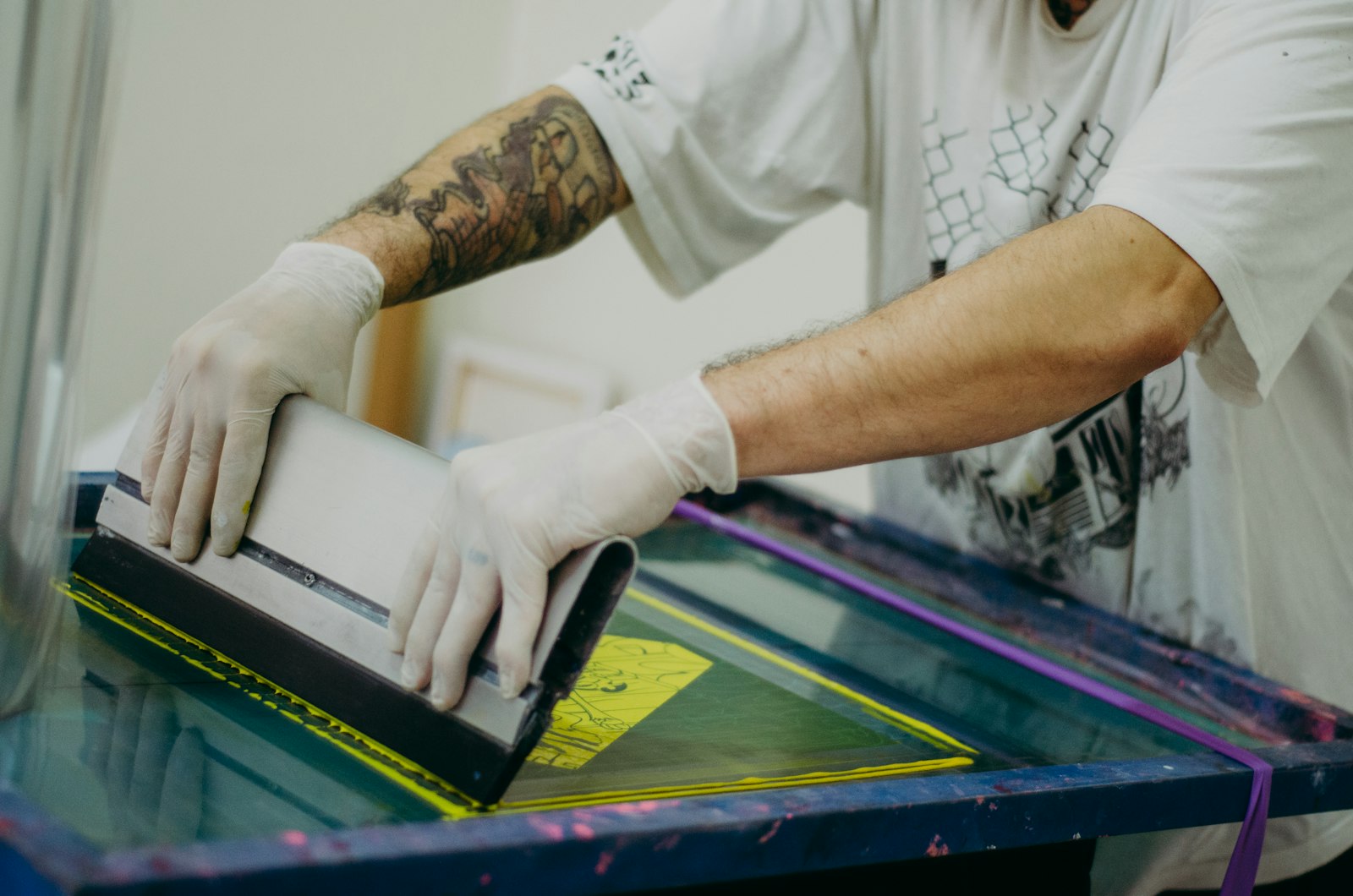
Now compare what you're actually choosing between: one shirt at a higher unit price, or twelve at a lower unit price where eleven live in a closet forever. Eleven shirts you didn't want is not a discount.
And note what you are not paying. No setup fee on DTF. No charge for the mockup — you see the shirt before money changes hands. No "small order fee" invented to make a one-off feel like an imposition. The single place a small order does lose ground is shipping, covered below.
Sample first, then scale
If you're planning a real order — fifty team shirts, a first drop, a uniform rollout — the best money you'll spend is on one shirt before you spend the rest. Order a single piece, live with it for a week, then commit. Shops with minimums can't offer you that, which is the main reason to find one that doesn't have them.
A physical sample tells you what a mockup on a screen cannot. How big the print really reads in the hand — art that looks bold on a monitor often lands smaller across a chest. How the blank feels and fits. How the ink colour sits on that specific fabric colour. And how it survives a wash, which is the only test that predicts what people think of it in six months.
For a new label this is close to mandatory. Ordering three hundred units of an untested design in an even size spread is the classic first-drop mistake; the alternative is laid out in how to start a clothing brand in Canada. Print one, wear it out, see what people ask about, then scale the design that earned it. Scaling is clean because we keep the artwork, placement measurements and garment details on record, so the bulk run matches your sample instead of reinterpreting it.
Put the sample in your calendar, though. Standard turnaround is 2–5 business days after mockup approval and payment, so sample-then-bulk needs two windows plus your own decision time. Rush is often 1–2 business days, and small DTF or DTG runs can sometimes go same day — but we won't guarantee same day, because the honest answer depends on the queue that morning.
Small batch t-shirt printing: mix garments, colours and sizes
Minimums have an ugly cousin — the rule that every piece must be the same garment in the same colour. That also comes from screen printing, where switching from a tee to a hoodie mid-run means new platens and re-registering at a different height.
Digital printing doesn't care. A six-piece order can be three t-shirts, two hoodies and one polo in four colours with the same logo on all of them. Sizes mix freely too, from youth through the extended range where stock allows. One 4XL and one youth small in the same order is normal, not an exception someone has to approve — the full garment range is on our custom clothing page.
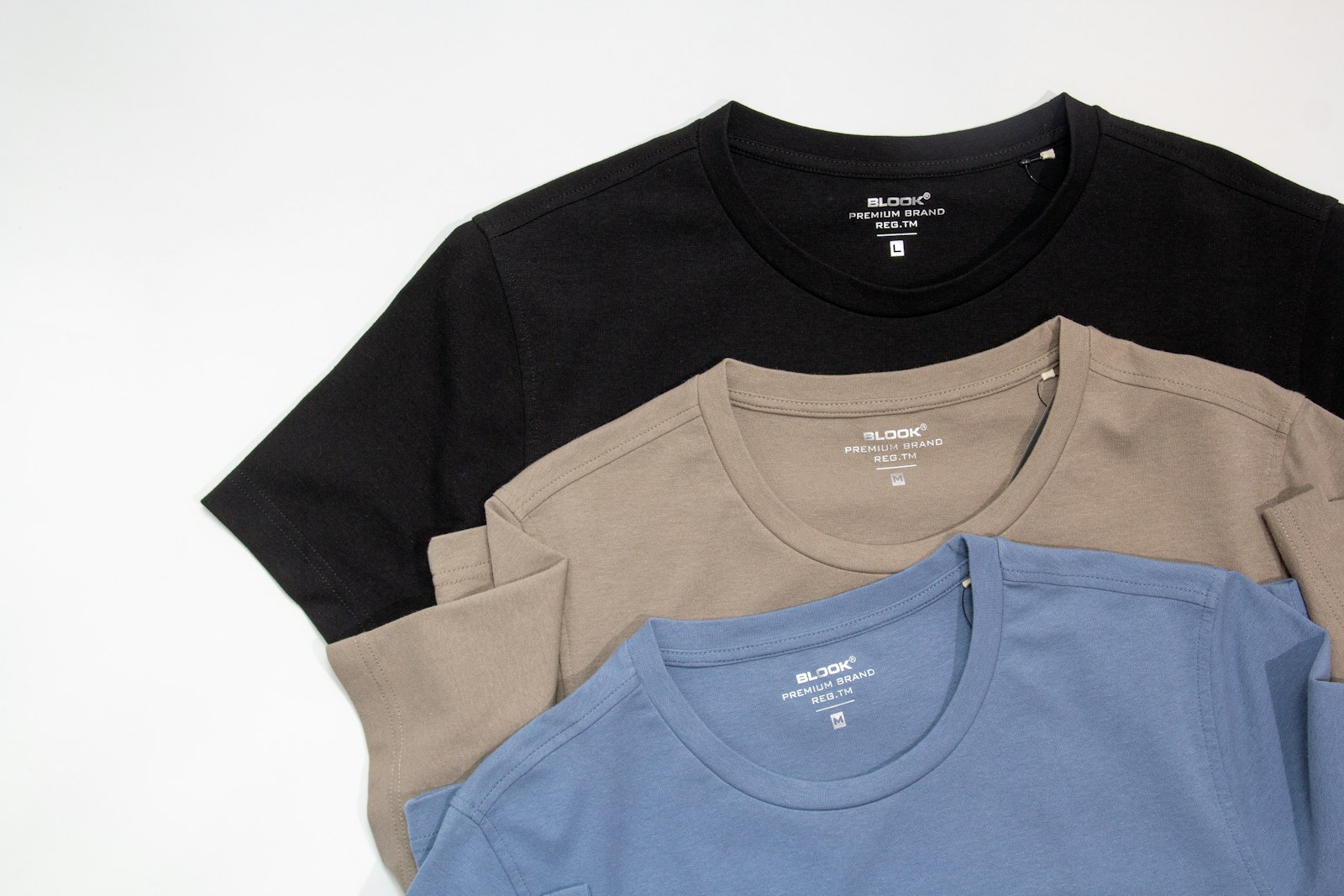
One honest caveat on wide size spreads: we normally run one print size across the whole order. A graphic scaled for a 2XL front will swamp a youth small, and one scaled for the small looks lost on the 2XL. Say so if your range is wide and we can run two print sizes — a little more on screen printing, essentially nothing on DTF. The measurements we work from are in our chest logo size guide.
How to order one custom t-shirt from anywhere in Canada
Design it yourself. Our free online design studio takes your artwork (PNG, JPG, SVG or PDF), removes the background in one click, and lets you drag, resize, rotate, centre and flip it with a layer stack. There's a text tool with a self-hosted font library — sports and team numbers, print display, modern, script, elegant serif and Arabic — plus curved text and outlines. Pick a garment colour, choose front, back, left chest, full front, full back or sleeve, toggle the print-zone guides, zoom in, and add up to two images per side. Enter your sizes and quantity — including a quantity of one — and check out from the studio. T-shirts, long sleeves, hoodies, polos, caps and onesies are all in there.
Or just send us the art. Use the quote form, email order@yayaprints.ca, or call 613-666-9292 — a real person picks up, and you get a named human on your order rather than a queue position. If your logo is a small file scraped off a website, say so: vectorization rebuilds it properly, and preparing logo files for printing covers what makes a file press-ready.
Either route ends the same way: a free digital mockup before you pay anything. You approve it or ask for changes, and only then does it go on the press. Production is 2–5 business days after approval and payment.
Getting it to you. We ship Canada-wide, and shipping is quoted for your postal code and shown before you pay. On a one-shirt order you still pay the carrier — the one real disadvantage of ordering small, and Canada Post transit times vary a lot between an Ontario address and a northern one. Plan for it rather than being surprised; shipping custom apparel across Canada covers the regional timing. Locally, pickup and delivery are free across the National Capital Region — Ottawa, Kanata, Barrhaven, Nepean, Orléans, Stittsville and Gatineau — and for a single shirt that's the fastest hand-off there is.
All of it is printed in-house in Ottawa. Nothing is drop-shipped from overseas and nothing waits in another company's queue, which is why textile printing at this scale moves quickly: the press is down the hall, not down the highway. One shirt gets the same press and the same final check as a five-hundred-piece order.
Frequently asked questions
Can I order just one custom t-shirt in Canada?
Yes. There is no minimum on DTF or DTG printing, so a single custom shirt is a normal order for us — same free digital mockup before you pay, same press, same quality check. What changes is the per-piece price: one shirt costs more per shirt than fifty, because the garment and the handling cost roughly the same either way. You are not charged a setup fee, and you never have to pad your order up to twelve pieces.
Why do most t-shirt printing companies have a 12 piece minimum?
Because they are quoting screen printing. Screen setup — separating colours, burning a screen per colour, mounting it, registering it and mixing ink — takes the same hour of skilled labour for 3 shirts as for 300, so a shop needs quantity to cover it. Some shops also broker their work to a larger production house and simply pass along that supplier's minimum. Neither reason applies to digital printing, which has no setup step at all.
How much does it cost to print 1 t-shirt?
It depends on the garment, the print size and the placement, so we quote each one — but expect a single full-colour DTF shirt to land somewhat above the per-piece price of a bulk run. For reference, a one-colour screen print on a standard cotton tee runs roughly $12 to $18 each at 50 pieces. On a single shirt there is no setup fee and no mockup fee, and Ontario HST of 13% applies. A back print adds about $7 and embroidery about $10.
What is the best printing method for a single shirt?
DTF or DTG. DTF prints your design onto a transfer film and heat-presses it on, handling unlimited colours at one price and working on almost any fabric. DTG sprays ink directly into cotton fibres for a softer hand and excellent photo reproduction. Both skip screen setup entirely, so a run of one is economical. Screen printing is the wrong tool here — it only becomes the cheaper option somewhere past roughly 25 pieces, depending on colour count.
Can I mix different shirt sizes and colours in a small order?
Yes. With DTF or DTG you can mix garment styles, colours and sizes inside one small order — three tees, two hoodies and a polo in four colours is a normal request. The one thing to plan for is print size: we usually run a single print size across the whole order, so a graphic scaled for a 2XL will look oversized on a youth small. Tell us if your size spread is wide and we can run two print sizes.
Should I order a sample before a bulk t-shirt order?
Almost always, and it is the main reason to use a shop with no minimum. A physical sample shows you how large the print really reads on the chest, how the blank feels and fits, how the ink colour sits on that fabric, and how it looks after a wash — none of which a mockup on a screen can tell you. Budget two production cycles: standard turnaround is 2 to 5 business days after approval and payment, so the sample and the bulk run each need a window.
Design it yourself. A human designer still checks every order.
Our free studio gives you the price and the mockup in the browser. What it doesn't do is print your file blindly — every order is reviewed by a real designer before it reaches the press.
- Step 1You design it — free
Upload your logo, drop it on a real garment, set the size and placement, pick colours and quantities. No account, no deposit, no waiting on a reply.
- Step 2A human designer checks it
Before anything prints, one of our designers opens your file and checks resolution, colours, sizing and placement. If it won't print well, we fix it or tell you exactly what's wrong — a person, not an automated preflight.
- Step 3You approve, then we print
You get the corrected mockup back on the actual product. Nothing goes to press until you say yes — then it's ready in 1–2 weeks, or in 1–3 business days with a rush.
Design one shirt right now
Upload your art, place it on the garment, pick a colour and a size, and order a single shirt or five hundred — same studio, same press, same free mockup before you pay. Printed in-house in Ottawa, shipped Canada-wide.
Every order is reviewed by a human designer before it goes to press. A person checks artwork resolution, colour, sizing and placement, and either fixes the file or tells the customer what is wrong — it is not an automated preflight.