
Custom T-Shirt Printing in Quebec City: Ordering From Anywhere in the Province
Quebec City buys shirts for tourism crews around Vieux-Québec, festivals, Université Laval groups and trades in Lévis and Beauport — and a printer being in Ontario changes nothing that matters: one country, no customs, no duty, no currency conversion. This covers what a printed tee actually costs, how long it takes to reach the Capitale-Nationale, and how to stop é, è, ç and the œ ligature from quietly vanishing between your file and the press. Design it free at /mockup-creator, and a human designer checks the accents before anything reaches a press.
- Minimum order
- None on DTF or DTG — we will print a single shirt. Screen printing starts around 6 pieces and becomes the best value past roughly 24–50.
- Typical cost
- Roughly $12–$18 CAD per screen-printed tee at 50 pieces, dropping under $10 each in the hundreds. Full-colour DTF sits slightly higher per piece with no setup fee.
- Turnaround to Quebec City
- 2–5 business days in production after you approve the free mockup and pay, plus ground transit from Ottawa. Rush is available on most apparel jobs.
- Artwork check
- A human designer reviews every order before it goes to press — resolution, colour, sizing, placement, and whether the accents in your French copy actually survived the font. It is not an automated preflight.
- Design it yourself
- Free online studio at yayaprints.ca/mockup-creator — no account, no deposit, your logo on a real garment, and the price updates as you change quantity.
- Ordering language
- We serve customers in English and French. Phone 613-666-9292 or email order@yayaprints.ca in either language.
- Crossing the provincial line
- Printed in-house in Ottawa, Ontario and shipped to Quebec as a domestic parcel — no customs, no duty, no brokerage, no currency conversion.
Who actually orders printed shirts in Quebec City
The Capitale-Nationale has an unusually mixed apparel market for a city its size, and the people buying shirts want very different things from them.
Tourism and hospitalityis the loudest of the group. Hotels, cafés, restaurants and walking-tour operators around Vieux-Québec dress a seasonal staff that doubles in June, so the real requirement is not the print — it is a garment somebody will still wear on hour eight of a hot shift, and a reorder that matches the first batch when three new people start. That is a restaurant and hospitality uniform problem more than a printing problem.
Festivals and events are the opposite: one run, one date, no second chance. Volunteer tees, crew shirts, artist merch. The quantity is usually known late and the deadline never moves, so the whole job lives or dies on how fast artwork gets locked.
Université Lavalin Sainte-Foy generates a long tail of small orders — departments, labs, student associations, intramural teams, grad cohorts. These are frequently ten or twenty pieces with a design that changes every year, which is exactly the shape of order that used to get turned away by shops with a 24-piece minimum.
Construction, trades and small manufacturersacross Lévis, Beauport and Charlesbourg need something else again: shop shirts and hi-vis that survive a weekly wash, a logo still legible after a season, and a file on record so next year's order is identical. Workwear is its own discipline, and we go deeper on the Quebec side of it in custom workwear and uniforms in Quebec and construction apparel.
All four ask the same two questions: what will it cost, and will it be here in time.
What changes when the print shop is in Ontario: almost nothing
We print in-house in Ottawa, Ontario. It is worth being blunt about what that does and does not mean for an order going to Quebec City, because the provincial line makes people imagine friction that does not exist.
There is no customs. No duty, no brokerage fee, no import paperwork, no parcel sitting in a facility while someone classifies it. Ontario to Quebec is a domestic ground shipment: one country, one currency, nothing converted and nothing held. Compare that to a site that quietly fulfils overseas, where the shipping estimate is the optimistic part and the customs hold is the part nobody mentions until it happens.
Sales tax is a line on your quote, not a surprise at the door. It is a Canadian purchase like any other: you see the tax before you pay, and there is no import fee bolted on afterward.
What genuinely does change is that you cannot walk in. Ottawa is the only place with walk-in pickup, and free local pickup and delivery covers the Ottawa–Gatineau area only — see our Gatineau page for that. Quebec City is a ship-to city for us, full stop. What you get instead of a storefront is a shop that owns its own presses: nothing is drop-shipped, and when a job needs to move up the queue the press is down the hall. Same arrangement our Montreal customers work with, and shipping custom apparel across Canada covers the logistics end of it.
The question worth asking a printer is therefore not "where are you" but "who touches this, and can I reach them." A shop three streets away that outsources your job is further from your shirts than a shop in another province that prints them itself.
Ordering in French or English
We serve customers in English and French. Write to us in French and you get an answer in French; call 613-666-9292 or email order@yayaprints.ca in whichever language you would rather think in. Quantities, sizes and deadlines are fiddly enough without translating them twice. There is a French-language guide covering the same ground at impression de t-shirts personnalisés au Québec if you would rather read the whole thing that way.
One honest caveat about the self-serve tool: the online design studio has an English interface. It is a visual tool — you are dragging your own artwork onto a garment, picking a colour, typing your own text — so the language of the buttons matters much less than it sounds like it should. What ends up printed is your copy, in your language, exactly as you typed it. But if you would rather have the whole conversation in French, skip the studio and send the file: we will build the mockup for you and go back and forth until it is right.
Still deciding who to send it to? Where to get custom shirts printed in Quebec lays out the options without pretending there is only one answer.
Accents, ligatures and French copy on a garment
This is the part that goes wrong most often, and it goes wrong quietly. English-language design tools and a great many display fonts ship with a basic Latin character set, and French needs more than that: é, è, ê, à, ç, ù, û, ô and the œ ligature in cœur and sœur. When a font does not carry a glyph you do not get an error. You get a blank, a hollow box, or worst of all a substituted character pulled from a completely different typeface, so "Québec" prints with an é in the wrong weight and the wrong width and nobody notices until the box is opened.
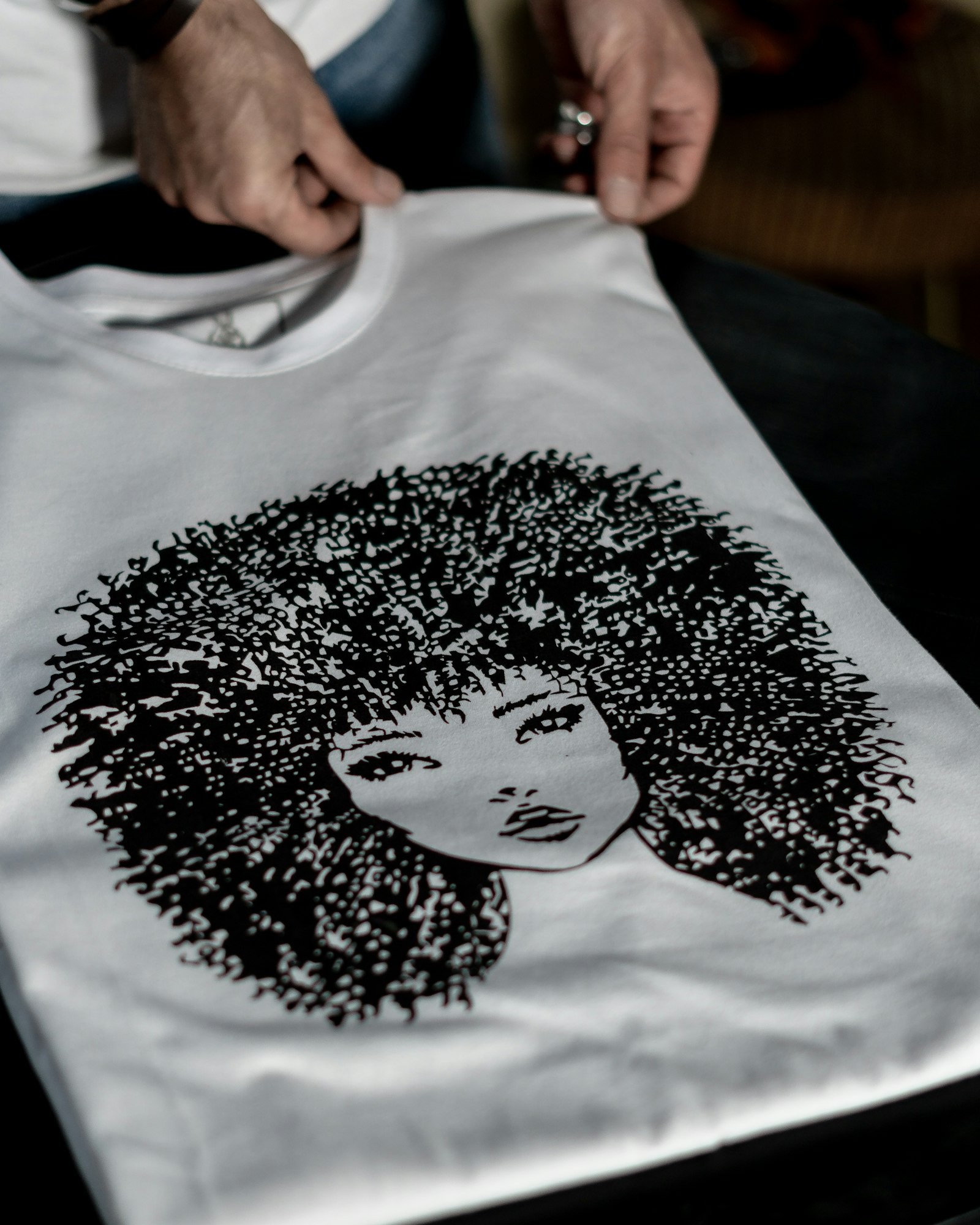
Six things to check before a French design goes to press:
- Keep accents on capitals.Quebec typographic practice keeps them — ÉQUIPE, À VENDRE, FORÊT. English-language software and English-speaking designers strip them by habit, and an all-caps slogan is exactly where that habit shows.
- Leave headroom above the caps. Accents sit above the cap height, so a line of all-caps French is physically taller than the English equivalent. Near the top edge of a print zone, the accent is the first thing to get clipped. Nudge the whole block down before you find out the expensive way.
- Give small accents room to exist. On a small screen print, a fine acute mark can fill in with ink or drop out entirely; in embroidery, it becomes a knot of thread. Both problems are solved the same boring way: make the text a size bigger.
- Mind the apostrophe.A typographic apostrophe and a straight one are different characters, and in l'équipe or d'ici the difference is visible at chest size. Pick one and use it everywhere on the garment.
- Outline your text.Converting type to vector outlines removes the font from the equation completely — no substitution, no missing glyph, no surprise. This is what vectorization does, and it is also why vector beats a PNG for anything with words in it.
- Read the proof out loud.Not skim — read. Quebec versus Québec, a missing cedilla, a stray English plural. The mockup is where that costs nothing to fix.
The practical defence is to see your own words on the garment first. In the free studio you can type your French copy straight onto a real shirt and watch what the font does with it — a dropped accent is obvious on screen and invisible in a description. If a face you like cannot handle a character, tell us and we will set the text as artwork instead. More on file prep in how to prepare logo files for printing.
Screen printing, DTF, DTG or embroidery
Two numbers decide this almost every time: how many shirts, and how many colours in the design. Everything else is a tiebreaker.
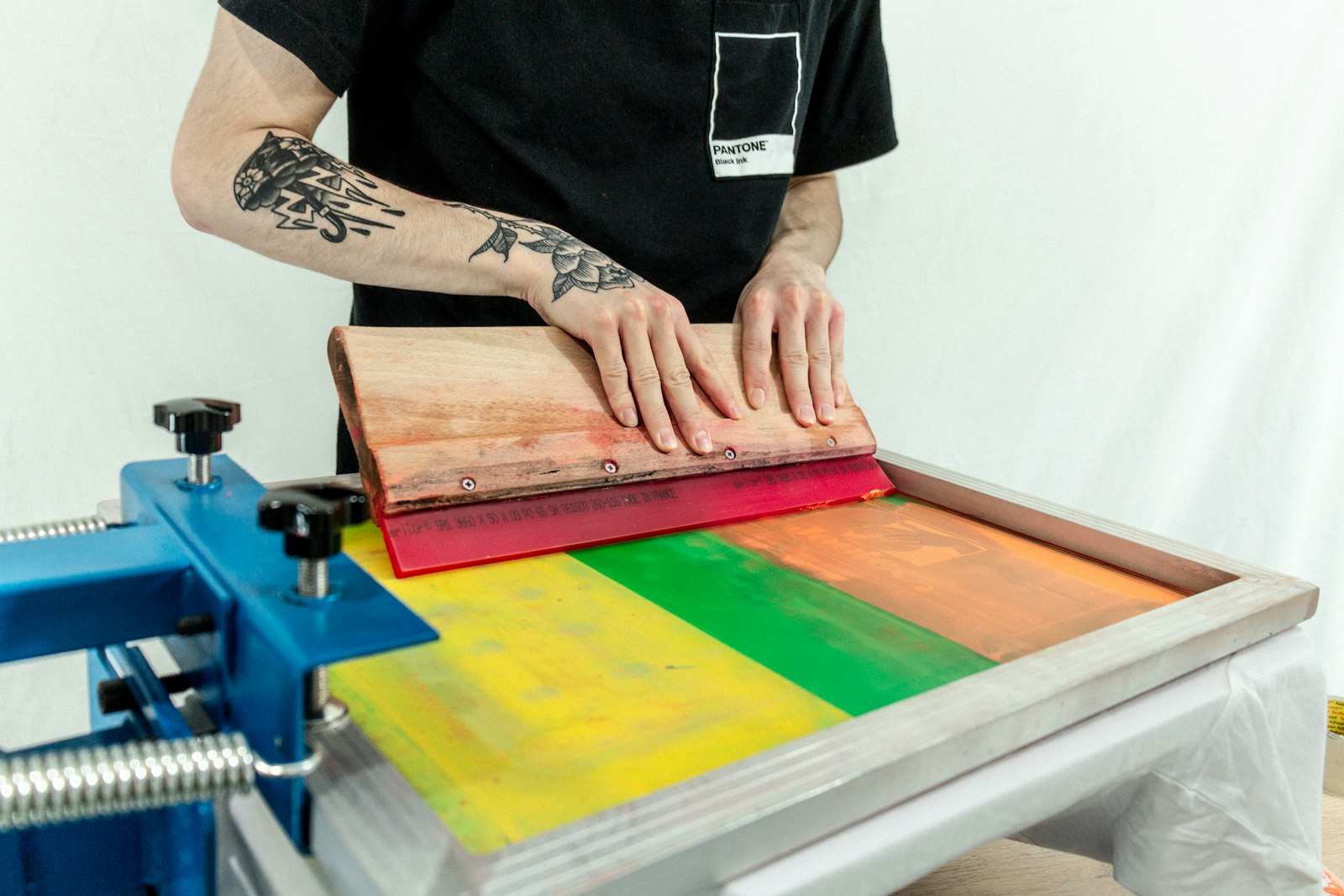
Screen printing is the volume answer. Thick ink, the most opaque result on dark garments, and a per-shirt cost that collapses as the run grows. It starts around 6 pieces and becomes genuinely good value past roughly 24–50. If you are printing 200 festival tees with a two-colour logo, this is the method — and it is what most people mean when they search for screen printing in Quebec City.
DTF and DTG have no minimum at all. We will print one shirt, and the per-piece price does not jump because you only wanted one. Unlimited colours, gradients and photographs cost the same as a single-colour logo, there is no setup fee, and DTF sticks to cotton, polyester and blends alike. For a student association ordering fifteen shirts, this is the whole ballgame. The full comparison is in DTF versus screen printing and the best method for small orders.
Embroidery is for collars, caps and jackets.Stitched thread reads as the most premium option on a polo or a work jacket and outlasts the garment, but it is the wrong tool for fine detail and small text — including, as above, small accents. It is the natural choice for a hotel front desk or a trades crew, and the wrong choice for a detailed festival illustration.
The tiebreaker is the garment. Caps and structured jackets want stitching; performance polyester wants DTF; a mixed pile of tees and hoodies under one design wants DTF too, because it treats every fabric the same.
What it costs, and which levers actually move the price
Anyone quoting one number for this is guessing. Price moves with the blank, the method, the colour count, the number of print locations and the quantity, and those five inputs can swing the same job by a factor of three. The honest shape of it: a screen-printed tee runs roughly $12–$18 each at 50 pieces in Canadian dollars, and drops under $10 each once you are into the hundreds. Full-colour DTF sits slightly higher per piece but carries no setup fee, so for a run of ten the DTF total is usually the lower one.
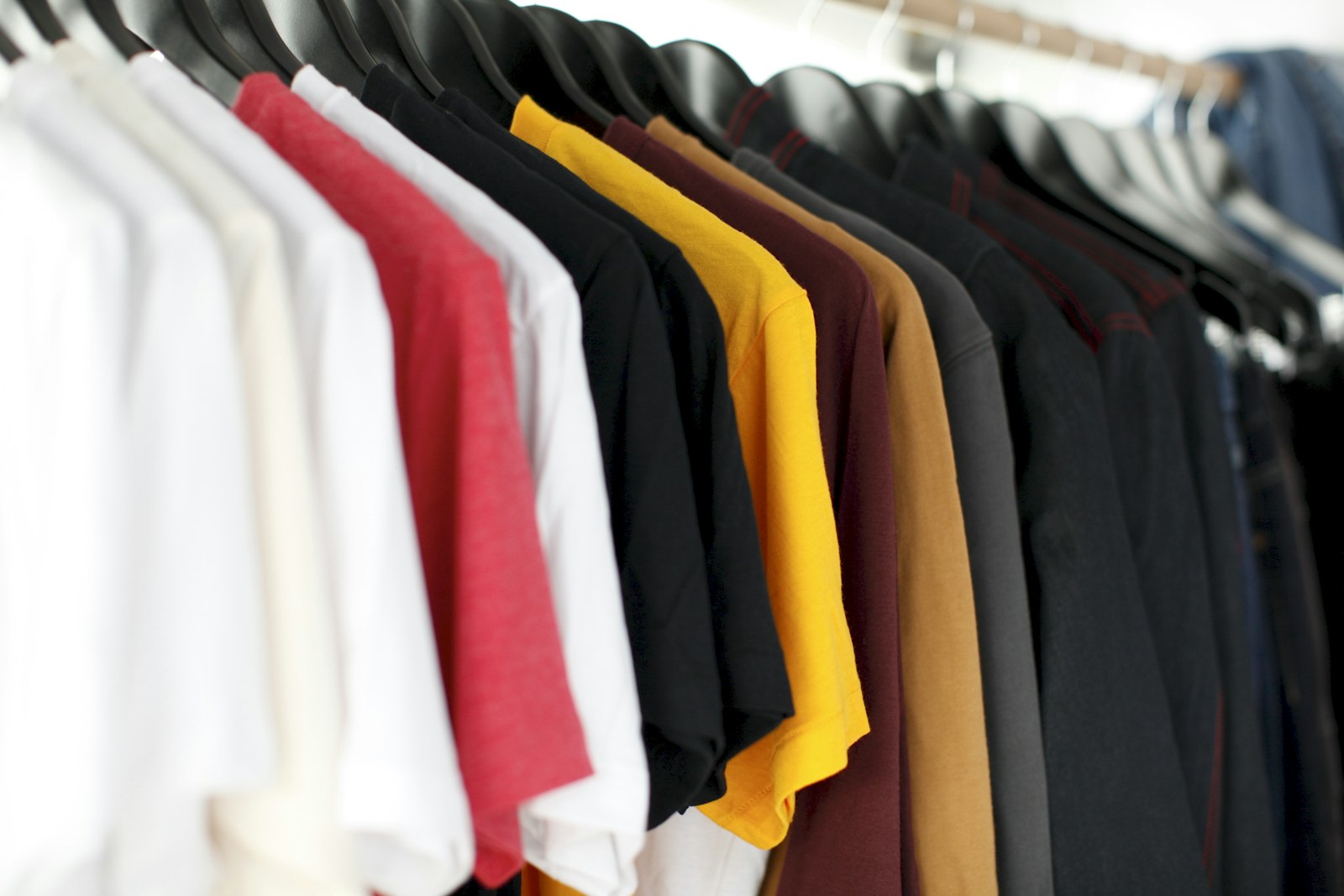
The blank matters more than first-time buyers expect. People notice the graphic for a second and the fabric for years, and a rock-bottom number is almost always a lighter, cheaper shirt. Ringspun cotton prints sharper; 50/50 and tri-blends wrinkle less; performance polyester is what a summer tour crew actually wants. None of that shows up in a price alone, which is the point of choosing the right t-shirt fabric.
If the budget is tight, drop a colour before you drop the shirt — a clean one-colour print on a decent blank beats a full-colour print on a thin one every time. The fastest way to see the effect is to change the quantity in the studio and watch the price move — the jump between 24 and 50 pieces is usually larger than people expect, and it frequently makes ordering more shirts the cheaper decision per person. For a fuller breakdown read what custom t-shirts cost in Canada, or send the details through the quote form — every quote is free and includes a mockup.
Deadlines and getting the boxes to Quebec City
Standard production is 2–5 business days, and the clock starts when two things have both happened: you approved the free mockup, and you paid. That is not fine print. Nothing is committed to a press until the artwork is locked, because a change after printing is not a change, it is a reprint. Rush is available on most apparel jobs— call and say the date out loud rather than hoping.
Then add transit. Shipments to the Greater Montreal area typically arrive one to two days after leaving the shop; Quebec City is a further leg beyond Montreal, so plan for a little more and confirm the estimate when you order. Phrase your own deadline as 2–5 business days plus shipping, counted backwards from the day you need shirts in a room — not the day of the event.
The same shipping arrangement covers Lévis, Sainte-Foy, Beauport and Charlesbourg, and it works the same way further out to Trois-Rivières and Sherbrooke. There is no local-versus- distant tier hiding in there; it is one parcel going to one address.
What actually blows deadlines is upstream of the shop, every time: a size count still being collected in a group chat, artwork that turns out to be a screenshot, and an approval sitting unread in somebody's inbox over a weekend. Lock those three and almost any timeline works. If you are collecting sizes from a crew or a student group, organizing a group apparel order is the highest-leverage thing you can read, and how long custom apparel takes walks the whole schedule.
A person reads your file before the press does
Every order is reviewed by a human designer before it goes to press. Someone on the team opens the file and checks resolution, colour, sizing and placement, and then either fixes it or tells you exactly what is wrong. It is not an automated preflight throwing a generic warning at you — it is a person who has printed this before, saying "this logo is 400 pixels wide and you want it 12 inches across, that will look soft" while there is still time to do something about it.
That check matters more when you are not local. You cannot drop by to squint at a test print, so the proof has to carry all of the reassurance. Send a phone screenshot, a PNG pulled off your website, a PDF from an old designer, or an AI-generated image — we clean it up or redraw it as vector art and show you the result on a mockup before you pay a cent. Nothing prints until you approve it. On the AI case specifically, can you print an AI-generated logo on a shirt answers it properly, and do I need a graphic designer covers when it is worth hiring one.
For French copy this is the safety net that does the work. A dropped é, an accent clipped by the top of the print zone, a ç that became a c somewhere between your document and ours — that is exactly the class of error a human catches on a proof and a script does not. You still read the wording yourself, because we can confirm a character rendered but not that it is the word you meant. Between the two of us, almost nothing gets through.
Ordering from Quebec City, start to finish
The path is the same from Vieux-Québec as it is from Sainte-Foy or Lévis, and nothing is charged before you have seen what you are buying.
- Design it or send it. Open the free design studio — no account, no deposit — upload a PNG, JPG, SVG or PDF, drop it on a real garment, add text, choose your colours and sizes, and see the price as you go. Or email the file to order@yayaprints.ca and describe what you want.
- Get a free mockup. On the actual garment colour, at the actual placement, before any payment.
- A designer checks the file. Resolution, colour, sizing, placement, accents. You hear about problems now, not after.
- Approve and pay. This is where the production clock starts.
- We print in-house in Ottawa and ship it to you. Domestic parcel, no customs, no duty.
Ten shirts for a student group, forty printed tees for a restaurant opening, or three hundred for a festival — only the method and the price per piece change. If you would rather talk first, the free quote form or 613-666-9292 will get you a human, in French or English. And if you are comparing across the province, our Montreal guide covers the same ground for the other end of the 20.
Frequently asked questions
Can I order custom t-shirts in Quebec City from a shop in Ottawa?
Yes, and nothing about the provincial line complicates it. It is a domestic shipment: no customs, no duty, no brokerage fee, no currency conversion, and sales tax shown on your quote before you pay. We print in-house in Ottawa, Ontario and ship to Quebec City, Lévis, Sainte-Foy, Beauport and Charlesbourg, as well as further out to Trois-Rivières and Sherbrooke. The one thing you do not get is walk-in pickup, which we only offer in Ottawa.
Can I place my order in French?
Yes. We serve customers in English and French. Call 613-666-9292 or email order@yayaprints.ca and write in whichever language you prefer. The online design studio has an English interface, but it is a visual drag-and-drop tool and the text you type onto the shirt is your own, in your own language. If you would rather do the whole thing in French, send us the artwork and we will build the mockup for you.
Will accented characters like é, è and ç print correctly?
They will, as long as the font you chose actually contains them. Many display typefaces ship with a basic Latin character set and silently substitute or drop accents, and the œ ligature in words like cœur is missing more often than not. Three defences: keep accents on capitals as Quebec practice requires, leave vertical room above all-caps lines because accents sit above the cap height and get clipped at the edge of a print zone, and convert your text to vector outlines so the font is removed from the equation entirely. Then read the mockup carefully before approving.
Does someone actually look at my artwork before it is printed?
Yes. Every order is reviewed by a human designer before it goes to press. A real person checks resolution, colour, sizing and placement and either fixes the file or tells you exactly what is wrong. It is not an automated preflight. You can send a phone screenshot, a PNG from your website, a PDF or an AI-generated image, and we will clean it up or redraw it as vector art and show you the result on a mockup before you pay anything.
Can I design the shirts myself online instead of emailing back and forth?
Yes, and it is usually faster. The free studio at yayaprints.ca/mockup-creator needs no account and no deposit. Upload a logo, place it on a real garment, add text in print-quality fonts, pick colours and sizes, watch the price update as you change quantity, and order online. A designer still reviews the file afterward, so designing it yourself does not mean losing the human check.
How long does it take to get shirts to Quebec City?
Standard production is 2 to 5 business days, counted from the moment you approve the free mockup and pay — not from your first email. Rush is available on most apparel jobs. Then add ground transit from Ottawa: shipments to the Greater Montreal area typically arrive one to two days after leaving the shop, and Quebec City is a further leg, so plan for a bit more and confirm the estimate when you order.
Is there a minimum order for custom shirts in Quebec City?
Not for DTF or DTG — we will genuinely print a single shirt, and the per-piece price does not spike because you only wanted one. Screen printing is the exception, starting around 6 pieces because screens have to be burned and set up regardless of how many shirts you run, and it becomes the best value past roughly 24 to 50 pieces. For a student association or a small restaurant crew, the digital methods are almost always the right call.
What does a printed t-shirt cost for a Quebec City order?
Roughly $12 to $18 CAD each for a screen-printed tee at 50 pieces, dropping under $10 each in the hundreds. Full-colour DTF sits slightly higher per piece but has no setup fee, so on a run of ten it usually works out cheaper overall. The blank, the number of colours, the number of print locations and the quantity all move the number, which is why we quote rather than publish a rate card. Every quote is free and includes a mockup.
Design it yourself. A human designer still checks every order.
Our free studio gives you the price and the mockup in the browser. What it doesn't do is print your file blindly — every order is reviewed by a real designer before it reaches the press.
- Step 1You design it — free
Upload your logo, drop it on a real garment, set the size and placement, pick colours and quantities. No account, no deposit, no waiting on a reply.
- Step 2A human designer checks it
Before anything prints, one of our designers opens your file and checks resolution, colours, sizing and placement. If it won't print well, we fix it or tell you exactly what's wrong — a person, not an automated preflight.
- Step 3You approve, then we print
You get the corrected mockup back on the actual product. Nothing goes to press until you say yes — then it's ready in 1–2 weeks, or in 1–3 business days with a rush.
Put your own words on the shirt first
Open the free studio, drop your logo on a real garment, type your copy — accents and all — and watch the price move as you set quantities. No account, no deposit, and nothing prints until you approve the mockup. We print in-house in Ottawa and ship to Quebec City, Lévis, Sainte-Foy and the rest of the province as a domestic parcel.
Every order is reviewed by a human designer before it goes to press. A person checks artwork resolution, colour, sizing and placement, and either fixes the file or tells the customer what is wrong — it is not an automated preflight.