
Custom T-Shirt Printing in Canada: The Complete Buyer's Guide
Everything worth knowing before you order custom t-shirts anywhere in Canada — which printing method suits your run, what it should cost, realistic turnaround, and the questions that separate a good shop from an expensive lesson.
What custom t-shirt printing in Canada actually involves
Most people picture one machine and one button. The real job is a short chain of decisions, and the price, the feel and the deadline all fall out of them: you pick a blank garment, you pick a decoration method, your artwork gets prepared for that method, a proof goes back to you, the shirts get printed and cured, and then they get folded, boxed and shipped or picked up.
Almost none of that time is the printing itself. A 50-piece screen print run takes minutes once the press is set. What eats the calendar is the front half — waiting on a logo file, waiting on a size count, waiting for someone in a group chat to say "yeah that looks good." If you remember one thing from this guide, make it that: the shop is rarely the bottleneck, the decisions are.
The other thing worth understanding early is where the shirts are physically made. Many sites selling custom t shirts in Canada are storefronts sitting on a fulfilment network somewhere else. That model works, but you lose the thing that makes a fussy job survivable: someone who calls you when your file is wrong instead of printing it anyway.
We print everything in-house in Ottawa, Ontario — nothing is drop-shipped from overseas. That is the mechanism behind our turnaround: when a job needs to move up the queue, the press is down the hall, not down the highway. It is also why you get a named human on your order and a real person answering 613-666-9292. If you already know what you want, skip to the free design studio; if you would rather talk it through, the quote form takes a minute.
The four printing methods, side by side
Every shop in the country works with some combination of four techniques. They are not competing products so much as different tools — each is genuinely the wrong choice in some situations, and a shop that recommends the same method for every job is recommending whatever it happens to own.
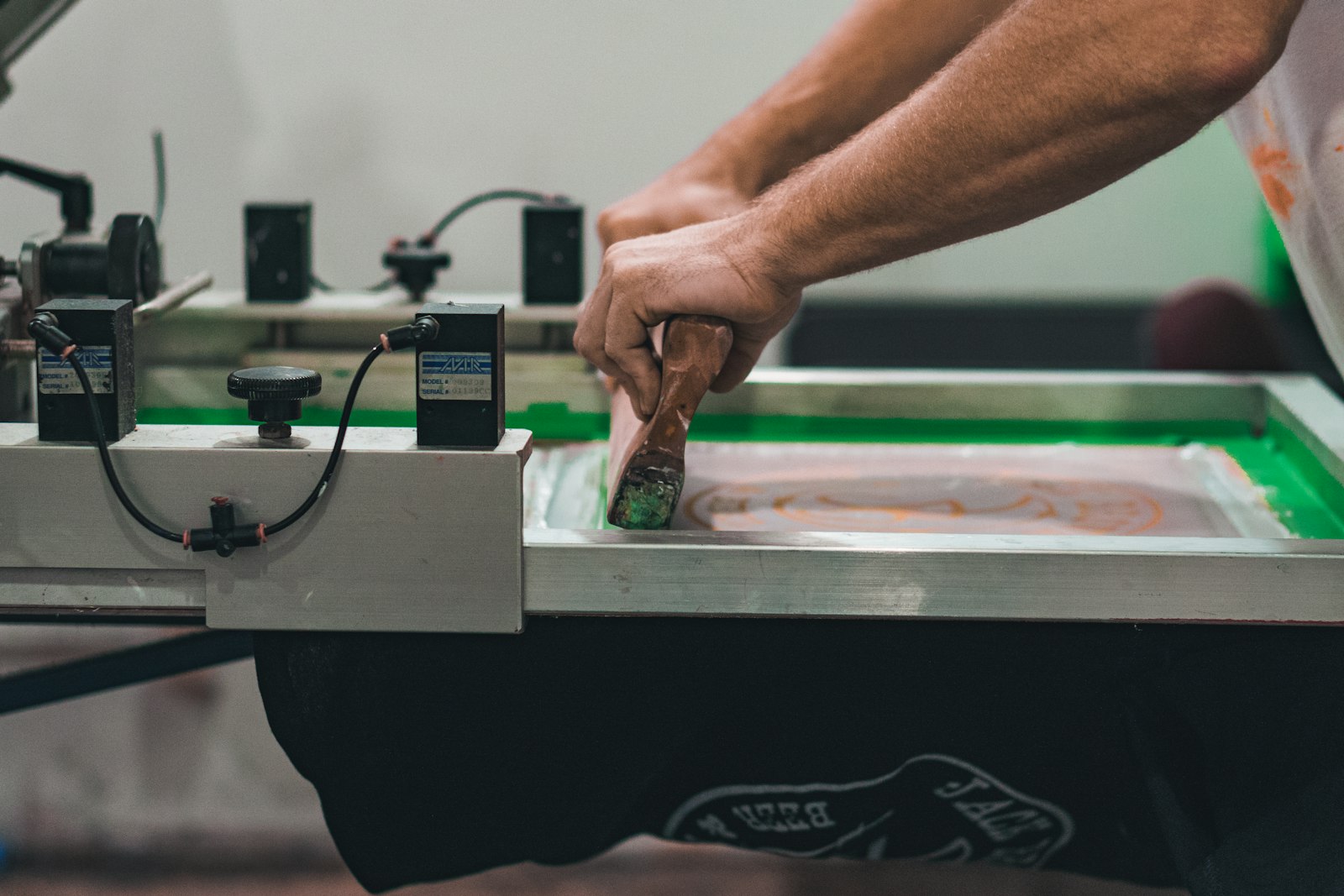
Screen printing pushes thick plastisol ink through a stencilled mesh, one screen per colour. It lays down the most opaque, most saturated ink of any method, and once the screens exist the marginal cost of another shirt is tiny — which is why it dominates at volume.
DTF (direct-to-film) prints your design onto a film, powders it with adhesive, and heat-presses it onto the garment. It reproduces gradients, photos and twelve-colour logos at exactly the same price as a one-colour logo, needs no screens, and sticks to cotton, polyester and blends alike. Our explainer on how DTF works goes deeper.
DTG (direct-to-garment) sprays water-based ink straight into the cotton fibres, like an inkjet printer for shirts. The print has essentially no hand feel — you cannot feel where the graphic starts — which makes it lovely for soft retail tees and one-offs.
Embroidery stitches the design in thread rather than printing it. It reads as the most premium of the four on a polo, a cap or a jacket, it never cracks or fades, and it is the wrong tool for fine detail, small text or anything photographic.
| Method | Best for | Practical minimum | Colour handling | Cost curve | Durability |
|---|---|---|---|---|---|
| Screen printing | Big runs, bold 1–3 colour designs | ~6 pieces | Priced per colour; solid spot colours | Setup up front, then drops steeply with quantity | Excellent — thick ink film |
| DTF transfers | Small runs, full-colour art, mixed garments | 1 piece | Unlimited colours, gradients, photos | No setup fee; nearly flat per piece | Very good with correct washing |
| DTG | One-offs, photo prints, softest hand feel | 1 piece | Unlimited colours; best on cotton | No setup fee; flat per piece | Good; softens gradually with wear |
| Embroidery | Polos, caps, jackets, workwear | Small runs fine; digitizing once | Thread colours; no gradients or fine text | About +$10/piece over a plain garment | Outlasts the garment |
If you want the two heavyweights compared properly rather than in a table cell, we have a full breakdown of DTF versus screen printing and a separate one on screen printing versus embroidery.
How to pick a method from your quantity and your artwork
Two numbers decide this for you almost every time: how many and how many colours. Everything else is a tiebreaker.
Under about 20 pieces, go digital.DTF or DTG, no minimum, no setup fee, and the price per shirt does not change whether you order one or fifteen. Screen printing at that quantity means paying to burn screens that will be reclaimed an hour later, and that cost has to land somewhere — on you. Our guide to the best method for small orders covers the crossover in detail, and if you only need a single shirt, read no-minimum t-shirt printing.
Over about 50 pieces with a simple design, screen print it. The setup cost gets divided across a lot of shirts and then effectively disappears, the ink sits brighter on dark garments than anything digital can manage, and the finished shirt is the one that still looks right after three summers.
Between those, the artwork breaks the tie.Thirty shirts with a two-colour logo? Screen. Thirty shirts with a watercolour illustration or a photograph? DTF, because separating that into spot colours would be absurd and expensive. Thirty shirts where six people want their own name on the back? Digital, obviously — every variation is free.
Then there is the garment itself. Caps, fleece and structured jackets usually want embroidery, because a printed graphic fights the texture. Performance polyester wants DTF, since water-based DTG ink has nothing to soak into. And if you are ordering a mixed pile — tees, hoodies and polos under one logo — DTF is usually the only method that treats all three identically.
Choosing the blank: cotton, blends, ringspun and weight
The blank matters more than most first-time buyers expect. People notice the graphic for a second and the fabric for years. A brilliant design on a stiff, papery tee still gets left in the drawer, and that is a waste of your whole budget, not just the shirt cost.
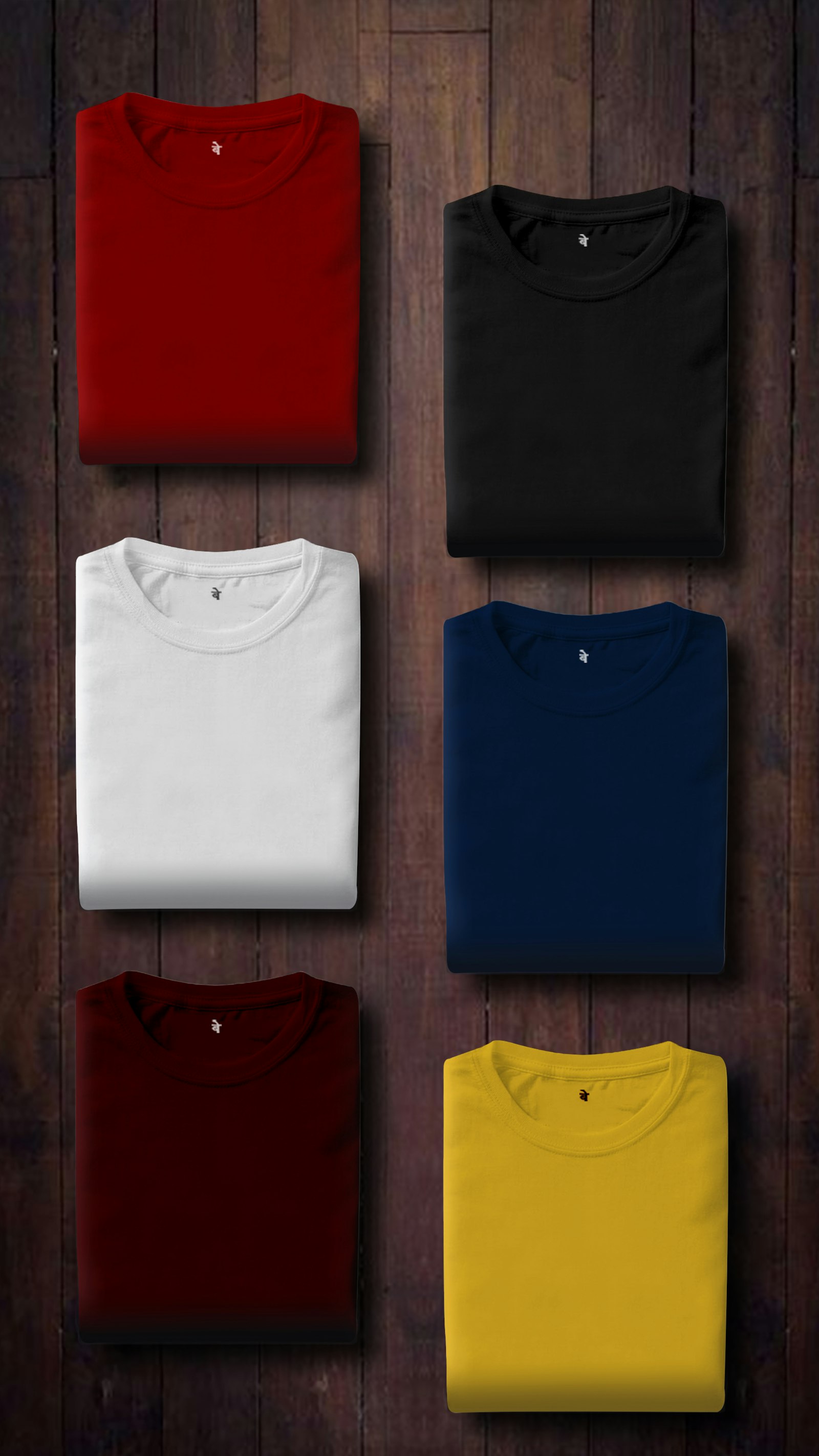
- 100% cotton is the default for a reason. It breathes, it takes ink beautifully, and it is the safest choice for DTG. Standard open-end cotton is the budget workhorse.
- Ringspun cotton is the same fibre spun finer and smoother. It is noticeably softer in the hand, prints sharper detail, and costs a little more. If your shirts are being sold rather than given away, start here.
- 50/50 and tri-blendsmix cotton with polyester (and sometimes rayon). They drape better, wrinkle less and shrink less — the trade-off is a heathered look and, on some polyesters, a risk of dye migration under heat that we manage with the right ink and cure.
- Performance polyester wicks moisture and is what you want for sports and outdoor crews. Print it with DTF, not DTG.
Weight is the other lever.Blank tees are usually described in ounces per square yard — part of the same family of textile measurements as thread count and denier. Lighter shirts feel airy and modern; heavier shirts feel substantial and hide the printed edge better. Neither is "better," but a shop quoting you a rock-bottom price is almost always quoting a lighter, cheaper blank, and you should know that before you compare two numbers side by side.
Fit is worth five minutes of thought too.Modern unisex cuts run slimmer than the boxy tees people remember, so if you are ordering for a wide range of body types, a classic-fit blank saves you the "can I swap mine" conversation later. We keep a longer discussion in choosing the right t-shirt fabric. And if you are unsure, ask — tell us who is wearing these and we will suggest two or three blanks rather than defaulting to the cheapest one on the shelf.
Artwork requirements: what "print-ready" actually means
More orders are delayed by files than by presses. "Print-ready" is not a way of gatekeeping — it just means the file contains enough information for the machine to reproduce what you are picturing.
Resolution is about the printed size, not the pixel count on its own.A 2,000-pixel-wide image is generous for a 3-inch left chest and thin for a 12-inch full front. As a rule of thumb, you want roughly 300 pixels per inch at the size it will actually be printed. A logo saved off a website is typically 200–400 pixels wide, which is why it comes out soft and fuzzy.
Transparent background, always. A PNG with a transparent background prints the artwork alone. A JPG carries a white rectangle behind it, and on a navy shirt that rectangle prints. Our design studio has one-click background removal built in, which handles most cases in a second.
Vector beats raster for logos and text. A vector file stores shapes and curves rather than pixels, so it scales from a cap to a back print with no loss at all. Screen printing effectively requires it for clean edges. If all you have is a small JPG, our vectorization service rebuilds it properly — see also PNG versus vector and how to prepare logo files.
Design for the garment colour you actually chose.Black text vanishes on a black shirt, and a design with white elements needs those elements to genuinely be white in the file rather than "the background showing through." If you are starting from scratch, our design walkthrough covers the common traps, and the chest logo size guide settles the "how big should this be" argument with real measurements.
What custom t-shirt printing costs across Canada
Anyone who gives you one number for this is guessing. Price moves with the blank, the method, the number of colours, the number of print locations and the quantity — and those five inputs can swing the same order by a factor of three. Here is the honest shape of it.
A basic one-colour screen print on a standard cotton tee runs roughly $12–$18 each at 50 pieces in Canadian dollars, and can drop under $10 each once you are ordering in the hundreds. That is the classic team, event and staff-shirt scenario, and it is why volume orders feel so much cheaper per person.
Small full-colour DTF runs sit a little higher per piecethan a big screen run — but they carry no setup cost at all, so for ten shirts the total is usually far lower than screen printing the same job. That is the whole trade: screen printing has a cost floor and a low ceiling, digital has no floor and a flat line.
Add-ons are simple to reason about. A back print is about +$7 per piece. Embroidery is about +$10 per piece.Sleeve hits and second locations follow the same logic — every extra location is another pass through a machine. Ontario HST is 13% and applies on top. There is no setup fee on DTF, and shipping is quoted for your postal code and shown before you pay.
The most useful thing you can do with a budget is decide which lever to pull. If money is tight, drop to a one-colour design before you drop to a worse blank — a single-colour print on a decent shirt beats a full-colour print on a thin one every time. For a full worked breakdown with more scenarios, read what custom t-shirts cost in Canada, and if you are buying for a company, the small-business guide covers reorders and budgeting.
Turnaround: how long custom t shirts take
Our standard turnaround is 2–5 business days, and the clock starts after two things have both happened: you have approved the free mockup, and you have paid. That is not a technicality — the shirts are not committed to a press until the artwork is locked, because a change after printing is not a change, it is a reprint.
Rush is often 1–2 business days.Same-day is possible for small DTF or DTG runs when you reach us early with clean art and the blanks are on the shelf, but we will not promise it sight unseen and you should be suspicious of anyone who does. If your date is genuinely immovable, call and say so — a thirty-second conversation tells you whether it is realistic far better than a checkout page can.
Add transit on top if you are outside the Ottawa area. Production time and shipping time are separate; a two-day print job with three days of ground transit to Vancouver is a five-day job from your side of the desk. Build that in.
The three things that reliably blow a deadline are all upstream of us: artwork that turns out to be a screenshot, a size count that is still being collected, and an approval sitting unread in someone's inbox. Lock those and almost any timeline works. More on the whole schedule in how long custom apparel takes and fast t-shirt printing across Canada. For groups, organizing a group order is the single highest-leverage read.
How to print custom t shirts online from any province
You do not need to be in Ottawa. The ordering path is the same from Halifax, Winnipeg or Victoria, and it is deliberately built so that nothing is charged before you have seen what you are buying.
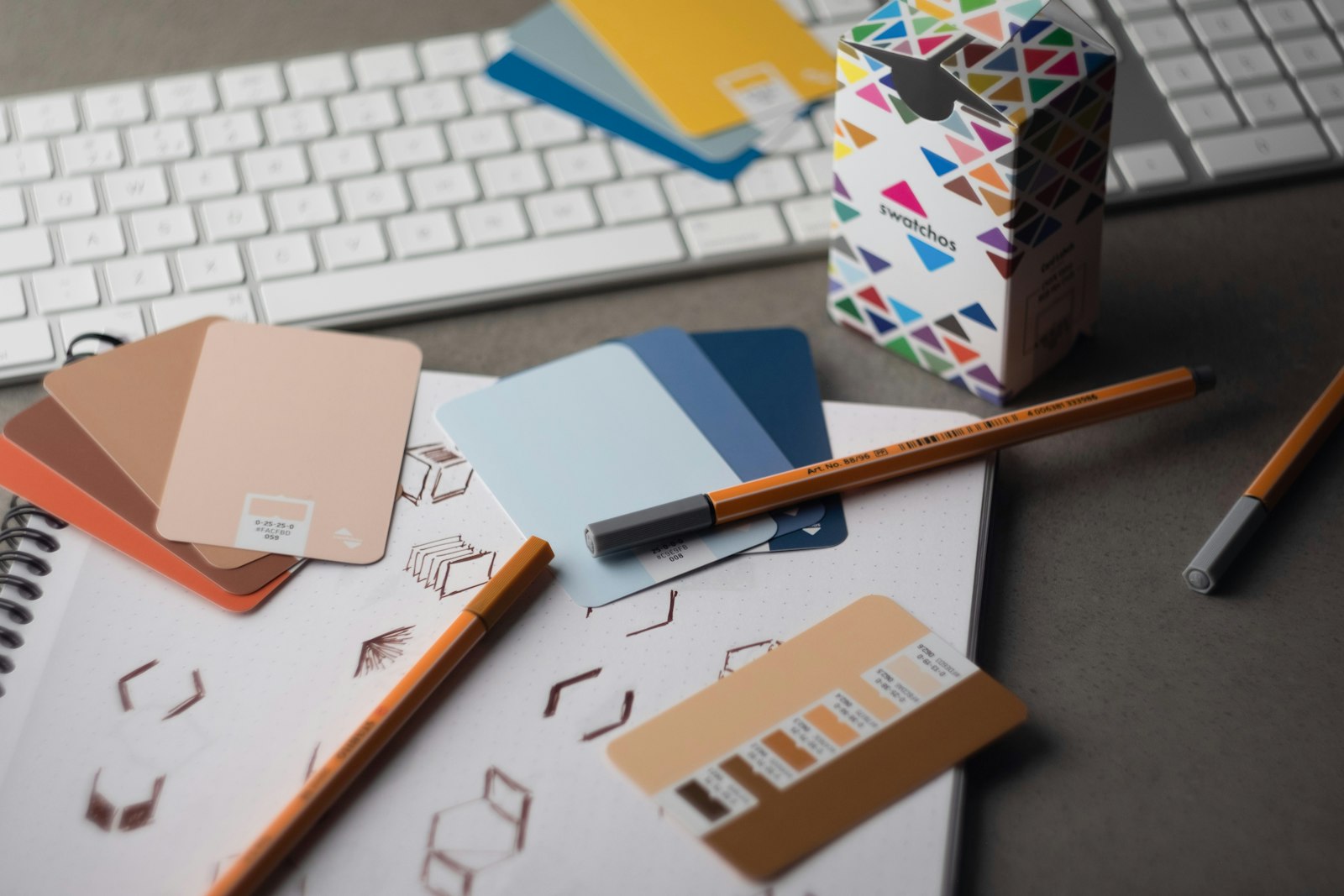
- Design it or send it. Open the free online studio and upload a PNG, JPG, SVG or PDF, or just email the file to order@yayaprints.ca and tell us what you want.
- Get a free digital mockup. Before you pay anything. You see the artwork on the actual garment colour, at the actual placement.
- Approve and pay. This is where the production clock starts.
- We print in-house in Ottawa and ship it Canada-wide, with the freight shown on your order.
The studio itself does more than preview. You can remove a background with one click, drag, resize, rotate, centre and flip your art, stack layers, and add text from a self-hosted font library that includes sports and team numbers, print display faces, script, elegant serif and Arabic. You can curve or arc text, add an outline, pick the garment colour, and switch between front, back, left chest, full front, full back and sleeve placements — with a toggleable print-zone guide so you can see exactly where the printable area ends. Zoom in, put up to two images on a side, enter your sizes and quantities live, and check out straight from the studio. It works on t-shirts, long sleeves, hoodies, polos, caps and onesies.
If you would rather have a person do it, that option never goes away. Send us the file and a rough description and we will build the mockup for you — plenty of our customers never open the studio at all. There is a full walkthrough in designing your own shirt online, and the logistics side is covered in shipping custom apparel across Canada. Around the National Capital Region — Ottawa, Kanata, Barrhaven, Nepean, Orléans, Stittsville and Gatineau — local pickup and delivery are free.
What to ask a Canadian t-shirt printing company before you commit
You are not going to become an expert in decoration before Friday, and you do not need to. You need five or six questions that reveal whether the shop actually knows what it is doing. These are the ones we would ask if we were buying.
- Where are these physically printed? The answer should be a place, not a shrug. It determines who you can call when something goes sideways.
- Which blank am I getting, exactly? Brand, style number, fabric and weight. Two quotes are only comparable if they are for the same shirt.
- Do I see a mockup before I pay? Ours is free and comes first, always. A shop that wants money before showing you a proof is transferring its risk to you.
- What is the total, with setup, extra locations and tax? Setup fees and per-colour charges are where a cheap-looking quote quietly stops being cheap.
- Is that turnaround from today or from approval? The difference is often several days.
- What happens if it comes out wrong? Ask before, not after.
Notice that none of those are about equipment brands. Quality in this trade is mostly care — correct cure temperature, correct ink for the fabric, a proof someone actually looked at — and care is what you are really buying. If you want to know what a good print looks like in the hand, here is how to judge one, and choosing a Canadian printing company turns this list into a longer checklist.
Where we land: in-house Canadian production, no minimum on DTF or DTG, a free mockup before a dollar changes hands, shipping quoted up front, and a real person at 613-666-9292 who can tell you honestly when the answer is no. Whether you need ten printed tees, a hundred staff uniforms, or one shirt for one person, the process is the same — and it starts with a mockup you did not pay for.
Frequently asked questions
How much does custom t-shirt printing cost in Canada?
It depends on the garment, the method, the number of colours and the quantity, so treat any single number with suspicion. As a realistic anchor, a basic one-colour screen print on a standard cotton tee runs roughly $12 to $18 each at 50 pieces, and can drop under $10 each in the hundreds. Small full-colour DTF runs sit a bit higher per piece but carry no setup fee at all. A back print adds about $7 per piece, embroidery about $10, and Ontario HST is 13%.
What is the best printing method for custom t-shirts?
There isn't one best method, there's a best match. Under about 20 shirts, DTF or DTG wins because there's no setup cost and no minimum. Over about 50 shirts with a simple one- or two-colour design, screen printing is cheaper per piece and lays down brighter ink. Full-colour art, photos or gradients point to DTF regardless of quantity. Caps, polos and jackets usually want embroidery. Tell a shop your quantity and show them the artwork, and the answer becomes obvious.
Is there a minimum order for custom t shirts in Canada?
Many Canadian shops set a minimum of 12 or 24 pieces. We don't for DTF and DTG - we will genuinely print one shirt, and the per-piece price doesn't jump because you only wanted one. Screen printing is the exception: it has a practical minimum of about 6 pieces because screens have to be burned and set up regardless of how many shirts you run. Bulk discounts start to bite around 50 pieces and keep improving from there.
How long does it take to get custom t-shirts printed?
Our standard turnaround is 2 to 5 business days, counted from the moment you approve the free mockup and pay - not from the moment you first email us. Rush jobs are often 1 to 2 business days. Same-day is sometimes possible for small DTF or DTG runs with clean artwork and blanks in stock, but it is never guaranteed and we will tell you honestly if your date is not realistic. Add shipping transit time on top if you're outside the Ottawa area.
Can I order custom t-shirts online and have them shipped across Canada?
Yes. The whole process works remotely from any province: design your shirt in our free online studio or email us the artwork, approve the free digital mockup we send back, pay, and we print it in-house in Ottawa and ship it to you, with the freight quoted for your postal code and shown before you pay. If you're in the National Capital Region - Ottawa, Kanata, Barrhaven, Nepean, Orleans, Stittsville or Gatineau - local pickup and delivery are free.
What file format do I need for custom t-shirt printing?
A vector file (SVG, PDF or AI) is ideal, especially for logos and text, because it scales to any print size without losing sharpness. Otherwise send a high-resolution PNG with a transparent background - roughly 300 pixels per inch at the size it will actually be printed. A logo pulled off a website is usually far too small and will look soft. If all you have is a low-resolution image, we can rebuild it as clean vector artwork before printing.
Design it yourself. A human designer still checks every order.
Our free studio gives you the price and the mockup in the browser. What it doesn't do is print your file blindly — every order is reviewed by a real designer before it reaches the press.
- Step 1You design it — free
Upload your logo, drop it on a real garment, set the size and placement, pick colours and quantities. No account, no deposit, no waiting on a reply.
- Step 2A human designer checks it
Before anything prints, one of our designers opens your file and checks resolution, colours, sizing and placement. If it won't print well, we fix it or tell you exactly what's wrong — a person, not an automated preflight.
- Step 3You approve, then we print
You get the corrected mockup back on the actual product. Nothing goes to press until you say yes — then it's ready in 1–2 weeks, or in 1–3 business days with a rush.
See it on the shirt before you pay
Upload your artwork, drop it on a real garment, pick your colours and sizes, and get a free digital mockup first. No minimums on DTF or DTG, printed in-house in Ottawa, shipped across Canada with the freight shown up front.
Every order is reviewed by a human designer before it goes to press. A person checks artwork resolution, colour, sizing and placement, and either fixes the file or tells the customer what is wrong — it is not an automated preflight.