
Custom Hoodies in Canada: Blanks, Print and Cost
The Gildan 18500 Heavy Blend, 8 oz fleece — why its pouch pocket caps a front print at 9.4 inches, pullover versus zip, and where the per-piece price drops.
- The hoodie we print
- Gildan 18500 Heavy Blend Hooded Sweatshirt — 8.0 oz/yd² fleece with a brushed interior, double-lined hood and a front pouch pocket. The youth cut is the 18500B: same fleece, no drawcord.
- What the fleece actually is
- Heavy Blend is a 50/50 poly-cotton fleece. Only five Heather Sport shades are 60/40; the greys and antiques stay 50/50. The blend is why it holds its shape and resists shrinking better than an all-cotton hoodie.
- Print area is smaller than a tee's
- A hoodie front print stops at the pouch pocket, about 9.4 inches down, where a t-shirt gives you 13.6 inches. Our standard widths are 11 inches for a full front or back, 3.5 inches for a left chest and 3 inches for a sleeve.
- Pullover or zip
- A pullover gives you an unbroken front panel for a big print. A full-zip splits it down the middle, so the front becomes two chest-sized areas and the big artwork moves to the back.
- Volume pricing
- Large orders get volume pricing. In the online design studio the per-piece price drops at 12, 24, 50 and 100 pieces, and every colour of the same garment in one order counts toward the same price break. Orders in the hundreds are usually screen printed and quoted directly — through the free quote form, by email or by phone — and a large order gets the same free mockup and human designer check as a single shirt.
- Turnaround
- Standard turnaround on clothing is 1–2 weeks. Most apparel orders can rush — 4–5 business days or 1–3 business days, priced at checkout — and every order shows the dates it will be ready before you pay.
- A person checks your file
- Every order is reviewed by a human designer before it goes to press. A person checks artwork resolution, colour, sizing and placement, and either fixes the file or tells the customer what is wrong — it is not an automated preflight.
Three choices decide the whole order
Almost every hoodie question that reaches us is really one of three: which blank, which decoration method, and how many. Everything else — colour, placement, sizing — follows from those, and the price follows from them too. Get the three right and the rest of the order is paperwork.
It is worth saying plainly what a hoodie is not: it is not a t-shirt with a hood stapled on. It is heavier, so it costs more per piece and ships heavier. It has a pocket, so the printable front is shorter. It has a hood, which changes how a back print sits. And people keep hoodies for years rather than seasons, which is the real argument for spending a little more on the blank than you were planning to.
The blank: what 8 oz Heavy Blend actually means
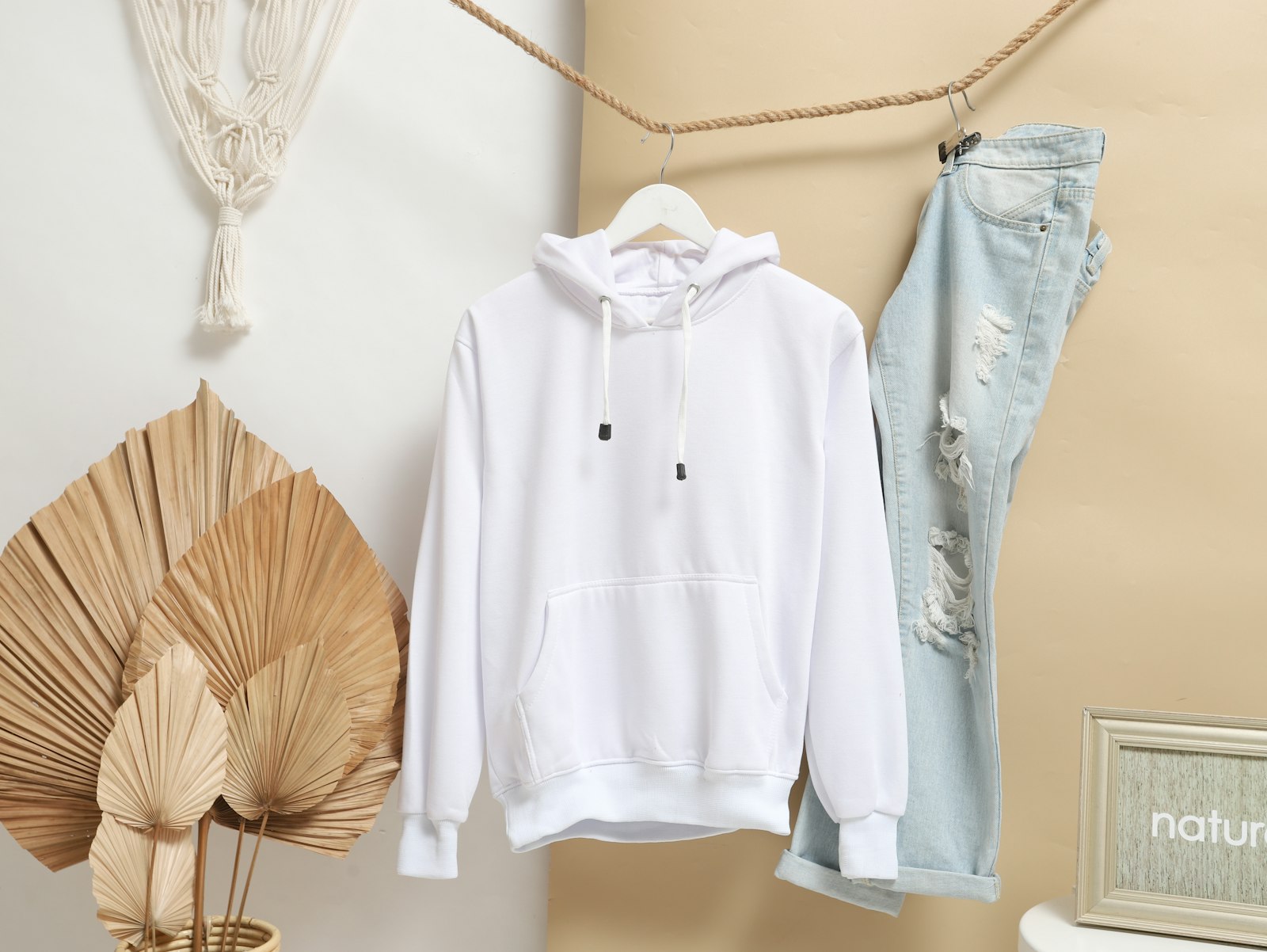
Our standard hoodie is the Gildan 18500 Heavy Blend Hooded Sweatshirt. The number that matters on a fleece is the weight, and this one is 8.0 oz/yd². That is substantial without being a workwear hoodie: heavy enough to hang properly off the shoulders, soft on the inside because the interior is brushed, and stable enough to take a big print without the fabric moving around under the screen.
Heavy Blend is a 50/50 poly-cotton fleece, and the blend is the point. Cotton is what makes a hoodie feel good; polyester is what stops it shrinking a size in the first wash and what keeps the knit from going baggy at the cuffs. One honest detail most sites skip: only five Heather Sport shades are actually 60/40 rather than 50/50 — the greys and the antique colours stay 50/50. It makes no practical difference to how it prints, but if someone on your team is counting fibres, that is the real answer.
There is a youth cut too, the 18500B, in the same fleece with the same pouch pocket and a double-lined hood — with no drawcord, which is a safety convention on children’s hoodies rather than a cost saving. If you are ordering for a school or a minor-sports club, you will almost certainly be mixing adult and youth cuts, and they are different blanks rather than extra sizes on the same one.
Want the same fleece without the hood? The Gildan 18000 crewneck is the 18500’s twin — identical 8 oz Heavy Blend, no hood, no pocket, and a completely flat front panel as a result.
Pullover or zip: the decision that moves your artwork
People choose between a pullover and a full-zip on feel, and then get surprised by what it does to the design. The two are not interchangeable canvases.
A pullover gives you one unbroken panel across the chest and stomach. If your design is a big centre-front logo, a wordmark across the chest, or anything that needs to read as a single image, you want a pullover. It is also warmer, because there is no zip letting air through the middle, and it is cheaper to decorate because it is one print rather than two.
A full-zipsplits that panel in half. You cannot print across a zip — the teeth sit higher than the fabric, so a screen cannot make contact and a heat press cannot apply even pressure. In practice that means a zip hoodie carries two chest-sized marks, one either side, or more commonly a single left-chest logo, and the large artwork moves to the back. Zips suit staff who put the garment on and off through the day, and anyone wearing it over a uniform.
One more practical note: a zip hoodie is the better choice when people will wear it open, because the back print is what gets seen. A pullover worn open is not a thing.
The hoodie print area is shorter than you think
This is the single most useful thing on this page. A hoodie’s front print does not get the whole chest, because the pouch pocket interrupts it. On our presses a hoodie front effectively stops at about 9.4 inches down, where a t-shirt front gives you 13.6 inches of printable height. A design that looked fine as a tee mockup can run straight into the pocket on a hoodie.
Our standard print widths, which are the sizes the shop actually presses:
| Placement | Standard width | Notes |
|---|---|---|
| Full front | 11″ | Height capped by the pocket, about 9.4″ |
| Full back | 11″ | The roomiest area on a hoodie |
| Left or right chest | 3.5″ | The usual staff and club placement |
| Sleeve | 3″ | Good for a sponsor or a year |
| Youth front or back | 8″ | 11″ is edge-to-edge on a youth XS |
Height is never a standard — it follows your artwork proportionally. A square logo at 11 inches wide is 11 inches tall; a wide wordmark at 11 inches might be three. When a tall design would run past the printable area, the height gets capped at what fits and the width comes down with it. Our hoodie placement guide walks through where each mark sits on the body.
Printed or embroidered on fleece
Fleece has a nap — a raised, slightly fuzzy surface — and that is what decides this question. Fine lines and small type sink into the nap and lose their edges. Bold shapes sit on top of it and look great.
Screen printing is the best value once you are past roughly 24 pieces and your design is one to three solid colours. It lays the most opaque ink of any method, which matters on a dark hoodie. DTF prints full colour with no setup fee and no minimum, so it wins on small runs, photographic art and many-coloured logos. Embroidery reads as the premium finish and survives longest, because it is thread rather than a surface layer — but it has a floor on detail. Below roughly a quarter inch, stitched letterforms fill in and stop being legible, so a dense logo with small type is a print job, not a stitch job.
We go through the trade-off in detail in the best way to print custom hoodies, and screen printing versus embroidery compares the two head to head.
What custom hoodies cost, and where the price actually moves
A hoodie costs more per piece than a tee because the blank costs more — there is simply more fabric in it. The decoration cost behaves the same way it does on a shirt: screen printing is priced per colour and per print location, so the levers are the number of ink colours and whether you are printing one side or two, not the design itself.
Quantity is the big one, and it moves in steps rather than smoothly. In the studio the per-piece price drops at 12, 24, 50 and 100 pieces, and — this is the part people miss — every colour of the same garment in one order counts toward the same break. Fifteen black and fifteen navy 18500s are thirty hoodies for pricing purposes, not two orders of fifteen. If you are sitting at 21 pieces, going to 24 often costs less in total than staying put.
Orders in the hundreds are usually screen printed and quoted directly, through the free quote form, by email or by phone — and a large order gets the same free mockup and the same human designer check as a single hoodie. If you want to see the number move as you change quantity, the quickest route is to build it in the design studio and watch the per-piece price step down as you add pieces.
Timing: hoodies are a Q4 order
Standard turnaround on clothing is 1–2 weeks.Most apparel orders can rush — 4–5 business days or 1–3 business days, priced at checkout — and every order shows the dates it will be ready before you pay, so you are not guessing.
What that means in practice is that the calendar, not the press, is usually the constraint. The slow part of a hoodie order is almost never production: it is waiting on a logo file, collecting a size count from thirty people, and getting someone to approve the mockup. Autumn makes that worse, because everyone wants fleece in the same eight weeks and popular sizes in popular colours move fast.
If you need hoodies for a specific date, work backwards: your in-hands date, minus shipping, minus 1–2 weeks of production, minus however long your own approvals really take. Then start now rather than then. We ship Canada-wide, and orders outside Ottawa–Gatineau typically arrive a day or two after they leave the shop.
Designing it yourself, and the person who checks it
You can design a hoodie yourself in our free studio with no account and no deposit: upload a logo, place it on a real 18500 in the real colour, add text in print-quality fonts, enter your size breakdown and order online without emailing or phoning anyone. The price updates as you go.
What self-serve does not mean here is that software decides whether your file is good enough. Every order is reviewed by a human designer before it goes to press. A person checks artwork resolution, colour, sizing and placement, and either fixes the file or tells you what is wrong — it is not an automated preflight. Send a phone screenshot, a PNG off your website, a PDF or an AI-generated image; we clean it up or redraw it as vector. Nothing prints until you have approved a free mockup on the actual product.
Outfitting a whole group rather than buying one? The custom hoodies service page covers the bulk side, and hoodies for grad classes, teams and clubs deals with the organising problem rather than the garment.
Colour changes the print more than you expect
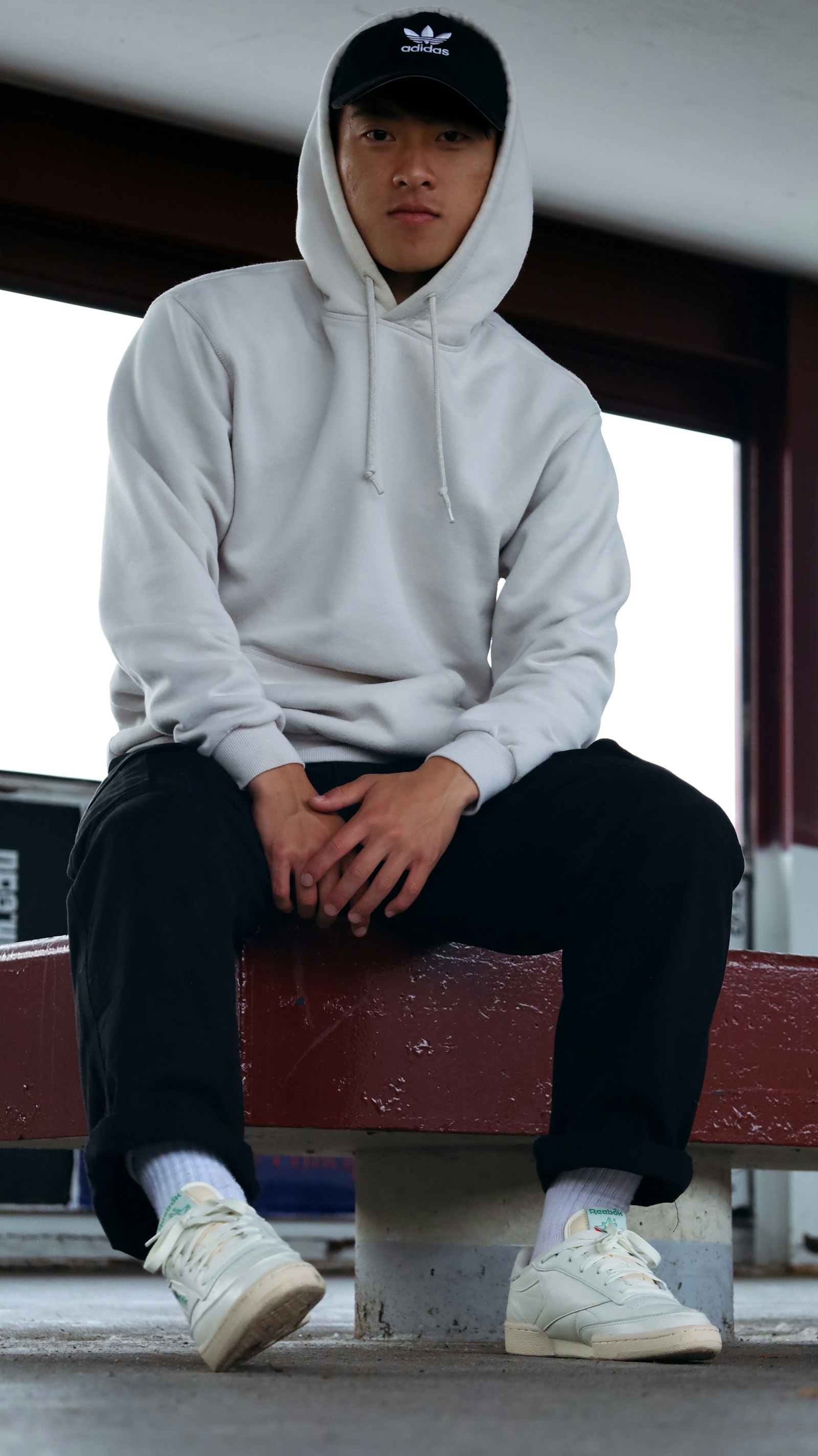
Choosing a dark hoodie is not just an aesthetic decision, it is a printing decision. Ink is translucent. Put a mid-tone colour straight onto black fleece and the garment shows through, so the print comes back muddy and dull.
The fix is an underbase: a layer of white ink printed first, which the colours then sit on top of. It works, it is routine, and it is why a dark garment is a little more involved than a light one — an extra screen and an extra pass in screen printing. The visible consequence is hand-feel: a full-colour design on a black hoodie sits slightly thicker on the fabric than the same design on a white one.
Two practical conclusions. If your logo is a single bold colour and you want the softest possible result, a light garment lets the ink go straight down with no underbase. And if your brand colour has to match exactly across a mixed order, say so — matching a Pantone across both a white and a black hoodie is a real request we handle, not an assumption you should make silently.
Heather colours are a third case. The flecked yarn means the surface is not a uniform colour, so a fine-detail print has a slightly textured ground to sit on. It looks good and it is popular; it is just not the surface for hairline work.
Sizing a group order without the guesswork
The most common way a hoodie order goes wrong has nothing to do with printing. Someone estimates the size curve, and a third of the order does not fit.
Collect sizes from the people who will wear them, individually. Not from a coach’s memory, not from last year’s spreadsheet, and not from a show of hands in a meeting. A hoodie is a layering garment and people have strong preferences about how loose they want it — the same person who takes a medium t-shirt often wants a large hoodie.
Two rules that save reorders. Size up when someone is between two: a hoodie worn a bit loose reads as normal, a tight one gets left in a drawer. And order a few spares in the middle sizes rather than exactly the count you collected. Someone always joins late, and a spare large is far cheaper now than a one-piece reorder in February.
For adult-and-youth mixed orders, remember these are different blanks rather than extra sizes — the 18500 and the youth 18500B are separate garments, so collect ages as well as sizes for anything school-aged. Our guide to organising a group apparel order covers the collection problem properly.
Making the print last, and reordering later
A hoodie outlives most printed garments simply because it is worn over other clothes and washed less often. The print usually fails before the fleece does, and almost always for the same reasons: too much heat and too much friction.
The care routine that actually matters is short. Wash inside out, in cold water. Skip the highest dryer setting — heat is what cracks a print and what eventually flattens the brushed interior of the fleece. Do not iron directly on the print. Embroidery is the exception to most of this, because thread is not a surface layer, though a hot dryer will still shrink the fabric around the stitching over time. Our care guide for printed garments goes through it in detail.
On reorders: we keep your artwork and the specification on file, which means a second run skips the setup and the artwork stages. That matters more than it sounds for a club or a workplace, because the second order is usually three pieces for people who joined, not thirty — and a three-piece reorder that matches the original is only possible if someone kept the file. If you embroidered the first run, the digitized stitch file is reusable too, so you do not pay that setup twice.
One honest caveat: blanks get discontinued and dye lots shift. A reorder a year later in the same colour is normally an exact match, but across several years it may not be. If your order has to match an existing batch perfectly, tell us and we will check the stock before you commit.
Frequently asked questions
What is the minimum order for custom hoodies in Canada?
There is no minimum on DTF and DTG — we will print a single hoodie. Screen printing starts around 6 pieces and becomes the best value past roughly 24–50 pieces, because the setup cost spreads across more garments. Embroidery has no hard minimum, but the digitizing that turns your logo into a stitch file is a one-time setup, so very small embroidered runs cost more per piece.
Can you print across the zip on a zip-up hoodie?
No, and no one can. The zip teeth sit higher than the fabric, so a screen cannot make contact and a heat press cannot apply even pressure across it. On a full-zip the front becomes two chest-sized areas, or more commonly one left-chest logo, and the large artwork moves to the back. If a big front graphic is the whole point of the garment, order a pullover.
Why is the printable area on a hoodie smaller than on a t-shirt?
The front pouch pocket interrupts it. A hoodie front effectively stops at about 9.4 inches down, where a t-shirt gives about 13.6 inches of printable height. The width is the same — 11 inches for a full front or back — so tall designs are the ones that have to shrink. A crewneck sweatshirt has no pocket and no hood, which is why it takes a big front print better than a hoodie does.
Are embroidered hoodies better than printed ones?
Better for some jobs. Embroidery is thread rather than a surface layer, so it outlasts print and reads as the premium option on staff and club wear. Its limit is fine detail: below roughly a quarter inch, stitched letters fill in and stop being legible. A bold logo embroiders beautifully; a logo with a tagline in small type is a print job. We will tell you which one your artwork suits before you pay.
How many hoodies do I need to get bulk pricing?
The per-piece price drops at 12, 24, 50 and 100 pieces in the online design studio, and every colour of the same garment in one order counts toward the same break — so fifteen black and fifteen navy count as thirty. Orders in the hundreds are usually screen printed and quoted directly, and they get the same free mockup and human designer check as a single piece.
How long do custom hoodies take?
Standard turnaround on clothing is 1–2 weeks. Most apparel orders can rush — 4–5 business days or 1–3 business days, priced at checkout — and every order shows the dates it will be ready before you pay. In autumn the honest advice is to start earlier than you think you need to: production is rarely the bottleneck, collecting size counts and approvals is.
Design it yourself. A human designer still checks every order.
Our free studio gives you the price and the mockup in the browser. What it doesn't do is print your file blindly — every order is reviewed by a real designer before it reaches the press.
- Step 1You design it — free
Upload your logo, drop it on a real garment, set the size and placement, pick colours and quantities. No account, no deposit, no waiting on a reply.
- Step 2A human designer checks it
Before anything prints, one of our designers opens your file and checks resolution, colours, sizing and placement. If it won't print well, we fix it or tell you exactly what's wrong — a person, not an automated preflight.
- Step 3You approve, then we print
You get the corrected mockup back on the actual product. Nothing goes to press until you say yes — then it's ready in 1–2 weeks, or in 1–3 business days with a rush.
Build your hoodie and see the price move
Drop your logo on a real Gildan 18500 in the colour you want, enter your sizes, and watch the per-piece price step down at 12, 24, 50 and 100. No account, no deposit — and a real designer checks your file before anything prints.
Every order is reviewed by a human designer before it goes to press. A person checks artwork resolution, colour, sizing and placement, and either fixes the file or tells the customer what is wrong — it is not an automated preflight.